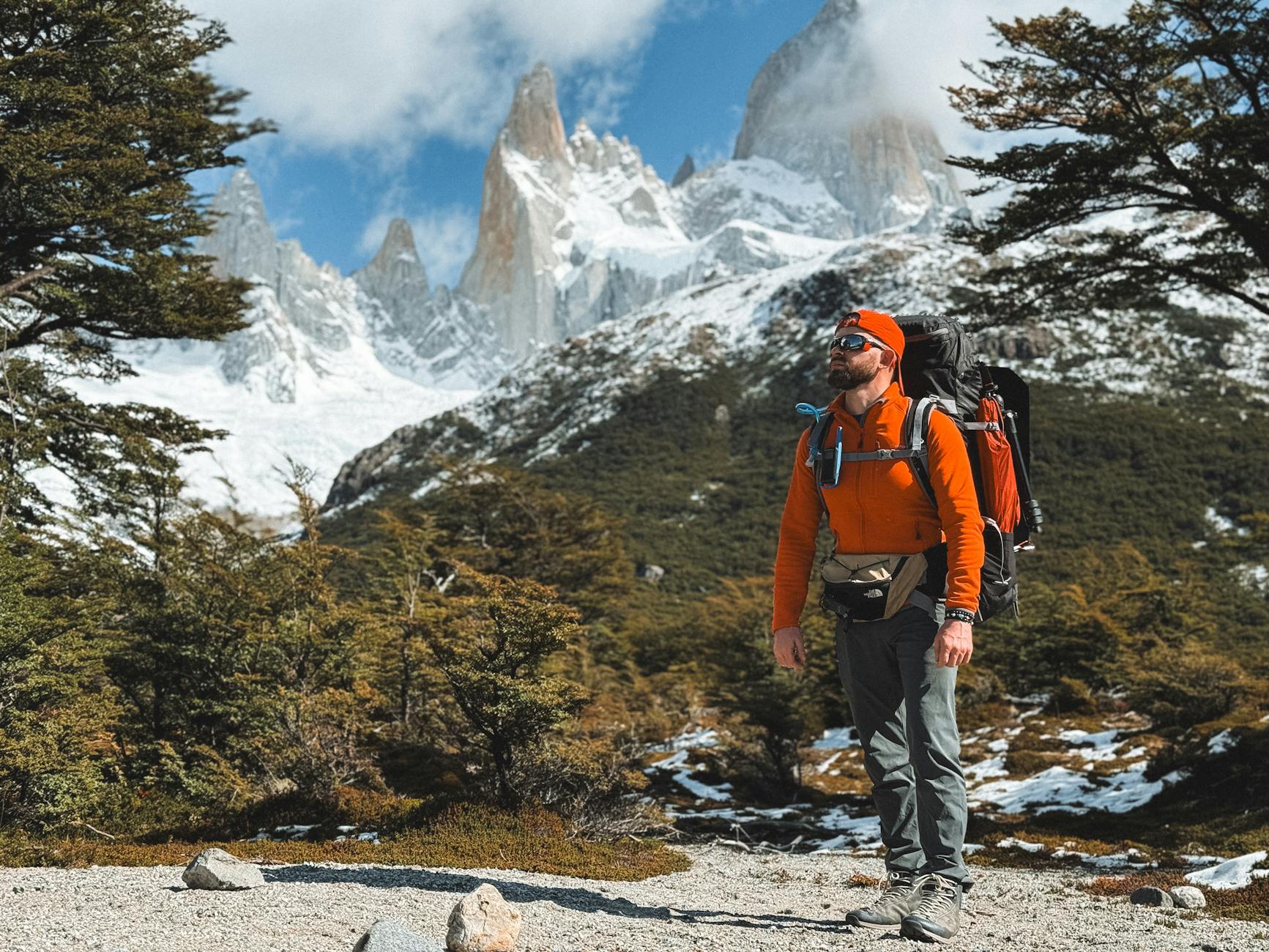
Photo by Marina Zvada on Pexels
Best multi-day hikes in Patagonia for beginners: five routes worth earning
The bus from Puerto Natales drops you at the CONAF administration office on the edge of Torres del Paine just after noon. The wind hits before you’re fully off the steps — a flat, cold shove from the west that smells of wet grass and lake water. Ahead, the Paine Massif sits under a ceiling of grey cloud, its granite towers invisible. You’ll wait two days before they appear. That wait, and the wind, and the mud, are as much a part of hiking Patagonia as any postcard view.
Patagonia rewards patience and punishes wishful planning. The good news: several multi-day routes here are genuinely accessible to hikers without technical mountaineering skills. “Beginner” doesn’t mean easy — it means no ropes, no crampons, no overnight glacial crossings. It does mean long days on uneven terrain, rapid weather changes, and real physical effort. Plan accordingly, and these routes will pay back everything you put in.
1. The W Trek, Torres del Paine — the most logical starting point
Length: 4–5 days | Distance: ~80 km | Difficulty: Moderate
The W Trek is Patagonia’s most-hiked multi-day route for good reason: it’s well-marked, the refugios (mountain huts) at Chileno, Los Cuernos, and Paine Grande provide beds and hot food, and the logistics are manageable. You walk west-to-east (or the reverse), ticking off Mirador Las Torres, Valle del Francés, and the Grey Glacier viewpoint.
The hardest single section is the climb to Mirador Las Torres: 800m elevation gain over 4 km on loose scree near the top. Your legs will burn. Start before 7am to avoid the worst of the afternoon wind and the crowds. The refugio at Chileno serves surprisingly decent pasta and charges around CLP 25,000 (roughly USD 27) for a dorm bed in 2026.
Book refugio beds through Vertice Patagonia or Fantastico Sur at least three months ahead for November–February. Arrive without a booking in high season and you’re camping in whatever shelter you can find.
Getting there: Bus from Puerto Natales to park entrance, 2–2.5 hours, CLP 15,000 each way. Catamaran across Lago Pehoé to Paine Grande, CLP 40,000.
2. Cerro Castillo Trek, Aysén Region — fewer people, comparable drama
Length: 4 days | Distance: ~55 km | Difficulty: Moderate–challenging
South of Coyhaique on the Carretera Austral, Cerro Castillo Nacional Reserve receives a fraction of Torres del Paine’s visitors and offers similar volcanic basalt scenery with a turquoise glacial lagoon at the base of Cerro Castillo’s black spires. The four-day circuit from Villa Cerro Castillo to Bahía Murta involves two significant mountain passes — Portezuelo Cerro Castillo and Portezuelo Las Horquetas — with exposed ridge walking that demands careful footing in wet conditions.
Camping is mandatory here; there are no refugios. Wild camping is permitted at designated sites. Bring your own stove, filter water from streams, and carry 3–4 days of food. CONAF registration is required at the Villa Cerro Castillo entrance.
Getting there: Bus from Coyhaique to Villa Cerro Castillo, around 3 hours, CLP 8,000. Coyhaique is connected to Santiago by LATAM and Sky Airline.
3. Dientes de Navarino Circuit, Isla Navarino — the world’s southernmost trek
Length: 4–5 days | Distance: ~53 km | Difficulty: Challenging for beginners
This one earns a caveat: Dientes de Navarino is harder than the W Trek, but it remains non-technical and many fit, experienced-at-camping beginners complete it without incident. The trail is only partially marked — orange blazes disappear in places — and navigation across the sub-antarctic peat bogs (called turberas) requires focus. Your boots will be wet by day two. Accept it.
The payoff is genuine remoteness. Puerto Williams, the small Chilean naval town where you start and finish, has a population under 3,000. The views across the Beagle Channel to Argentina are unobstructed. You’ll see condors, upland geese, and occasionally Andean fox. CONAF registration is mandatory; pick up a basic trail map at the office in Puerto Williams.
Getting there: LATAM operates flights from Punta Arenas to Puerto Williams, roughly 1 hour, USD 80–130 one-way. Aerovías DAP runs smaller planes on the same route. A passenger ferry from Punta Arenas takes 32–36 hours and is infrequent.
4. Laguna de los Tres, El Chaltén — single overnight as an introduction
Length: 2 days | Distance: ~22 km return | Difficulty: Moderate
If four-day circuits feel like too much commitment for a first Patagonia trip, the overnight to Laguna de los Tres in Los Glaciares National Park (Argentine side) is a useful entry point. Hike in to Poincenot campsite on day one, leave your pack, and tag the lagoon beneath Fitz Roy in the morning before weather closes in. The final 400m climb to the lagoon is steep and boulder-strewn; in early season (October–November) there may be snow.
El Chaltén itself is a genuine hikers’ town rather than a tourist village — small, unpretentious, with a decent craft beer scene and locro (a hearty Andean stew of corn, beans, and beef) at Patagonia Tapas on Avenida San Martín.
Getting there: Bus from El Calafate to El Chaltén, 3 hours, ARS 15,000–20,000 (prices fluctuate significantly with Argentine inflation; verify locally).
5. Valle Mosco and Laguna Sofía, Puerto Natales — a warm-up day hike loop
Length: 1–2 days | Distance: ~30 km | Difficulty: Easy–Moderate
Before committing to a multi-day route, spend a day in the hills immediately behind Puerto Natales. The Valle Mosco loop climbs through lenga beech forest to a viewpoint over Última Esperanza Sound, and Laguna Sofía (a 2-hour drive north of town) offers flamingos in a shallow salt lake with almost no foot traffic. Neither requires a permit. Neither will prepare your legs for the W Trek’s scree, but they’ll calibrate your gear and your expectations.