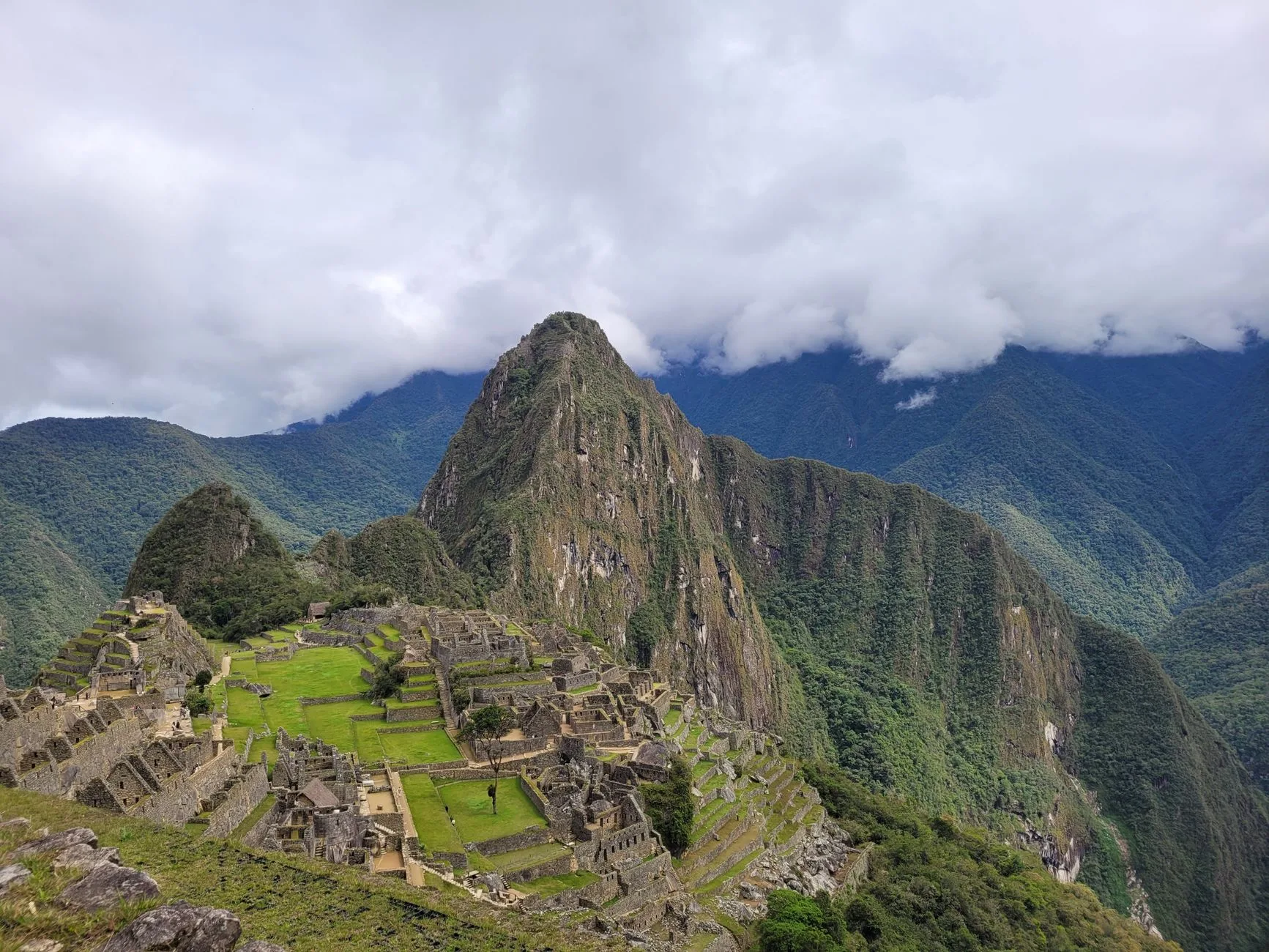
Photo by Laura Rudi on Pexels
The market in San Camilo, Arequipa, opens before the mist burns off the volcano above it. Women in white aprons stack rocoto peppers into pyramids, blend tumbo juice to order, and sell queso helado — a frozen cinnamon-and-coconut cheese that has nothing to do with cheese and everything to do with breakfast. A bowl of chupe de camarones costs less than three soles more than a coffee would in Cusco’s Plaza de Armas, and no one here is selling you a photo with a llama.
Cusco and Machu Picchu deserve their reputation, but they’ve also become Peru’s most expensive square mile — entrance fees, inflated hostel rates, agencies competing to upsell the same four-day trek. Peru is a country roughly the size of France and Spain combined, with a coastline, three mountain ranges, and a chunk of the Amazon basin larger than most countries outright. Spend a week outside the Sacred Valley and the budget maths changes completely, along with the crowds.
Arequipa and the Colca Canyon: the Sacred Valley’s quieter cousin
Arequipa is built from sillar, a pale volcanic stone that gives the whole historic centre — a UNESCO World Heritage Site — a washed, luminous quality at sunset. Dorm beds in the San Lázaro neighbourhood run $8–12 a night, and a set lunch (menú del día) of soup, a main, and juice costs 10–15 soles almost anywhere off the main square.
From here, the Colca Canyon is the budget alternative to a Sacred Valley day trip, and arguably more dramatic — twice the depth of the Grand Canyon at points, with Andean condors riding the thermals at Cruz del Cóndor most mornings between 8 and 10am. Colectivo vans to Chivay leave from Terminal Terrestre for around 15–20 soles; from Chivay, a two-day trek down into the canyon to Sangalle (the “oasis,” with palm trees and cold-water pools) and back up the other side costs little beyond basic guesthouse stays of $5–7 a night, if you’re comfortable navigating the trail without a guide — it’s well-marked, but the final ascent is a genuine 1,000-metre grind, best started before sunrise.
Huaraz and the Cordillera Blanca: trekking without the Inca Trail queue
Huaraz sits at 3,050 metres in the Callejón de Huaylas, a scruffy, functional town that exists almost entirely to service trekkers heading into the Cordillera Blanca — the highest tropical mountain range on earth, with over 30 peaks above 6,000 metres. Unlike the Inca Trail, there’s no permit lottery and no requirement to book months ahead.
The Santa Cruz trek (four days, around 50km, topping out at the 4,750-metre Punta Union pass) can be done independently for the cost of food, a tent, and a modest arriero fee if you hire a mule to carry gear — typically $10–15 a day all-in if self-organised, versus $180–250 for a guided package from a Huaraz agency. The Laguna 69 day hike, a turquoise glacial lake at 4,600 metres reached via a punishing but short ascent from Cebollapampa, can be done as a long day trip by colectivo for under $15 including the Huascarán National Park entrance fee. Altitude is the real cost here, not money — spend two or three nights in Huaraz acclimatising before attempting anything above 4,000 metres, and budget a rest day if you’re coming straight from sea level.
Lake Titicaca from Puno: homestays, not just a photo stop
Puno gets dismissed as a one-night stopover between Cusco and Bolivia, which undersells it. The floating Uros Islands are the postcard image, but the more substantial experience is a homestay on Isla Amantani or Isla Taquile, both a 2.5–3 hour boat ride from Puno’s harbour (around 25–35 soles return). Amantani families host overnight stays for roughly $20–25 including meals — usually quinoa soup, lake trout, and potatoes grown on the island’s terraced slopes — and often invite guests to a Friday or Saturday night dance wearing borrowed traditional dress, which is more fun and less contrived than it sounds.
Puno itself has solid budget accommodation (dorms from $7) and is the jumping-off point for the Bolivian border crossing at Yunguyo-Copacabana, a straightforward land crossing that connects onward to La Paz — useful if Titicaca is one stop on a longer Andean route.
Chachapoyas and Kuelap: the north most travellers skip
Northern Peru barely registers on most itineraries, which is precisely the point. Chachapoyas, reached by a 10–12 hour overnight bus from Chiclayo (itself connected to Lima by coastal bus routes), is the base for Kuelap — a pre-Inca fortress city built by the Chachapoya culture, with walls up to 20 metres high enclosing hundreds of circular stone dwellings. It predates Machu Picchu by centuries and receives a fraction of the visitors. A cable car (the teleférico) now covers the steepest part of the ascent for around 20 soles round trip, cutting what used to be a multi-hour climb to 20 minutes.
Nearby, the Gocta waterfall — one of the tallest in the world, though its exact ranking is disputed — is reachable via a half-day hike from the village of Cocachimba. Chachapoyas has no five-star infrastructure and that’s part of its appeal: guesthouses run $8–10 a night, and the region remains one of Peru’s best value stops precisely because it requires effort to reach.
The desert coast: Huacachina, Paracas, and skipping the Nazca flight
South of Lima, the Pan-American Highway cuts through genuine desert, and Huacachina — an actual oasis town built around a natural lagoon, ringed by towering dunes — makes a worthwhile two-day stop en route to Arequipa. Dune buggy and sandboarding trips cost $15–20 for a sunset run, and hostels around the lagoon run $10–15 with pools that feel essential in the heat.
Paracas, an hour further south, offers a far cheaper alternative to the famous Nazca Lines overflight (which runs $80–100 and has a history of safety concerns worth researching before booking). A boat trip to the Islas Ballestas — sometimes called the “poor man’s Galápagos” for their sea lion colonies, Humboldt penguins, and dense seabird populations — costs around 40–50 soles and takes two hours.
Getting around: buses, not flights
Peru’s long-distance bus network is extensive and, on the main routes, genuinely comfortable — reclining “cama” seats, onboard meals, and security that rivals budget airlines for a fraction of the price. Cruz del Sur and Oltursa serve the main coastal and southern routes with the most reliable safety records; Movil Tours covers the Lima–Huaraz and Chiclayo–Chachapoyas routes well. For a broader sense of how bus travel works across the continent, including what to expect from overnight services and border logistics, it’s worth reading a dedicated guide to bus travel in South America before building a route.
| Region | Best for | How to get there | Typical daily budget |
|---|---|---|---|
| Arequipa & Colca Canyon | Canyon trekking, colonial architecture | Bus from Cusco (10–11 hrs) or flight | $20–30 |
| Huaraz & Cordillera Blanca | High-altitude trekking | Bus from Lima (7–8 hrs) | $20–35 |
| Puno & Lake Titicaca | Homestays, island culture | Bus from Cusco (6–7 hrs) or Arequipa | $20–30 |
| Chachapoyas & Kuelap | Pre-Inca ruins, far fewer crowds | Overnight bus from Chiclayo (10–12 hrs) | $15–25 |
| Huacachina & Paracas | Desert, wildlife boat trips | Bus from Lima (3–4 hrs to Ica) | $20–30 |
Money, altitude, and the small print
Peru runs on cash more than cards outside Lima and Cusco — carry soles in small denominations, since street vendors and rural buses rarely break anything larger than a 20. ATMs (BCP and Scotiabank are reliable) charge withdrawal fees on top of your home bank’s, so fewer, larger withdrawals work out cheaper. Altitude sickness is a real consideration across the highland routes above — Puno, Cusco, and Huaraz all sit above 3,000 metres, and soroche (as it’s known locally) doesn’t discriminate by fitness level. Coca tea is the standard remedy, acetazolamide the more medical one, and simply slowing down for the first 48 hours the most reliable.
Food safety is generally good if you eat where there’s turnover — a packed picantería at lunchtime is a safer bet than an empty one at 4pm. Ceviche is a lunch dish for a reason: freshness matters, and most reputable places stop serving it by early afternoon.
The Bottom Line
- Arequipa and the Colca Canyon deliver a Sacred Valley-level experience — canyon, condors, colonial stone — at roughly two-thirds the cost and a fraction of the crowds.
- Huaraz rewards travellers willing to acclimatise properly; the Cordillera Blanca offers trekking on par with the Inca Trail without permits, lotteries, or the price tag.
- Chachapoyas is the most logistically demanding destination here — long overnight buses, limited infrastructure — and also the one most likely to feel genuinely uncrowded.
- Build in altitude buffer days wherever your route crosses 3,000 metres; it costs a day, not money, and ignoring it costs both.
- None of this requires abandoning Cusco and Machu Picchu — it’s a case for treating them as one stop in a much larger country, not the whole trip.
Keep reading: Budget travel in Peru beyond Machu Picchu guide