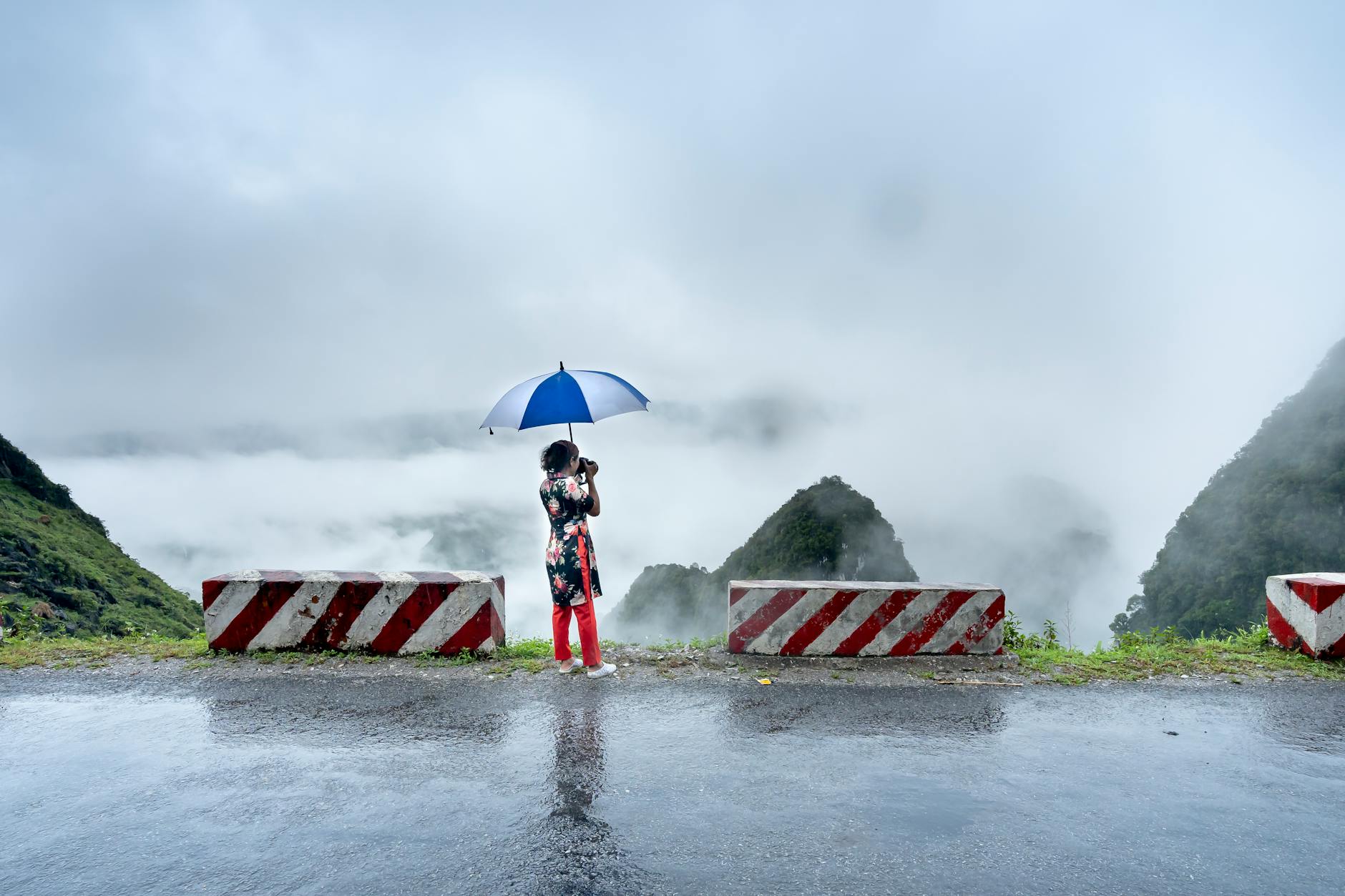
Photo by Quang Nguyen Vinh on Pexels
Solo travel anxiety: how to manage fear of the unknown
You’re sitting in Chiang Mai’s Nimman Road area at 7am, nursing a glass of cold Thai iced tea at a plastic table outside a noodle stall. The khao tom — rice soup with ginger and a soft-boiled egg — costs 50 baht. You ordered it by pointing. Nobody cared that you got it slightly wrong. The city is already warm, already loud with scooters and monks heading back from alms rounds, and you are, against all earlier predictions, completely fine.
That moment doesn’t arrive on day one. It usually arrives on day three, once the noise in your head quiets enough to actually hear the city. Solo travel anxiety isn’t irrational — it’s a reasonable response to genuine uncertainty. New transport systems, unfamiliar food, no buffer between you and whatever goes wrong. The goal isn’t to eliminate the anxiety. It’s to shrink the unknown into something navigable.
Here’s how to do that, with specifics.
Start with a forgiving city, not a proving ground
The first destination choice matters more than people admit. Picking somewhere logistically complex — say, a rural homestay in northern Albania with no English signage and cash-only everything — for your first solo trip is not brave. It’s unnecessary. Start somewhere with a visible solo traveller infrastructure, reliable transport, and a hostel culture that makes meeting people easy if you want company.
Chiang Mai, Thailand remains one of the most practical entry points for nervous solo travellers. The old city neighbourhood (inside the moat) has a dense cluster of mid-range guesthouses from around 400–600 THB/night (roughly £9–13). Transport around the city costs under 100 baht by red songthaew shared truck. The food scene on Saturday Walking Street in Wualai Road is manageable and cheap — pad see ew, mango sticky rice, sai oua (northern pork sausage with lemongrass). English is functional everywhere tourists go. You can be completely self-sufficient without speaking a word of Thai, but you’ll learn a few anyway.
Alternatives worth considering: Porto, Portugal (metro system is cheap and clear, Bairro Miguel Bombarda neighbourhood for food and people-watching, pastel de nata from Confeitaria do Bolhão on Rua Formosa); Medellín, Colombia (El Poblado neighbourhood, metro + cable car system is one of the most useful in South America, safe if you stay aware, strong hostel community at places like Casa Kiwi).
Manage the pre-departure spiral specifically
Most solo travel anxiety peaks in the two weeks before departure, not during the trip itself. The fear is abstract then — it feeds on worst-case scenarios rather than actual problems to solve.
Counter it with specificity. Open the map. Find the street your guesthouse is on. Know which bus or train goes from the airport into the city (in Chiang Mai, that’s the airport bus AE1 to the city, around 20 THB, or a metered taxi for 150–200 THB). Name three things you’ll eat in the first 48 hours. This isn’t toxic positivity — it’s replacing a vague dread with a concrete plan.
Lonely Planet’s guide to solo travel safety is worth reading for its honest breakdown of documentation and emergency contacts. Print one physical copy of your accommodation address in the local script for the first night. That alone removes one specific fear.
Build a manageable daily structure
The most disorienting part of solo travel isn’t danger — it’s unstructured time. Full days with no fixed points can feel heavy, especially in the first 48 hours before you’ve found your rhythm.
Use a loose framework: one activity that requires you to leave the guesthouse before 10am (a market, a walk, a coffee at a specific café), one meal at a place you’ve identified in advance, one completely unplanned afternoon. This isn’t a rigid itinerary. It’s enough structure to get you out of bed and into the texture of a place.
In Medellín, that morning activity might be taking the Metrocable Line K from Acevedo metro station up to Parque Arví — a forested park in the mountains above the city. Return ticket is around COP 9,000 (roughly £1.70). The journey itself is the point. An hour in the air above a city you’re still figuring out, watching it get smaller below you.
Know the difference between anxiety and a genuine red signal
This is the distinction that matters most. Anxiety tells you that the taxi driver looks suspicious, that the hostel dorm feels dangerous, that the street is too quiet. Most of the time, anxiety is pattern-matching incorrectly — applying a threat response to situations that are simply unfamiliar.
A genuine red signal is different: someone is following you, someone is asking for your passport on the street, a situation is escalating. The UK Foreign, Commonwealth & Development Office travel advisories are worth checking before you travel — not to scare yourself, but to know the actual risk profile of a place rather than the imagined one.
Trust your gut, but audit your gut. Ask yourself: is this uncomfortable because something is wrong, or because it’s new? If the answer is “new,” walk towards it.
The practical toolkit: what actually helps
These are not abstract suggestions.
- A local SIM on day one. In Thailand, AIS or DTAC sell tourist SIMs at the airport for around 300 THB for 15 days of data. Having maps and translation offline-capable is worth more than any guidebook.
- Google Translate’s camera function. Point it at a menu and read it. Imperfect, useful.
- One fixed daily check-in. Tell someone at home when you’ll message them each day. Not for safety theatre — for the psychological anchor of knowing someone expects to hear from you.
- Book the first two nights. Not the whole trip. Just enough that you’re not searching for accommodation when you’re jet-lagged and overwhelmed.
- Sit at the bar or communal table. In hostels, food halls, even local restaurants. Proximity creates conversation without demanding it.
Starter destinations compared
| Destination | Approx. daily budget (budget travel) | English spoken? | Solo traveller infrastructure | Difficulty level |
|---|---|---|---|---|
| Chiang Mai, Thailand | £20–30 | Widely in tourist areas | Very high | Low |
| Porto, Portugal | £45–65 | High | High | Low |
| Medellín, Colombia | £25–40 | Moderate in hostels | High | Low–Medium |
| Tbilisi, Georgia | £20–35 | Moderate | Medium | Medium |
| Hội An, Vietnam | £15–25 | High in tourist areas | High | Low |
Budget figures include accommodation, food, local transport. Excludes flights and alcohol.
The Bottom Line
- Choose your first destination strategically. A forgiving city with good infrastructure and a hostel culture isn’t settling — it’s building a foundation. Chiang Mai and Porto are genuinely excellent starting points,