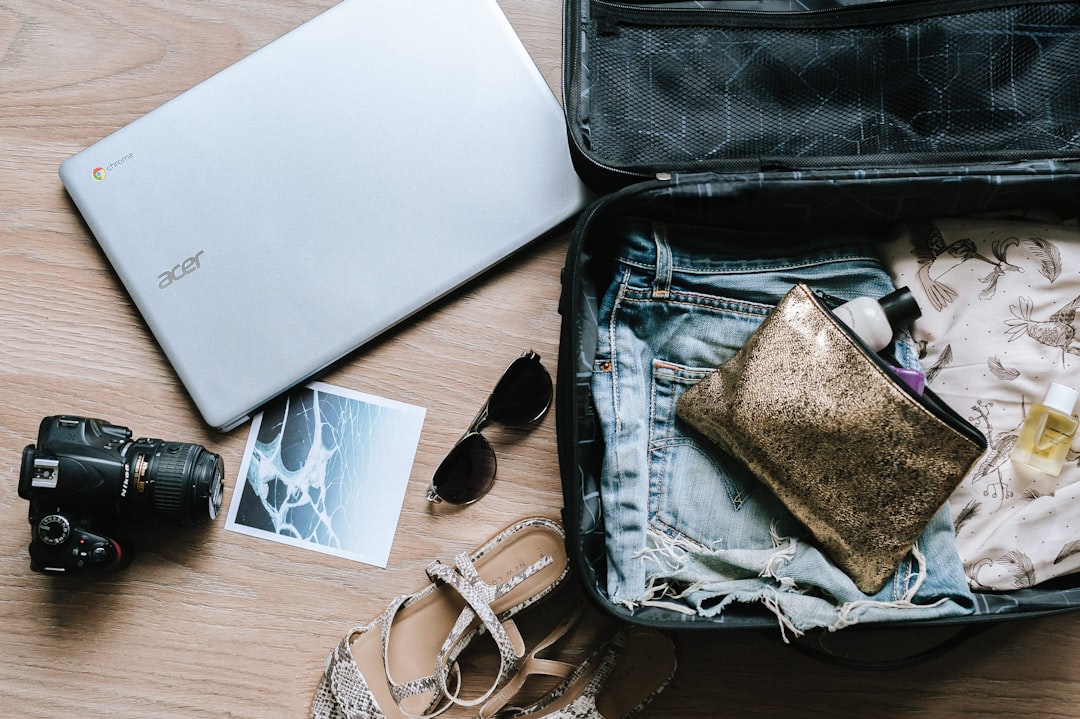
Photo by Anete Lūsiņa on Unsplash
Packing for Six Months in a Carry-On Backpack: What Actually Fits
The Osprey Farpoint 40L backpack sits next to the scale at 1.8kg empty. Your six months of life needs to fit inside with room to spare — total weight target is 6–7kg. This means every item must justify its existence. You need clothes for hot and cold climates, shoes that work for urban walking and light hiking, hygiene items, electronics, and not much else. Most people pack 2–3 times more than this and regret half of it. Here’s what actually works.
The constraint of a 40L backpack is the forcing function. It prevents you from overpacking because physically, you can’t fit more. The discipline is built in. Six months is long enough that you’ll do laundry, so you don’t need 30 days of clothing — you need 5–7 days and the ability to wash.
The Pack: Osprey Farpoint 40L
Weight empty: 1.8kg
Dimensions: 55cm height, 33cm width, 23cm depth
Airline carry-on compliance: Yes (most airlines; check your carrier)
Durability: Five-plus years of heavy travel
Cost: 180–220 USD
The Farpoint 40 is the standard carry-on trekking pack. It’s designed for this exact purpose — long-term travel without checking bags. The main compartment is accessible from the back, the front pocket has organization, and there’s a detachable daypack (which you’ll use constantly). The hip belt actually works and distributes weight properly so you can wear it for hours without shoulder pain.
Alternatives: Peak Design Travel Backpack 45L (smaller front opening, slightly better organization, more expensive), Patagonia Black Hole 55L (overkill for 6 months, designed for expedition support), or cheaper packs (less comfortable, fail faster).
Internal organization: Use packing cubes to separate clothing (one for base layers, one for warm clothes, one for toiletries, one for electronics). This lets you find items without unpacking everything. Buy small — 5–7 litre cubes, not massive ones.
The Clothing: Capsule Wardrobe for Hot and Cold
You need clothes for hot weather (tropical heat, 30°C+) and cool weather (mountains, temperate zones, altitude, 5–15°C). You need urban clothes (walking cities) and rougher clothes (trekking, unpredictable conditions). You need one outfit that’s acceptable in more formal contexts (restaurants, temples, situations where dress codes matter).
The list (total weight, ~2.5kg for clothing):
Base layers (wearing against skin, fast-drying, merino wool preferred):
– 2 merino wool t-shirts (150–200g/shirt, $40–60 each)
– 1 merino wool long-sleeve shirt (lightweight, for sun protection and cool evenings)
– 3 merino wool underwear or synthetic boxers ($15–25 each)
– 1 merino wool bra (if applicable, $40–60)
Total: ~1kg, ~$250
Merino wool reasoning: It doesn’t smell (even after days of wearing), it regulates temperature (warm when cold, cool when hot), it dries faster than cotton. This is worth the upfront cost because you’ll hand-wash clothes in hostel sinks, and merino dries overnight instead of taking 2–3 days.
Warm layer (for cool climates, altitude, air-conditioned spaces):
– 1 lightweight down jacket or fleece hoodie (200–300g, $60–120)
This is the item that makes six months possible across seasons. A down jacket packs to the size of a water bottle and provides legitimate warmth in 5–15°C conditions.
Pants and shorts:
– 1 pair of hiking/travel pants (quick-dry nylon, convertible to shorts if possible, 300–400g, $50–80)
– 1 pair of jeans or chinos (denim is heavy and slow to dry, but sometimes socially necessary; 500–600g, $30–80)
– 1 pair of shorts (quick-dry, 100–150g, $20–40)
– 1 pair of lightweight thermal leggings (if you go to cold places, 200–250g, $30–50)
Total: ~1.5kg for 4 bottoms
Shoes (heaviest items, so choose carefully):
– 1 pair of walking shoes or lightweight hiking boots (merino wool socks included, 600–700g per pair, $80–150)
– 1 pair of sandals or water shoes (lightweight, 200–300g, $20–40)
– 1 pair of minimal “dressier” shoes if you’ll encounter formal situations (flip-flops count, 100g, $10)
Total: ~1.2kg
One “nicer” outfit (for temples, formal restaurants, situations where casual clothes are inappropriate):
– 1 lightweight button-up shirt or blouse (merino wool or quick-dry cotton, 150g, $30–50)
– 1 skirt or pair of chinos (lightweight, 200–300g, $20–50)
This outfit, combined with your cleanest underwear and one of your regular t-shirts, works for dressing up. It’s not glamorous but it’s presentable.
Underwear: 7 pairs of merino wool or synthetic (daily wear + laundry day). Merino doesn’t need washing as frequently; synthetic dries faster. Cost: $15–25 per pair.
Socks: 4 pairs of merino wool hiking socks (thin weight), 1 pair of thermal socks if going to cold places. Total: 150g, $40–60.
Hat/sun protection:
– 1 lightweight cap or wide-brimmed hat (50–100g, $15–25)
– 1 light scarf (multipurpose: sun, cold, cultural dress code, 100g, $10–15)
Total clothing package: ~2.5kg, ~$900–1,200 (including shoes). This seems expensive upfront but the items last years and you’re wearing them constantly. It’s an investment, not a cost.
Toiletries: What to Bring, What to Buy
Toiletries take up minimal weight if you’re strategic. You can buy most things anywhere. Bring only what’s hard to find or essential.
What to bring (~400g total):
– Merino wool underwear acts as deodorant (you don’t need chemical deodorant if your base layers don’t hold smell)
– Toothbrush and small container of toothpaste (20g, $3)
– Dental floss (5g, $2)
– Small bar of soap (50g, $2) — use for body and hands
– Shampoo bar or solid shampoo (50g, $5–8) — lasts longer and weighs less than liquid
– Small container of moisturizer (30g, $3–5)
– Sunscreen if sensitive to sun (ideally buy locally, ~50g, $5–8)
– Hair tie or clips if you have long hair (5g, $1)
– Small nail clipper (10g, $2)
– Three days of medications if you take them regularly (vary, bring extras)
– Feminine hygiene products if needed (or buy locally; usually available)
What to buy locally:
– Full-size toothpaste (every 2–3 months)
– Shampoo and body wash if you prefer liquid
– Deodorant if you want it
– Razors and shaving cream
– Acne products or specific skin care
– Sunscreen (if you bought more)
Buying locally saves weight and money (especially toiletries are cheap in most countries). Most cities have pharmacies or supermarkets.
First aid: A small pack (100g): pain reliever, anti-diarrhea, anti-nausea, antibiotic cream, adhesive bandages. Malaria/dengue prevention pills if needed for your destinations (buy before departure, not locally).
Total toiletries: ~500g, ~$50 initial + $20–30 per month for replenishment.
Electronics: What You Actually Need
Backpack power system (~500g including charging):
– 1 USB power bank (20,000–30,000 mAh, 300g, $20–40)
– 1 fast charger with multiple USB ports (60–80g, $15–30)
– 1 universal power adapter with USB ports (40g, $15–25)
Devices:
– 1 smartphone (bring one you own, don’t buy a new one for travel, ~200g)
– 1 lightweight laptop if you need it for work (Macbook Air: 1.24kg; if this exceeds your budget, use your phone only)
Cables (minimal):
– 2 phone charging cables (both USB-C, micro-USB, or Lightning depending on your phones, 50g total, $5)
– 1 headphone cable if you use wired headphones ($2)
– 1 cable organizer (20g, $3)
Optional electronics:
– E-reader (Kindle, 170g, nice for reading but not essential) — use your phone instead if weight is critical
– Camera (if photography is essential to you; otherwise your phone works; 300–500g+, $200+)
Total electronics: ~1kg without laptop, ~2.2kg with laptop. Weight decision: if you don’t absolutely need a laptop, leave it behind. Your phone handles email, messages, photos, and navigation.
Miscellaneous: The Remaining Items
Documents and money (~50g):
– 1 small notebook and pen (for addresses, notes, translation help; 30g, $3)
– Copies of important documents (passport, insurance, vaccination records; photocopies weigh nothing)
– Emergency cash in multiple currencies if going to remote places (or ATM access is fine)
Repair/maintenance (~150g):
– Small sewing kit (15g, $2)
– Duct tape (small roll, 20g, $2)
– Scissors (small, 20g, $3)
– Quick-dry fabric patches or leukotape for blister prevention (30g, $5)
– Super glue (5g, $1)
– Extra shoelaces (10g, $1)
Laundry (~50g):
– Laundry detergent sheets (10–15 sheets, 30g, $3–5) — easier than powder, lighter than liquid
– Clothesline and clothespins if you’ll hang-dry (30g, $5) — or just use your backpack and window edges
Other (~100g):
– Reusable water bottle (300–400g if you have one, but hostels usually have tap water; buy locally if needed, $5–10)
– Ziploc bags (few small ones for wet/dirty items, 10g, $1)
Packing Strategy: How It Actually Goes in the Bag
- Bottom: Shoes (outside in shoe compartment or bottom corners). Rolled jeans or heavy items.
- Main compartment: Packing cubes with clothing, organized by type (base layers, warm clothes, bottoms). Leave some empty space for souvenirs or items you buy.
- Front pocket: Toiletries, electronics cables, repair kit, notebook.
- Side pockets: Water bottle (if you have one), small items you’ll access during the day.
- Detachable daypack: Use this for daily walking — it carries water, sunscreen, phone, maybe a light jacket.
The key is organization. Everything should have a place so you don’t dig through the entire pack to find something.
What To Wear During Travel Days
You’ll spend some time in transit. Wear the most comfortable clothes:
– Your walking shoes (or sandals for short flights)
– Lightweight pants or shorts
– One of your regular t-shirts or the merino wool long-sleeve (sun protection on planes)
– The light scarf (neck support, blanket substitute)
You’ll spend 15–20% of your six months in transit (planes, trains, buses). Comfort matters.
The Weight Test: Getting to 7kg
Empty pack: 1.8kg
Clothing: 2.5kg
Shoes (in pack): 1kg
Electronics: 1kg
Toiletries: 0.5kg
Everything else: 0.7kg
Total: 7.5kg
This is tight but achievable. If you exceed it:
– Remove one clothing item (do fewer in-place laundries)
– Buy a lighter backpack (Peak Design is lighter than Osprey by 100–200g)
– Skip the laptop (saves 1.2kg)
– Use your phone instead of an e-reader
What You’ll Actually Buy While Traveling
Six months is long enough that you’ll buy things:
– Clothing replacements if something fails or you find something better (50–100 USD)
– Books in English (if you read; 10–20 USD per book, maybe 3–4 total)
– Local souvenirs or gifts (100–300 USD depending on culture and how much you shop)
– Technical gear if you discover you need it (extra charging cable, new shoes, etc.)
Leave 10–15% of your backpack space free for these items. Everything that comes in needs something to come out (give away to hostels, donate, leave behind).
The Philosophy: Why This Matters
Packing light isn’t about minimalism as virtue. It’s practical:
– You move faster (airport stress, bus loading, train station searching)
– You carry less (shoulders, back, joints don’t suffer)
– You’re less a target for theft (small backpack is less noticeable than a massive rolling luggage)
– You stay flexible (you can take transit that big luggage won’t fit, hike with your full pack if needed)
– You buy less because you have nowhere to put it (financial discipline)
Six months with a 40L pack is normal. Many long-term travellers do it. The constraint forces intentionality — every item needs to justify its weight.
The Bottom Line
Spend $1,000–1,500 upfront on a good pack and quality merino wool clothing. This is an investment that enables six months of travel without checking bags. Use a 40L backpack (Osprey Farpoint). Stick to 7kg total weight. Wear merino wool because it doesn’t smell, dries fast, and temperature-regulates. Do laundry weekly. Buy most toiletries locally. Leave your laptop unless you absolutely need it. The result is that you carry everything you need, move freely, and can travel by any transport method for six months without the burden of luggage.