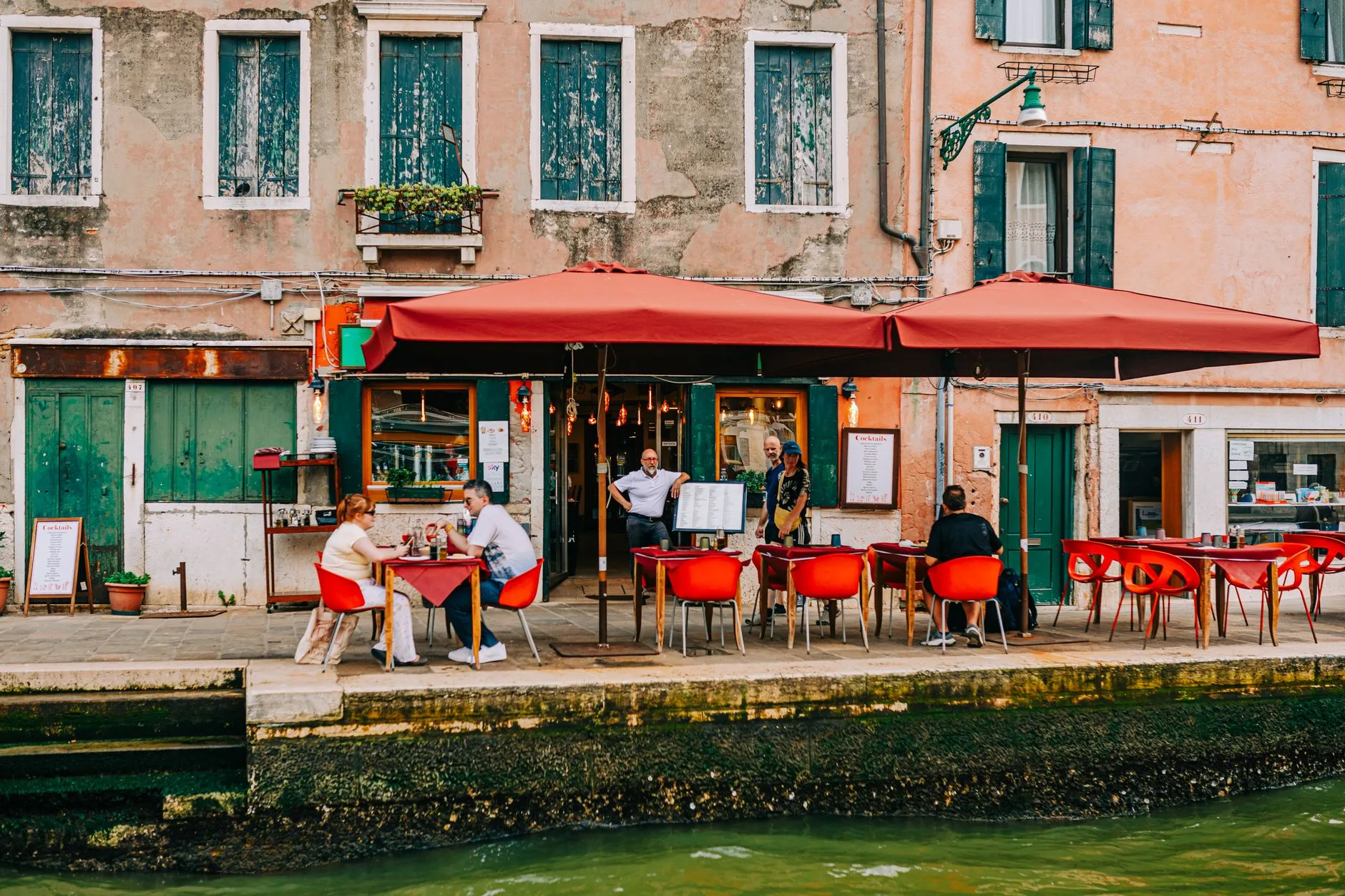
Photo by Helena Jankovičová Kováčová on Pexels
It’s 7:40pm in Palermo’s Ballarò market, and the stalls are closing but the real business is just starting. A folding table appears outside a shuttered butcher shop. A woman starts frying panelle in a blackened pan balanced on a gas ring. There’s no sign, no menu, no chairs — just a queue of people who live in the neighbourhood, waiting for chickpea fritters wrapped in paper, eaten standing up, for two euros. Twenty metres away, a restaurant with laminated photos of pasta and a tout on the door is empty except for two confused-looking tourists studying a menu printed in six languages.
This is the split you’ll find in almost every city that gets visitors: one economy that exists to look like local food, and one that actually is local food. The second one is rarely hidden on purpose — it’s just not built for people who don’t already know where to look. Finding it isn’t about luck or a secret app. It’s a set of habits, and they work whether you’re in Palermo, Phnom Penh, or Puebla.
Walk Away From the Postcard Streets
The single most reliable rule: restaurant quality is usually inversely proportional to proximity to a major monument. Streets facing cathedrals, main squares, and famous viewpoints pay astronomical rent, which they recoup through high turnover, laminated menus, and photos of food that looks better than it tastes. This isn’t a moral failing on their part — it’s just economics. A restaurant that needs to seat 200 tourists a day to cover its lease has different incentives than one feeding the same 40 regulars every week.
The practical fix is simple: once you’ve seen the landmark, walk two to three streets back — not two to three kilometres, just enough to get off the direct sightline. In Rome, that means leaving the streets immediately around the Trevi Fountain and heading into Monti or the quieter edges of Trastevere past Piazza San Cosimato. In Bangkok, it means stepping off Khao San Road and into the sois of Banglamphu, where the noodle carts serve the same dish for a third of the price with none of the tout. This buffer zone — close enough to walk, far enough to lose the crowds — is where a huge percentage of genuinely good, reasonably priced food lives.
Read the Room, Not the Menu
Before you read a single dish, read the restaurant itself. A few honest signals, learned the hard way over years of both good meals and bad ones:
- A short, handwritten or chalkboard menu usually means the kitchen is cooking a small number of dishes well, often based on what came into the market that morning. A menu running to four pages with sushi, pizza, and tacos on it is cooking nothing well.
- Locals eating alone at odd hours. Someone eating solo at 2:30pm on a weekday, reading a newspaper or scrolling their phone without urgency, is a regular. Regulars don’t tolerate mediocre, overpriced food — they have too many other options nearby.
- No one outside trying to get your attention. Restaurants confident in their food don’t need a host physically stepping into your path. Touting is a symptom of a place that needs volume to survive, not word of mouth.
- The smell before you see the menu. If you can smell char, garlic, spice, or broth from the street, the kitchen is active and cooking to order. A restaurant that smells like nothing is often reheating.
None of these are absolute — a touristy spot can occasionally still be good, and a quiet local spot can be quiet because it’s simply mediocre. But stacked together, they’re a far better filter than star ratings.
Go Where the Ingredients Are
Markets are the most efficient shortcut to good food anywhere in the world, because they compress the entire local food economy into one place: what’s in season, what people actually cook with, and — often — where to eat it immediately. This is doubly true in cities where market culture is central to daily life, like the wet markets of Southeast Asia or the food markets scattered across European cities, where produce stalls sit metres from counters serving that same produce cooked.
In Mexico City, the Mercado de San Juan and Mercado Medellín both function this way — walk past the fruit and meat vendors and you’ll find comedores (small eating counters) tucked into corners, serving whatever’s fresh that day for a fraction of restaurant prices. In Hanoi, Chợ Đồng Xuân operates similarly, with pho stalls fed directly by the market’s meat and herb sellers. If you want a structured approach to this kind of eating — including hygiene basics and how to order when there’s no English menu — it’s worth reading up on eating at local markets in Southeast Asia before you go, since the etiquette (queueing, paying, what to point at) varies more than people expect.
Ask People Who Aren’t Selling You Anything
The most consistently useful recommendations come from people with nothing to gain from the answer. A hotel concierge often has a commission arrangement with certain restaurants — not always, but often enough that their enthusiasm should be weighed accordingly. A taxi or rideshare driver, a shopkeeper, or a hostel staff member off shift has no such incentive, and tends to answer honestly and specifically: not “there’s great food everywhere here” but “go to the place near the mosque that only does one dish, it’s better than anywhere fancy.”
A useful script, adaptable anywhere: “If you were hungry right now and not at work, where would you go?” This reframes the question away from “best restaurant” (which triggers a generic, defensive answer) toward an honest, personal one. It works in taxis in Bogotá, in barbershops in Marrakech, in the small talk with a shopkeeper in Chiang Mai. People generally enjoy being asked this — it’s a compliment to their knowledge of their own city, not a request for tourist information.
Use Reviews Backwards
Review platforms aren’t useless, but most travellers use them the wrong way — sorting by star rating and picking the top result, which almost always surfaces the restaurants best optimised for reviews in English, not the ones locals actually rate. Two adjustments make them far more useful:
- Switch the app’s language to the local one, or at least read reviews written in it (translate if needed). A restaurant with 4.6 stars from 40 reviews in English and 4.3 stars from 900 reviews in the local language is telling you something — the second number is the honest one.
- Sort by “most reviewed” rather than “highest rated” in the local language, then read the three-star reviews specifically. Five-star reviews are often written in a rush of goodwill; three-star reviews tend to be specific and useful (“good food, but go early, they run out of the stew by 1pm”).
Timing Changes Everything
The best version of a dish is frequently available for a narrower window than visitors assume, and arriving at the wrong hour is one of the most common reasons people end up disappointed by food that locals rave about. Birria in Tijuana is best in the morning, when the broth hasn’t been topped up all day. Dim sum in Hong Kong’s older teahouses, like Lin Heung Tea House in Sheung Wan, is a different, better experience before 10am, when trolleys are freshly loaded rather than picked over. Bakeries selling börek in Istanbul’s Fatih district sell out of the good pastries by mid-morning. If a dish has a reputation, it’s worth asking specifically when it’s cooked, not just where.
| Method | Best for | Time investment | Reliability |
|---|---|---|---|
| Walking 2–3 streets off major landmarks | Any city with a tourist centre | Low (10–15 min detour) | High |
| Markets and food stalls | Cities with strong market culture (Mexico City, Hanoi, Marrakech) | Medium | High |
| Asking drivers/shopkeepers | Anywhere, especially smaller towns | Low | Medium–High |
| Local-language reviews, sorted by 3-star | Cities with active local review culture | Medium | Medium–High |
| Timing meals around peak freshness | Dish-specific (birria, dim sum, bakery items) | Low, once known | High |
| English-language “best of” lists | Quick decisions, low effort | Low | Low |
Accept Some Meals Will Be Ordinary
Not every meal found this way will be extraordinary, and that’s worth saying plainly. Some markets have an off day. Some recommended spots have changed hands or gone downhill since your driver last ate there. This is part of eating the way people who live somewhere actually eat — the hit rate is higher than following crowds to landmark-adjacent restaurants, but it isn’t perfect, and treating an ordinary meal as a failure misses the point. According to Lonely Planet’s guidance on eating like a local, part of the value is in the texture of everyday food, not just the highlight reel. The BBC Travel food section has covered this repeatedly across different cities: the best food experiences are often the least photogenic ones.
This applies particularly in places where food culture is inseparable from daily rhythm rather than performance — smaller towns in southern Italy, market towns in rural Colombia, the back lanes of Chiang Mai far from the night bazaar. In these places, there often isn’t a “hidden gem” to find, because nothing was hidden — it simply wasn’t built with visitors in mind, which is exactly the point.
The Bottom Line
- Physical distance from major landmarks is still one of the best predictors of food quality and price — walk two or three streets back before deciding where to eat.
- Markets aren’t just for browsing; the stalls next to the produce sellers are often the most direct route to fresh, honestly priced food, especially across Southeast Asia and Latin America.
- Ask people with no commercial stake in your answer — drivers, shopkeepers, off-duty staff — using a specific, personal question rather than “what’s the best restaurant here.”
- Switch review apps to the local language and read the three-star reviews, not the five-star ones, for the most honest picture.
- Timing matters as much as location for dishes with a narrow freshness window — ask when something is cooked, not just where to find it.
- Expect some meals to be simply fine. That’s not a failure of method; it’s what eating the way a place actually eats looks like most days.
Keep reading: How to eat at local markets in Southeast Asia