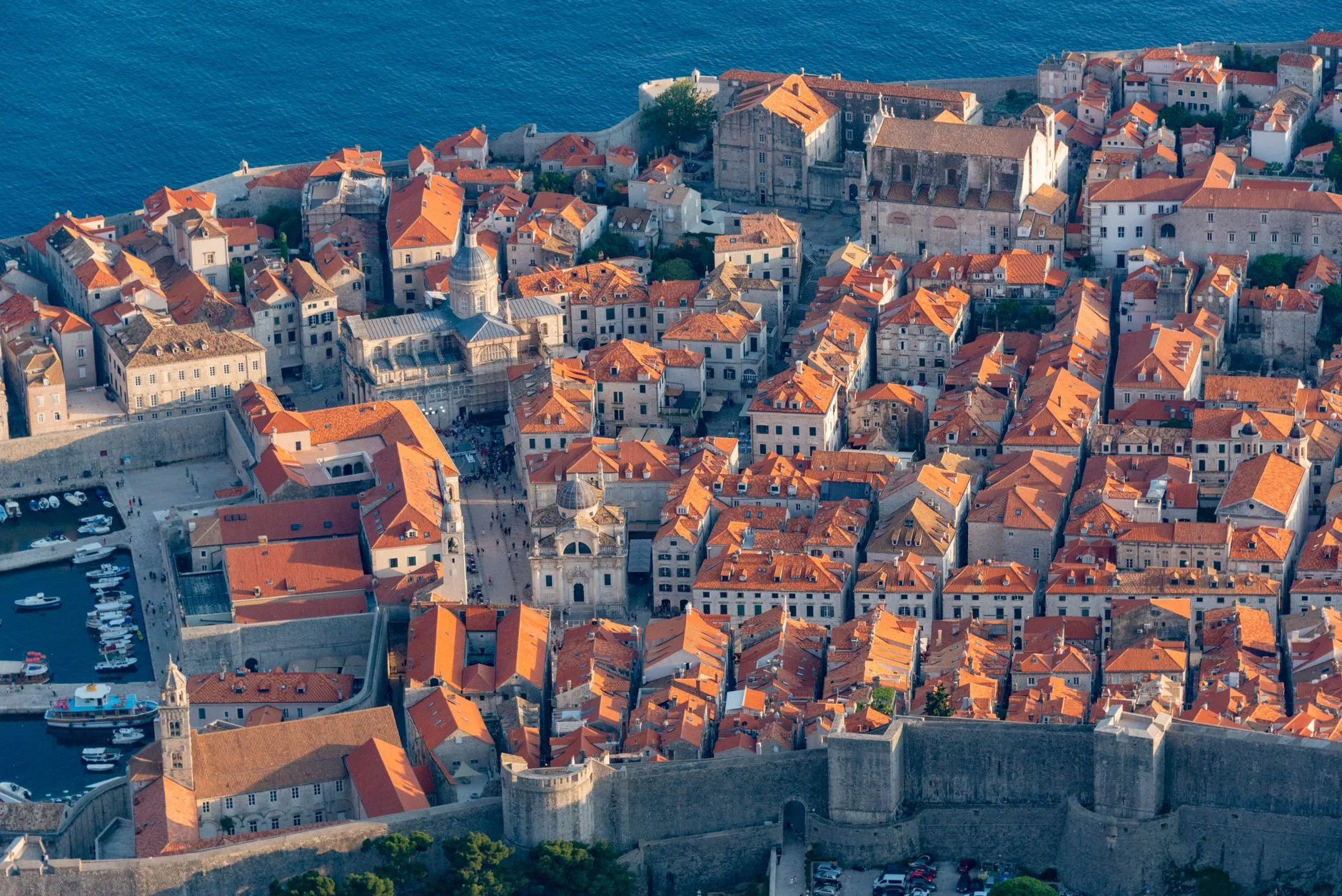
Photo by Diego F. Parra on Pexels
The ferry from Split to Vis leaves at 11:30 most mornings, and if you get there early enough you can watch the crew load crates of tomatoes and boxes of engine parts alongside the tourists’ wheeled suitcases. Two hours later, the boat rounds the headland into Komiža, a fishing town on the island’s western side where the harbour still smells more of diesel and salt than of sunscreen. Men in their seventies sit outside a konoba mending nets they clearly don’t need mending, and nobody is in any particular hurry to sell you anything.
This is the Croatia that exists past the cruise-ship gangways of the old town in Dubrovnik — a country of stone villages, working harbours, and a interior almost nobody photographs. Dubrovnik earned its fame honestly: the walls are extraordinary, and the Adriatic light does something to limestone that no filter can replicate. But it has also become a cautionary tale about what happens when a city of 40,000 residents hosts several million visitors a year, most of them for a single afternoon between cruise excursions. Slow travel in Croatia means going elsewhere, or at least going differently — trading the two-hour walk along the walls for a week spent learning the rhythm of somewhere smaller.
Why Croatia rewards a slower pace
Croatia’s coastline runs for over a thousand kilometres if you count every inlet, and it’s scattered with more than a thousand islands, of which only about fifty are inhabited. That geography makes it a poor fit for the highlight-reel approach — you cannot see “Croatia” in the way you can tick off a capital city, because the country’s character lives in the gaps between the famous stops: the interior of Istria, the smaller Dalmatian islands, the continental north that almost no coastal itinerary includes.
Slowing down here isn’t a moral position, it’s a practical one. Ferry schedules dictate your days whether you like it or not. Family-run konobas (taverns) cook what arrived at the market that morning, not what’s on a laminated menu. Towns like Hvar’s main harbour get loud and expensive in July and August, while the same island’s interior — the Stari Grad Plain, farmed continuously since the Greeks arrived in the 4th century BC and now a UNESCO World Heritage site — stays quiet enough to hear cicadas over your own footsteps.
Istria: hill towns, truffle country, and the quiet coast
Istria, the heart-shaped peninsula in Croatia’s northwest, works well as a first slow-travel base because distances are short and the pace is already unhurried. Base yourself in Rovinj’s old town for a couple of nights — its pastel houses stack up toward the Church of St. Euphemia in a way that photographs beautifully but is best experienced by simply getting lost in the alleys below it, where laundry lines cross overhead and cats outnumber people.
From there, head inland. Motovun sits on a hilltop above the Mirna valley, ringed by Venetian walls and, in autumn, by truffle hunters and their dogs working the oak forest below. The Zigante and Karlić truffle shops in town are tourist-facing, but the real experience is booking a hunt directly through one of the smaller family operations in nearby Livade — expect to pay €50–80 per person for a few hours in the woods followed by a truffle-heavy lunch. Grožnjan, a smaller hill town nearby, has reinvented itself as an artists’ colony; its cobbled lanes are lined with studios rather than souvenir stalls, and it’s worth an afternoon rather than a rushed hour.
Buzet, further north, calls itself the truffle capital and hosts a truffle festival each September that’s considerably less touristed than anything on the coast. Renting a car is close to essential for this inland route — buses connect the main towns but run infrequently, and the pleasure of Istria is stopping at whatever konoba or roadside olive oil producer catches your eye.
The islands beyond Hvar’s harbour
Hvar Town gets the reputation — yacht-heavy, expensive, loud into the small hours in summer — but the island’s interior is a different country. Take the bus or scooter inland to Stari Grad, the older and calmer of the island’s two main towns, and walk out onto the Stari Grad Plain, where stone walls still divide fields planted with grapes and olives in a pattern laid down over two thousand years ago.
Vis, an hour further by ferry from Split (or reachable directly from Split by catamaran, skipping Hvar altogether), was a closed military zone until 1989 and still feels lightly touched. Komiža and Vis Town are the two main settlements; the beaches at Stončica and the Blue Cave on the neighbouring islet of Biševo (reachable by small boat tours from Komiža) are worth the trip, but the real draw is the pace — long lunches of pogača (a savoury flatbread, often stuffed with anchovies and onion) and gregada, a slow-cooked fish stew, eaten without anyone checking a watch.
Korčula, further south, is often sold as “Dubrovnik lite,” but its old town — a smaller-scale grid of stone streets fanning out from the cathedral — deserves its own time rather than a day-trip glance. The village of Lumbarda, a short bus or bike ride away, has sandy beaches (rare in Dalmatia, where pebble and rock dominate) and small family wineries growing the indigenous Grk grape, sold mostly at the cellar door because it’s barely exported.
Zagreb and the continental interior
Most visitors treat Zagreb as a layover between the airport and the coast, which is a mistake if slow travel is the goal. The capital’s Dolac Market, just above the main square, is worth an early-morning visit for its rows of red umbrellas and farmers selling produce from the Zagorje hills — the sort of market scene that rewards wandering rather than checklist tourism (a habit worth cultivating anywhere, as explored in this guide to Europe’s best local food markets). The Tkalčićeva Street cafés fill up with locals over long coffees that stretch well past the point an espresso alone would justify.
From Zagreb, the Hrvatsko Zagorje region unfolds within an hour’s drive — a landscape of vineyard hills, small thermal spa towns, and hilltop castles like Trakošćan, with its lake and forested grounds. Further east, Slavonia rarely makes it onto any coastal itinerary, but Osijek’s riverside promenade along the Drava and the wetlands of Kopački Rit Nature Park (a serious birdwatching destination, with white-tailed eagles and herons among the regulars) offer a version of Croatia that has nothing to do with beaches.
Plitvice Lakes National Park, the country’s most visited inland site and a UNESCO World Heritage site since 1979, gets overwhelmed by day-trippers arriving on buses from the coast. Staying overnight nearby — in the village of Rastoke, with its own smaller cluster of waterfalls and watermills, or in one of the family guesthouses around the park’s northern entrance — lets you enter early, before the crowds, or in the late afternoon light after the tour buses have left.
Getting around without a rental car (mostly)
Croatia’s public transport rewards patience more than convenience. The coastal bus network, run by several regional operators, is reliable and reasonably priced but slow — the road hugs every inlet, so a journey that looks short on a map can take three or four hours. Trains are limited to the interior; there’s no coastal rail line at all, a legacy of the terrain rather than any oversight.
Ferries are the backbone of island travel, run primarily by Jadrolinija, and schedules thin out considerably outside the June–September season — some island connections drop to a couple of sailings a week in winter. Booking ahead in high season matters for car ferries; foot passengers can usually walk on, though queues at Split’s ferry terminal in August are genuinely unpleasant. If you’re comparing this kind of island-hopping logistics to somewhere more familiar, the patterns will feel similar to ferry travel in Greece — frequent short hops, seasonal timetables, and a fair amount of standing around in port.
| Region | Best season | Pace | How to get there | Highlight |
|---|---|---|---|---|
| Istria (Motovun, Rovinj) | May–June, September–October | Easy, car recommended | Fly to Pula, drive or bus inland | Truffle hunting, hill towns |
| Vis & Korčula | June, September | Slow, ferry-dependent | Catamaran/ferry from Split | Quiet beaches, family konobas |
| Hvar interior (Stari Grad) | May, September | Relaxed, walkable | Ferry from Split to Stari Grad | Ancient farmed plain (UNESCO) |
| Zagreb & Zagorje | Year-round, spring/autumn best | Urban, then rural | Fly or train to Zagreb, drive inland | Markets, castles, spa towns |
| Slavonia (Osijek, Kopački Rit) | April–June, September | Very slow, car needed | Train or drive from Zagreb (2–3 hrs) | Wetlands, riverside towns |
Eating well without a reservation
Croatian coastal food leans heavily on what the Adriatic and the hillsides provide that day: grilled fish sold by weight, black risotto (crni rižot) stained with cuttlefish ink, pašticada (a slow-braised beef dish marinated in wine and prunes, usually a Sunday or celebration dish in Dalmatia), and manestra, a hearty Istrian bean and vegetable stew closer to Italian minestrone than anything typically Balkan. Inland, expect more game, mushrooms, and the truffle-heavy dishes Istria has built its reputation on.
The honest advice: skip restaurants with laminated multilingual menus and photos of the food, especially near any harbour with cruise-ship traffic. Konobas without a sign in five languages, often a short walk from the waterfront rather than directly on it, are consistently better and considerably cheaper. Family-run agroturizmi (farm stays), especially common in Istria and the Zagorje, often serve set menus from their own produce and are worth booking a table at even if you’re not staying overnight.
When to go
July and August are Croatia at its most crowded and expensive — hotel prices along the coast can double, and popular ferry routes fill up. Late May through June and September through early October offer warm sea temperatures, functioning ferry schedules, and considerably thinner crowds; this is the sweet spot most seasoned visitors aim for. Winter along the coast is genuinely quiet, sometimes to the point that entire towns feel half-shuttered, though Zagreb’s winter markets and continental attractions run year-round regardless.
The Bottom Line
- Dubrovnik’s old town is worth seeing, but treat it as a single stop rather than the whole trip — the country’s more rewarding version of itself lives in Istria’s hill towns, the smaller Dalmatian islands, and the continental interior around Zagreb and Slavonia.
- Build slack into any itinerary that involves ferries; Croatia’s island-hopping runs on its own schedule, and treating it like a European train network will only cause frustration.
- A rental car earns its cost in Istria and the continental interior, where bus connections are sparse; on the islands, walking, cycling, or the local bus is usually enough.
- Shoulder season (late May–June, September–early October) delivers nearly everything peak summer does, at a fraction of the crowd and cost.
- If slow travel across Europe more broadly appeals, Croatia sits comfortably alongside other countries built for a wandering, unhurried pace rather than a checklist — the kind of trip explored further in guides to slow travel across European cities.
Keep reading: Best cities in Europe for slow travel