Photo by Necip Duman on Pexels
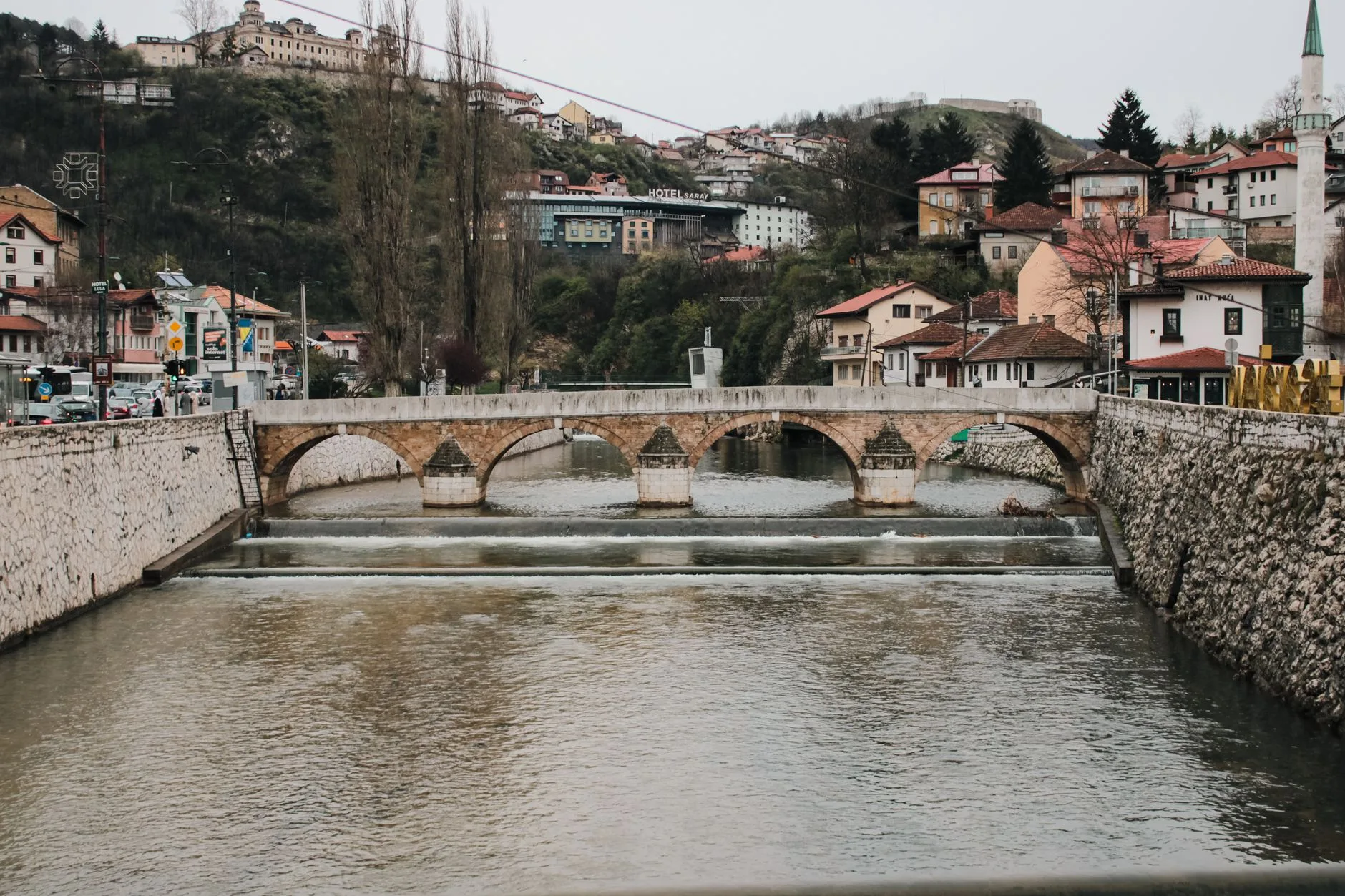
The call to prayer rolls across Baščaršija just after 5am, bouncing off copper-roofed workshops that have sold the same hammered coffee pots for three hundred years. By 7, the first fildžan of Bosnian coffee is already cooling on a low copper tray outside Čajdžinica Džirlo, and the smell of ćevapi grilling over charcoal starts to compete with the incense drifting from the Gazi Husrev-beg Mosque next door. Sarajevo does not ease you in. It hands you its contradictions — Ottoman, Austro-Hungarian, socialist, scarred, rebuilt — before your coffee’s gone cold.
This is a reasonable place to start a Balkans route, because it sets expectations correctly: this region rewards slowness and curiosity, not a checklist. It is also, still, one of the cheapest corners of Europe to travel through properly — dorm beds for €10–15, a full meal for €5, and buses that, while not always punctual, will get you somewhere interesting for less than the price of a coffee back home.
Why the Balkans still work on a tight budget
Western Europe has mostly priced out the slow traveller. The Balkans haven’t — yet. Bosnia and Herzegovina, North Macedonia, Albania, and Kosovo remain genuinely cheap: hostel beds under €15, street food under €3, intercity buses rarely topping €20 even for five-hour journeys. Montenegro and Croatia’s coastal towns are pricier in summer, driven by cruise traffic and short seasons, but even there, costs drop fast the moment you step away from the harbour.
The bigger issue isn’t money — it’s logistics. Rail networks are patchy or nonexistent across much of the region, timetables change seasonally without much warning, and Sunday bus schedules can be genuinely sparse. Budget travel here means flexibility, not frugality for its own sake.
The core route: Sarajevo to Belgrade, the long way
The loop below takes four to six weeks at a comfortable pace, covers six countries, and uses buses, shared minivans (furgons in Albania), and the occasional overnight coach. It avoids flying between stops almost entirely, which keeps both costs and the carbon footprint down.
Sarajevo → Mostar → Kotor → Tirana → Gjirokastër → Ohrid → Skopje → Pristina → Niš → Belgrade
Each leg is doable by public transport, though a few require patience.
| Leg | Transport | Duration | Approx. cost | Notes |
|---|---|---|---|---|
| Sarajevo → Mostar | Bus | 2.5 hrs | €8–10 | Scenic Neretva valley route |
| Mostar → Kotor | Bus via Trebinje | 5–6 hrs | €20–25 | Limited daily departures |
| Kotor → Tirana | Direct bus | 5–6 hrs | €25–30 | Via Shkodër border crossing |
| Tirana → Gjirokastër | Furgon (minivan) | 4 hrs | €8–10 | Informal but reliable |
| Gjirokastër → Ohrid | Bus via Korçë | 5–7 hrs | €15–20 | Border crossing at Qafë e Thanës |
| Ohrid → Skopje | Bus | 3 hrs | €7–9 | Frequent, easy |
| Skopje → Pristina | Bus | 2.5 hrs | €8–10 | Several daily |
| Pristina → Niš | Bus | 3.5 hrs | €10–12 | Enter Serbia from Kosovo directly |
| Niš → Belgrade | Bus or train | 3 hrs | €8–15 | Train is slower but pleasant |
Budget roughly €25–35 a day for transport, food, and a dorm bed, more if you want private rooms or a beer with every dinner, which — honestly — you will.
Sarajevo and Mostar: start with the wounds still visible
Sarajevo’s Baščaršija is the obvious centre, but the real education is a walk up to the Yellow Fortress at dusk, where the whole valley — minarets, church spires, socialist tower blocks — lays itself out below. The Tunnel of Hope museum, a 20-minute tram and taxi combination from the centre, is unglamorous and essential: a few preserved metres of the tunnel that kept the besieged city alive between 1993 and 1996.
Mostar gets crowded with day-trippers from Dubrovnik and Split by late morning, cruise-bus traffic pouring across the Stari Most from 10am. Stay the night instead — most visitors don’t — and the Old Bridge area empties by early evening, leaving the Neretva running turquoise beneath it and the muezzin’s call echoing off stone that’s been rebuilt once already, after the 1990s war destroyed the original. The bridge and old town are a UNESCO World Heritage Site, and UNESCO’s own listing is worth a look before you go, if only to understand what was lost and rebuilt here.
Kotor and the Montenegrin coast: budget carefully
Kotor’s Old Town is stunning and, by mid-morning in July and August, nearly unwalkable — cruise ships dock directly below the fortress walls and disgorge thousands of passengers at once. Budget travellers should time their visit around the ships’ schedules (postable online, checked each morning at the harbour) or simply arrive before 8am and leave before 11.
Montenegro uses the euro despite not being in the EU, which makes it noticeably pricier than its neighbours. A dorm bed here runs €15–20, double what you’d pay in Mostar. The fix: stay in nearby Perast or Risan instead of Kotor itself, both a short bus ride along the bay, with rooms for half the price and better views of the fjord-like Bay of Kotor without the crowds.
Albania: the cheapest, most rewarding stretch
Albania remains the best value in the entire route, and arguably the most underrated. Tirana’s Blloku district, once sealed off for Communist Party officials under Enver Hoxha, is now full of cafés serving byrek (flaky pastry stuffed with spinach, cheese, or minced meat) for under a euro. From there, the furgon network — informal shared minivans that leave when full rather than on a timetable — gets you to Berat’s Ottoman old town or south to Gjirokastër’s stone citadel, both remarkably cheap and still light on visitors compared to the coast.
Albania’s bus and furgon system takes some getting used to: departures from unmarked car parks, drivers who speak little English, fares paid in cash directly to the driver. It works, but budget extra time and patience, and don’t expect anything resembling a printed schedule.
Lake Ohrid and North Macedonia: the midpoint pause
Ohrid, straddling the border between Albania and North Macedonia, is one of Europe’s oldest lakes and one of its least visited UNESCO-listed towns. The Church of St. John at Kaneo, perched on a cliff above the water, is the postcard shot, but the real pleasure is simply sitting at a lakeside kafana in the evening eating grilled trout and watching swifts cut across the water. Skopje, ninety minutes north, is a strange, oversized capital full of grandiose statues from a 2014 redevelopment project — worth a day, not much more, unless you’re drawn to its genuinely excellent bazaar quarter and its ćevapi, which locals will insist (loudly) is better than Sarajevo’s.
Kosovo and the Serbia question
Pristina doesn’t get much tourist traffic, which is part of its appeal — Newborn monument selfies aside, this is a young, scrappy capital with a strong café culture around Nënë Tereza Boulevard and genuinely interesting history to engage with at the Kosovo Museum.
Here’s the honest logistical catch: crossing from Kosovo into Serbia is straightforward in 2026, but the reverse — entering Kosovo from Serbia and then trying to exit into a third country without re-entering Serbia first — has historically caused problems, since Serbia doesn’t recognise Kosovo’s border crossings as legitimate entry points. If you’re doing this route in the Sarajevo-to-Belgrade direction described here, you’re fine: Kosovo to Serbia is a non-issue. Doing it in reverse requires more research. Check your government’s current travel advisory before you go; these rules shift with the political weather.
Where to eat without a plan
You don’t need restaurant recommendations here so much as a general rule: eat at the place with plastic chairs and no menu in English. Ćevapi (grilled minced meat in flatbread) appears everywhere with regional variations — Sarajevo’s version comes in somun bread with raw onion, Skopje’s with kajmak. Burek, the flaky meat or cheese pastry sold by weight from bakery windows from dawn, is the region’s great budget breakfast, rarely costing more than €1.50. In Serbia, pljeskavica — a grilled meat patty the size of a dinner plate, stuffed into bread with kajmak and ajvar — will comfortably feed you for a day. None of this requires planning. It requires following the smell of charcoal smoke and the queue of locals at lunchtime.
Where to sleep and what it costs
Hostels cluster in old towns and near bus stations across the region — Hostel Franz Ferdinand in Sarajevo, Hostel Boxyard in Kotor, Trip’n Hostel in Tirana — and dorm beds generally run €8–18 depending on country and season. Private guesthouses (sobe in Montenegro and Serbia, dhoma in Albania) are often better value than hostels for two people travelling together, and staying with a host family is frequently the best source of local advice you’ll get all trip. Booking a night or two ahead is wise in peak season (July–August) along the coast; inland, you can usually turn up and ask.
When to go
May, June, and September hit the sweet spot: warm enough for the coast, cool enough for hiking, and without the July–August crush that clogs Kotor and Dubrovnik’s old towns. Winter travel is viable and very cheap inland — Sarajevo under snow has its own quiet beauty — but some mountain border crossings and smaller bus routes reduce frequency or shut down entirely.
For travellers who’ve found their rhythm on long European routes before — cycling the Danube corridor, for instance, or working through Portugal’s interior beyond Lisbon — this region will feel familiar in its demand for flexibility, and unfamiliar in just how cheap that flexibility still is.
The Bottom Line
- Budget €25–35 a day for a comfortable, unhurried trip covering transport, food, and dorm accommodation; Montenegro and coastal Croatia will push that higher, inland Albania and Kosovo will pull it lower.
- Build in slack days. Bus schedules shift seasonally, Sundays are thin everywhere, and furgons in Albania leave when full, not on time.
- Sleep in Mostar and Kotor rather than day-tripping — both towns transform after the tour buses leave, and that’s when they’re actually worth seeing.
- Check current Serbia–Kosovo border guidance before finalising your route direction; the rules are improving but still worth a last-minute check.
- Albania remains the best value stretch of the entire route and rewards slowing down in Gjirokastër and Berat rather than rushing to the coast.
Keep reading: Budget travel in Albania: Europe’s last hidden gem