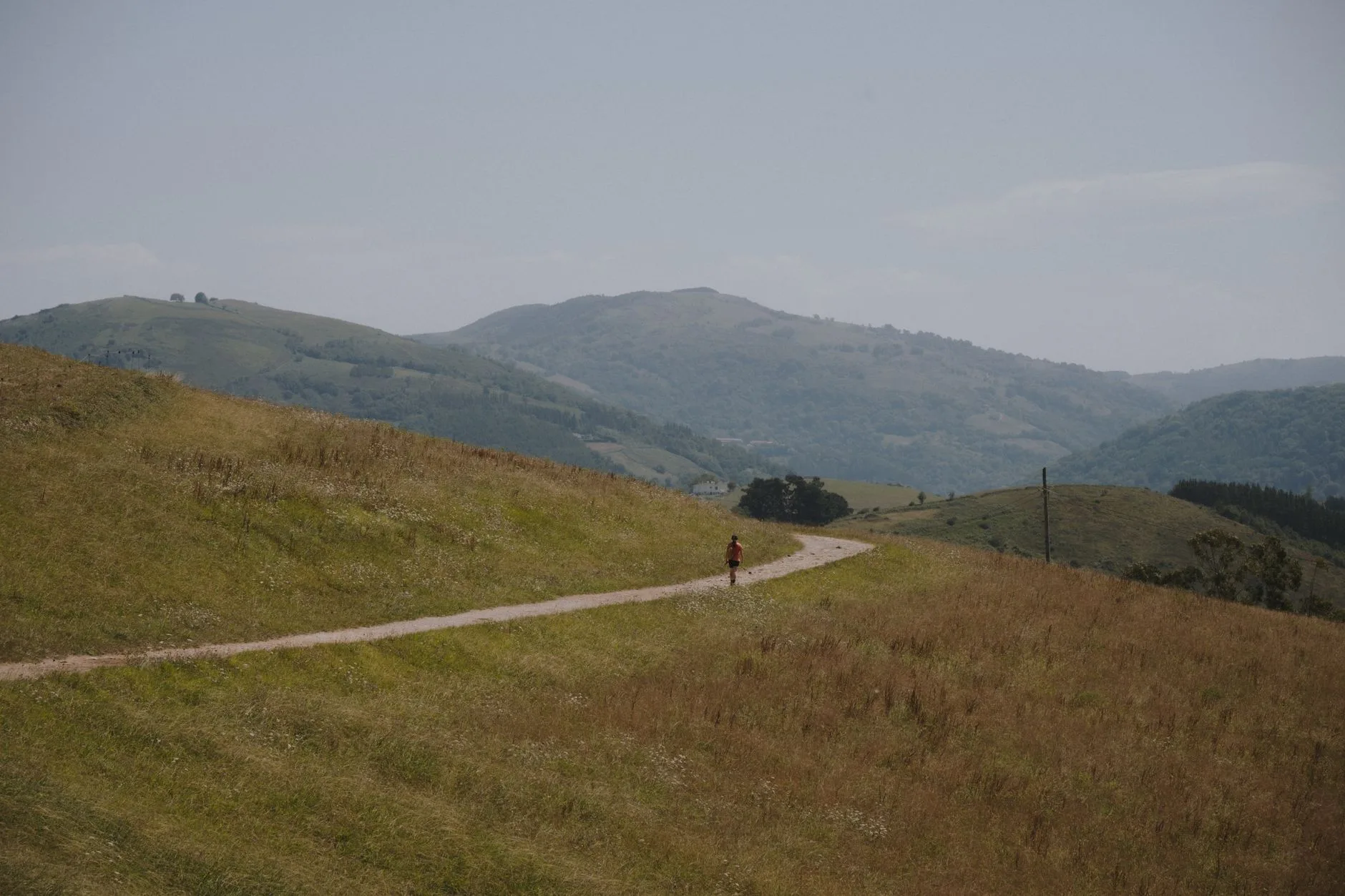
Photo by Alinson Torres on Pexels
At 5am on the GR20, the Refuge de Ciottulu di i Mori is already awake. Headlamps bob across the granite as walkers strap on boots still damp from yesterday, and someone is boiling water for coffee that will taste faintly of the gas canister it was heated on. Outside, the Cirque de la Solitude waits — a scramble of chains and iron rungs bolted into rock that the French national park service has, more than once, considered closing after a fatal fall. Nobody at this altitude is thinking about Instagram. They’re thinking about the next four hours of exposed ridge before the heat sets in.
That’s the texture of long-distance walking in Europe: less a photogenic stroll and more a logistics puzzle wrapped around genuinely wild terrain, solved one refuge booking or albergue stamp at a time. The continent’s trail network is unmatched anywhere else on earth for density and variety — you can walk coast to coast, sea to sea, or nation to nation, sleeping in stone huts, monastic hostels, or converted barns, and never touch a car for weeks.
This list leans toward trails with real character and real difficulty spread across a range — some achievable by a fit beginner with decent boots, others demanding technical scrambling and mountain experience. Distances, huts, and costs are accurate as of current trail conditions, but always check the relevant national park or trail association before booking, since refuge capacity and reservation systems change trail to trail and year to year.
1. GR20, Corsica, France
Widely considered the hardest long-distance trail in Europe, the GR20 runs roughly 180km down the spine of Corsica from Calenzana in the north to Conca in the south, gaining and losing over 10,000m of elevation across 15-16 days. The terrain alternates between granite slabs, chained scrambles, and boulder fields with barely a flat metre anywhere.
Refuges (Ciottulu di i Mori, Manganu, Usciolu) are run by the Parc Naturel Régional de Corse and require booking in high season — June through September — well in advance, since they fill fast and camping outside designated refuge grounds is restricted. Expect to pay around €15-20 per night for a dorm bunk, more for half-board meals of pasta and Corsican charcuterie.
July and August bring heat that turns exposed sections brutal by midday; many walkers start at dawn specifically to clear ridgelines before 11am. This is not a trail for a first multi-day hike — bring scrambling confidence, via ferrata comfort, and a realistic sense of your own fitness.
2. Tour du Mont Blanc, France/Italy/Switzerland
The TMB circles the Mont Blanc massif through three countries in about 170km and 10-11 days, crossing high passes like the Col de la Seigne and Grand Col Ferret with the white bulk of the mountain in view most of the way. It’s demanding — daily ascents of 1,000m aren’t unusual — but the trail itself is well-marked and doesn’t require technical skill.
Accommodation runs through a chain of refuges (Rifugio Elisabetta, Refuge du Col de la Croix du Bonhomme) that need booking months ahead for July and August; half-board averages €60-80 per night. Many walkers now shift to June or September to dodge both crowds and the worst of the heat, though snow can linger on the high cols into early July.
For readers weighing this against France’s other classic routes, the broader landscape of French trail walking — including sections of the GR5 and GR10 — gets a fuller treatment in a guide to the best hikes in France worth the effort.
3. Camino Francés, Spain
The most walked pilgrim route in the world runs about 780km from Saint-Jean-Pied-de-Port in the French Pyrenees to Santiago de Compostela in Galicia, typically taking five to six weeks, though most walkers do sections rather than the whole thing. It’s the gentlest entry on this list in terms of terrain — mostly dirt tracks and rural roads — but the sheer distance and daily repetition are their own kind of test.
Albergues (pilgrim hostels) cost €8-15 a night and require a credencial (pilgrim passport) stamped along the way, which also earns you the Compostela certificate at the end. The Routes of Santiago de Compostela are recognised as a UNESCO World Heritage site, which tells you something about the cultural weight carried by the dusty yellow arrows painted on walls and posts the entire way.
Spring (April-May) and early autumn avoid both the July-August crowds and the Meseta’s brutal midsummer heat between Burgos and León.
4. West Highland Way, Scotland
Running 154km from Milngavie, just outside Glasgow, to Fort William at the foot of Ben Nevis, this is one of Europe’s most accessible long trails — well-graded, well-signed, and doable in six to eight days by anyone with moderate fitness. It threads past Loch Lomond, across the wild expanse of Rannoch Moor, and through Glen Coe, with weather that changes on a ten-minute cycle regardless of season.
B&Bs and bunkhouses line the route, though booking ahead in July and August is essential since capacity is limited in small Highland villages like Kinlochleven. Midges — small biting flies — are a genuine nuisance from late May through September, particularly at dawn and dusk near water; a head net earns its weight in relief.
5. Alta Via 1, Dolomites, Italy
This roughly 120km route through the Dolomites runs from Lago di Braies to Belluno over 10-12 days, staying almost entirely above 2,000m through some of the most dramatically vertical scenery in Europe — limestone towers, via ferrata cables, and rifugios perched on ledges that seem to defy the terrain.
Rifugios such as Lagazuoi and Nuvolau require booking well ahead for July-August and typically cost €50-70 half-board. Some sections involve exposed scrambling with fixed cables, so a via ferrata kit (harness, lanyard, helmet) is worth carrying even if you don’t plan to use it on every section. The broader Alpine hut network across Italy, Austria, and Switzerland — including trails through the Carpathians further east — rewards travellers willing to plan around hut reservation systems rather than freelance camping, a theme also explored in a guide to hiking in the Carpathian Mountains of Romania.
6. E5 Alpine Crossing, Oberstdorf to Merano
The E5 crosses the Alps from Bavaria into South Tyrol over roughly 110km and 6-8 days, passing through the Lechtal Alps and over the Timmelsjoch into Italy. It’s a serious mountain route with several days above 2,500m, including glacier crossings on some variants that require crampons and a guide.
Huts along the way (Kemptner Hütte, Memminger Hütte) are run by the German and Austrian Alpine Clubs; membership discounts the nightly rate considerably, making club membership worth the modest annual fee if you plan more than one Alpine trip. Late June through September is the only realistic window — snow closes the high passes outside it.
7. Camino Português Coastal Route, Portugal/Spain
An alternative to the crowded Camino Francés, this route runs about 280km from Porto to Santiago de Compostela along the Atlantic coast before cutting inland near Redondela, taking 12-14 days. It passes through fishing towns like Vila do Conde and Viana do Castelo, with the smell of salt and grilled sardines a near-constant companion.
Albergues cost similarly to the Francés route, and the terrain is flat to gently rolling — accessible to most fitness levels. This coastal stretch pairs naturally with wider exploration of Portugal beyond its capital, a subject covered in a guide to backpacking in Portugal beyond Lisbon.
8. Pennine Way, England
Britain’s oldest official long-distance trail runs 429km from Edale in the Peak District to Kirk Yetholm on the Scottish border, taking 16-19 days through boggy moorland, limestone dales, and the Cheviot Hills. It has a reputation — not entirely undeserved — for relentless mud, particularly across Kinder Scout and Bleaklow.
Waymarking and hut infrastructure are managed through the UK’s National Trails network, with B&Bs and hostels available in most villages along the route, though some stretches require careful planning around limited accommodation. April through September avoids the worst bog conditions, though “worst” is relative on a trail that’s rarely dry.
9. Rota Vicentina, Portugal
This network of trails along Portugal’s southwest coast includes the Fishermen’s Trail (Trilho dos Pescadores), a roughly 230km coastal route from Porto Covo to Cabo de São Vicente that hugs dramatic cliff edges and empty beaches through the Alentejo and Algarve, typically walked over 10-12 days.
Accommodation ranges from simple guesthouses to converted farmhouses, and the trail is generally easy underfoot, though soft sand sections are more tiring than they look. Spring and autumn are ideal — summer heat and tourist traffic both peak in July-August. This route sits well alongside other European coastal walking, a category surveyed more broadly in a rundown of the best coastal walks in Europe worth the effort.
10. Peaks of the Balkans Trail, Albania/Kosovo/Montenegro
A roughly 190km loop crossing three borders through the Accursed Mountains (Prokletije), this trail links remote villages in northern Albania, western Kosovo, and Montenegro over 10-12 days, staying in family-run guesthouses that often serve homemade raki alongside dinner. It’s demanding terrain — steep, occasionally poorly marked, and requiring a border permit system that changes periodically depending on regional relations.
This is the least developed trail on this list in tourist infrastructure terms, which is exactly its appeal for walkers wanting genuine remoteness rather than a well-oiled trekking industry. It pairs naturally with wider travel in the region, covered in more depth in a guide to budget travel in Albania.
Trail Comparison
| Trail | Length | Days | Difficulty | Best Season | Approx. Cost/Night |
|---|---|---|---|---|---|
| GR20, Corsica | ~180km | 15-16 | Very hard | June-Sept | €15-20 |
| Tour du Mont Blanc | ~170km | 10-11 | Hard | June-Sept | €60-80 |
| Camino Francés | ~780km | 5-6 wks | Moderate | Apr-May, Sept-Oct | €8-15 |
| West Highland Way | 154km | 6-8 | Easy-Moderate | May-Sept | €30-60 |
| Alta Via 1, Dolomites | ~120km | 10-12 | Hard | July-Aug | €50-70 |
| E5 Alpine Crossing | ~110km | 6-8 | Hard | June-Sept | €25-45 |
| Camino Português Coastal | ~280km | 12-14 | Easy-Moderate | Apr-June, Sept | €10-20 |
| Pennine Way | 429km | 16-19 | Moderate-Hard | Apr-Sept | €25-50 |
| Rota Vicentina | ~230km | 10-12 | Easy-Moderate | Mar-May, Sept-Oct | €25-50 |
| Peaks of the Balkans | ~190km | 10-12 | Hard | June-Sept | €15-25 |
The Bottom Line
- Match the trail to your actual fitness, not your aspirational fitness — the GR20 and Alta Via 1 have ended plenty of otherwise capable hikers’ trips within the first two days.
- Book huts and albergues before you leave home for anything in the Alps or Dolomites during July-August; freelance planning works on the Camino routes but not in the high mountains.
- Shoulder seasons (May-June, September) consistently offer the best combination of manageable weather, thinner crowds, and open accommodation across nearly every trail on this list.
- Distance is a poor proxy for difficulty — the 780km Camino Francés is gentler underfoot than the 120km Alta Via 1. Plan around elevation profile and terrain type, not just kilometres.
- None of these trails require guiding services to complete safely, but the more remote ones — Peaks of the Balkans especially — reward carrying a paper map and compass alongside any GPS device, since signal and signage both disappear in the high passes.
Keep reading: Best hikes in France: top 10 trails to walk