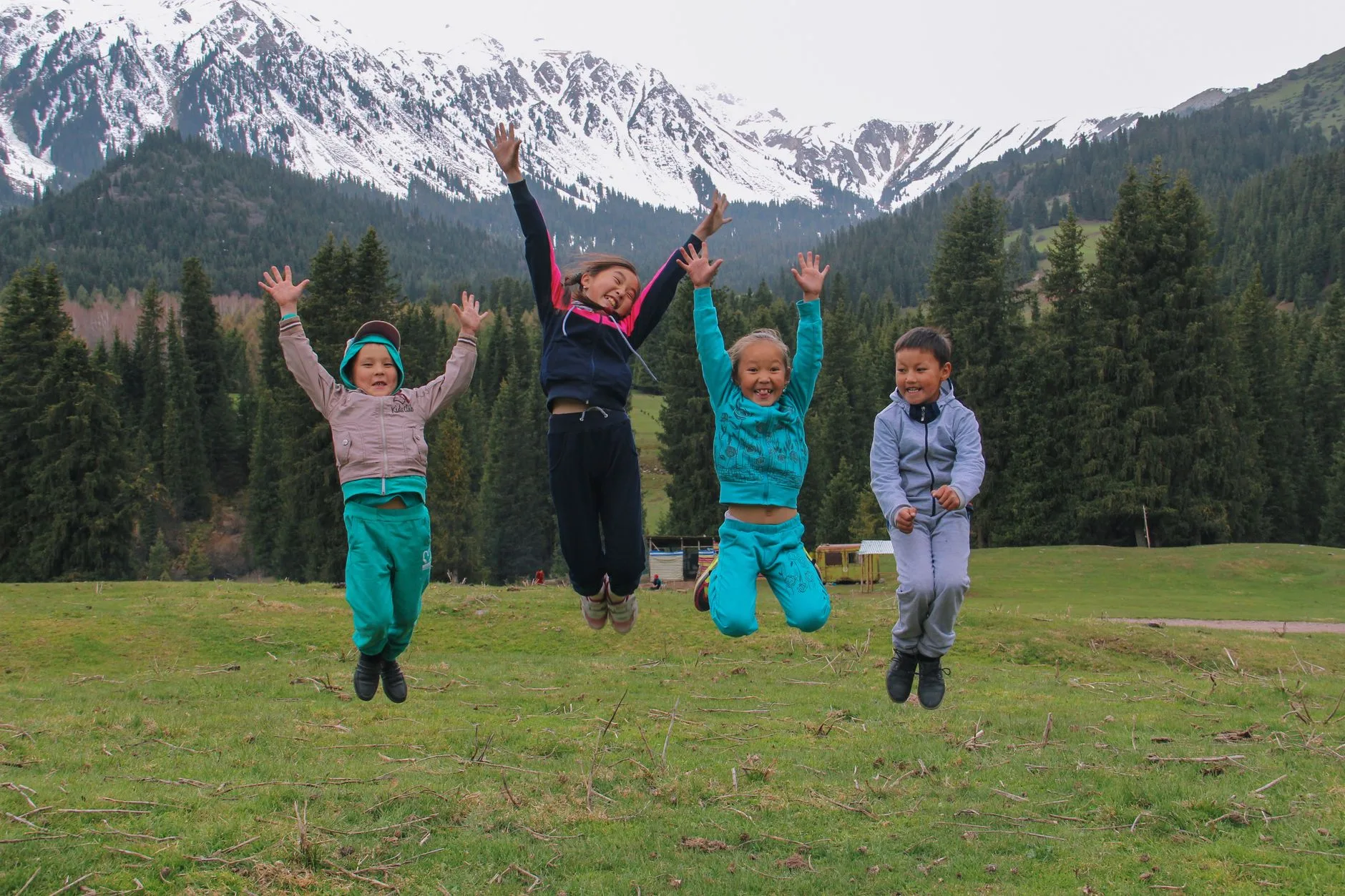
Photo by Sadettin Dogan on Pexels
Kyrgyzstan is one of the most accessible Central Asian countries for independent travellers and one of the least visited. The country is landlocked between Kazakhstan, China, Tajikistan, and Uzbekistan, and most of it consists of mountains — the Tian Shan range covers about 80% of the territory, with peaks above 7,000 metres. The population is about 7 million, most of it concentrated in the capital Bishkek and the Fergana Valley in the south. The rest of the country is high pasture, glaciers, and river valleys, seasonally inhabited by herding families in yurts.
The infrastructure for independent travellers has grown considerably over the past decade, primarily through a government-supported community tourism network called CBT (Community Based Tourism). This network of local homestays, guesthouses, and yurt camps lets you travel through the mountains with a bed guaranteed each night and meals cooked by people who live there. You don’t need a guide for most of it, you don’t need to book through an expensive agency, and outside of peak summer, you’re unlikely to see many other foreign tourists.
Getting In: Visas and Entry
As of 2026, citizens of the EU, UK, USA, Canada, Australia, and many other countries can enter Kyrgyzstan visa-free for stays of up to 60 days. Check the Kyrgyzstan e-Visa portal to confirm your nationality’s status — the list has expanded significantly in recent years.
Citizens of countries not on the visa-free list can apply for an e-Visa online, typically processed within 3 business days and costing around $35–50 USD.
Entry points:
– Bishkek Manas International Airport (FRU) is the main international hub. Airlines connecting it include Turkish Airlines (via Istanbul), Air Astana (via Almaty), FlyDubai, and various regional carriers
– Land crossings from Kazakhstan (Bishkek is 4 hours from Almaty by shared taxi) and Uzbekistan (Osh to Andijan) are used regularly by travellers doing a broader Central Asia circuit
– The China border at Irkeshtam (connecting to Kashgar) is periodically open but requires checking current status before planning around it
Getting Around Inside Kyrgyzstan
There is no passenger rail network of note. All intercity travel is by road.
Marshrutkas (shared minibuses) connect major towns and run from central bus stations in Bishkek and Osh. They depart when full rather than on a fixed schedule. A seat from Bishkek to Karakol (the main gateway town for the Issyk-Kul region and Tian Shan mountains) costs around 350–400 KGS (approximately £3–4) and takes 4–5 hours.
Shared taxis (usually older Mercedes or Lada sedans) are faster, more frequent, and cost roughly double marshrutkas. Prices are negotiable at the start.
Renting a car is possible in Bishkek; a 4WD is strongly advisable for mountain roads. Rental rates run about £50–80/day. International driving licences are recognised. Many of the roads in the Naryn and At-Bashi valleys are unpaved and require a vehicle with decent ground clearance.
Hitching works in rural areas, where traffic is sparse and drivers routinely pick up travellers. A small payment is customary and expected — about the equivalent of the marshrutka fare for the same distance.
Where to Stay: CBT, Homestays, and Yurt Camps
The CBT network (Community Based Tourism Kyrgyzstan) coordinates accommodation across the country, particularly in rural areas. Prices are standardised:
| Accommodation type | Price per person (approx.) | What’s included |
|---|---|---|
| Homestay (room in family home) | 600–900 KGS (£5–8) | Bed, dinner, breakfast |
| Yurt camp (in jailoo/summer pasture) | 700–1,100 KGS (£6–10) | Bed, dinner, breakfast |
| Guesthouse (Karakol, Kochkor, Naryn) | 500–800 KGS per person | Room only, breakfast optional |
| Bishkek hostel (dorm) | 400–600 KGS (£3.50–5.50) | Bed, use of kitchen |
CBT offices in Bishkek, Karakol, Kochkor, Naryn, and Arslanbob can book accommodation, arrange guides and horse rental, and provide maps. Their official website lists regional contacts and standardised prices.
This model is genuinely good for the communities hosting you. Families earn income directly from visitors, meals are home-cooked from local ingredients (lamb, potatoes, fermented mare’s milk called kumys, flatbread baked in a tandoor oven), and the accommodation is typically clean, warm, and hospitable in a way that has nothing to do with a hotel star rating.
Key Regions and What to See
Bishkek — the capital is a functional rather than beautiful Soviet-era city with wide boulevards, a good bar scene, solid food options (both local and international), and all the services a traveller needs before heading into the mountains. Worth 1–2 days. Osh Bazaar is the best market. The State History Museum near Ala-Too Square has good exhibits on Kyrgyz nomadic history.
Issyk-Kul — a vast alpine lake at 1,600 metres elevation, the second-largest mountain lake in the world. The north shore is more developed with beach resorts popular with Kazakhstani tourists; the south shore is quieter and more interesting. Karakol, at the eastern end of the lake, is the main traveller hub: guesthouses, a CBT office, a good market, and a Russian Orthodox church built without nails. From Karakol, the Altyn Arashan valley (a 2–3 hour 4WD drive or a full day’s walk) has natural hot springs and glacier views at the end.
Song-Kul Lake — a high-altitude lake at 3,016 metres, accessible only by an unpaved mountain road (open roughly June–September) or on horseback. In summer, dozens of herding families bring their flocks up to the surrounding jailoo (summer pasture) and set up yurt camps. Staying overnight here — horses grazing outside, the night sky unobstructed by any light pollution — is the canonical Kyrgyzstan experience. The most popular approach is via the Kochkor valley from the north; the CBT in Kochkor arranges 2–3 day horse treks.
Naryn and the Tian Shan — the provincial capital of Naryn is a quiet, functional town 5 hours south of Bishkek, used as a base for travel towards the Chinese border. The surrounding landscape is severe and treeless at higher elevations. The At-Bashi valley, about 2 hours south of Naryn, contains the Tash Rabat caravanserai — a 15th-century stone waystation for Silk Road traders, remarkably intact and almost always empty of visitors outside peak summer.
Osh and the South — Osh is the second city and the cultural centre of the Kyrgyz south, with a larger Uzbek minority and a different character from the north. The Sulaiman-Too mountain in the middle of the city is a UNESCO World Heritage site with pilgrimage routes used continuously for over 3,000 years. The Osh Bazaar is one of the most authentic large markets in Central Asia.
Arslanbob — a walnut-forested village in the southwest, in the Jalal-Abad region, that contains the largest natural walnut forest in the world. The village is largely Uzbek-speaking, CBT-organised, and almost untouched by mass tourism. Trekking routes into the surrounding hills are signposted by CBT.
What to Budget
Kyrgyzstan is genuinely inexpensive. A realistic daily budget for an independent traveller:
| Category | Low budget | Mid budget |
|---|---|---|
| Accommodation | £5–8 (homestay/CBT) | £10–20 (guesthouse) |
| Food | £4–8 (local cafes + markets) | £10–15 (restaurant dinners) |
| Transport | £3–8 (marshrutka/hitching) | £10–20 (shared taxi/car) |
| Activities | £0–5 (hiking) | £15–30 (horse trekking per day) |
| Daily total | £12–29 | £35–85 |
A two-week trip including flights from the UK (typically £600–900 return via Istanbul or Dubai) runs £900–1,500 all in for a budget traveller.
Practical Notes
Currency: Kyrgyzstani Som (KGS). USD is widely accepted as a secondary currency; carry some as backup. ATMs are available in Bishkek and Karakol but unreliable in rural areas — carry enough cash for multi-day mountain sections.
Language: Kyrgyz and Russian. Russian works in most situations in Bishkek; in rural areas, basic Russian phrases (numbers, greetings, directions) go a long way. Download the Russian Cyrillic keyboard on your phone before arriving.
Connectivity: SIM cards from Beeline or MegaCom cost around 200–300 KGS and provide 4G in populated areas. Rural mountain areas have no signal.
Safety: Petty crime is low by regional standards. Altitude is the main practical risk — Song-Kul at 3,000m is genuinely high; take a day to acclimatise in Karakol or Bishkek before heading up.
Conclusion
Kyrgyzstan rewards travellers who are prepared to be flexible and comfortable with basic infrastructure. The key practical points:
- Visa-free entry for most Western nationalities makes the logistics simple — check your status and go
- The CBT network is your primary tool for rural accommodation; book a day or two ahead via local offices, not months in advance
- Marshrutkas and shared taxis cover all major routes cheaply; a 4WD rental opens the mountain valleys
- Song-Kul and the jailoo are the defining experience — prioritise at least two nights there if you visit in summer
- Daily costs of £15–30 make this one of the most affordable destinations in Eurasia for independent travel
Keep reading: Road tripping through the Faroe Islands: what to expect