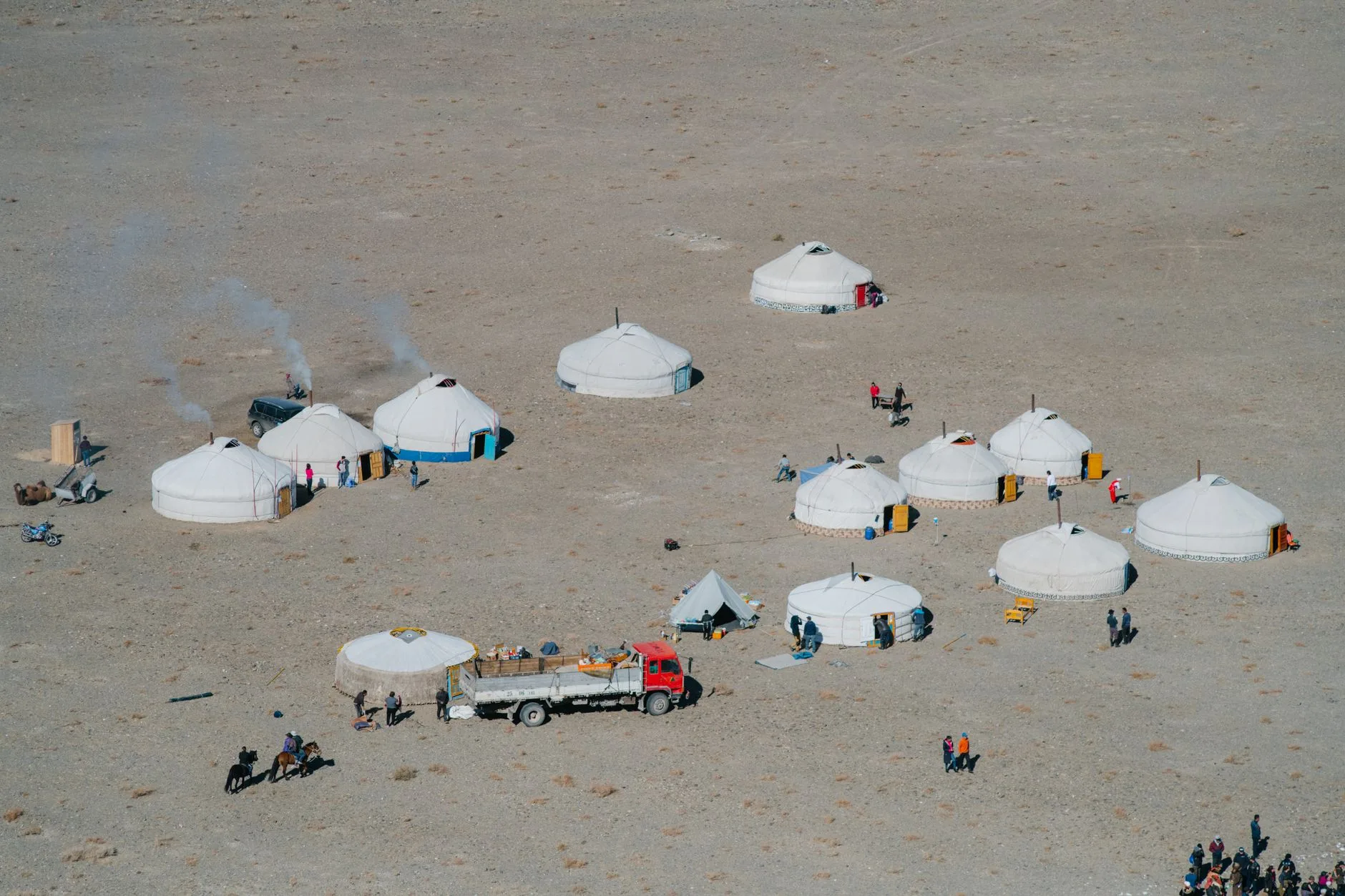
Photo by Julia Volk on Pexels
The Dragon Bus Terminal in Ulaanbaatar does not look like the start of anything epic. It’s a concrete yard near the Peace Bridge, lined with minivans whose destinations are chalked on cardboard in Cyrillic, drivers shouting town names — Mörön, Dalanzadgad, Kharkhorin — while passengers heave sacks of flour and spare tyres onto the roof racks. There’s no ticket office with air conditioning, no neat queue. You find the van going your way, pay the driver directly, and wait until every seat is filled, which can take four hours or forty minutes depending on the day’s luck.
This is also, more or less, how most of Mongolia gets around — and it’s entirely possible to do the same. The country has a reputation as somewhere you need a guided jeep tour to access, and for the deep Gobi or the Tsaatan reindeer camps in the far north, a local driver or guide genuinely helps. But the central steppe, the Gobi’s major sites, and Lake Khövsgöl are all reachable independently, with patience, a decent paper map, and a willingness to eat a lot of mutton.
Why Mongolia resists conventional planning
Mongolia is the size of Western Europe with a population smaller than Chicago’s, and most of that population lives in Ulaanbaatar (UB). Outside the capital and the 21 aimag (provincial) centres, there are no fixed addresses, limited paved roads, and long stretches where “the road” is simply the flattest line of tyre tracks across open grassland — sometimes four or five parallel tracks, because everyone’s avoiding the last driver’s ruts. GPS apps like Maps.me or Organic Maps are essential precisely because paper maps and road signs can’t keep up with where the tracks actually run that season.
What this means practically: distances that look like a three-hour drive on a map can take seven. Fuel stations thin out fast once you leave the aimag capitals, and in the Gobi, stretches of 200–300km between pumps are normal. None of this is a reason to book a package tour — it’s a reason to plan with margin, carry spare fuel, and not be precious about schedules.
Getting around without joining a tour
Shared minivans and jeeps (UAZ-452 “furgons”) running fixed routes from aimag to aimag are the backbone of independent travel. They leave from Dragon Bus Terminal in UB or from the central square of whichever aimag town you’re in, and fill up before departing — there’s no fixed timetable, which is the first lesson in Mongolian travel patience. Fares are cheap, typically a few dollars to a few tens of dollars depending on distance.
Hiring a vehicle and driver is the more comfortable middle path and doesn’t require surrendering control to a tour company. In UB, you can arrange a driver with a Russian UAZ-469 jeep (the vehicle built for exactly this terrain) or a Toyota Prius — Mongolia’s improbable but genuinely common choice for long-distance travel, thanks to all-wheel-drive hacks and a culture of relentless vehicle maintenance. Rates for a driver with vehicle run roughly $70–120 a day including fuel, depending on the route and season, and you set the itinerary, not them. Negotiate directly at guesthouses in UB’s Bayanzurkh or Sükhbaatar districts, or through hostel noticeboards — this is informal, cash-based, and entirely normal.
Hitchhiking for a fee — locally just an accepted way of getting around, not a backpacker novelty — works on less-trafficked routes. Flag down a truck or jeep, agree a price before you get in, and expect to share the cab with sacks of goods and occasionally livestock.
Public buses connect UB to larger towns like Mörön and Dalanzadgad on paved or semi-paved roads, and are the cheapest option if your route allows it.
Staying with nomadic families — and where it isn’t a performance
Ger camps built for tourists exist all over the central steppe and Gobi, and they’re fine, if a little staged. The more interesting and genuinely independent option is simply asking at a ger you pass. Hospitality toward travellers runs deep in Mongolian herding culture — turning up at a ger, especially outside the main tourist corridors, and asking to stay the night is a long-standing practice, not an imposition, though it’s courteous to pay for the meal and bed (roughly $10–15 per person is standard and appreciated) and to bring a small gift — tea, sweets, something for the children.
Expect a round felt tent heated by a dung-fired stove, a floor you sleep on in a line with the family, salty milk tea (süütei tsai) pressed into your hands before you’ve even sat down, and an outside toilet that is, generously, a hole in the ground a short walk away. None of this is hardship exactly — it’s simply rural Mongolia, and it’s the most direct way to understand how roughly a third of the population still lives.
Three routes that don’t require a guide
The Central Mongolia loop (7–10 days) is the most accessible introduction. From UB, head west to Hustai National Park to see Przewalski’s horses — the last truly wild horse breed, reintroduced here after near-extinction — then on to Kharkhorin, site of the 13th-century Mongol capital Karakorum and the active Erdene Zuu Monastery. The surrounding Orkhon Valley is a UNESCO World Heritage Cultural Landscape, its river terraces still grazed much as they were under the Mongol Empire. From there, continue to Tsenkher Hot Springs for a soak that feels genuinely earned, and loop back via Ögii Lake. Roads are paved as far as Kharkhorin; beyond that, expect graded dirt.
The Gobi Desert route (10–14 days) runs south from UB through Mandalgovi, with a detour to the granite outcrops of Baga Gazriin Chuluu, down to Dalanzadgad, gateway to Gobi Gurvansaikhan National Park. From there: Yolyn Am, a gorge that holds ice well into summer despite desert heat on either side; Khongoryn Els, dunes rising 300 metres that genuinely hum in high wind (their local name translates as “singing dunes”); and Bayanzag, the red “Flaming Cliffs” where the first dinosaur eggs were scientifically documented in the 1920s. This route covers the longest, emptiest stretches, so fuel and food planning matter here more than anywhere else. Domestic flights (Hunnu Air, Aero Mongolia) connect Dalanzadgad back to UB if you’d rather not retrace the drive.
The Lake Khövsgöl route (8–10 days) heads north instead. Overnight bus or a short flight gets you to Mörön, from where shared jeeps run to Khatgal, the lakeside village. Khövsgöl itself — Mongolia’s largest freshwater lake, cold and startlingly clear — can be explored by horse trek or on foot along its eastern shore. Reaching the Tsaatan reindeer herders further north in the taiga is possible independently but genuinely demanding: expect several days on horseback and a local guide is close to essential here, both for navigation and for the courtesy of visiting a small, remote community respectfully.
| Route | Duration | Best season | Difficulty | Approx. daily budget | Main transport |
|---|---|---|---|---|---|
| Central Mongolia loop | 7–10 days | June–September | Moderate | $25–50 | Shared jeep / hired driver |
| Gobi Desert route | 10–14 days | May–June, Sept | Demanding | $30–60 | Hired vehicle (jeep) |
| Lake Khövsgöl route | 8–10 days | June–August | Moderate–hard | $25–55 | Jeep + horse trek |
When to go, and the Naadam complication
June through September is the practical window — outside it, winter temperatures regularly drop below minus 30°C and most ger camps and family homestays simply close. July brings Naadam, the national festival of wrestling, archery and horse racing, held in UB and in every aimag capital simultaneously. It’s a genuine highlight, but it also means UB’s accommodation books out and transport gets squeezed for the surrounding fortnight — plan around it rather than casually alongside it.
Money, connectivity, and other unglamorous realities
Mongolia runs largely on cash (Mongolian tögrög). ATMs exist in aimag capitals but not beyond, so withdraw more than feels comfortable before heading into rural routes. A local SIM from Unitel or Mobicom, bought on arrival in UB, gives decent coverage in towns but drops out completely for long stretches of the Gobi and the steppe — treat connectivity as a UB-only convenience, not a travel tool. Pick up camping gear, sleeping bags, and a decent knife at Naran Tuul Market (the “Black Market”) on UB’s eastern edge before you leave the city; it’s cheaper and better stocked than anything you’ll find en route.
Vehicle breakdowns happen — roads here are hard on suspensions and tyres — and a driver who can fix their own jeep is worth more than one with polished English. Language is a real barrier outside UB; a phrasebook or offline translation app earns its weight many times over.
Before travelling, it’s worth checking the UK Foreign, Commonwealth & Development Office’s travel advice for Mongolia for any current road or regional cautions, particularly around winter conditions and remote border areas.
The Bottom Line
Mongolia without a tour isn’t harder because the country is unwelcoming — it’s harder because the infrastructure simply wasn’t built around convenience, and that’s precisely the appeal for anyone drawn to independent travel the way readers of guides on budget travel in Georgia or solo routes through lesser-known countries tend to be. Build in slack — a week’s buffer on any route involving the Gobi. Hire a driver rather than self-drive unless you’re genuinely confident reading terrain without signage. Say yes to the ger that waves you in rather than holding out for the next tourist camp. And accept that the appeal of these routes is partly the discomfort — the mutton every night, the cold mornings, the four-hour wait for a minivan to fill — because that’s also where the actual country is.
Keep reading: Independent travel in Georgia shares the same spirit of going it alone