The sulfur baths in Abanotubani fill with steam before eight in the morning, and the smell — eggy, mineral, faintly medicinal — drifts up through the old town of Tbilisi and settles over the brick domes that give the neighbourhood its skyline. A few streets up, bakers are pulling khachapuri out of tone ovens with long metal hooks, the cheese still bubbling inside the boat-shaped bread. Nobody is selling anything you didn’t ask for. Nobody is herding a tour group through. This is just Tuesday in Tbilisi.
Georgia has spent the last decade quietly becoming one of the easier countries in the world to travel through on your own terms — visa-free entry for most nationalities, a functioning if idiosyncratic transport network, and a culture where hospitality is less a service industry and more a point of personal honour. It is not undiscovered. Tbilisi’s Instagram geometry and Kazbegi’s mountain backdrop have found their way onto enough feeds that “hidden gem” is starting to feel like a stretch. But step outside the three or four places everyone photographs, and Georgia still rewards travellers willing to work things out for themselves, in a way that fewer and fewer countries do.
Why Georgia works so well without a plan
Citizens of the EU, UK, US, and most of the rest of the world can enter Georgia visa-free for up to a year — a policy that has made the country a long-stay favourite for digital nomads and a genuinely useful one for independent travellers who want to move slowly without paperwork hanging over them. There’s no need to book tours in advance, no permit system for the regions that matter most (Tusheti being the partial exception, more on that below), and cash still works everywhere a card might not.
The language barrier is real — Georgian uses its own script, unrelated to anything else, and English fluency drops fast outside Tbilisi and Batumi — but this matters less than it sounds. Google Translate’s camera function, a handful of memorised Georgian phrases, and the fact that Georgians will physically walk you to where you need to go rather than just point, close most of the gap.
Tbilisi as a base, not just a stop
Most independent trips start in Tbilisi, and it earns more than the two days most itineraries give it. Base yourself in Sololaki or Vera rather than the tourist-heavy stretch around Rustaveli Avenue — both are walkable to the old town but quieter at night, with crumbling Art Nouveau balconies and courtyards that double as impromptu wine bars after dark.
Eat khinkali — the soup dumplings twisted at the top into a little knot you’re meant to discard, not eat — at Zakaria or Khinkali House rather than the glossier versions aimed at tour groups. For produce, spices, and a genuine sense of how Tbilisi feeds itself, spend an hour at Dezerter Bazaar near the central train station, where vendors sell churchkhela (walnuts dipped repeatedly in grape must until they look like fat candles), tkemali plum sauce, and more varieties of dried fruit than seems reasonable.
The Narikala Fortress and the cable car up to it are worth doing once for orientation, but the better version of Tbilisi is found walking the Vake and Mtatsminda slopes without a destination, or riding the funicular up for a view of the Mtkvari River cutting the city in two.
Getting around: marshrutkas, trains, and a loose relationship with schedules
Georgia’s marshrutka minibus network is the backbone of independent travel here, and understanding it is the single most useful skill a visitor can develop. These shared vans leave from designated stations — Tbilisi’s Didube station is the main hub — generally departing once they’re full rather than on a fixed timetable, which means mornings are more reliable than afternoons. Fares are cheap (a few lari for most regional routes) and paid in cash to the driver.
Trains connect Tbilisi to Batumi and Kutaisi comfortably and are worth booking a day ahead through the Georgian Railway website. For the mountains, marshrutkas and shared taxis are really the only options, and shared taxis — arranged by asking around at the station rather than through an app — often work out faster and only slightly more expensive, especially when split three or four ways.
Bolt operates reliably in Tbilisi and Batumi and is worth having installed before you arrive. Outside the cities, it disappears, and so does any illusion of app-based convenience.
Kakheti: the wine region that isn’t performing for anyone
East of Tbilisi, the Kakheti region is where Georgia’s eight-thousand-year wine tradition is still made the old way — fermented and aged in qvevri, the large egg-shaped clay vessels buried in the ground, a method UNESCO recognises as intangible cultural heritage. The hill town of Sighnaghi, with its restored Italianate walls and views over the Alazani Valley toward the Caucasus, makes a good base, though it’s popular enough on weekends that a weekday visit is worth the small effort of rearranging a schedule.
The real texture of the region is in the villages around it — Telavi, Kvareli, and the family-run cellars that will pour you wine from the qvevri if you simply knock and ask, which is a more normal transaction here than it sounds. The 11th-century Alaverdi Monastery, still an active working winery, is a working cathedral complex rather than a museum piece, and mass is held there most Sundays.
The mountains: Kazbegi, Svaneti, and the long way to Ushguli
Stepantsminda — still called Kazbegi by almost everyone — sits about three hours north of Tbilisi along the Georgian Military Highway, a route that climbs through the Jvari Pass with views that make the marshrutka’s questionable suspension easier to forgive. From the town, the hike up to Gergeti Trinity Church takes two to three hours on foot (or a shared 4×4 ride for those short on time or knees) and delivers the single most photographed view in the country, with Mount Kazbek rising behind the 14th-century church in a way that still works even after you’ve seen it a hundred times online first.
Further west, the Svaneti region is where independent travel in Georgia asks more of you and gives more back. Mestia, reached by a dramatic nine-hour marshrutka ride from Tbilisi or a short domestic flight, is the gateway to the multi-day trek to Ushguli, a cluster of medieval villages recognised by UNESCO as one of the highest continuously inhabited settlements in Europe, its stone defensive towers rising out of farmland that still gets cut off by snow for parts of the winter. The trek runs three to four days through the villages of Zhabeshi, Adishi, and Iprali, with guesthouses (not formal hotels — family homes with spare rooms) providing beds and dinner along the way for a fraction of what organised trekking elsewhere in the world costs.
Tusheti: the region that closes itself off
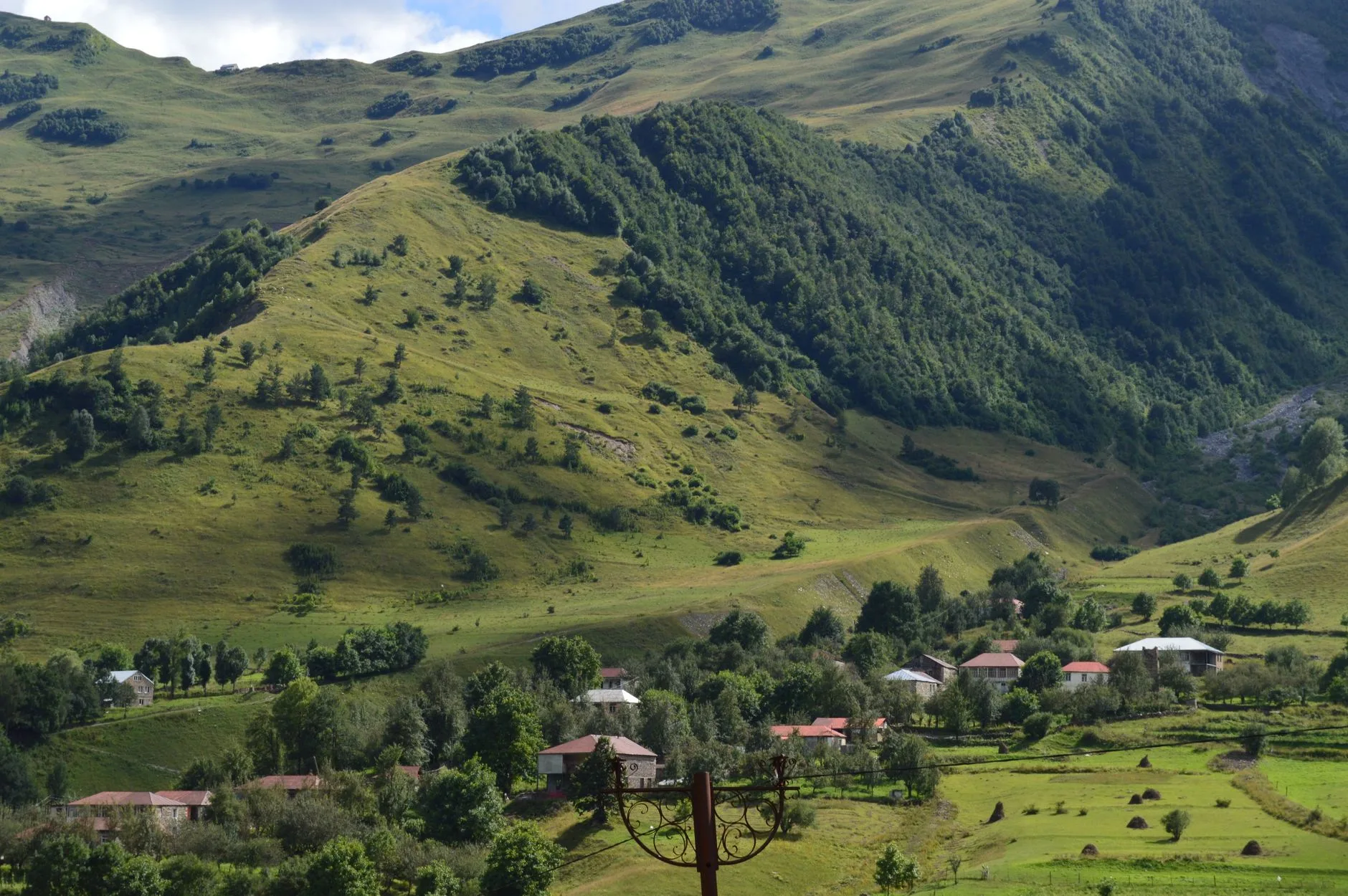
Northeast of Kazbegi, Tusheti is the part of Georgia that still operates on its own schedule. The single road in from Kvemo Alvani to Omalo — via the Abano Pass, one of the more hair-raising drives in the Caucasus — is only passable roughly from June to early October, and only by 4×4. The region cuts itself off entirely in winter, its villages emptying as residents move down to the lowlands.
This isn’t a place to arrange on a whim without a buffer day or two — shared jeeps leave from Alvani when full, not on a schedule, and weather closes the pass without warning. But for travellers who make the trip, Tusheti delivers a version of mountain life that Svaneti, now firmly on the circuit, has started to lose: shepherd villages, watchtowers nobody has restored for tourism, and a silence broken mostly by sheep bells.
| Region | Best season | Getting there | Difficulty | What it’s known for |
|---|---|---|---|---|
| Tbilisi | Year-round | International flights to TBS | Easy | Old town, baths, food |
| Kakheti | April–October | 2hr marshrutka from Didube | Easy | Qvevri wine, monasteries |
| Kazbegi / Stepantsminda | May–October | 3hr marshrutka or shared taxi | Moderate | Gergeti Trinity hike |
| Svaneti (Mestia–Ushguli) | June–September | 9hr marshrutka or flight to Mestia | Moderate–hard | Multi-day trek, stone towers |
| Tusheti | Late June–early October | 4×4 shared jeep from Alvani | Hard | Remote villages, closes in winter |
Borders, honesty about costs, and what to actually expect
Georgia borders Armenia, Azerbaijan, Turkey, and Russia, and the land crossings to Armenia (Sadakhlo) and Turkey (Sarpi, near Batumi) are straightforward for independent travellers, with marshrutkas running direct between Tbilisi and Yerevan daily. Crossing to Russia is not recommended given the current state of relations and ongoing restrictions, and travellers should check current government travel advisories — both the UK Foreign, Commonwealth & Development Office and the US State Department maintain current guidance on the breakaway regions of Abkhazia and South Ossetia, which are not accessible to most travellers and not worth the risk of attempting.
Daily budgets run lean by Western European standards — a filling meal of khinkali and a glass of wine rarely tops $8–10, and guesthouses in the regions run $15–25 a night including breakfast, often a home-cooked one. Tbilisi hotels and the more polished Batumi seafront push costs up, but stepping even slightly outside the centre collapses the price fast.
Road quality is the honest caveat that doesn’t make it into most glossy write-ups: the Georgian Military Highway floods and lands in avalanche season, marshrutka drivers pass on blind corners with a confidence that takes some acclimatising to, and Tusheti’s Abano Pass has genuinely killed people who misjudged it. None of this should scare off a careful traveller, but it should temper any illusion that Georgia’s infrastructure matches its scenery.
The Bottom Line
- Georgia’s visa-free entry and marshrutka network make it one of the more genuinely workable countries for independent travel without pre-booked tours — but budget patience for schedules that bend to “when the van is full,” not the clock.
- Tbilisi deserves more than a stopover; basing yourself in Sololaki or Vera and eating at neighbourhood khinkali houses gives a far better sense of the city than Rustaveli Avenue alone.
- Svaneti and Tusheti offer genuinely different trips — Svaneti is more accessible and increasingly well-trodden, while Tusheti’s short season and rough pass demand flexibility and a tolerance for uncertainty, similar in spirit to how travellers weigh the best countries for solo travel against ease versus reward.
- The family-run guesthouses along the trekking routes function as a form of community-based tourism that keeps money in the villages themselves — worth seeking out deliberately rather than defaulting to the first listing online.
- Check current advisories before planning any route near Abkhazia, South Ossetia, or the Russian border — the rest of the country remains straightforward, but these areas are not.
Keep reading: Budget travel in Georgia: the country’s hidden gem