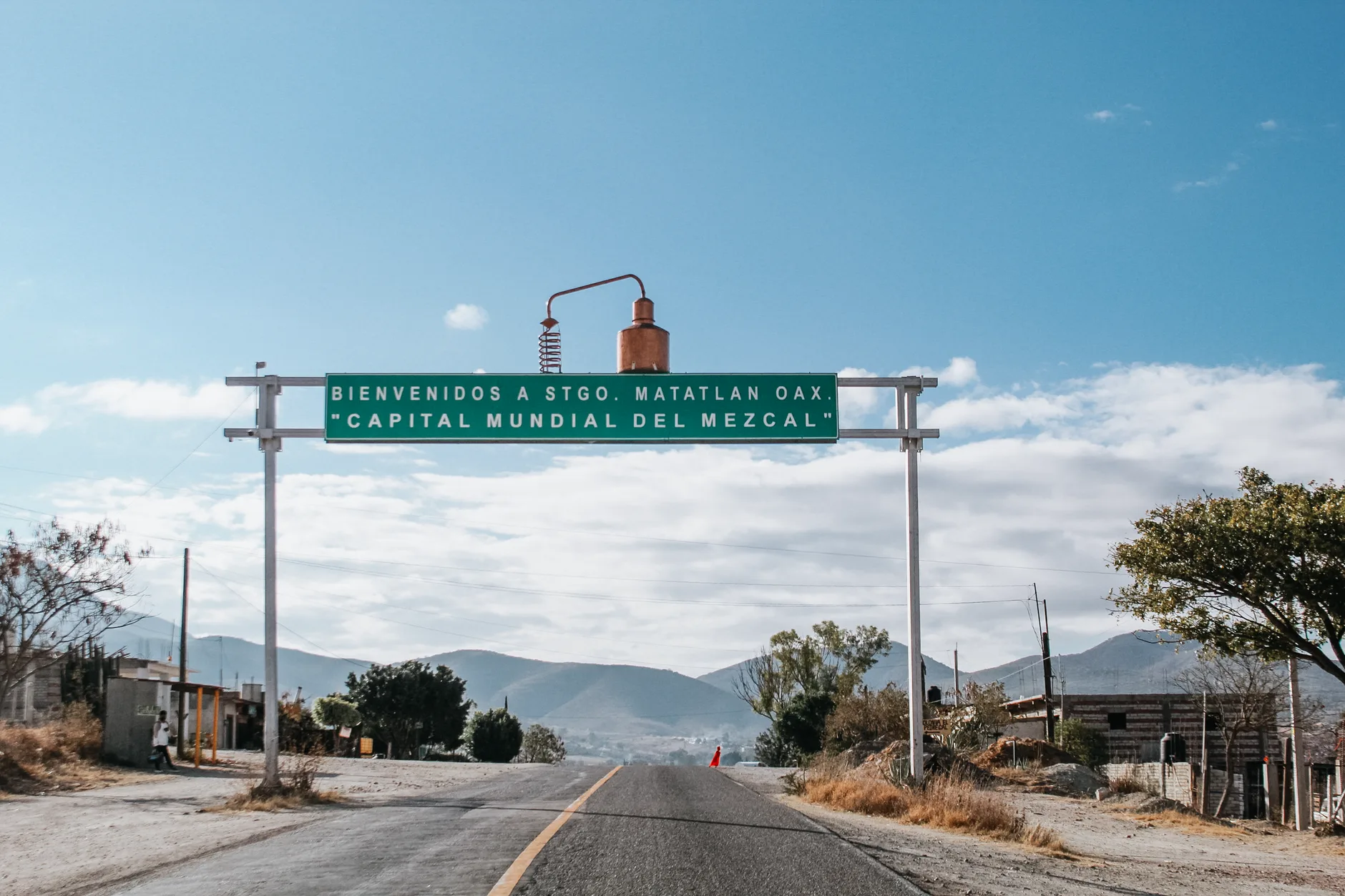
Photo by Gustavo Romero Monterroza on Pexels
The dye vat in Teotitlán del Valle smells like crushed insects and lime juice, which is more or less what it is. A woman named Juana — not her real name, because half the weavers in this valley share two or three family names and introductions tend to happen by workshop rather than surname — pulls a hank of wool from a pot the colour of dried blood and explains that the red comes from cochineal, a parasite that lives on prickly pear cactus and has been harvested here since before the Spanish arrived. The wool steams slightly in the cold morning air. Somewhere behind the house, a dog barks at nothing in particular, and the only other sound is the dry clack of a backstrap loom from the room next door.
This is Oaxaca without the mezcal flight and the seven-mole tasting menu — not because those things aren’t worth doing (they are, and this piece assumes you’ve already had your smoky espadín and your mole negro at a market stall in the city), but because the state holds far more than its restaurant scene suggests. Oaxaca is Mexico’s most ethnically diverse state, home to sixteen recognised Indigenous groups, and its textiles, its archaeology, its Pacific coast, and its mountain villages reward exactly the kind of unhurried attention that a weekend city break doesn’t allow.
Why Oaxaca rewards slowing down
Oaxaca City itself is compact enough to walk in an afternoon, which is precisely the trap. Visitors land, do the Templo de Santo Domingo, the Mercado 20 de Noviembre, a mezcalería crawl through Jalatlaco, and leave three days later having seen the capital and nothing else. But Oaxaca the state is roughly the size of Portugal, and its interest lies in the valleys, sierras, and coastline radiating out from the city — each requiring its own travel day, its own pace, its own kind of attention.
The historic centre of Oaxaca City and the nearby ruins of Monte Albán are jointly inscribed as a UNESCO World Heritage Site, and that status is well earned — but treating the city as a base rather than the destination changes the whole shape of a trip. Budget two to three weeks if you can, or commit to one region properly if you can’t. Oaxaca punishes the rushed itinerary more than most places; the roads are mountainous, the buses are slower than the map suggests, and the villages run on their own clocks.
The Central Valleys: weaving towns and the market at Mitla
South and east of the city, Highway 190 strings together a chain of villages worth a full day each. Teotitlán del Valle, 30 minutes from Oaxaca City by colectivo (shared taxi, around 25 pesos) or a short Uber, is the heart of Zapotec weaving. Family workshops like Bii Dauu, a women’s weaving cooperative, offer natural-dye demonstrations and sell rugs directly, cutting out the markup you’d pay in a city gallery. Expect to spend 1,500–6,000 pesos on a hand-loomed piece, depending on size and dye complexity — cochineal reds and indigo blues cost more than synthetic colour, and a good weaver will tell you plainly which is which.
Further along, San Bartolo Coyotepec produces barro negro, the distinctive black pottery burnished to a dull shine with quartz stones rather than glaze — a technique attributed to a potter named Doña Rosa, who discovered it by accident in the 1950s. Santo Tomás Jalieza specialises in backstrap-loom textiles, mostly smaller cotton pieces — belts, table runners — woven by women sitting in doorways with the loom strap around their waist, tension held by the body rather than a frame.
At the end of the road, Mitla has its own archaeological site, less visited than Monte Albán but arguably more striking: the geometric stone fretwork (grecas) on its palace walls is unique in Mesoamerica, intricate mosaic patterns assembled without mortar. The Frissell Museum next door, modest and underfunded, fills in context most guidebooks skip. From Mitla, shared taxis run to Hierve el Agua, the petrified waterfall formations where mineral-saturated spring water has calcified over centuries into cliffs that look, from a distance, like frozen cascades. Entry costs around 50–100 pesos depending on which community checkpoint you pass through (the site straddles land managed by two villages, San Lorenzo Albarradas and San Isidro Roaguía, and both charge). Swim in the natural pools at the cliff edge if you don’t mind sharing the view with everyone else who had the same idea — mornings on a weekday are quieter.
Sierra Norte: hiking between villages, not toward a summit
North of the city, the Sierra Norte mountains hold a network of eight villages — Benito Juárez, Cuajimoloyas, Latuvi, Lachatao, and others — connected by hiking and mountain biking trails through pine-oak forest at altitudes between 2,000 and 3,200 metres. This is the Pueblos Mancomunados, a community-managed tourism network run by the villages themselves rather than an outside operator, with cabañas, guides, and trail maintenance handled cooperatively. It’s one of the better-functioning examples of locally controlled tourism in Mexico, and worth comparing against other community based tourism examples that work if you’re interested in how the model holds up elsewhere.
Expeditions can be booked through the Expediciones Sierra Norte office in Oaxaca City, or arranged village by village if you’re comfortable with more improvisation and some Spanish. Treks typically run two to four days, moving between villages with a local guide, sleeping in simple cabañas (bring a sleeping bag liner; blankets are provided but thin), and eating meals cooked by a village family — usually a hearty caldo, fresh tortillas pressed by hand, and strong black coffee grown on nearby slopes. The air up here is cold at night even in dry season, and the trails are genuinely remote: don’t expect phone signal, and don’t attempt the longer routes without a guide unless you’re confident in backcountry navigation.
The coast: Mazunte, Zipolite, and the turtle sanctuary
Oaxaca’s Pacific coast is a seven-to-eight-hour bus journey from the city (ADO runs the route; the mountain road has more curves than a horror film and some travellers take motion sickness tablets as a precaution), or a short flight into Puerto Escondido or Huatulco. The coast operates on an entirely different rhythm from the valleys — hot, humid, slower still.
Mazunte is the quiet centre of gravity here: a former turtle-slaughter town turned conservation site, home to the Centro Mexicano de la Tortuga, a research and rescue centre where four species of sea turtle nest on the surrounding beaches between roughly May and January. Volunteer nest-monitoring programs exist but require advance arrangement and a minimum stay, typically several weeks — this isn’t a drop-in activity. Next door, San Agustinillo has a smaller, calmer beach with a handful of palapa restaurants serving fresh-caught fish, grilled whole and served with lime and a scoop of salsa that will clear your sinuses.
Zipolite, a little further on, remains Mexico’s only legally recognised nude beach and has a reputation that precedes it — strong currents mean it’s also one of the more dangerous beaches on this stretch of coast for swimming, so treat the surf with respect regardless of what else is happening on the sand. Inland from the coast road, the Manialtepec and Ventanilla lagoons offer boat trips through mangrove channels where you’ll spot crocodiles, herons, and — at Manialtepec, on moonless nights — bioluminescent plankton that lights up in the boat’s wake like something out of a dream sequence, caused by dinoflagellates disturbed by movement in the water.
Food beyond the mole tasting menu
Oaxacan food writing tends to orbit the seven moles and stop there, but the everyday eating is where the state’s agricultural diversity actually shows up. In Oaxaca City’s Mercado 20 de Noviembre, the smoke-filled passage known as the pasillo de humo is where vendors grill meat to order over charcoal while you choose your cut and sides; it’s touristy now, but still functions as advertised. The Mercado de Abastos, the city’s sprawling wholesale market, is less photogenic and far more interesting — go on a Saturday, when the surrounding streets fill with produce trucks from every valley village, and you’ll find things no restaurant menu lists: chapulines (chile-lime grasshoppers, sold by the kilo), fresh quesillo being pulled into its signature stretchy strands, and tejate, a pre-Hispanic maize-and-cacao drink served cold in painted gourd bowls, foam floating on top like a strange beer.
In Etla, a half-hour north of the city, the Wednesday market is the best place to try tejate in its original context, made by women using a recipe that predates the Spanish conquest by centuries. For something sweet, look for nicuatole, a corn-based pudding set with cochineal-pink or purple hibiscus colouring, sold from coolers on street corners rather than in restaurants. None of this requires a reservation or a tasting menu — it requires showing up hungry and asking what’s good, which market vendors will answer honestly, usually while already serving you.
| Region | Travel time from Oaxaca City | Best for | Difficulty | Best season |
|---|---|---|---|---|
| Central Valleys (Teotitlán, Mitla, Hierve el Agua) | 30–90 min by colectivo/taxi | Textiles, pottery, archaeology, day trips | Easy | Year-round, Oct–April driest |
| Sierra Norte (Pueblos Mancomunados) | 1.5–2 hrs to trailhead village | Multi-day hiking, community tourism | Moderate–strenuous | Oct–April (dry, cold nights) |
| Oaxaca Coast (Mazunte, Zipolite, San Agustinillo) | 7–8 hrs by bus, 45 min by flight | Beaches, turtle conservation, lagoons | Easy | Nov–April (dry); turtle nesting May–Jan |
| Day of the Dead villages (Xoxocotlán, San Agustín Etla) | 20–40 min by taxi | Cemetery vigils, altars, cultural immersion | Easy | Late Oct–early Nov only |
Día de los Muertos, done at village pace
If you’re timing a trip around Day of the Dead (Días de Muertos, officially October 31 to November 2), skip the city’s organised comparsas and paid cemetery tours for at least one night and head to Xoxocotlán, a municipality just south of the centre where the Panteón Viejo cemetery holds an all-night vigil lit entirely by candles and marigold petals (cempasúchil), families sitting beside decorated graves with food, mezcal, and music for the dead. It’s not a performance for visitors — it’s a real vigil that visitors are permitted to witness respectfully, which means quiet observation, no flash photography of grieving families, and no wandering into private altars uninvited. Hotel prices in the city triple during this week and book out months ahead; if you’re serious about attending, reserve by midyear.
Getting around without losing the week to transit
Oaxaca’s intercity bus network, run mainly by ADO and the cheaper regional lines, is reliable on paved routes but slow on mountain roads — budget double the Google Maps estimate for anything in the Sierra Norte. Colectivos (shared vans or taxis, often Nissan NV vans packed well past what looks like capacity) connect most Central Valley villages for 20–40 pesos a ride and leave when full rather than on a schedule, which means patience is part of the cost. Renting a car gives more control over timing but Oaxacan mountain driving is not casual — narrow shoulders, frequent fog, and livestock on unlit roads after dark. If you’re coming from Mexico City first, note that the cultures and paces are different enough that it’s worth treating as two separate trips rather than one combined itinerary; anyone road-tripping the capital beforehand should read up on budget travel in Mexico City separately, since the logistics barely overlap.
Entry requirements are straightforward for most nationalities (tourist visas on arrival for US, Canadian, UK, EU, and many other passport holders), but it’s worth checking current conditions before booking, since travel advisories for parts of Mexico do shift; the US State Department’s Mexico travel advisory breaks down state-by-state risk levels, and Oaxaca state has historically sat at a lower advisory level than some northern states, though it’s sensible to check rather than assume.
The Bottom Line
- Oaxaca rewards a regional approach, not a city-break mentality — pick two of the three regions (valleys, sierra, coast) rather than trying to rush all three in under ten days.
- The Sierra Norte hiking network is genuinely community-run, not a marketing label, which means slower bookings, simpler accommodation, and a more direct economic benefit to the villages hosting you.
- Market food, not restaurant tasting menus, is where Oaxaca’s agricultural and culinary diversity actually shows up — go hungry, go on a market day (Etla on Wednesdays, Abastos on Saturdays), and ask vendors directly.
- If Day of the Dead is the draw, book accommodation by midyear and treat the cemetery vigils as something you’re witnessing, not attending as entertainment.
- Build in slack for transit delays — mountain roads and colectivo schedules don’t bend to itineraries, and the state is considerably larger and slower-moving than its compact capital suggests.
Keep reading: Budget travel in Mexico City: a practical guide