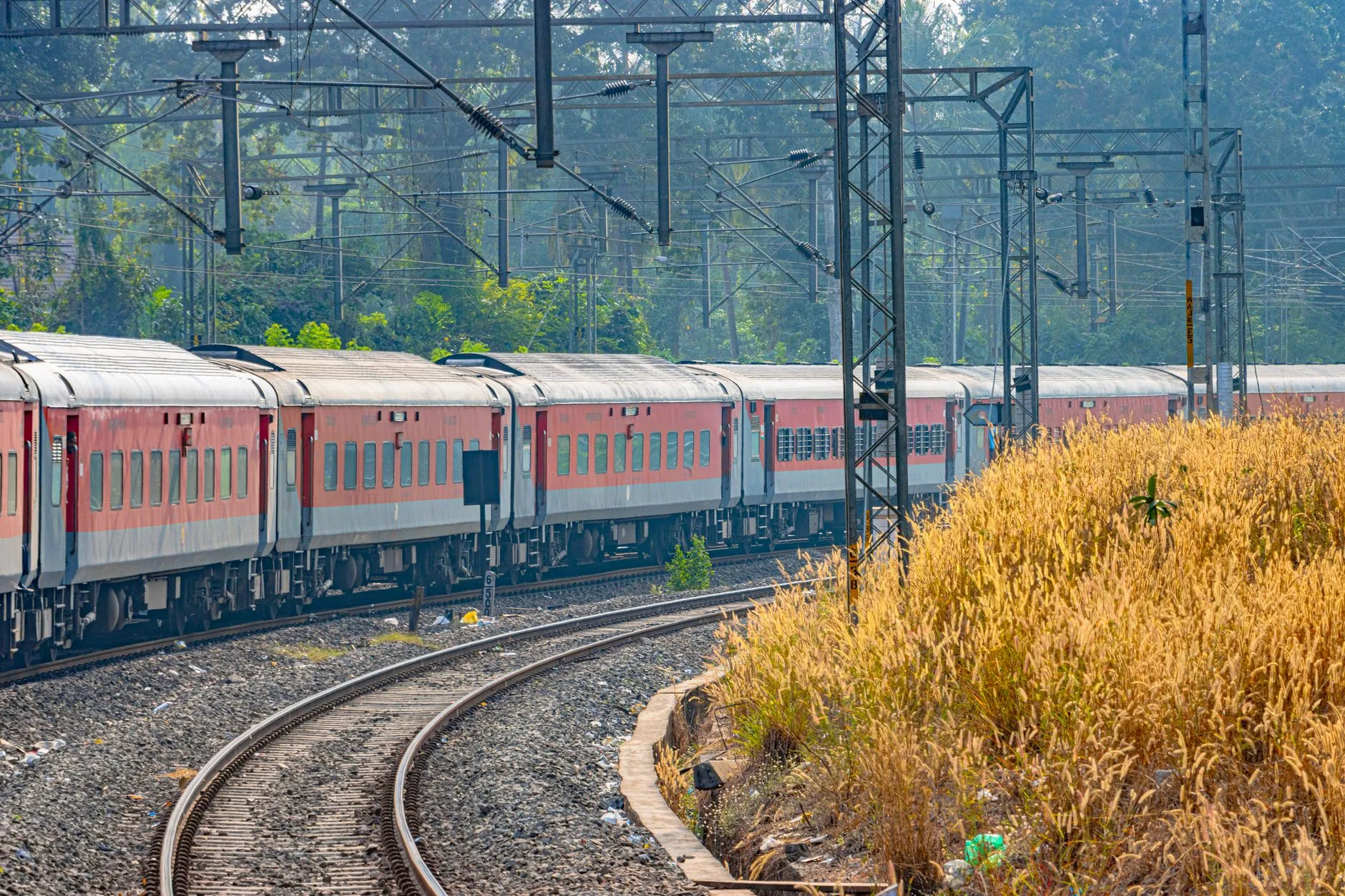
Photo by Shantum Singh on Pexels
The platform at New Delhi railway station at 6am smells of diesel, frying parathas, and the particular mustiness of a building that never quite dries out. Porters in red shirts balance three suitcases on their heads while a chai-wallah works the length of Platform 1 with a kettle and a stack of small clay cups, calling out the price before anyone asks. Somewhere a loudspeaker announces, in Hindi and then English, that the Golden Temple Mail is running forty minutes late — an announcement that will repeat, with revised numbers, for the next hour.
This is the starting point for one of the great overland journeys available to a traveller with time and a tolerance for queues: a north-to-south crossing of India entirely by train, from the Himalayan foothills to the beaches of Kerala and Tamil Nadu. It can be done on a genuinely modest budget — sleeper class fares across the country rarely exceed a few dollars for journeys of several hundred kilometres — but it rewards planning. Indian Railways runs one of the largest networks on earth, and that scale is both the appeal and the challenge.
Why the train, and not the bus or the plane
Domestic flights in India have become cheap enough that budget airlines like IndiGo and SpiceJet can beat train fares on long north-south hauls. But flying skips the part of India that makes the journey worth taking in the first place — the hours spent watching mustard fields give way to scrubland, the Deccan Plateau give way to palm groves, while sharing biscuits with a family travelling to a wedding three states away. Buses are often faster door-to-door on shorter regional hops, but overnight sleeper buses on Indian highways are a genuinely rough way to sleep, and don’t offer the same window onto the country.
The train occupies the middle ground: slow enough to feel the scale of the country, cheap enough to not think twice about a 20-hour journey, and social in a way that flying never is. Strangers in a six-berth sleeper compartment will, within an hour, know where you’re from, whether you’re married, and what you think of Indian food — usually followed by an invitation to share theirs.
Booking: IRCTC, Tatkal, and the waitlist problem
All long-distance train bookings run through IRCTC, the government’s reservation platform. The website and app are notoriously clunky for first-time users — expect to set up an account well before departure and keep a local SIM or working OTP access, since bookings require a verification code. Popular routes (Delhi–Agra, Mumbai–Goa, anything touching a festival period) sell out weeks ahead, so book as early as the 60-day advance window allows if your dates are fixed.
Two systems are worth knowing:
- Tatkal releases a small quota of seats one day before departure, at a premium, for travellers who didn’t plan ahead. Booking opens at 10am (AC classes) or 11am (non-AC) and the good seats vanish within minutes.
- Waitlisted (WL) tickets are common on popular routes — a confirmed berth isn’t guaranteed until the chart is prepared, usually four hours before departure. Foreign travellers sometimes fall back on the small quota reserved for tourists at certain stations, bookable in person with a passport.
Picking a class: sleeper, 3AC, 2AC, or general
| Class | Typical fare (Delhi–Varanasi, ~800km) | Comfort | Who it suits |
|---|---|---|---|
| General (unreserved) | $2–3 | No seat guaranteed, crowded, no AC | Short daytime hops only, high tolerance for chaos |
| Sleeper (SL) | $5–7 | Open berths, fans, no AC, functional toilets | The classic budget overnight experience |
| 3AC | $14–18 | Air-conditioned, curtained berths, bedding included | Best value for long overnight legs |
| 2AC | $22–28 | Fewer berths per compartment, more privacy | Worth it on 20+ hour hauls |
Sleeper class is the backbone of budget train travel in India — it’s where you’ll meet the most people and spend the least money, though the heat on a May afternoon in Madhya Pradesh is not to be underestimated. 3AC is the sensible upgrade for anyone doing multiple overnight journeys back to back; the bedding and air conditioning make a real difference to how rested you’ll feel the next morning.
The northern leg: Delhi to Varanasi
Start in Delhi, but don’t rush it — Old Delhi’s Chandni Chowk, with its silver market and the Jama Masjid rising over the rooftops, deserves at least a full day before boarding anything. From Delhi, most travellers head first to Agra (2 hours by Gatimaan Express, India’s fastest train) for the Taj Mahal at sunrise, then loop to Jaipur (4.5 hours by train from Agra), Jodhpur, and Udaipur through Rajasthan — a week well spent on forts, bazaars, and lake palaces before turning the journey properly south.
From Rajasthan, the long haul to Varanasi (typically 24+ hours via Delhi or a direct overnight service from Jaipur) is where the trip stops feeling like sightseeing and starts feeling like travel. Varanasi itself rewards an early start: boats on the Ganges at dawn, the ghats thick with woodsmoke from cremation fires at Manikarnika, and lanes in the old city too narrow for anything but a bicycle and a wandering cow.
The pivot point: crossing the middle of the country
There is no elegant way to cross the middle of India by train — it is simply long. The most practical pivot is via Mumbai, reached from Varanasi in roughly 24–30 hours depending on the service, or via a shorter hop to Nagpur and onward. Mumbai is worth two or three days regardless: Colaba’s Causeway market, the Gothic bulk of Chhatrapati Shivaji Maharaj Terminus (itself a UNESCO World Heritage Site), and a plate of pav bhaji from a stall near Juhu Beach at dusk.
From Mumbai, the southern network opens up properly — this is where the trip shifts gears, the architecture changes, the food gets sharper with curry leaf and tamarind, and the pace slows.
The southern leg: Goa, Hampi, and the Kerala backwaters
The Konkan Railway line south from Mumbai runs along one of the more scenic stretches of track in the country, cutting through the Western Ghats with the Arabian Sea visible for long stretches — the Mumbai–Goa leg (around 12 hours) is worth taking in daylight if your schedule allows.
From Goa, detour inland to Hampi (via an overnight train or bus to Hospet, then a short tuk-tuk ride), a UNESCO-listed landscape of 14th-century temple ruins scattered across a boulder-strewn valley — one of the more remarkable and underused stops in the whole country, cheap to visit and genuinely strange in the best way.
Continuing south, Kochi’s Fort Kochi district offers Chinese fishing nets at sunset and a slower, colonial-tinged pace before the final stretch into the Kerala backwaters around Alleppey, where a shared houseboat or a cheaper public ferry along the canals is a different kind of train-less travel entirely — the green silence after weeks of station noise is its own reward. From Kerala, the line continues to Kanyakumari, the literal southern tip of India, where the Arabian Sea, Bay of Bengal, and Indian Ocean meet.
Food along the route, station by station
Train food in India operates on two levels: what’s served onboard (variable, often skippable) and what’s sold through the window at stations, which is where the real eating happens. Vendors board at every stop selling regional specialities — expect litti chomcha in Bihar, vada pav around Maharashtra, and fresh coconut water the moment the train crosses into Kerala. Carry a steel water bottle and refill at station taps or buy sealed bottles only — tap water outside major hotels isn’t safe to drink raw, and this is the one area where cutting costs isn’t worth the risk.
Costs, timing, and an honest assessment
A full north-to-south crossing — Delhi to Kanyakumari, with stops — typically takes four to six weeks done at a reasonable pace, though it can be compressed to three if you’re willing to skip Rajasthan or Hampi. Train fares for the entire route, booked mostly in sleeper and 3AC, rarely total more than $150–200 even for several thousand kilometres of travel. Accommodation is the bigger lever on cost: budget guesthouses and hostels across most of the route run $5–15 a night, though Goa and parts of Kerala climb higher in peak season (December–February).
The best window for the full route is November through February, when Delhi and Rajasthan are cool and dry and the south hasn’t yet hit its pre-monsoon heat. Travelling April through June means brutal heat in the north; July through September brings the monsoon, which floods some southern routes and makes the Ganges unphotographable with silt.
| Season | North (Delhi, Rajasthan, Varanasi) | South (Goa, Hampi, Kerala) |
|---|---|---|
| Nov–Feb | Cool, dry, best overall | Pleasant, peak season crowds in Goa |
| Mar–Jun | Very hot, dusty | Hot, humid before monsoon |
| Jul–Sep | Monsoon rains, Ganges swollen | Heavy monsoon, Kerala backwaters lush but wet |
| Oct | Transitional, decent | Transitional, decent |
This kind of trip is not without friction. Trains run late, often by hours rather than minutes. Toilets on sleeper class are basic squat affairs that get worse as a journey wears on. Waitlisted tickets can leave you standing in a corridor for a night if they don’t clear. None of this is a reason to avoid the route — it’s simply the texture of it, and travellers who’ve done similar long overland routes through Vietnam’s north-south train line or Sri Lanka’s hill country rail will recognise the trade-off: slower, cheaper, and far more textured than flying over it.
The Bottom Line
- Book Sleeper or 3AC through IRCTC as early as the 60-day window allows for any fixed dates — Tatkal and waitlists are a genuine fallback, not a plan.
- Budget four to six weeks for the full Delhi-to-Kanyakumari route if you want to actually stop and look, not just transit through it.
- November to February is the forgiving season for both ends of the country; anything April through September means contending with either extreme heat or monsoon disruption.
- The real cost driver isn’t the trains — it’s accommodation and how long you linger in Goa and Rajasthan, both of which can quietly eat a budget if you’re not watching.
- If a full coast-to-coast crossing feels too long, the Delhi–Varanasi northern loop or the Goa–Kerala southern stretch work as standalone trips, and travellers weighing up other South Asian rail-and-road routes might find it useful to compare against Nepal’s overland options beyond the tourist trail before deciding where to spend the time.
Keep reading: Compare it to a similar north-south overland route