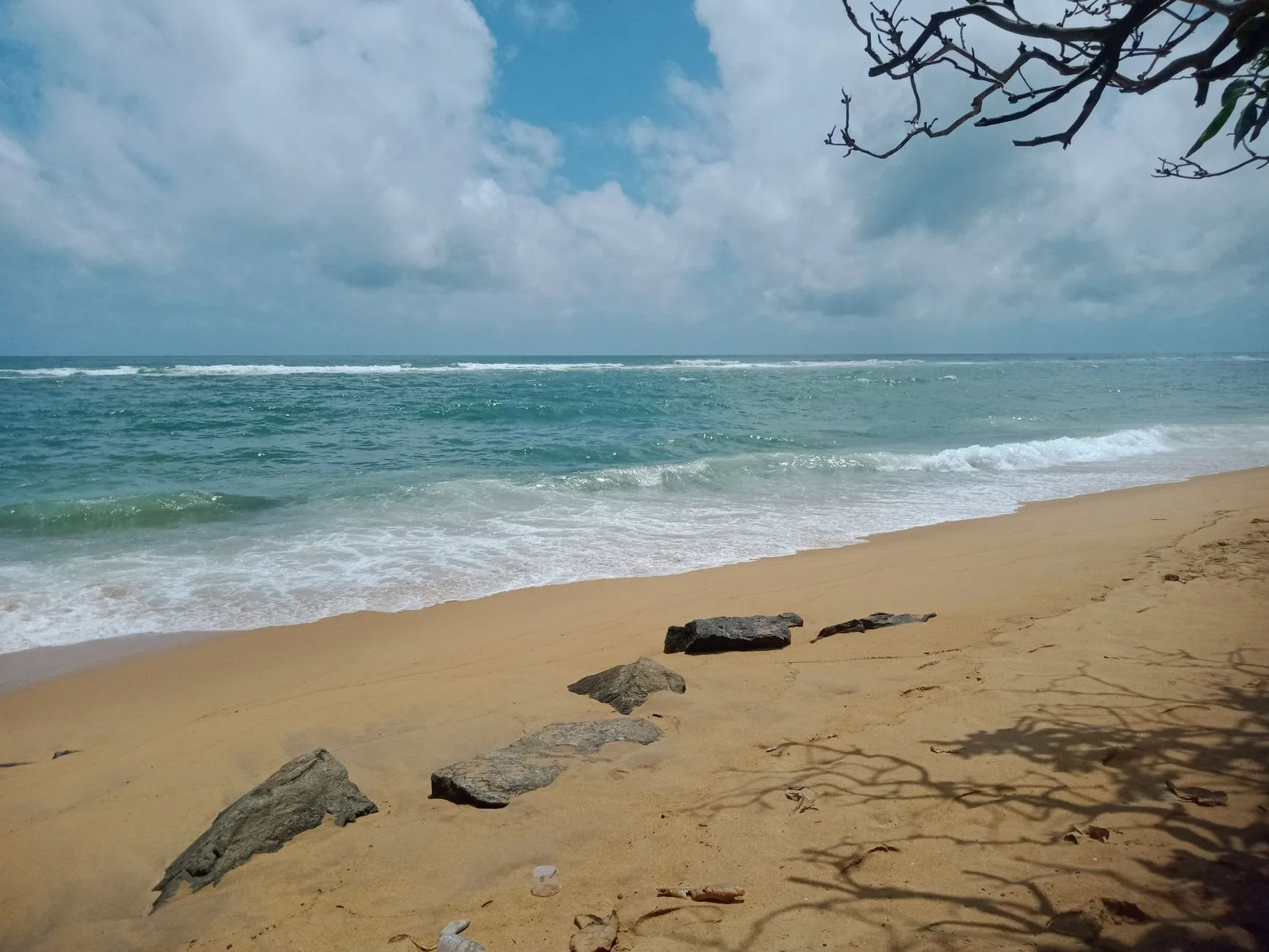
Photo by Ransi Deshadi on Pexels
The 6:40am train from Kandy to Ella fills up fast, and if you haven’t reserved a seat in the observation car weeks ahead, you’ll be standing in the open doorway of a second-class carriage somewhere past Nanu Oya, legs dangling over tea plantations that unroll in green terraces down the hillside, the air smelling of wet eucalyptus and someone’s thermos of plain tea. A vendor moves through the carriage selling vadai wrapped in newspaper. Nobody’s in a hurry. This is Sri Lanka’s most photographed train ride, and it costs about 500–1,500 rupees (roughly $1.50–$5) depending on class — one of the more absurd value-for-money experiences left in independent travel.
That contrast — scenery and service that feel disproportionate to the price — runs through most of Sri Lanka. The island rewards travellers who move slowly and stay flexible, but it also demands patience with infrastructure that can be unpredictable: buses that leave when full rather than on schedule, entrance fees at major sites that have risen sharply for foreign visitors, and a tourism economy still recalibrating after the 2019 Easter bombings, the 2020–2022 pandemic closures, and the 2022 economic crisis that briefly brought fuel queues and power cuts. None of that makes Sri Lanka difficult to travel on a budget. It makes it a place where a little planning goes a long way.
Getting In and the Visa Situation
Sri Lanka requires almost all foreign visitors to obtain an Electronic Travel Authorization (ETA) before arrival, applied for online through the official government portal. It’s generally valid for a 30-day stay and extendable at the Department of Immigration in Colombo if you want to linger. Processing is usually quick, but apply at least a few days ahead rather than at the airport gate — the system has a habit of being slower than advertised, and a rejected or delayed application is a bad way to start a trip.
Most international flights land at Bandaranaike International Airport near Negombo, about 30km north of Colombo. A prepaid taxi into the capital runs around $15–20; a tuk-tuk from outside the airport gates, negotiated rather than metered, can be cheaper but takes longer in traffic. If your flight lands late, Negombo itself — with its long beach and fish market at dawn — is a reasonable first night rather than pushing straight into Colombo’s traffic.
Getting Around: Trains, Buses, and the Tuk-Tuk Question
Sri Lanka’s railway network, built under British colonial rule, is slow, often delayed, and genuinely one of the best ways to see the country. Beyond the Kandy–Ella line, the coastal route from Colombo to Galle and on to Matara hugs the shoreline closely enough that waves sometimes splash the tracks. Book reserved seats through the official Sri Lanka Railways booking system or through booking agents in Colombo and Kandy — unreserved third class is cheap and available on the day, but means standing room only on popular routes.
Buses cover everywhere trains don’t, and fares are startlingly low — a few hundred rupees for hours of travel. Private intercity buses (“semi-luxury” or “luxury AC”) cost more but are faster and less crowded than government CTB buses, which stop everywhere and pack riders in during peak hours. For shorter hops, three-wheelers (tuk-tuks) are everywhere; use the PickMe app (Sri Lanka’s answer to Uber) for metered, fixed-price rides rather than negotiating on the street, where foreigners routinely get quoted triple the local rate.
Renting a scooter is common among longer-stay travellers, especially around the south coast and hill country, and costs roughly $8–15 per day. Roads are chaotic by Western standards — expect dogs, cattle, and oncoming traffic overtaking on blind corners — so this suits travellers with prior riding experience more than first-timers.
| Transport | Cost (approx.) | Best for | Honest downside |
|---|---|---|---|
| Reserved train (2nd/1st class) | $2–8 per journey | Scenic routes (Kandy–Ella, coastal line) | Must book weeks ahead in high season |
| Unreserved train | Under $1 | Short hops, flexibility | Standing room only, very crowded |
| Private AC intercity bus | $3–8 | Longer distances, comfort | Fewer departures, fixed schedules |
| Government CTB bus | Under $1 | Short local trips, remote areas | Hot, crowded, frequent stops |
| Tuk-tuk (PickMe app) | $1–5 per ride | City hops, last-mile transport | Street-hailed fares often inflated |
| Scooter rental | $8–15/day | Independent exploring, coast and hills | Chaotic roads, needs riding experience |
Where to Stay and What It Actually Costs
Guesthouses — family-run, often with a home-cooked breakfast included — remain the backbone of budget accommodation in Sri Lanka, typically running $10–25 for a double room with fan or basic air-con. Hostels have multiplied in tourist hubs like Ella, Mirissa, and Arugam Bay, with dorm beds from around $6–10. In quieter towns like Jaffna in the north or Batticaloa on the east coast, guesthouses are cheaper still and far less likely to be booked out, since most travellers haven’t ventured that far from the well-worn south-coast and hill-country circuit.
Prices climb steeply in December–January (peak season on the south and west coasts) and during the April Sinhala and Tamil New Year, when domestic travel surges alongside foreign arrivals. Booking two or three days ahead is usually enough outside these windows; during them, a week’s notice is safer.
Food: Where the Real Savings Are
Eating well in Sri Lanka is cheap almost everywhere that isn’t a hotel restaurant. A rice and curry set meal — rice with several small curries, dhal, and a sambol — costs $1.50–3 at a local “hotel” (the Sri Lankan term for a casual eatery, confusingly unrelated to accommodation). Kottu roti, chopped flatbread stir-fried with vegetables, egg, or meat on a hot griddle, is the island’s great street food, best eaten where you can hear the rhythmic clanging of the metal blades before you see the stall — Galle Face Green in Colombo and the night food stalls in Kandy near the lake are reliable spots.
Hoppers (appa) — bowl-shaped fermented rice-flour pancakes, often with an egg cracked into the centre — are a breakfast staple, best found at small roadside stalls rather than hotel buffets, where they’re invariably worse and more expensive. String hoppers, lamprais, and devilled dishes round out a cuisine built on coconut, chilli, and curry leaves that rewards eating locally rather than sticking to tourist-menu “Western breakfast” options, which cost two or three times as much for a fraction of the flavour.
Fresh king coconut water, sold roadside for 60–100 rupees, is both the best rehydration on a hot day and a reliable way to avoid bottled drinks in a country still working to improve plastic waste management.
The Cultural Triangle: Ruins Worth the Entrance Fee
Sigiriya, Polonnaruwa, Anuradhapura, and Dambulla make up Sri Lanka’s “Cultural Triangle,” a cluster of ancient capitals and rock fortresses dating back over a thousand years. This is where the honest budget conversation gets complicated: entrance fees for foreigners at these sites have risen substantially and now sit well above $20–30 per site, a sharp contrast to the dollar-or-two meals elsewhere on the island. Sigiriya, the fifth-century rock fortress with frescoes and lion-paw gateway (a UNESCO World Heritage Site), is worth the climb and the fee for most visitors, but it’s reasonable to pick one or two sites rather than all four if budget is tight — Polonnaruwa’s compact, bicycle-friendly ruins offer a gentler, cheaper alternative to Anuradhapura’s more sprawling complex.
Basing yourself in Dambulla or the small town of Sigiriya itself, rather than pricier resort-style lodges near the rock, keeps accommodation costs down considerably. Hiring a bicycle to explore Polonnaruwa’s ruins — flat, shaded in parts, and far less crowded by mid-morning — is one of the better-value mornings on the island.
Hill Country and the South Coast: Two Different Climates, Two Different Trips
Sri Lanka’s compact size hides real climatic variety. The hill country around Ella, Nuwara Eliya, and Haputale sits at elevation, meaning cool nights, mist that rolls in over tea estates by late afternoon, and a noticeably different pace — this is where the Ceylon tea industry concentrates, and walking through the Lipton’s Seat or Little Adam’s Peak trails costs nothing but a pair of decent shoes and an early start to beat both heat and crowds.
The south coast — Mirissa, Weligama, Tangalle — runs on a different rhythm: beach towns, whale-watching boats heading out from Mirissa harbour before dawn (December to April is peak season, with sightings not guaranteed), and surf breaks at Weligama suited to beginners. The east coast, around Arugam Bay, flips the seasonal calendar — its surf season runs roughly May to September, when the south-west monsoon makes the opposite coast unreliable. Planning a route that respects this monsoon split, rather than trying to hit both coasts in the same week, saves both money and disappointment.
| Region | Best season | What it’s for | Typical daily budget |
|---|---|---|---|
| Hill country (Ella, Nuwara Eliya) | Year-round, coolest Dec–Feb | Tea estates, hiking, trains | $20–35 |
| South coast (Mirissa, Tangalle) | Dec–April | Beaches, whale watching, surf | $20–40 |
| East coast (Arugam Bay) | May–Sept | Surf, quieter beaches | $18–30 |
| Cultural Triangle | Year-round, hot | Ancient ruins, rock fortresses | $25–45 (entry fees heavy) |
| Jaffna and the north | Jan–Sept (less rain) | Tamil culture, far fewer travellers | $15–25 |
The North: Jaffna and a Different Sri Lanka
Jaffna, the cultural heart of Sri Lanka’s Tamil population, still carries visible scars from the decades-long civil war that ended in 2009 — bullet-pocked buildings sit alongside restored colonial Dutch fort walls. It receives a fraction of the visitors that the south coast does, which means guesthouse prices are lower and the pace is unhurried in a way that feels different from the more tourism-adapted south. The food here leans into Jaffna’s distinct Tamil cuisine — crab curry, odiyal kool (a seafood and tuber soup), and fiery prawn dishes rarely found further south. Getting there means a long but comfortable train ride from Colombo (around 6–7 hours) rather than a flight, which keeps the journey itself part of the experience rather than a logistics problem to skip past.
The Bottom Line
Sri Lanka remains genuinely affordable by most measures — $25–40 a day covers guesthouse accommodation, local food, and trains or buses comfortably for most independent travellers — but the gap between cheap daily living and the cost of entry to major heritage sites is real and worth budgeting for separately. Book the scenic train routes well ahead, especially the Kandy–Ella leg, or accept standing in a doorway with everyone else. Respect the monsoon split between the south and east coasts rather than fighting it. And consider that the quieter regions — Jaffna, Batticaloa, inland towns around Polonnaruwa — often deliver more texture per dollar than the well-established south-coast and hill-country circuit, the same logic that applies to travellers weighing options beyond Southeast Asia’s busiest routes more broadly. If two wheels and a slower pace appeal more than bus timetables, it’s also worth looking at what cycling through the island actually involves before settling on a route.
Keep reading: Cycling through Sri Lanka: what to expect