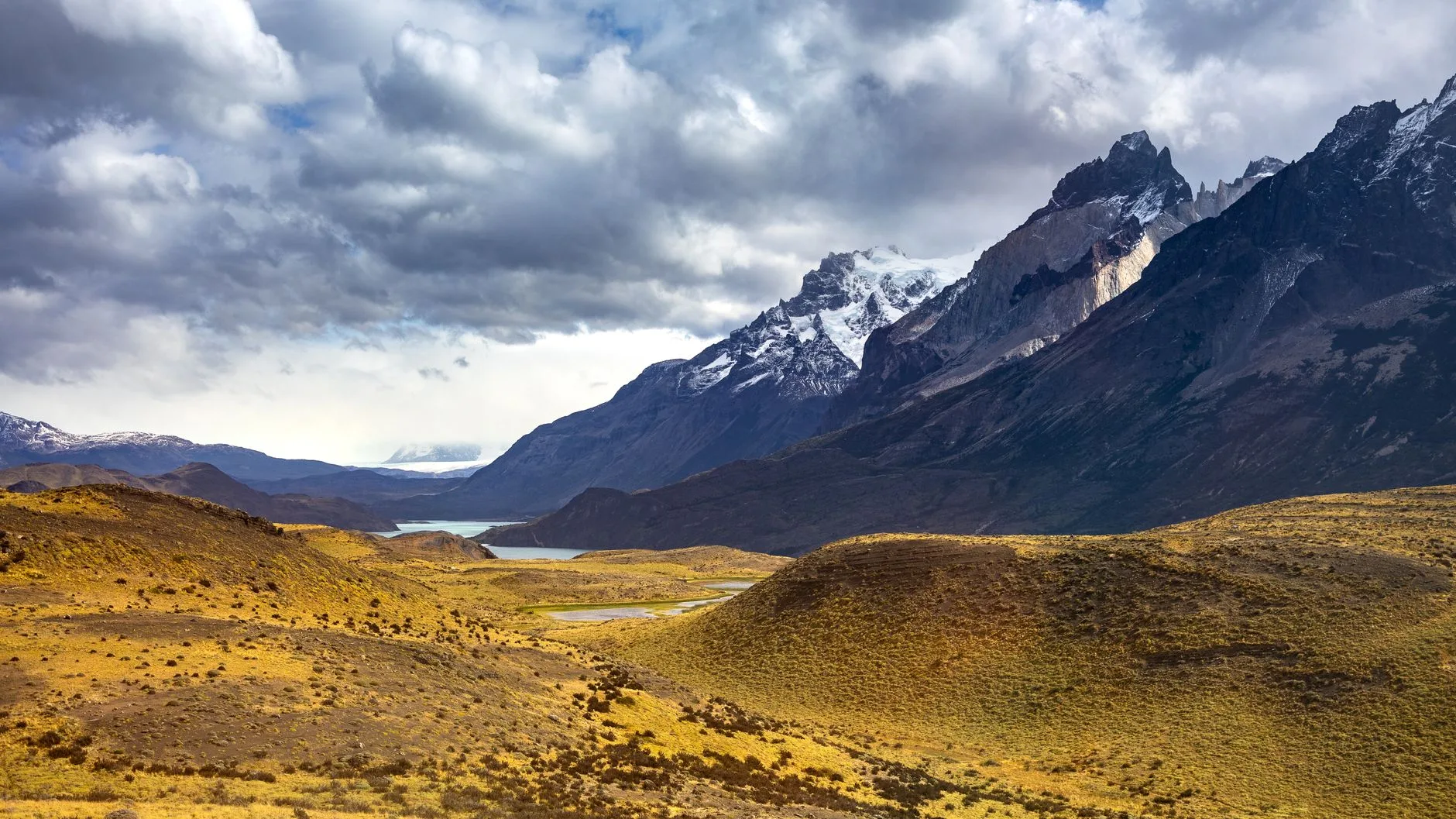
Photo by Marek Piwnicki on Pexels
The wind at Laguna de los Tres hits you sideways around 4,500 feet, somewhere past the lenga forest where the trail turns to scree and the trees give up entirely. You’ve been climbing for two hours from the Poincenot campsite, and the last switchback dumps you onto a ridge where Monte Fitz Roy’s granite spire is suddenly just there, close enough that it stops conversation. People sit on boulders eating crackers in silence, not because the moment demands reverence exactly, but because the wind makes talking a genuine effort.
This is Patagonia doing what it does best: making you work for a view, then not caring whether you’re impressed. The region — spanning southern Argentina and Chile, split by a border that wanders through some of the most dramatic terrain on the continent — rewards people who come prepared and treats everyone else like a minor inconvenience. Weather changes in twenty minutes. Trails that look flat on a map have 1,000 metres of elevation hidden in the contour lines. None of this is a reason to stay away. It’s a reason to plan properly.
Where to Base Yourself: El Chaltén vs Puerto Natales
Two towns anchor most Patagonian hiking, and they’re different enough in character that picking the right one matters.
El Chaltén, Argentina, sits inside Los Glaciares National Park and was essentially built for hikers — there’s no entry fee to the park, trails start from the town’s edge, and you can walk to Laguna de los Tres or Laguna Torre without a car or shuttle. It’s small, dusty in summer, and the main street has more outdoor gear shops than anything else. Reaching it usually means flying into El Calafate (itself a 3-hour bus ride away) and then catching one of the frequent shuttle buses.
Puerto Natales, Chile, is the gateway to Torres del Paine National Park, about 1.5–2 hours away by bus or shared van. It’s a larger, more port-like town on the Última Esperanza Sound, with a proper selection of refugios to book and a logistics-heavy feel — this is where you sort permits, rent gear, and buy fuel canisters you can’t fly with. Torres del Paine, unlike Los Glaciares, charges a park entrance fee (historically in the $35–50 USD range for foreign visitors) and the famous multi-day circuits require advance reservations for campsites and refugios, sometimes months ahead for peak season.
If you only have time for one, the choice usually comes down to this: El Chaltén for accessible day hikes with minimal bureaucracy, Torres del Paine for a bigger, more structured multi-day trekking experience.
The Classic Routes, Honestly Assessed
Laguna de los Tres (El Chaltén, Argentina) — roughly 20km round trip, 10 hours for most people, with a brutal final 400m ascent. No permit needed, no fee. Start at dawn if you want the lagoon without wind chop obscuring the reflection of Fitz Roy.
Laguna Torre (El Chaltén, Argentina) — a gentler 18km round trip to a lake facing Cerro Torre, usually 7–8 hours. Good second-day option since your legs will already be sore.
The W Trek (Torres del Paine, Chile) — the trekking world’s reasonably priced showpiece, named for the shape it traces on the map: around 60–75km over 4–5 days, hitting the base of the Torres, the French Valley, and Grey Glacier. You sleep in refugios or campsites, all of which must be booked through Chile’s park concession system well in advance. This is not a wander-in-and-figure-it-out trek anymore; reservations are mandatory and campsites fill up a full season ahead in December and January.
The O Circuit (Torres del Paine, Chile) — the full loop, roughly 110km over 7–9 days, including the W plus the quieter backside of the massif and the John Gardner Pass, a genuinely tough, exposed climb with views over the Southern Patagonian Ice Field. This is where Patagonia stops being scenic and starts being an expedition. Weight matters, weather windows matter, and a poor-fitting pack will ruin day four.
Cerro Castillo (Aysén region, Chile) — a less-trodden alternative near Coyhaique, a 4-day trek around jagged granite spires with a genuinely demanding mountain pass crossing. Fewer facilities, fewer people, more self-sufficiency required.
Crossing the Border Mid-Trip
Because the Andes don’t respect national lines, a lot of hikers combine El Chaltén and Torres del Paine in one trip. The most common route is the bus from El Calafate to Puerto Natales (around 5–7 hours including the border crossing at Cerro Castillo/Paso Río Don Guillermo), or El Chaltén to Puerto Natales directly in summer season, when more frequent services run. Bring your passport, expect a basic customs check for fresh produce (Chile is strict about this — don’t carry fruit, meat, or honey across), and build in slack, because border waits vary unpredictably.
Season and Weather
| Month | Conditions | Crowds | Notes |
|---|---|---|---|
| Nov | Early season, trails clearing of snow | Low–Moderate | Some high passes may still be closed |
| Dec–Jan | Peak summer, long daylight (up to 17 hrs) | High | Book refugios/campsites months ahead |
| Feb | Warmest, driest | High | Best overall weather window |
| Mar | Shoulder season, autumn colour | Moderate | Fewer crowds, weather more volatile |
| Apr–Oct | Winter, many trails closed or hazardous | Very low | Only for experienced winter hikers |
Patagonian weather is famous for a reason: four seasons in an afternoon is not an exaggeration. Layering matters more than any single piece of gear — a windproof shell is arguably more important than a heavy jacket, since wind chill, not cold air, is what actually gets you. Gusts in Torres del Paine have been known to knock hikers off their feet on exposed ridgelines; locals don’t find this remarkable.
Food and Refuelling
Don’t expect fine dining on the trail, but do expect it in town. In El Chaltére, La Tapera and Patagonicus serve solid, calorie-dense meals — pizza and lamb stew — that make sense after a 20km day. Puerto Natales has a stronger food scene overall; Afrigonia, an unlikely Zambian-Chilean fusion restaurant, is a genuine standout, and the lamb asado at most parrillas around town is the regional specialty worth prioritising. On the trail itself, refugios in Torres del Paine offer paid meals and some have small shops for last-minute supplies, but prices run high and selection is limited, so carry your own trail food as backup rather than relying on it.
Gear and Physical Preparation
Multi-day treks in both parks demand genuine fitness — not technical climbing skill, but the stamina to carry a loaded pack over uneven terrain for six to nine hours a day, repeated across a week. A trekking pole pair helps considerably on the steep descents, particularly the John Gardner Pass on the O Circuit. Waterproof boots are non-negotiable; Patagonian “dry” trails still cross bog sections and glacial meltwater streams.
Camping gear needs to handle sustained wind — a three-season tent with strong guy-lines, not the lightest option you own. If you’re not bringing your own equipment, both El Chaltén and Puerto Natales have rental shops stocking sleeping bags, tents, and stoves, though availability tightens in peak season.
This kind of sustained, self-sufficient trekking rewards the same mindset that makes the best multi-day hikes in Patagonia for beginners worth attempting even without prior high-altitude experience — it’s less about technical skill and more about pacing, layering, and respecting the weather windows.
Getting There and Getting Around
Most international travellers fly into Buenos Aires or Santiago first. From Buenos Aires, domestic flights to El Calafate take around 3 hours; from Santiago, flights to Punta Arenas run about 3.5 hours, followed by a 3-hour bus to Puerto Natales. If you’re coming from elsewhere in South America, it’s worth reading up on bus travel in South America, since long-distance coach routes connect the Patagonian gateway towns to the rest of both countries, and buses remain the default way to move between El Calafate, El Chaltén, and Puerto Natales once you’re in the region.
Car rentals are an option for more flexibility, particularly for day-tripping to lesser-visited spots like Laguna Capri or the Chorrillo del Salto waterfall near El Chaltén, but one-way rentals crossing the Argentina–Chile border carry extra fees and paperwork — check with the rental company well ahead.
When the Trail Isn’t the Point
Not every day in Patagonia needs to be a summit push. The glacier boat trips out of Puerto Natales to Grey Glacier, or the short walk to the Perito Moreno Glacier viewpoints near El Calafate — a sprawling network of walkways rather than a trail — offer a lower-effort way to take in the scale of the ice field without the multi-day commitment. Worth building a rest day around, especially mid-trip when legs need recovery before a harder push like the O Circuit.
The Bottom Line
- El Chaltén suits travellers who want serious day hikes without permits, reservations, or heavy logistics; Torres del Paine suits those planning a structured multi-day trek and willing to book months ahead.
- December through February is the most reliable weather window, but it’s also when campsite reservations in Torres del Paine sell out — book the W or O circuit as early as six months out if you have fixed travel dates.
- Wind, not cold, is the main physical challenge — invest in a genuinely windproof shell over an extra warm layer.
- Crossing between the Argentine and Chilean sides is straightforward by bus but budget a full travel day, and don’t carry fresh produce across the border.
- If multi-day trekking feels like a big commitment for a first Patagonia trip, day hikes from El Chaltén deliver comparable views for a fraction of the planning.
Keep reading: Best multi-day hikes in Patagonia for beginners