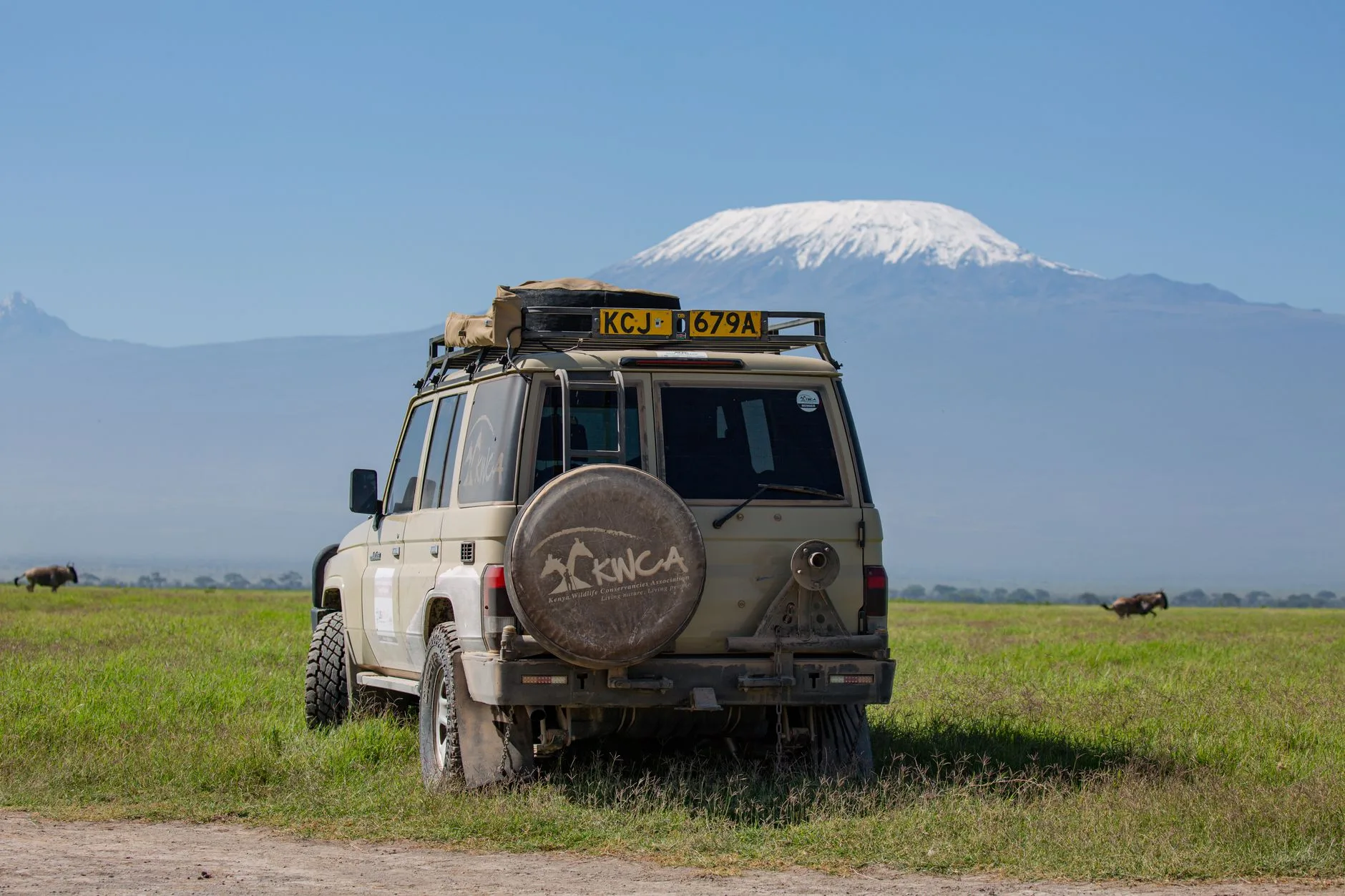
Photo by Twilight Kenya on Pexels
The muezzin’s call drifts over Lamu Old Town just before five, and by the time it fades, the donkeys are already working. There are no cars on Lamu Island — the streets are too narrow, barely wider than a loaded cart — so donkeys haul everything from charcoal to crates of soda down alleys that haven’t changed their footprint since the Swahili merchants built them in the 1700s. Coral stone houses with carved wooden doors lean toward each other overhead, and the smell of frying cassava and cardamom-spiced coffee cuts through the salt air coming off the channel.
This is the Kenya that doesn’t make it onto the safari brochure, and it costs a fraction of the one that does. A single night in a mid-range Maasai Mara lodge can run $300–600; a comfortable guesthouse room in Lamu costs $15–25. That gap is the whole argument for looking past the park circuit — not because the parks aren’t worth it, but because Kenya’s reefs, forests, lake towns, and cities offer a different, cheaper, and in some ways more textured version of the country.
Why the park circuit isn’t the only Kenya
Kenya’s national parks are genuinely extraordinary, and nothing here argues against seeing the Mara or Amboseli if that’s part of the plan. But park fees alone run $60–80 per person per day in high season, before vehicle hire, guides, or accommodation — and that’s before you’ve left the gate. A traveller working with a backpacker budget of $30–50 a day can spend two to three weeks exploring the coast, the Rift Valley, and Lake Victoria for what a single overnight safari costs.
The trade-off is pace. This is slower travel, built around matatus, dala-dala-style minibuses, and the occasional overnight bus rather than a pop-up roof Land Cruiser. You trade guaranteed lion sightings for market mornings, lakeside towns, and conversations that happen because you’re sitting next to someone for four hours, not because you booked an “encounter.”
Lamu Old Town and the Swahili coast
Lamu Old Town, a UNESCO World Heritage Site, is the best-preserved Swahili settlement on the East African coast, and it remains stubbornly uninterested in modernising its infrastructure for tourists. There’s a reason for that: much of the town’s charm is its refusal to widen streets for traffic that will never come.
Getting there is part of the budget calculation. Flights from Nairobi to Manda Airport run $80–150 one way and take under two hours. The overland route — an 8–10 hour bus from Nairobi to Mokowe, followed by a short motorised dhow across to Lamu — costs closer to $15–20 but should be weighed against the current security advisory for travel near the Kenya–Somalia border region; check the UK government’s travel advice for Kenya before planning the overland leg, as guidance on specific routes changes.
Once there, budget guesthouses in Shela and Lamu town run $15–30 a night, and meals at local spots like Whispers Coffee Shop’s courtyard or the harbourfront food stalls selling grilled kingfish and coconut rice rarely exceed $5. A half-day dhow sail to Manda Toto for snorkelling costs $20–30 split among a small group. November to March brings the driest, calmest weather; the long rains from April to June can strand small boats for days.
Kisumu and Lake Victoria
Kisumu, on the shores of Lake Victoria, gets skipped by most itineraries entirely, which is strange given it’s Kenya’s third-largest city and sits on Africa’s largest lake. The Dunga wetlands just south of the city centre offer boat trips through papyrus channels for $10–15, with a decent chance of spotting African fish eagles and monitor lizards without a park fee anywhere in sight.
The real draw is the food and the pace. Kibuye Market, Kisumu’s sprawling open-air market held most intensely on Wednesdays and Sundays, is where to find omena (small dried silver fish, a Luo staple) sold by the scoop, alongside second-hand clothing stalls and fresh produce hauled in from farms around Kakamega and Kisii. A plate of tilapia from the lake, deep-fried whole and served with ugali at one of the lakeside restaurants near Dunga Beach, costs $4–6 and is worth building an afternoon around.
Buses from Nairobi to Kisumu take 6–7 hours and cost $8–12; the road via Nakuru and the Rift Valley escarpment is itself one of Kenya’s more dramatic drives, dropping through tea country before flattening out toward the lake basin.
Kakamega Forest
An hour’s matatu ride north of Kisumu, Kakamega Forest is the last remnant of the rainforest that once stretched from West Africa across the Congo Basin into Kenya. It’s a different ecosystem entirely from the savanna parks — dense, loud with birdsong, and humid in a way that soaks through clothes within twenty minutes of walking.
Entry to the Kenya Wildlife Service section costs a modest $10–15, far below any major park gate fee, and local guides from the surrounding community — often arranged through the Kenya Forest Service office at Buyangu — charge $10–20 for a half-day walk to spot colobus monkeys, hornbills, and, with real luck, the elusive forest viper. Simple bandas near the forest edge rent for $10–15 a night. This kind of guide arrangement, where fees go directly to people living alongside the resource being protected, is close to what’s described in these examples of community-based tourism that actually works, and it’s worth seeking out specifically rather than defaulting to whichever operator is easiest to find.
The Rift Valley’s smaller towns
Nakuru town itself — distinct from Lake Nakuru National Park next door — is a workaday agricultural hub with a lively central market and a decent base for exploring the wider Rift Valley without park fees. From there, Kabarnet and the Kerio Valley offer some of the best unpaid views in the country: a 1,000-metre escarpment drop into a valley of mango and papaya farms, with viewpoints along the road that cost nothing beyond the matatu fare to reach them.
Nyahururu, a few hours further west, is home to Thomson’s Falls, a 72-metre waterfall you can walk right up to (and, if you don’t mind a slippery scramble, behind) for an entrance fee of around $2–3. Guesthouses in town run $10–20 a night, and the surrounding highland air — Nyahururu sits above 2,300 metres — is cool enough that evenings call for a fleece, a detail most people don’t associate with equatorial Kenya.
Nairobi beyond the safari transit lounge
Most travellers treat Nairobi as a one-night stopover between the airport and a safari pickup. That’s a missed opportunity, because Nairobi’s neighbourhoods reward a few unhurried days more than almost anywhere else in the country.
The Maasai Market — which rotates locations through the week, with Saturdays at the Village Market and other days at venues like the Junction Mall — is where to buy beadwork, kikoy fabric, and carvings directly from makers, and bargaining is expected and genuinely part of the transaction rather than a performance. In Kibera, several community-run walking tours, operated by residents rather than outside agencies, offer a grounded look at one of Africa’s largest informal settlements — its schools, its recycling workshops, its music studios — for $15–25, with proceeds going back into local projects. It’s worth choosing an operator carefully and asking directly where the fee goes; the same scrutiny that applies to community tourism elsewhere applies here.
For food, Eastleigh — Nairobi’s predominantly Somali neighbourhood — has some of the city’s best and cheapest meals: camel meat stew, sambusas, and tea brewed with cardamom and cinnamon, all at a fraction of restaurant prices in Westlands or Kilimani. A full meal rarely tops $4.
Getting around without renting a vehicle
Matatus — privately operated minibuses, often decorated with elaborate graffiti and sound systems that announce their arrival before you see them — are the backbone of budget travel in Kenya. They’re cheap (city routes run $0.30–0.50, intercity routes $5–15) and frequent, but they’re also crowded, driven with more confidence than caution, and not always comfortable for long distances. For longer hauls, companies like Modern Coast and Easy Coach run scheduled buses with assigned seats, costing slightly more but offering a real improvement in comfort and safety margin. For visitors who’ve found their footing with budget hostel culture elsewhere, the same instincts apply here — book a bed the day you arrive in a new town rather than in advance, and ask staff about current road conditions before committing to a route.
| Region | How to get there | Daily budget | Best season | Highlight |
|---|---|---|---|---|
| Lamu Old Town | Flight ($80–150) or bus + dhow ($15–20) | $25–40 | Nov–Mar | Car-free Swahili architecture |
| Kisumu & Lake Victoria | Bus from Nairobi, 6–7 hrs ($8–12) | $15–25 | Jun–Sep, Dec–Feb | Dunga wetlands, lakeside tilapia |
| Kakamega Forest | Matatu from Kisumu, ~1 hr ($2–3) | $15–25 | Dry months, Jun–Sep | Rainforest walks with community guides |
| Rift Valley towns (Nakuru, Kabarnet, Nyahururu) | Bus/matatu from Nairobi (2–5 hrs) | $15–25 | Year-round, cooler Jun–Aug | Kerio Valley escarpment, Thomson’s Falls |
| Nairobi neighbourhoods | N/A (arrival city) | $20–35 | Year-round | Maasai Market, Kibera tours, Eastleigh food |
The Bottom Line
Budget travel in Kenya beyond the national parks works best for travellers who’ve already accepted that the itinerary will be shaped by bus schedules and ferry tides rather than a fixed plan — build in slack days, especially around Lamu’s weather-dependent dhow crossings and the long rains between April and June. Spend less time chasing a single “highlight” destination and more time moving slowly between Kisumu, Kakamega, and the Rift Valley towns, where the actual cost of a day — meals, a bed, local transport — rarely exceeds $25–30. When it comes to community-run experiences, whether in Kibera or Kakamega, ask directly how the fee is distributed; it’s a fair question and a useful filter. And if the safari is still part of the plan, treat it as one chapter rather than the whole trip — the savings from the rest of the itinerary will likely cover more of it than expected.
Keep reading: Budget travel in Tanzania: Zanzibar and the mainland