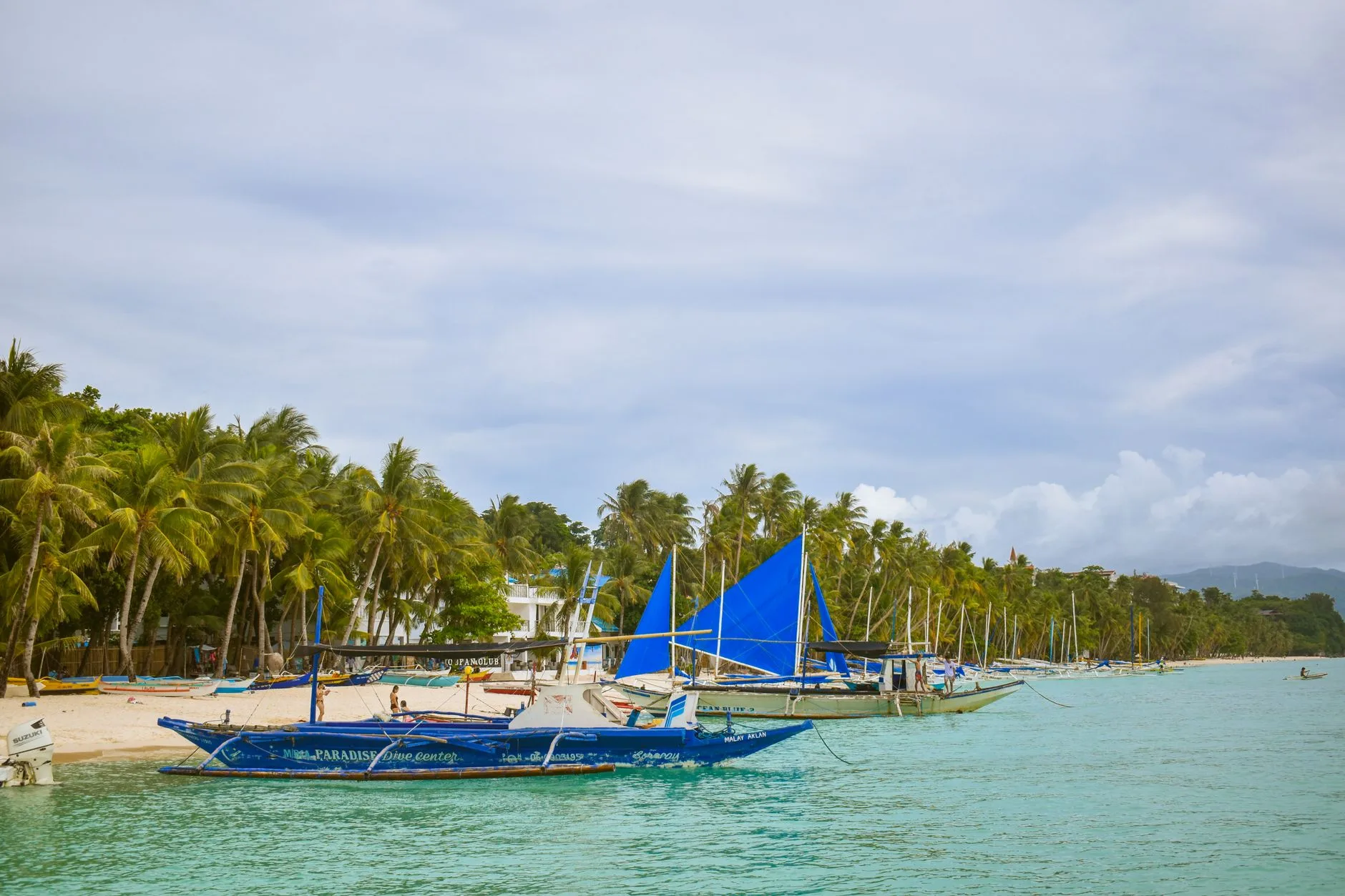
Photo by Darwin Frivaldo on Pexels
The jeepney from Sayak Airport into General Luna rattles over potholes that have outlasted three resurfacing attempts, past sari-sari stores selling ice-cold Red Horse beer and women frying banana cue over charcoal braziers. The driver has the radio tuned to a station playing OPM ballads at a volume that makes conversation pointless, which is fine, because the scenery does the talking: coconut plantations giving way to the first glimpse of a turquoise channel, surfboards strapped to the roof of the vehicle ahead. This is Siargao, and it is one of a dozen places in the Philippines that make Boracay’s white sand and sunset bars feel like a rounding error in a country made of more than 7,600 islands.
Boracay earned its reputation honestly — the sand really is that fine, the water really is that clear — but it also earned a six-month government shutdown in 2018 for environmental overload, and the rebuilt version comes with higher prices, stricter rules, and a crowd density that budget travellers tend to find exhausting. The archipelago beyond it is where the Philippines gets interesting: volcanic islands with hot springs bubbling out of black sand, rice terraces carved by hand centuries ago, towns where the local healers still practice hilot, and ferry routes that test your patience and reward it in roughly equal measure.
This guide covers where to go, how to get between islands without draining a budget trip in transport costs, and what the logistics actually look like once the brochure photos are set aside.
Siargao: surf, sandbars, and a slower kind of busy
Siargao sits off the northeastern tip of Mindanao and has spent the last decade becoming the Philippines’ surf capital without quite losing its small-town pulse. Cloud 9, the reef break that put the island on the map, still draws a serious surf crowd to General Luna, but the appeal now extends well past the break itself. Magpupungko rock pools, a 40-minute ride north near Pilar, fill with impossibly clear seawater at low tide — check tide charts before going, since the pools disappear completely when the water’s up. Sugba Lagoon, reached by boat from Del Carmen through a mangrove channel, is worth the ₱1,000–1,500 ($18–27) group boat rental split among several people.
Budget accommodation runs ₱600–1,200 ($11–21) a night for a fan room or dorm bed in General Luna; a motorbike rental (₱350–500/$6–9 a day) is the practical way to reach Pacifico Beach or the Magpupungko pools, since public transport on the island is thin. Fly into Sayak Airport via Cebu Pacific or AirAsia from Manila or Cebu — flights are frequently cancelled or rescheduled in typhoon season, so build in a buffer day if connecting onward.
Palawan beyond El Nido’s lagoons
El Nido gets the postcard shots — Big Lagoon, Small Lagoon, the limestone cliffs of Bacuit Bay — and the standard island-hopping Tours A through D (₱1,200–1,400/$21–25 per person including lunch) are genuinely worth doing once, crowds and all. But El Nido town itself has grown fast, and prices have climbed with it. Port Barton, two hours south by van, offers a quieter version of the same karst scenery with far fewer boats on the water and guesthouses from ₱500 ($9) a night.
Coron, on the northern tip of Palawan, trades lagoons for WWII shipwreck diving — a dozen Japanese vessels sunk in 1944 sit in Coron Bay at depths accessible to open-water divers, with dive shops in Coron town running two-tank wreck trips for ₱3,500–4,500 ($62–80). Kayangan Lake, often called the cleanest lake in the country, requires an early start to beat the tour boats. Getting between El Nido and Coron means either a short flight or the Montenegro Lines ferry, a 4–6 hour crossing that can get rough — motion sickness tablets are worth packing.
Siquijor, Camiguin, and the islands tourists overlook
Siquijor, reached by a one-hour OceanJet or Delta Fast Ferry crossing from Dumaguete (₱400–600/$7–11), has a folk reputation for witchcraft and healing that locals treat with more humour than the guidebooks suggest. Cambugahay Falls, a three-tiered waterfall with a rope swing that’s seen better structural days, and Salagdoong Beach’s cliff jump are the two set pieces, but the real draw is the pace — single-lane roads, almost no tour buses, and guesthouses charging ₱700–900 ($12–16) a night.
Camiguin, a volcanic island off the northern coast of Mindanao, packs seven volcanoes into an island you can circle by motorbike in half a day. White Island, a sandbar with no vegetation and nowhere to hide from the sun, sits a short banca ride from Agoda Beach. The Sunken Cemetery, marked by a cross rising from the water where a 1871 eruption buried the old town, and Ardent Hot Spring at the foot of Hibok-Hibok volcano round out a short but satisfying itinerary. Ferries run from Balingoan on the Mindanao mainland (1.5 hours, ₱200–300/$4–5), making it an easy add-on rather than a destination requiring its own flight.
The food is half the reason to go
Street food in the Philippines runs cheap and unglamorous in the best sense — plastic stools, a single menu board, and dishes that taste better than the setting suggests. Sisig, sizzling minced pork face and liver seasoned with calamansi and chili, originated in Pampanga but shows up everywhere; Cebu’s answer is lechon, whole roast pig with crackling skin considered among the best in the country. Kinilaw, raw fish cured in vinegar and calamansi with ginger and chili, is the Filipino answer to ceviche and worth seeking out in any coastal town. Halo-halo — shaved ice, evaporated milk, sweet beans, jackfruit, and a scoop of purple ube ice cream — is the standard antidote to afternoon heat.
Markets and turo-turo (point-point) eateries serving home-style meals for ₱80–150 ($1.50–2.70) a plate are where most of the actual eating happens, and the general principles that apply across eating at local markets in Southeast Asia — go where the queue is, eat things cooked to order, carry hand sanitiser — hold true here too.
Getting around: ferries, budget flights, and buses
Inter-island transport is the real budgeting variable in the Philippines, and the options trade off cost against time in ways worth mapping before booking anything.
| Option | Typical cost | Typical duration | Comfort level | Best for |
|---|---|---|---|---|
| Budget flights (Cebu Pacific, AirAsia) | $25–60 | 1–2 hrs | Reliable in dry season, frequent delays/cancellations in storm season | Long hops (Manila–Siargao, Manila–Palawan) |
| Fast ferries (OceanJet, Delta Fast Ferry) | $7–25 | 1–4 hrs | Air-conditioned, can be rough in swell | Short inter-island hops (Dumaguete–Siquijor, Cebu–Bohol) |
| RORO/slow ferries (2Go) | $15–40 | 8–20 hrs overnight | Basic cabins or shared seating | Longer hauls where flights are pricey or absent |
| Buses (Ohayami, Coda Lines) | $10–20 | 6–10 hrs overnight | No-frills, reclining seats | Manila–Banaue/Batad |
| Jeepneys and tricycles | $0.20–1 | Local | Crowded, open-air, genuinely fun | Short local trips, not long distance |
Banaue and the nearby village of Batad, home to the rice terraces carved by the Ifugao people and recognised by UNESCO as a World Heritage site, are reached by overnight bus from Manila (around nine hours) followed by a jeepney to the trailhead and a 30–45 minute walk into Batad itself, since no road reaches the village directly. It’s a long way to go for a view, but the terraces climbing the valley walls in tiers are unlike anything else in the country.
What a budget trip actually costs
A realistic daily budget for a backpacker moving between islands sits around ₱1,500–2,500 ($27–45), covering a dorm bed or basic fan room, three meals at local eateries, and short local transport. That rises quickly once dive trips, island-hopping tours, or flights enter the picture — a two-week loop through Palawan, Siargao, and Cebu with a handful of activities tends to land closer to $35–55 a day all-in. Prepaid SIM cards from Globe or Smart, available at any airport kiosk, run about ₱500 ($9) for several gigabytes and are worth getting on arrival, since connectivity on smaller islands can be patchy.
Season, storms, and timing it right
The dry season, roughly November to May, is when most of this itinerary makes sense — calm seas for island-hopping, reliable ferry schedules, and surf conditions in Siargao that peak around September to November on the shoulder. June through October is typhoon season, tracked closely by PAGASA, the national weather agency, and it’s not a season to dismiss lightly: ferries get cancelled without much notice, flights reroute, and entire regions can lose power for days after a direct hit. Travelling in the shoulder months (May–June, October–November) often means lower prices and thinner crowds, with manageable weather risk if you build flexibility into the itinerary.
Oslob, on Cebu’s southern coast, deserves a specific mention here: the whale shark feeding operation draws large numbers of visitors daily, but the practice of hand-feeding sharks to keep them close to shore has drawn sustained criticism from marine biologists for altering natural feeding behaviour. Moalboal, two hours up the coast, offers a genuinely wild encounter with its resident sardine run — a shifting, shimmering bait ball visible from shore with just a mask and snorkel, no feeding required.
The Bottom Line
- Fly into Manila or Cebu and build your route around one or two regions rather than trying to cover the archipelago — inter-island transport eats days, and the Philippines rewards slower movement more than most Southeast Asian countries.
- Budget flights are the fastest way between distant islands but the least reliable in storm season; always build a buffer day around any flight connecting to an onward ferry or tour.
- Siquijor and Camiguin are the easiest entry points for travellers wanting the slower pace people associate with the region’s smaller islands, without the logistical commitment of somewhere like Batanes.
- Skip Oslob’s whale shark feeding and swim with the sardine run at Moalboal instead — a wilder encounter for less money, and one that doesn’t depend on altering an animal’s behaviour to guarantee a sighting.
- If the Philippines’ outer islands appeal to you, it’s worth comparing the pace and cost against other island destinations across Asia before committing a full itinerary to one country — the archipelago’s scale means even a month only scratches the surface.
Keep reading: Avoiding overtourism in Southeast Asia: where to go