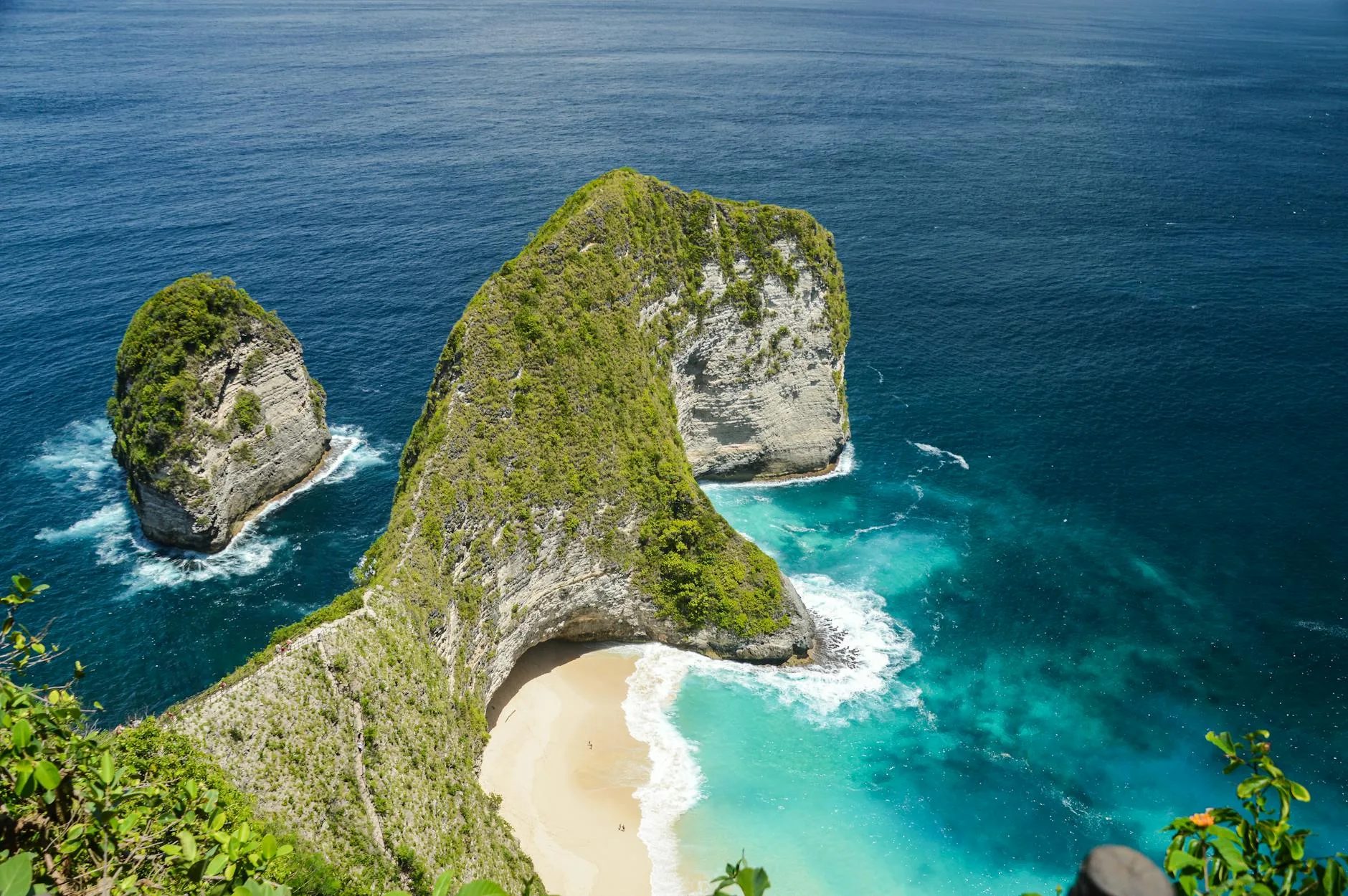
Photo by Saksham Vikram on Pexels
10 alternatives to Bali for island travel in Asia
The ferry from Padang Bai smells of diesel and salt. Passengers squeeze onto plastic seats or sprawl across motorbikes roped to the deck. Kuta’s traffic is forty minutes behind you, and already something has shifted. The thing is, that feeling — of an island opening up as you cross toward it — isn’t unique to Bali. It exists on a hundred other islands across Asia, most of them considerably quieter, many of them cheaper, and some offering a depth of culture or landscape that Bali, for all its beauty, now struggles to deliver under the weight of four million annual visitors.
That isn’t a criticism of Bali itself. Attending a ceremony in one of its temple villages remains a genuinely moving experience. But if what drew you to Bali — rice terraces, warm water, volcanic landscapes, cheap food, slow mornings — can be found elsewhere with fewer crowds and more room to breathe, those places are worth knowing about.
The ten islands below were chosen for variety: some are wild and hard to reach, others are easy and family-friendly, a few are somewhere in between. All offer something Bali once had in greater abundance — the sense that you have landed somewhere that hasn’t been entirely reshaped to receive you.
How to use this list
This isn’t a ranking. These are ten genuinely different islands suited to different kinds of trips. A comparison table at the end covers difficulty, cost, best season, and the main draw for each one. Read the entries that match what you’re actually looking for.
1. Koh Lanta, Thailand
Where: Krabi Province, southern Thailand. About 70 km south of Krabi Town.
Koh Lanta Yai (the larger of the two Lanta islands) has a slower pace than Koh Samui or even Koh Phangan outside full-moon season. The west coast holds a string of long, sandy beaches — Hat Khlong Dao in the north is the most accessible, Ao Kantiang in the south quieter and flanked by hills. The old town, Lanta Old Town (Ban Si Raya), sits on stilts above the eastern shore and is one of the more honest heritage streetscapes in southern Thailand: Chinese shophouses, a mosque, a small pier where fishing boats still come in.
Logistics: Fly to Krabi or Trang, then a combination of minivan and ferry. High-season ferries run frequently from November to April; in the low season (May–October), services reduce significantly and some resorts close. The island is about 30 km long and navigable by motorbike, rented from most guesthouses for around 200–300 THB per day. No ATMs in the south of the island — bring cash.
Best for: Families, first-timers to Thai islands, anyone who wants beaches without the Koh Tao diving crowd or the Samui resort excess.
2. Palawan, Philippines
Where: Western Philippines. The island stretches over 400 km; most travellers base themselves in El Nido (north) or Coron (further north) or Port Barton (mid-island).
Palawan is the kind of place that earns its reputation without needing to oversell it. The karst limestone formations rising from the Bacuit Archipelago around El Nido are among the most dramatic in Southeast Asia — not metaphorically, literally vertical. Island-hopping tours leave from El Nido’s town beach each morning: Tour A covers the Big Lagoon and Secret Lagoon, Tour C includes Shimizu Island and Cathedral Cave. The water is clear enough that you can see reef fish from the surface without a mask.
Coron is the better base for divers — a dozen Japanese WWII wrecks lie in relatively shallow water and are accessible to mid-level open-water divers. Port Barton, reached by van from Puerto Princesa (3–4 hours on a road that gives your spine a workout), is the quietest of the three and has a handful of guesthouses, a beach, and nothing much else to do except eat grilled barracuda and watch fishing boats.
Logistics: Fly to Puerto Princesa from Manila (1 hour, around $40–80 depending on timing), or directly to El Nido via Air Swift from Manila or Cebu. Visas on arrival for most nationalities for up to 30 days, extendable. The wet season runs June to October; typhoon risk is real. November to May is the window.
Best for: Snorkellers, divers, landscape photographers, anyone who can tolerate basic infrastructure in exchange for genuinely extraordinary scenery.
3. Nias, Indonesia
Where: Off the west coast of North Sumatra, Indonesia. About 100 km from the mainland.
Nias is where serious surfers have been going since the 1970s, specifically to the break at Sorake Beach in the south (Lagundri Bay) — a long right-hander over a shallow reef that ranks among the most consistent in the world. But Nias has a non-surfing identity that most visitors miss: a megalithic culture producing stone monuments, ceremonial chairs, and a tradition of war dances (hombo batu — stone jumping) that has no equivalent elsewhere in Indonesia. The villages of Bawömataluo and Hilisimaetano in South Nias are genuine living heritage sites, not reconstructions for tourists.
Logistics: Fly from Medan (Kualanamu Airport) to Binaka Airport near Gunungsitoli in the north, or Lasonde Airport in South Nias. Alternatively, there’s a 10–12 hour ferry from Sibolga (North Sumatra). Getting around requires hiring a driver or renting a motorbike; roads are functional but rough in places. Budget accommodation runs around $10–25 per night; Sorake has a cluster of surf guesthouses.
Best for: Surfers (intermediate to advanced), travellers with a serious interest in Indonesian culture beyond Bali and Lombok.
4. Phu Quoc, Vietnam
Where: Gulf of Thailand, off the southwestern tip of Vietnam, close to the Cambodian coast.
Phu Quoc has developed fast — there are now casino resorts and a cable car — but the northern end of the island and the archipelago of smaller islands to the south (An Thoi Islands, best reached by speedboat from An Thoi Port) remain genuinely beautiful. Snorkelling around Hon Thom and Hon Gam is good. The fish sauce produced here (nuoc mam from Phu Quoc) is a protected geographical indication in Vietnam, and visiting one of the family-run factories near Duong Dong gives you something more interesting than another beach afternoon.
The pepper plantations in the centre of the island are another undervisited stop — Phu Quoc pepper has a specific, floral heat that tastes noticeably different from what you’d buy at home.
Logistics: Direct international flights to Phu Quoc International Airport from several Asian hubs. No visa required for many nationalities for stays under 45 days (check current Vietnamese e-visa rules, which expanded significantly in 2023). Getting around: motorbike rental from around 150,000 VND/day. The north end of the island (Ganh Dau village, Rach Vem fishing village) is worth a half-day by motorbike.
Best for: Couples, food-focused travellers, those who want infrastructure and comfort without a huge flight.
5. Koh Rong Sanloem, Cambodia
Where: Preah Sihanouk Province, Cambodia. About 25 km off the coast of Sihanoukville.
Koh Rong Sanloem is the smaller, quieter sibling of Koh Rong. The main bay, Saracen Bay, has fine white sand and water that glows blue-green with bioluminescence on dark nights — take a night swim during a new moon and the water lights up around your hands. The village of M’Pai Bay on the north end of the island has no vehicles, a few simple guesthouses, and a handful of Khmer families who have lived here for generations.
Sihanoukville itself has changed dramatically over the past decade with Chinese investment — it’s not a place most travellers linger. The island, though, is largely insulated from that and remains low-key.
Logistics: Ferry from Sihanoukville pier — Speed Ferry Cambodia and GTVC run services, around 45 minutes to Saracen Bay. Return fare roughly $20–25. Accommodation ranges from dorm beds to mid-range bungalows. For visa information, Cambodia offers e-visas and visas on arrival for most nationalities — $30, valid 30 days.
Best for: Budget travellers, bioluminescence seekers, anyone wanting a genuinely quiet beach without long haul flights.
6. Tioman Island, Malaysia
Where: Pahang state, off the east coast of Peninsular Malaysia, in the South China Sea.
Tioman is a big island — about 40 km long — with a forested interior that includes wild macaques, monitor lizards, and hornbills. The main villages (Tekek, Air Batang, Salang) are connected by a single road in the north and by jungle trail or boat elsewhere. Diving is the main draw: visibility around Renggis Island and the wreck of the MV Pulau Tioman (sunk deliberately as an artificial reef near Tekek) is reliable, and PADI courses are reasonably priced.
The snorkelling straight off Juara Beach on the quieter east coast is among the best on the island — you can walk across the island on a 7 km jungle trail from Tekek in about 2–3 hours.
Logistics: Ferry from Mersing (Johor) or Tanjung Gemok (Pahang), roughly 1.5–2 hours. Flights from Kuala Lumpur with Berjaya Air. The island is only open to tourists from roughly March to October — the northeast monsoon closes it between November and February. Duty-free status means alcohol is cheaper than on the mainland.
Best for: Divers, hikers, families, travellers heading through Malaysia who want an island without flying to Thailand.
7. Siquijor, Philippines
Where: Visayas region, Philippines. A small island province between Cebu, Negros, and Mindanao.
Siquijor has a reputation among Filipinos that precedes it: the island is known for its mananambal (folk healers) and their use of herbal remedies and ritual healing, a tradition most visible during Holy Week when healers from across the Visayas gather near the barangay of San Antonio. It’s a real cultural phenomenon, not a show for visitors — and approaching it with curiosity rather than spectacle tends to produce more genuine encounters.
Beyond that, Siquijor has clear water, a 72 km coastal road that circuits the entire island in a pleasant half-day by motorbike, waterfalls (Cambugahay Falls near Lazi is the most popular, Lugnason Falls quieter and barely visited), and an unhurried pace that the larger Visayan islands have largely lost.
Logistics: Fast ferry from Dumaguete (30–45 minutes) or from Cebu City (3.5 hours via Oceanjet or SuperCat). Motorbike rental around 350–400 PHP per day. The island is small enough that one day covers the circuit; two or three lets you slow down. Budget guesthouses in San Juan from around $15 per night.
Best for: Travellers curious about Filipino folk culture, motorbike riders, those routing through the Visayas.
8. Sumba, Indonesia
Where: East Nusa Tenggara province, Indonesia. About 200 km east of Lombok, 300 km west of Flores.
Sumba is the most culturally distinct island on this list. The indigenous Marapu religion — animist, centred on ancestral spirits and megalithic tomb building — still governs daily life in many villages, particularly in West Sumba. The Pasola festival (February or March, depending on the appearance of sea worms in the water) involves hundreds of horsemen hurling wooden spears at each other in a ritual that draws blood and is taken entirely seriously as a sacrifice to the spirits.
The landscapes in West Sumba — rolling savannah, stone-roofed clan houses, teak trees — look nothing like the rest of Indonesia. East Sumba is drier and produces the ikat textiles that have made Sumba famous among collectors: the village of Prailiu near Waingapu is a working centre for hinggi (men’s ikat) production.
Logistics: Fly from Denpasar (Bali) to Tambolaka (West Sumba) or Waingapu (East Sumba) — around 1 hour, multiple flights daily with Wings Air and TransNusa. A driver-guide is strongly advisable for West Sumba village visits — roads are unsealed and navigating without local knowledge is genuinely difficult. Homestays in rural Indonesian communities are possible and add considerable depth to a visit like this. Budget $40–80/day including transport and accommodation.
Best for: Travellers with a serious interest in living culture and textiles, photographers, those who want tropical landscapes without beach tourism.
9. Yakushima, Japan
Where: Kagoshima Prefecture, southern Japan. About 60 km south of Kyushu.
Yakushima is a different proposition from the others on this list — colder, wetter, more expensive, and covered in one of the most extraordinary temperate rainforests in Asia. The yakusugi cedar trees here are among the oldest living organisms in Japan: Jōmon Sugi, accessible via a 10-hour return trail through moss-covered forest, is estimated at between 2,000 and 7,200 years old. The forest feels genuinely ancient in a way that’s hard to describe without sounding hyperbolic — the moss is ankle-deep, the humidity total, the silence broken only by rain.
Sea turtles nest on the beaches at Nagata and Isso from May to July. The combination of rainforest, turtles, hot springs (Hirauchi Kaichu Onsen is a natural tidal pool that functions as a rotenburo), and serious hiking trails makes Yakushima unlike any other island in East Asia.
Logistics: Ferry or hydrofoil from Kagoshima (2–4 hours depending on service). Alternatively, fly from Kagoshima in 35 minutes. The island is navigable by bus, but a rental car gives more flexibility. Trails require good waterproof gear — it rains here roughly 335 days a year. Best hiking season is March–November; avoid August for the Jōmon Sugi trail (extremely crowded). Mid-range accommodation from around ¥8,000–15,000 per night.
Best for: Hikers, nature lovers, Japan travellers extending beyond the standard Kyoto-Tokyo circuit, anyone drawn to genuinely ancient landscapes.
10. Gili Meno, Indonesia
Where: West Lombok, Indonesia. The smallest of the three Gili Islands, between Gili Air and Gili Trawangan.
If Gili Trawangan is the Bali of the Gilis — full, loud, functioning as a rite of passage for backpackers — then Gili Meno is the antidote. It has one small road circling the island (no motorised vehicles), a turtle sanctuary where juvenile hawksbill and green turtles are raised before release, and almost nothing to do except snorkel, read, and eat grilled fish at one of the handful of warungs facing the water.
The underwater statue garden Nest (a collection of figures arranged on the seabed, visible from the surface or with a snorkel) is genuinely worth a look. The snorkelling on the north and east sides is consistent year-round.
Logistics: Fast boat from Padang Bai (Bali) or Bangsal Harbour (Lombok) — around 1.5–2 hours from Bali, 20–30 minutes from Bangsal. Return fare roughly $25–35 from Bali. Accommodation is limited and books out in high season (July–August, December–January) — book ahead. Generator power only; expect the lights to go off at midnight.
Best for: Couples, anyone wanting two or three nights of genuine quiet after the stimulation of Bali or Lombok. Not ideal for children under 10 (no medical facility).
Comparison table
| Island | Country | Difficulty to reach | Budget per day (USD) | Best season | Main draw |
|---|---|---|---|---|---|
| Koh Lanta | Thailand | Easy | $40–80 | Nov–Apr | Beaches, old town, families |
| Palawan | Philippines | Moderate | $50–100 | Nov–May | Limestone karst, diving, snorkelling |
| Nias | Indonesia | Moderate | $25–50 | Apr–Oct | Surfing, megalithic culture |
| Phu Quoc | Vietnam | Easy | $50–90 | Nov–Apr | Food, snorkelling, ease of access |
| Koh Rong Sanloem | Cambodia | Easy | $20–50 | Nov–Apr | Bioluminescence, quiet beaches |
| Tioman | Malaysia | Easy–Moderate | $40–80 | Mar–Oct | Diving, jungle trekking, duty-free |
| Siquijor | Philippines | Easy | $25–50 | Jan–Jun | Folk culture, coastal circuit |
| Sumba | Indonesia | Challenging | $50–100 | Apr–Oct | Living culture, Pasola, textiles |
| Yakushima | Japan | Moderate | $100–180 | Mar–Nov | Ancient forest, hiking, turtles |
| Gili Meno | Indonesia | Easy | $40–70 | Apr–Oct | Peace, snorkelling, turtles |
Daily budgets are rough mid-range estimates including accommodation, food, and local transport. Diving, tours, and ferries add to these figures.
For broader context on where Southeast Asian tourism infrastructure is becoming strained — and which destinations still have breathing room — this guide to avoiding overtourism across the region is worth reading alongside this list.
The practical realities of eating at markets and street stalls are also worth knowing before you arrive on any of these islands, where the best food is almost always found at the nearest warung, food stall, or morning market rather than anywhere with a printed menu.
The Bottom Line
- For ease and infrastructure, Koh Lanta, Phu Quoc, and Gili Meno are the most straightforward: well-connected, English-speaking, reliably good food and accommodation without significant logistics headaches.
- For serious culture, Sumba and Siquijor require more effort but offer something genuinely unlike what most travellers see — Sumba especially rewards those willing to hire a local guide and move slowly.
- For nature and wilderness, Yakushima is in a category of its own in East Asia. It costs more and requires proper hiking gear, but the ancient cedar forest is one of the most extraordinary natural environments on the continent.
- For budget travellers, Koh Rong Sanloem and Siquijor offer the most for the least outlay — both accessible from mainland hubs, both quiet, both beautiful.
- Season matters more than destination. Every island on this list has a window when the weather turns — check the monsoon calendar before you book, not after.
Keep reading: Avoiding overtourism in Southeast Asia: where to go