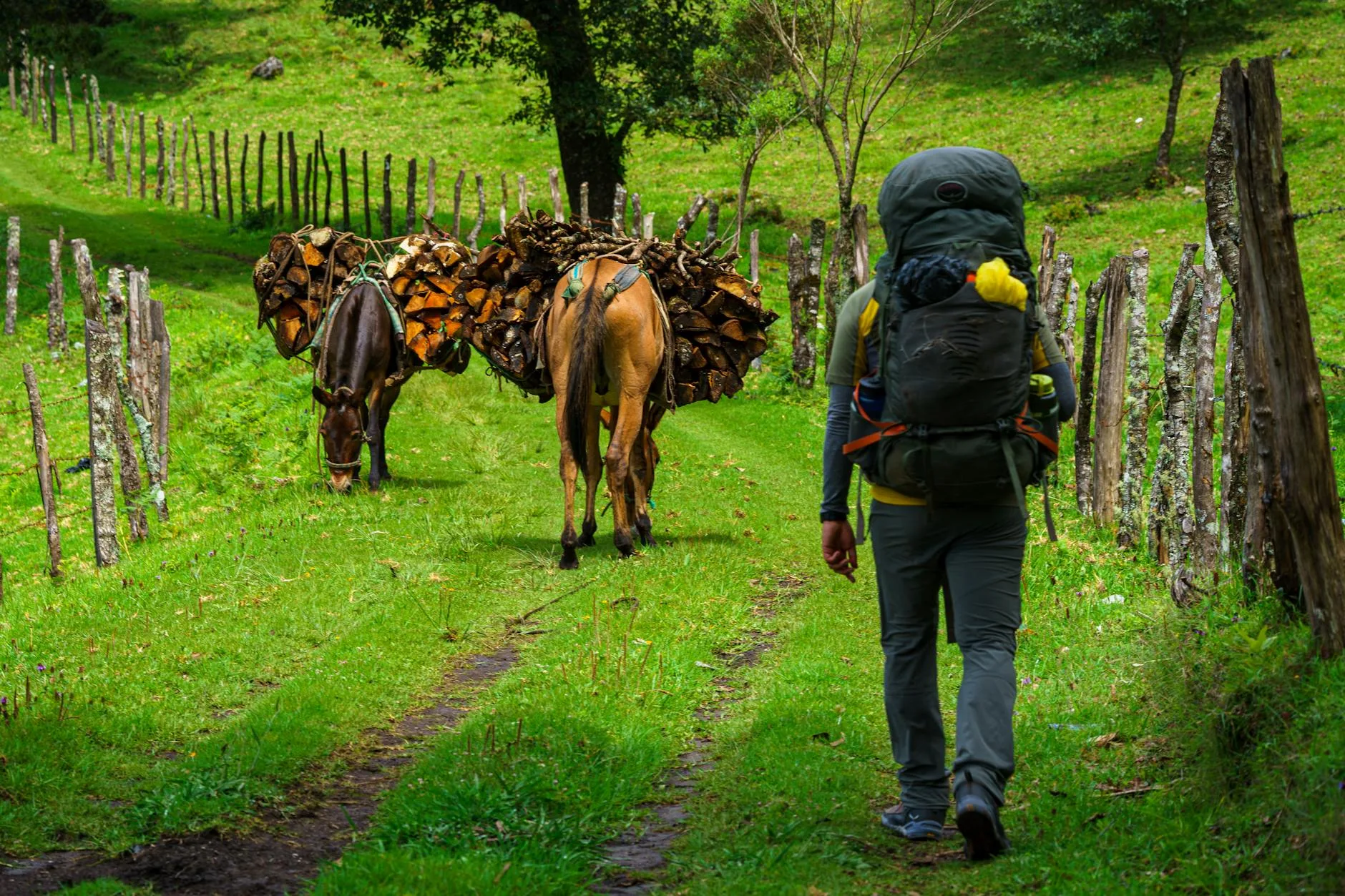
Photo by Diego Girón on Pexels
Backpacking Central America on a shoestring budget
The chicken bus out of Antigua leaves from the corner of Alameda Santa Catalina before 6am, when the market women are already stacking tomatoes and the air still smells of woodsmoke. You pay Q8 — roughly a dollar — and spend the next two hours crammed between a man with a live chicken in a bag and a schoolgirl doing homework on her knee. It is loud, it is slow, and there is nowhere else you would rather be.
That bus is, in miniature, what backpacking Central America actually feels like: vivid, occasionally chaotic, sometimes unglamorous, and extraordinarily good value if you know where to spend and where to hold back. The isthmus stretching from Guatemala’s highlands to Panama’s canal gives you volcanoes, cloud forest, colonial cities, Caribbean coast, and Pacific surf — all within a region smaller than Texas, all connected by a transport network that rewards patience over speed.
This guide runs south from Guatemala to Panama, which is the most logical direction for budget travellers arriving on international flights into Guatemala City (GUA) or departing from Tocumen (PTY). It is skippable, reshuffable, and honest about what costs what.
The realistic budget: what a shoestring actually looks like
“Shoestring” means different things in different places. In Central America in 2026, a genuine low-budget day — dormitory bed, three meals from local comedores and market stalls, public transport, one paid attraction — runs to about $25–40 USD depending on the country. That range is wide because costs vary significantly along the route.
| Country | Avg. dorm bed (USD) | Avg. comedor meal (USD) | Daily budget estimate (USD) |
|---|---|---|---|
| Guatemala | $8–12 | $2–4 | $25–35 |
| Belize | $15–22 | $5–8 | $45–60 |
| Honduras | $8–12 | $2–4 | $25–35 |
| El Salvador | $8–12 | $2–3 | $22–32 |
| Nicaragua | $7–11 | $1.50–3 | $22–30 |
| Costa Rica | $14–20 | $4–7 | $40–55 |
| Panama | $12–18 | $3–6 | $35–50 |
Belize and Costa Rica are the notable outliers — both use the US dollar or near-parity currencies and have tourism infrastructure that prices accordingly. If budget is the priority, spend less time there and more in Guatemala, Nicaragua, and El Salvador, which offer some of the best value on the continent.
Guatemala: Antigua and beyond
Guatemala is where most routes begin, and Antigua is usually the first stop — a Spanish colonial city of ochre and terracotta walls, active volcanoes on three sides, and a language-school industry that lets you fund Spanish study while you plan the rest of the trip. A week of four-hours-daily group classes costs around $80–100 at schools like La Union or San José el Viejo. If you have the flexibility, it’s worth it: Spanish is the practical currency of the entire isthmus south of Belize. (We’ve covered the school scene in depth in our guide to learning Spanish in Antigua, Guatemala.)
From Antigua, the highlands open up. Lake Atitlán — three hours by shuttle or four-plus by chicken bus via Chimaltenango — is ringed by indigenous Maya towns, each with a different character. San Pedro La Laguna has the backpacker infrastructure (cheap guesthouses on the lakefront, kayak rentals, hammock cafés). San Juan La Laguna is quieter, known for its weaving cooperatives. Santiago Atitlán, across the lake, has the shrine of Maximón — a folk saint who smokes cigars and drinks rum — tucked inside a house near the main church. Lanchas (small motorboats) connect the towns for Q10–20 per crossing.
In Quetzaltenango (Xela), Guatemala’s second city, the markets around the main plaza sell produce and textiles without the tourist markup of Antigua. The street food is excellent: tostadas con guacamol for Q5, atole from the thermos vendors outside the central market at breakfast.
Honduras and El Salvador: two countries worth not skipping
Honduras gets bypassed by travellers in a hurry to reach Nicaragua, which is a mistake. Copán Ruinas — a small town six hours west of San Pedro Sula by bus — sits beside one of the most intricate Maya archaeological sites in the region. The hieroglyphic stairway at Copán contains the longest known Maya inscription. Entry is around $15. The town itself has good budget guesthouses (try those on the streets north of the main plaza), and the surrounding hills have coffee farms and bird-rich cloud forest.
El Salvador is similarly underappreciated. The country is compact — you can cross it in three hours — and routes between Guatemala and Nicaragua often pass through only San Salvador or skip it entirely. That’s worth reconsidering. The Ruta de las Flores, a string of small towns (Juayúa, Apaneca, Ataco) through highland coffee country, runs on a local bus from Sonsonate for under $2. Juayúa hosts a food festival every Saturday and Sunday on the central plaza: yuca frita, mariscada, smoked meats, atol de elote. It is busy with Salvadoran families, not tourist crowds, and the food is very good for very little money.
Nicaragua: the budget sweet spot
Nicaragua remains the most affordable country in Central America for travellers and one of the most rewarding. Granada, on the shores of Lake Nicaragua, is the colonial showpiece — churches painted in mustard and cream, horse-drawn carts on cobblestones, and a mercado central where lunch from a comedor runs to C$80–100 (roughly $2–2.50). The town is compact and walkable; an evening on the terrace of any of the rooftop bars on Calle Calzada gives you the cathedral lit up at dusk for the cost of a beer.
León, two hours northwest by bus, is politically and architecturally distinct — a university city with a tradition of protest muralism, wider streets, and a more lived-in feel than Granada. The rooftop of the Catedral de la Asunción (León Cathedral) is open to visitors for a small fee and gives the best view of any city in the country: a sweep of white domes, Pacific horizon, and the Cordillera de los Maribios volcanoes. Cerro Negro, an hour from León by shared transport, is a black-cinder volcano you can hike in about two hours and sandboard down in considerably less.
Costa Rica: spend selectively
Costa Rica is expensive by regional standards, but it is also home to some of the most biodiverse and well-managed national parks in the Americas. The trick to keeping costs down is public transport, cooking your own food occasionally, and choosing your activities deliberately rather than booking every tour.
Buses from the Coca-Cola terminal in San José reach most major destinations: Monteverde (4–5 hours, ~$5), Puerto Viejo de Talamanca on the Caribbean coast (4.5 hours, ~$8), and La Fortuna near Arenal volcano (4 hours, ~$3 if you go via Ciudad Quesada). The Arenal hot springs that charge $60 entrance can be skipped; there are free thermal rivers just outside La Fortuna if you follow directions from hostel staff rather than tour desks.
Monteverde’s cloud forest reserves charge $20–25 entry but are genuinely worth it — the biodiversity density is hard to overstate, and the hanging bridges trail at Santa Elena Reserve is usually quieter than the main Monteverde reserve. The night walks ($15–20 with a guide) reveal the forest’s second shift: glass frogs on leaves, porcupines in the canopy, fer-de-lance snakes moving through the undergrowth.
Panama: the end of the road (and a good one)
Panama City has two personalities. The Casco Viejo neighbourhood — a UNESCO-listed peninsula of crumbling Spanish colonial buildings gradually being restored — offers a walkable, atmospheric base with some genuinely affordable guesthouses on its quieter streets. The financial district skyline visible across the bay is a completely different world. Stick to Casco Viejo and the nearby Calle Uruguay area for food that doesn’t break the budget.
The canal itself can be seen from the Miraflores Locks visitor centre (entry ~$22) or, for free, from the banks of the Miraflores Lake near Gamboa if you’re willing to walk 30 minutes from the road. The passage of a Panamax container ship through the locks — slow, enormous, incongruously close — is one of those moments that earns its place in any itinerary.
For those continuing into South America, the Darién Gap is impassable overland. Most travellers fly San José–Bogotá or Panama City–Bogotá (fares start around $80–120 booked ahead). By boat, the San Blas archipelago route via the Guna Yala islands to Cartagena takes 4–5 days and costs $400–600 all-in — expensive but genuinely memorable.
Border crossings: what to expect
Land borders in Central America range from smooth to grinding, and the experience depends heavily on which crossing you choose and what time you arrive.
- Guatemala → Honduras: El Florido (near Copán) is manageable and relatively quick. Agua Caliente (near Esquipulas) is higher volume.
- Honduras → Nicaragua: Las Manos is the standard crossing; bring small bills for the departure tax (~$3 Honduras exit + $13 Nicaragua entry).
- Nicaragua → Costa Rica: Peñas Blancas is the only land crossing and can back up for hours on weekends. Arrive early morning. A shuttle from Granada or Rivas handles the paperwork chaos for ~$25.
- Costa Rica → Panama: Paso Canoas on the Pan-American Highway is busy but efficient. Have your onward travel evidence ready — Costa Rica occasionally asks to see it on entry.
All borders have fixed official fees plus unofficial “facilitation” requests from touts offering to help with paperwork. Decline politely, use only official windows, and keep your documents in a money belt rather than a bag.
Getting around: chicken buses, shuttles, and the choice between them
The backbone of budget travel here is the camioneta — retired North American school buses repainted, decorated, and packed to twice their designed capacity. They cover nearly every route between towns and cost a fraction of tourist shuttles. The tradeoff is time: a route that takes 2 hours by shuttle takes 3–4 by local bus, with stops at every roadside junction. That extra time is often where the most interesting parts of the journey happen.
Shuttles (Tica Bus, Hedman Alas, King Quality for longer international routes; local hostel-arranged vans for shorter hops) are faster and door-to-door, running roughly $15–40 for a multi-hour international journey. If a border crossing is involved and you’re not confident navigating the paperwork alone, a shuttle that handles it can be worth the premium.
Consistency with packing helps more here than almost anywhere. A carry-on-sized bag loaded into an overhead rack or onto your lap is manageable; a 70-litre frame pack on a crowded chicken bus at midday is its own kind of suffering. Our guide to packing light for six months of travel is directly applicable here.
Food: what to eat, where to eat it
Eat at comedores — small family-run canteens — for every meal you can. The almuerzo corriente (set lunch) typically runs $2–4 and includes rice, beans, a small salad, and a protein. Gallo pinto (rice and black beans fried together) is ubiquitous in Costa Rica and Nicaragua and makes an honest, filling breakfast for $2. In Guatemala, pepián (a rich seed-and-chilli stew, usually over chicken) and kak’ik (a smoky turkey soup from the Q’eqchi’ Maya tradition) are worth seeking at markets in Cobán and the Verapaz highlands.
Markets are always cheaper than restaurants. The Mercado Central in San José, Costa Rica, has a food hall in the interior with set lunches for $4–5 in a city where restaurant prices can be triple that. The Mercado Roberto Huembes in Managua, Nicaragua, runs the same pattern. The principle is the same across the region: if you can smell cooking before you see the establishment, you’re in the right place. For practical guidance on eating safely and cheaply at markets throughout the tropics, the advice in our guide to eating at local markets in Southeast Asia translates surprisingly well — the hygiene logic is identical even if the dishes aren’t.
The Bottom Line
-
Guatemala and Nicaragua give you the most for the least. If budget is genuinely tight, weight your itinerary toward these two countries. Costa Rica and Belize are worth visiting but budget significantly more per day.
-
Chicken buses are slow and essential. They are the most honest way to understand how Central Americans actually move through the region. Use shuttles strategically — for border crossings or when you’ve lost two days to delays — not as a default.
-
Border crossings take longer than expected. Build a buffer day on either side of any land crossing. Peñas Blancas (Nicaragua–Costa Rica) and Paso Canoas (Costa Rica–Panama) in particular can consume a full morning.
-
The route south works better than the route north. Flying into Guatemala City and out of Panama (or Bogotá) is logistically cleaner, avoids backtracking, and follows the natural geography of the isthmus.
-
Street food and comedores are not a compromise — they are the point. The best meals on this route cost less than $4. Budget for a couple of splurges (a night at a proper hotel, a guided cloud forest walk), but the daily eating is one of Central America’s genuine pleasures at almost no cost.
Entry requirements and border fees change. Check your government’s current travel advisory before departure — the UK Foreign Commonwealth & Development Office and US State Department both maintain up-to-date pages for each country in the region.
Keep reading: How to spend a month in Colombia on a budget