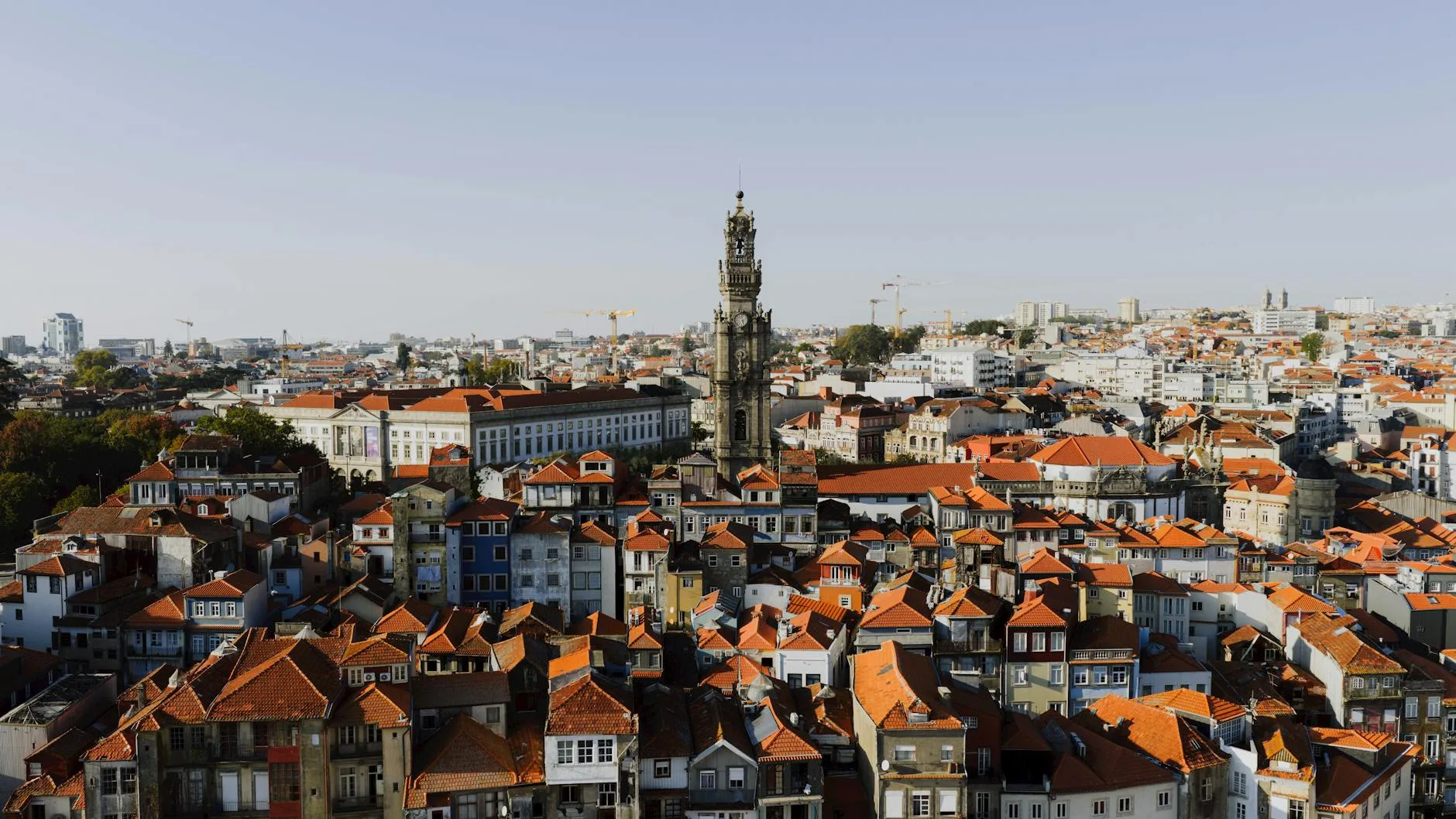
The bread arrives without being ordered — a dense, slightly sour pão de centeio with a small dish of local olive oil — and the woman behind the counter has already gone back to her conversation. It’s eleven in the morning in Mértola, a whitewashed hill town above the Rio Guadiana in the eastern Alentejo, and the café holds maybe six tables. Outside, a cat sleeps on warm stone steps. The castle ramparts are visible through the window. Nobody is in a rush.
This is what slow travel in Portugal actually feels like — not a philosophy, but a pace the country imposes naturally if you let it. The tourist infrastructure exists, but outside a handful of coastal hotspots it remains thin enough that you’re genuinely pushed toward local rhythms: the lunch hour that shuts everything from 1pm to 3pm, the markets that happen once a week and mean it, the bus that comes when it comes.
Portugal rewards patience and punishes the two-day stopover. The five places below are chosen because they each offer something that compounds over time: a neighbourhood that reveals itself slowly, a landscape that changes as you walk it, a food culture you can follow for a week without repeating yourself.
The Alentejo interior: Évora and the villages beyond
Évora is the obvious entry point — a UNESCO-listed city of Roman temple columns, bone chapels, and university students — but it works best as a base rather than a destination. The city itself takes two days to absorb properly: the Capelo dos Ossos in Igreja de São Francisco, the 1st-century Templo Romano, the tangle of lanes around Praça do Giraldo. Budget for €70–100/night for a guesthouse in the old town; the neighbourhood around Rua 5 de Outubro holds some of the better ones.
The real payoff is in the villages. Rent a car from Évora (Europcar and Sixt both have branches; expect €35–55/day for a small manual) and drive east toward Monsaraz, a fortified village on a granite ridge above the Alqueva reservoir. The village has roughly 800 residents, two restaurants, and a view across the largest artificial lake in Western Europe. Stay at least two nights. A Alcáçova is the better restaurant for local cooking — açorda de bacalhau (a thick bread-and-salt cod porridge), migas, and slow-roasted black pork that bears no resemblance to what’s served in Lisbon airport’s food court.
Further east, the market town of Serpa has almost no tourism infrastructure despite being genuinely beautiful, and Mértola — 90 minutes south — deserves its own two-night stop. Its Moorish heritage is layered and intact: the mosque-church conversion in the main square retains its original mihrab. The town’s small but serious Islamic Museum is free on Sunday mornings.
The Douro Valley: upstream from Porto
Porto gets crowded and deserves its own article. The Douro Valley, beginning roughly 90 minutes east of the city, is where you want to spend your time if you’re here for more than a weekend.
The valley is most spectacular between Peso da Régua and Pinhão, where terraced vineyards rise in steep columns above the river. The slow approach by train from Porto’s Campanhã station (the Douro line, operated by CP — around €12 each way, 2.5 hours to Pinhão) beats the tourist boats that clog the lower river in summer. The train hugs the northern bank; sit on the right side heading east.
Pinhão is small — one main street, a handful of quintas — but it’s the right size. The azulejo tile panels on the railway platform, depicting harvest scenes, are among the finest in the country and almost nobody lingers to look at them properly. From Pinhão, you can walk the PR3 Caminho do Vinho, a waymarked 15km trail through working quintas to São João da Pesqueira. It takes around 4 hours, gains roughly 400 metres in elevation through scrubby hillside, and ends in a village that has a bakery, a mercearia (grocery), and a Sunday market. Stay at a working quinta rather than a wine resort — many offer simple rooms through their own websites for €60–80/night, breakfast included.
Upstream from Pinhão, the valley narrows and the road worsens. Barca d’Alva, near the Spanish border, sees almost no visitors and has a quality of quiet that feels earned.
The Algarve’s interior: Serra de Monchique
Most people who come to the Algarve see its coast. The Serra de Monchique — a small but steep mountain range that backs the western Algarve — is visited by almost none of them, which makes it the most interesting part of the region.
Monchique town sits at around 450 metres, cooler and wetter than the beaches below. The hills are covered in eucalyptus, cork oak, and arbutus (the medronho tree, whose berries are distilled into a rough but distinctive aguardente). The walk from Monchique to Fóia, the highest point in the Algarve at 902 metres, is 7km each way on a mix of road and track — clear signage, no technical difficulty, two hours up.
The spa village of Caldas de Monchique sits in a steep valley just below the main town: a cluster of 19th-century buildings around a mineral spring that still operates as a spa (€15 for a basic treatment). It’s slightly faded, genuinely unhurried. The restaurant at the Hotel Central de Monchique serves carne de porco preto (black pig) with clams — a surprisingly harmonious combination — for around €14.
Getting to Monchique without a car requires a bus from Portimão (roughly hourly, 45 minutes, €4). Once there, most of the interesting territory is walkable.
The Minho: vineyards, market towns, and the Lima Valley
Portugal’s green north — the Minho region above Porto — gets overlooked partly because it doesn’t fit the country’s sunny, terracotta image. It rains here. The vineyards are strung on high trellises (the vinho verde system, designed to keep grapes off the wet ground), and the landscape is dense and layered.
Ponte de Lima, in the Lima Valley, is the oldest town in Portugal and its Monday market has been running since 1125. It’s held on alternating Mondays in the riverside square — an actual working market selling live poultry, seeds, cheese, and agricultural tools alongside vegetables and bread. Portugal’s food markets are explored in more depth in our round-up of the best local food markets in Europe for travellers.
The town makes an excellent slow base. The Via Romana XVIII — a Roman road that connected Braga to Astorga — passes through here and can be walked in sections. The stretch from Ponte de Lima to Rubiães (10km, mostly on original stone paving) is especially good.
The border with Spain is close, and the crossing at Valença is worth visiting: a double-walled fortified town facing the Spanish city of Tui across the Minho River. The bridge is 20 minutes on foot. The interior of Valença’s fortress, away from the souvenir shops on the main drag, holds quiet streets of actual residents.
Getting around the Minho without a car is possible but slow. Rede Expressos buses connect Viana do Castelo, Braga, and Ponte de Lima; local services fill in gaps but run infrequently (one or two daily on many routes). For longer stays, a bicycle or rental car opens up the river valleys considerably.
The Serra da Estrela: Portugal’s only mountain range
The Serra da Estrela is the highest point in continental Portugal (Torre, 1,993m) and one of the least-visited mountain regions in Western Europe, despite being roughly 3 hours from Lisbon by car or bus.
The gateway town is Seia on the western slope, or Gouveia slightly to the north — both ordinary market towns with weekly markets and no tourism infrastructure to speak of. Manteigas, in the glacial valley of the Zêzere river, is the better base: a long, narrow town in a deep valley, cold even in July, with trout in the river and a resident population of around 3,000.
The Vale do Zêzere walk — a waymarked trail following the glacial trough from Manteigas northward to Nave de Santo António (15km, 600m elevation gain) — is the best day walk in Portugal that almost nobody does. The valley is entirely treeless above a certain altitude, the rock glacially smoothed, the trail marked with red-and-yellow waymarks. Carry water; there are no services on the route.
The Serra da Estrela’s cheese — queijo da Serra — deserves particular attention. Produced between November and March from raw sheep’s milk, cured to a semi-liquid consistency in the rind, it is the kind of food that takes three or four tastes to understand. The best place to buy it is from the producer cooperatives in Seia or at the Tuesday market in Gouveia, not from supermarkets in Lisbon.
Bus connections to Manteigas require a change in Guarda (Rede Expressos from Lisbon to Guarda, 3.5 hours, €16; local STUB bus onward to Manteigas, 1 hour, €4). The local bus runs twice daily. A car gives you considerably more freedom across the plateau.
Comparing the five regions
| Region | Best for | Getting there | Car needed? | Best season |
|---|---|---|---|---|
| Alentejo interior | Food, villages, history | Bus to Évora, then drive | Yes, strongly | Mar–May, Sep–Oct |
| Douro Valley | Vineyards, walking, trains | CP train from Porto | No (with planning) | Sep–Nov (harvest) |
| Serra de Monchique | Mountains, quiet, day walks | Bus from Portimão | No (with planning) | Apr–Jun, Sep–Oct |
| Minho & Lima Valley | Markets, green landscape, history | Bus to Viana/Braga | Helpful | May–Sep |
| Serra da Estrela | Walking, solitude, cheese | Bus via Guarda | Helpful | Jun–Sep, Nov–Feb |
Practical Portugal: what you need to know before you go
Portugal uses the euro. ATMs are widespread; smaller villages may have one machine or none — carry cash when heading into the Alentejo interior or the Estrela. Tipping is not compulsory but rounding up the bill or leaving €1–2 is normal.
Public transport is reliable in the main corridors (Lisbon–Porto–Faro) and genuinely slow elsewhere. Rede Expressos covers most of the country by coach; CP (Comboios de Portugal) covers the rail network. The Douro and Minho lines are scenic and useful; most rural areas require a bus or car.
EU/EEA citizens need only a national ID card; most other nationalities can enter visa-free for 90 days under the Schengen agreement. The UK requires a passport but no visa for stays under 90 days.
Budget: Portugal is no longer the bargain it was a decade ago. Expect €80–120/day for comfortable mid-range travel (guesthouse, meals, transport) outside Lisbon and Porto; the interior is cheaper, the coast more expensive in summer. August on the Algarve coast is expensive and crowded — the interior regions above are not.
Language helps. Portuguese is phonetically unfamiliar to English speakers — it sounds closer to Russian than Spanish — but most guesthouses and restaurants in towns speak basic English. In small villages, a phrasebook and patience go a long way.
For those extending their Portugal trip into the Atlantic, the Azores archipelago offers a different but complementary kind of depth — our piece on slow travel in the Azores covers a month on São Miguel in practical detail.
The Bottom Line
- The Alentejo and Serra da Estrela are the two most underused regions for slow travel in Portugal — both reward multiple days and punish single-night visits. Don’t treat them as day trips.
- A rental car transforms the interior. Public transport is possible in the Douro Valley and Serra de Monchique with planning, but the Alentejo villages and Estrela plateau are genuinely hard without your own wheels.
- Go in spring (April–May) or autumn (September–October) for the best combination of weather, food seasonality, and manageable visitor numbers. August is fine in the mountains; it’s hectic and expensive on the coast.
- Eat where you see handwritten menus. The prato do dia (dish of the day) in a working village restaurant will cost €8–12 and be better than most things at twice the price in tourist-facing spots.
- Book accommodation further ahead than you think. Good small guesthouses in the interior have few rooms and fill up on weekends, especially in harvest season (October in the Douro, November in the Alentejo for olive oil).
Keep reading: Living in Lisbon for a month: a practical guide