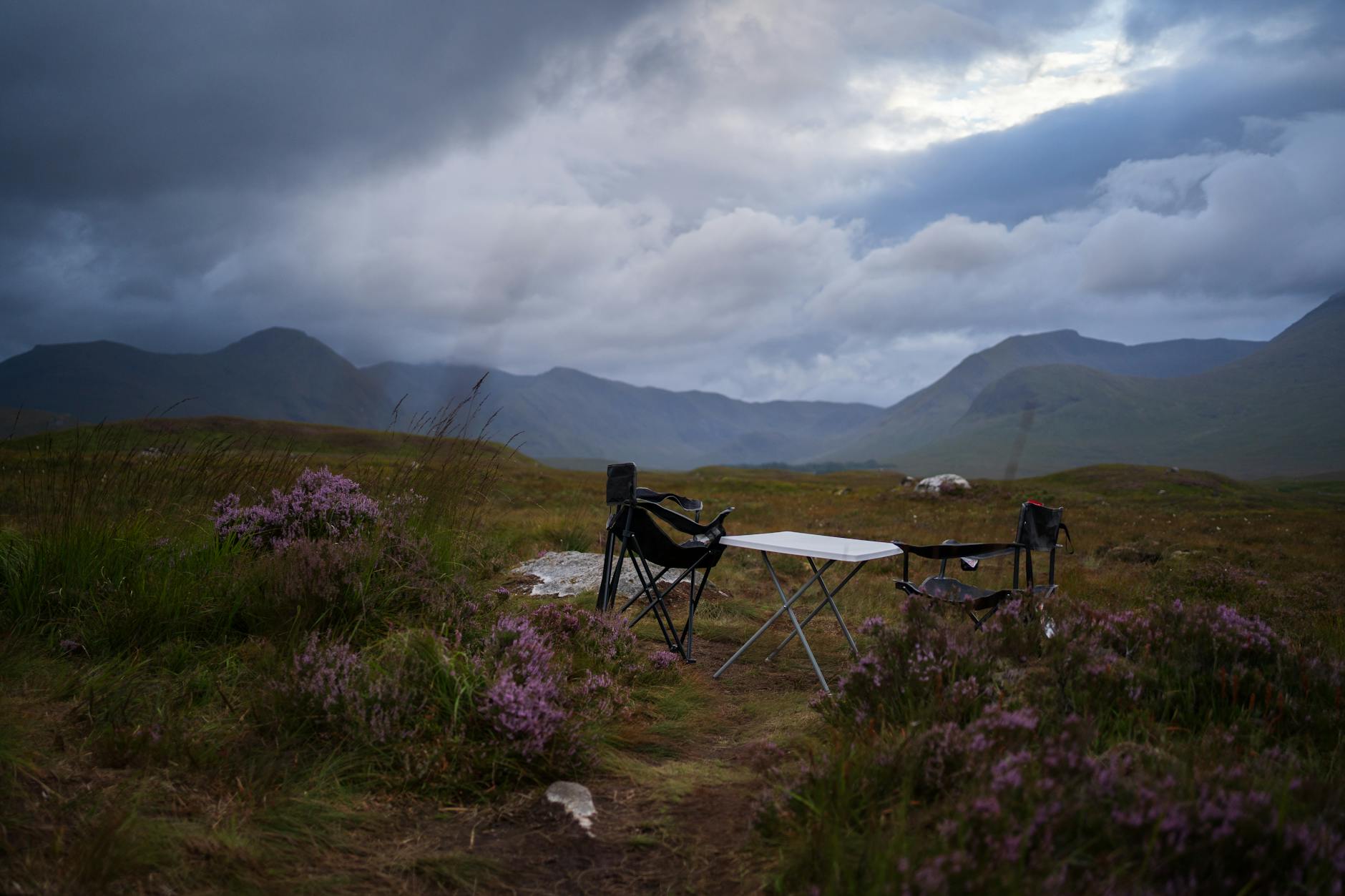
Photo by Mathias Dargnat on Pexels
Wild camping in Scotland: what you need to know
The midges arrive before the light does. You’re on the eastern shore of Loch Ossian, somewhere in the Corrour wilderness, and it’s just past five in the morning — the sky going from black to a bruised violet over the Rannoch Moor. Your tent is damp with condensation. The nearest road is eight kilometres away. There is no signal, no café, no one asking if you’ve made a reservation. This is what Scotland’s land access laws make possible, and it is genuinely unusual in the world.
Scotland is one of the very few countries where wild camping is not just tolerated but enshrined in law. The Land Reform (Scotland) Act 2003 grants everyone the right to camp on most unenclosed land, provided you do so responsibly. That legal foundation changes everything about how you plan and move through the country. But the law alone won’t tell you where the midges are worst, which glens flood in October, or how to actually reach a remote loch without a car. That’s what this guide is for.
What the law actually says — and what it doesn’t
The 2003 Act is often summarised as “you can camp anywhere.” The fuller picture is more nuanced and more useful. You have the right to camp on most land in Scotland as long as you act responsibly under the Scottish Outdoor Access Code, which means: stay for no more than two or three nights in one spot, leave no trace, use a stove rather than open fires where ground is dry or vegetation thin, and move on without being asked.
What the law doesn’t protect: camping in enclosed fields (farmland with crops or livestock), within the curtilage of a house or garden, or on land explicitly managed as a designated campsite. In practice, deer forests, open moorland, loch shores, mountain slopes, and forestry land are almost universally fine.
Open fires are legal but carry their own rules. Fires must be kept small, away from overhanging vegetation and peat, and you must fully extinguish them — cold, not just dark. During dry spells, particularly on the west coast in spring, fire bans are increasingly common. Check the Mountaineering Scotland fire guidance before you go, and carry a stove regardless.
Where to actually go
Scotland’s wild camping landscape divides roughly into three types of terrain, each with different conditions and logistics.
The Northwest Highlands — Torridon, Assynt, Cape Wrath — offer the most dramatic camping in Britain. Beinn Eighe and the Torridon ridge provide high camps with views across the Minch on clear days. The Assynt peninsula, particularly around Stac Pollaidh and Suilven, is patterned with small lochans that make excellent camp spots. The tradeoff: this is also some of the wettest, windiest, and midgiest terrain in Europe. Come in May or September, not July or August, and accept that the weather will do what it likes.
Loch Lomond and the Trossachs is the closest wild country to Glasgow and Edinburgh and, as a result, the most pressured. Loch Lomond’s eastern shore — accessed from Balmaha or along the West Highland Way — is specifically covered by a camping management zone between March and September, which requires a permit. These are available online in advance through the National Park and cost around £3–5 per night. Don’t skip this step; rangers do check. The western shore has more freedom, and Loch Katrine to the north is noticeably quieter.
The Cairngorms offer high-altitude plateau camping that feels genuinely remote without requiring the same multi-day approach as the northwest. The Lairig Ghru corridor, the Feshie valley, and the Garbh Choire above Braeriach all see experienced campers. The plateau can be genuinely dangerous in winter — this is sub-Arctic terrain, not a weekend in the hills — but in June or August, the long light makes camping here something else entirely.
For something more accessible, the Galloway Forest Dark Sky Park in the southwest is excellent for a first wild camp: few serious midges, gentle terrain, and skies that are worth the trip alone.
Seasonality: when to go and what you’re signing up for
| Season | Conditions | Midges | Daylight | Verdict |
|---|---|---|---|---|
| January–March | Cold, wet, often snowy above 500m | None | Short | For experienced winter campers only |
| April–May | Variable, some snow possible | Low | Building | Excellent: burns running, midges rare |
| June–July | Warmest, but busiest | High | Very long (almost 24hr in north) | Good if you prepare for midges |
| August | Warm, busy, midges peak mid-month | Very high | Long but shortening | Bring a midge net. Seriously. |
| September | Cooling, less busy, autumn colour | Low–moderate | Good | Best overall month for most campers |
| October–November | Wet, storms likely, short days | None | Short | Demanding but beautiful |
The midge question deserves its own paragraph. Culicoides impunctatus — the Highland midge — is a small biting fly that exists in densities that can make camping genuinely miserable in summer, particularly in the west, near water, in still air, at dawn and dusk. Smidge repellent (the Scottish brand, not DEET) works well. A good midge head net costs about £5 and is non-negotiable if you’re camping near Loch Maree or in Knoydart in late summer. On the positive side: midges don’t like wind, rain, or direct sunlight. The same weather that produces clouds of them also tends to produce the most spectacular Highland light.
Getting there without a car
The persistent myth is that wild camping in Scotland requires a car. It doesn’t, but it does require more planning.
Corrour is perhaps the best example of what’s achievable by train. The Corrour station stop on the West Highland Line — no road access, no village, just a small station building and open moorland — drops you into genuine wilderness 45 minutes from Fort William. From Corrour you can walk to Loch Ossian (20 minutes), set up camp on the shore, and spend several nights exploring the surrounding hills before catching the train back. The return journey to Glasgow takes around three hours and costs roughly £35–45. The Sleeper train from London Euston to Fort William or Inverness is worth the extra cost if you’re travelling from the south — it eliminates a flying connection and you wake up already in the Highlands.
Kyle of Lochalsh is reachable by train from Inverness, which opens up Torridon (bus or taxi from there) and the Applecross peninsula. The 973 bus from Inverness serves Gairloch and Poolewe, both useful staging points for the Beinn Eighe and Flowerdale area.
Aviemore has a direct train from Edinburgh (2.5 hours) and serves as the eastern Cairngorms base. From the town, Rothiemurchus Estate and the Lairig Ghru trailhead at Coylumbridge are a few kilometres by bike or on foot.
What to pack — honestly
The standard lightweight backpacking kit applies, but Scotland adds specific considerations. A three-season sleeping bag is the minimum; a four-season bag makes late autumn possible. A freestanding tent — meaning one that doesn’t rely on pegs in soft ground — is strongly preferable; Highland peat doesn’t hold stakes well, and some ground near the coast is so soft that guylines work better fixed to rocks. A trowel and a small bag for human waste (particularly above the tree line where Leave No Trace principles are most important) are worth carrying. Water purification tablets or a filter are useful even in the Highlands, particularly near grazing land.
Budget realistically. Wild camping itself costs nothing (or £3–5 in the Loch Lomond management zone). The spend is in kit, transport, and resupply. A weekend trip from Edinburgh to Aviemore for two people — train tickets, food, stove fuel — comes to around £120–160 all in. A week in the northwest, including Inverness accommodation either side, is more like £400–500 per person, depending on how you travel.
The practicalities that often get missed
Phone signal in the Highland interior is sparse to nonexistent on most networks. EE has the widest rural coverage in Scotland. Download offline maps before you go — OS Maps (the app) is the standard, with 1:25,000 detail that shows field boundaries and small tracks. A dedicated GPS device is worth bringing for serious multi-day routes; phones fail in cold and wet.
Water from mountain burns and lochs is generally safe to drink in the Highlands above grazing land, but treat anything below an area with sheep or deer as potentially contaminated with Cryptosporidium. Carry a Sawyer Squeeze or similar filter; it weighs very little and removes the guesswork.
The emergency number in Scotland, as elsewhere in the UK, is 999. Mountain Rescue in Scotland is volunteer-operated and responds anywhere — register your route with a responsible person at home, or use the free Mountain Rescue app, which logs your location even without signal when activated.
The Bottom Line
- The right is real. Scotland’s Land Reform Act genuinely grants wild camping access to most unenclosed land — you don’t need permission, and the law is not a loophole. Learn the Scottish Outdoor Access Code and apply it consistently.
- Loch Lomond requires a permit. Between March and September, the eastern shore camping management zone is permit-only. Book at the National Park website before you arrive; it’s cheap and quick.
- September is the sweet spot. Midges taper off, crowds thin, the light is extraordinary, and the weather, while unreliable, is warmer than October. May is the strong second choice.
- You don’t need a car. Corrour by train, Aviemore by train, Inverness by train and bus — the network reaches further than most guides suggest. Plan it properly and the car becomes optional.
- The gear matters more here than in many places. Scottish Highland weather is serious. A cheap tent and a summer sleeping bag will make a miserable trip in all but the calmest conditions. Borrow kit before you buy if you’re starting out, but don’t underestimate what you need.