Photo by Győző Mórocz on Pexels
The albergue in Pamplona smells of damp boots and instant soup by 7pm. Thirty people are horizontal on bunk beds, alarms already set for 5:45am. Someone is wrapping both feet in surgical tape with the focused expression of a field medic. Outside, the old city is still going — pintxos bars on Calle Estafeta packed shoulder to shoulder, glasses of txakoli being poured from a height. These two worlds — the pilgrimage and the actual Spain it passes through — run parallel on the Camino Francés, and knowing how to move between them changes the whole experience.
The Camino de Santiago is not a secret. Around 500,000 people received their Compostela certificate in Santiago de Compostela in 2025, and the main route, the Camino Francés, can feel like a managed event in high summer. But the infrastructure, the food, the towns, the terrain — these are genuinely worth understanding before you arrive, because almost everything you think you know about the Camino comes from memoirs and films, and almost none of it is actually useful for planning a walk.
The route question nobody answers clearly
There isn’t one Camino. There are at least eight recognised routes to Santiago de Compostela, and the choice you make determines almost everything about your experience.
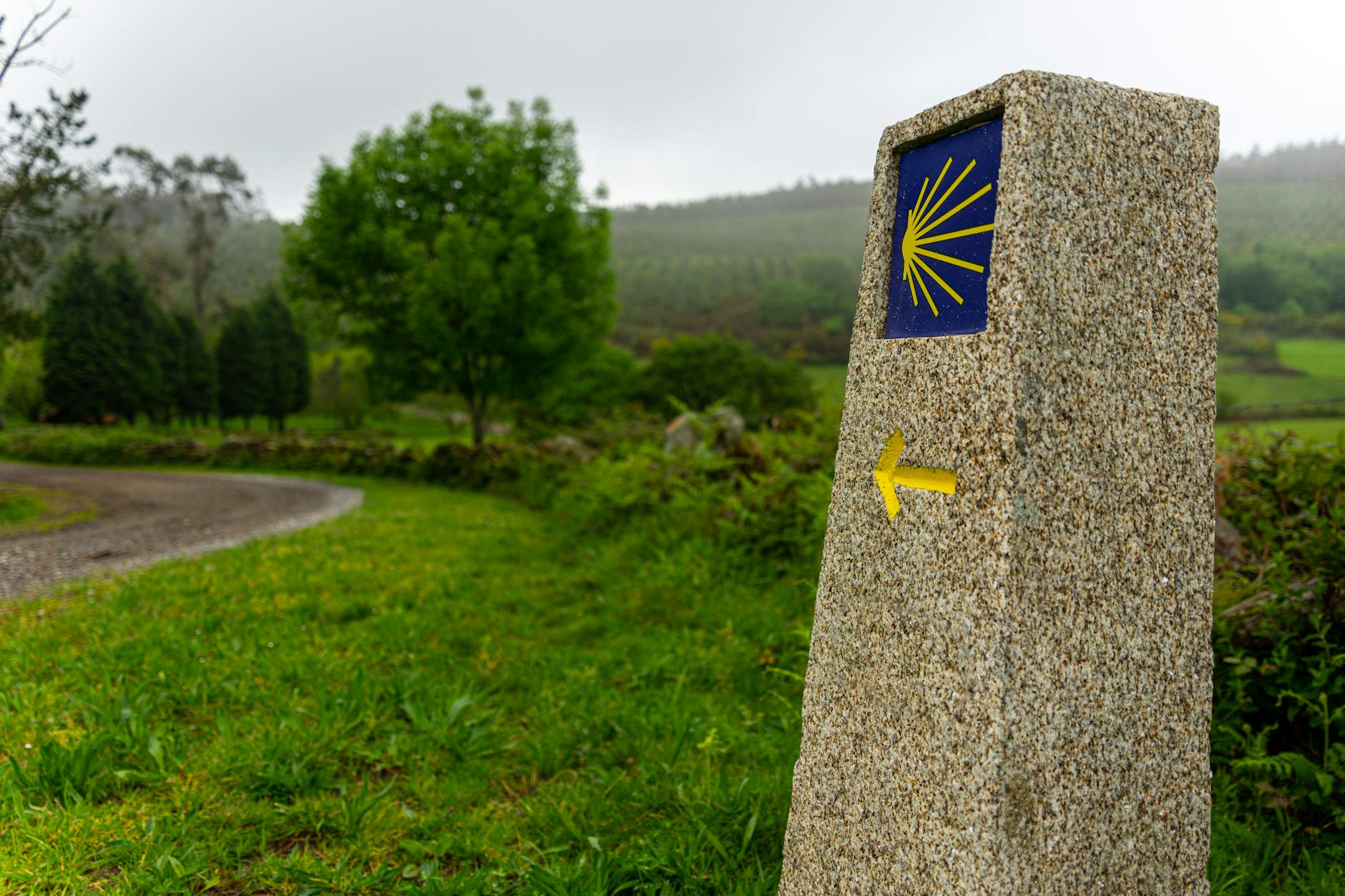
The Camino Francés (French Way) runs 780km from Saint-Jean-Pied-de-Port in France over the Pyrenees to Santiago. It’s the busiest, the most serviced, and the most socially intense — you will likely see the same 30 people every day for two weeks. The infrastructure is extraordinary: albergues every 5–10km, cafés at regular intervals, yellow arrows so frequent you’d have to try to get lost.
The Camino Portugués starts in Lisbon or Porto; the stretch from Porto to Santiago (roughly 240km) is increasingly popular and noticeably quieter than the Francés outside of June–August. The coastal variant via Viana do Castelo and the Spanish coast through A Guarda is particularly good — flatter, greener, with Atlantic light that’s entirely different from the Castilian meseta.
The Via de la Plata runs 1,000km north from Seville through Extremadura and Galicia. It’s longer than the Francés, significantly harder to find information about in English, and almost empty in the early sections. In February or March, you can walk entire days between Zafra and Mérida without seeing another pilgrim.
The Camino del Norte follows the Cantabrian coast from Irún on the French border — more physically demanding, with more coastal climbing, but consistently beautiful and less crowded than the Francés.
For a first walk, Porto to Santiago on the Portugués is a genuinely good option: manageable distance (most people do it in 10–12 days), excellent infrastructure, and enough other pilgrims that you won’t feel isolated, but not so many that albergues fill by 9am.
What the Pyrenees crossing actually involves
If you start the Camino Francés from Saint-Jean-Pied-de-Port, the first day is the hardest single stage of the entire route: 25km over the Pyrenees via the Napoleonic route (Route de Napoléon) with 1,400m of ascent. In good weather it’s a tough but spectacular mountain walk. In bad weather — and the Pyrenees in October or November can turn quickly — it’s closed and walkers are redirected via Valcarlos, which is lower but adds little.
The Pilgrim Office in Saint-Jean (Rue de la Citadelle) opens at 7:30am and issues your credencial (pilgrim passport) and current weather advice. They will tell you directly if the mountain route is inadvisable. Listen to them. Two or three people are evacuated from that crossing every year.
Saint-Jean is a well-preserved Basque market town worth arriving a day early. Stay at the Gîte Ultreïa or Albergue Beilari (book ahead in April–September) and eat at one of the restaurants on Rue d’Espagne — the axoa (veal stew with Espelette pepper) is the local dish and it’s genuinely good.
The meseta: what everyone warns you about
Between Burgos and León, the Camino Francés crosses the Castilian meseta — roughly 200km of high plateau farmland, largely exposed, with long flat stages and little shade. June and July temperatures regularly exceed 35°C on the meseta. The advice to start walking by 6am is not a suggestion; by 10am the light is white and the heat becomes a serious physical fact.
Most accounts frame the meseta as a psychological trial. It is, in the sense that there’s nothing to distract you from the walking. But it’s also genuinely beautiful — wheat fields going silver in the wind, the occasional Romanesque church appearing out of the flatness, red kite and white stork overhead. The town of Sahagún is chronically underrated: it has some of the finest Mudéjar brickwork in Spain (the Torre del Reloj, the church of San Tirso), almost no tourists, and a Thursday market that sells cheese and cured meats from León province.
Where to sleep: albergues, the booking question, and the alternative
The Camino albergue system is real and functional. Municipal albergues charge €8–12 per night in a dormitory, are first-come-first-served, and range from basic (San Juan de Ortega: stone floors, no heating, extraordinary Romanesque church) to comfortable (the Albergue de la Abadía in Burgos, inside a former monastery).
Private albergues run €15–25 and usually offer smaller dorms, better bathrooms, and sometimes private rooms. The albergues in O Cebreiro (the mountain village that marks your entry into Galicia, at 1,293m) and Arzúa (45km from Santiago) are worth booking ahead in summer, as both are bottlenecks where tired walkers cluster.
The thing nobody says clearly: you do not have to stay in albergues. Rural guesthouses (casas rurales), small hotels (hostales), and Airbnb options exist along the entire route. If you want private space and a decent night’s sleep, a room in a hostal in a small Castilian town typically costs €35–50 and is often better value than the same money spent in a city. Some pilgrims do the whole route in albergues; others mix them with private rooms and are not lesser for it.
Eating along the route: what’s actually good
The Camino passes through four distinct food cultures, and paying attention to this changes the experience considerably.
In Navarre and the Rioja, eat menú del peregrino at lunchtime (€10–13, three courses with wine, almost universally available), but save space for the pintxos bars in Logroño’s Calle Laurel — this is one of the best bar streets in Spain, and Logroño is often dismissed as a transit town when it deserves an evening.
On the Castilian meseta, the food is heavier: roast lamb (lechazo), morcilla (blood sausage from Burgos, mixed with rice and onion, unlike anything you’ll find elsewhere), and sopa castellana (bread soup with paprika and egg). In Burgos, eat at the Mercado de Abastos on Calle Miranda.
In Galicia, the final stretch changes everything — the landscape becomes Atlantic green, the food becomes oceanic. Pulpo a feira (boiled octopus dressed with paprika and olive oil) is everywhere; the version served in the market town of Melide, at Ezequiel or Pulpería Garnacha, is excellent. Caldo gallego (white bean and greens broth) and empanada gallega (tuna or pork pie) are the daily staples. The local wine is Albariño.
The arrival in Santiago: what to expect
The final stage into Santiago de Compostela ends at the Plaza del Obradoiro and the Cathedral. This is one of the genuinely moving arrivals in European travel — the granite façade, the bagpipes, the other walkers sitting on the stones looking stunned. It is also crowded, particularly in summer and on feast days, and the square around the Cathedral can feel like an outdoor theatre with a cast of thousands.
The Pilgrim Office (Oficina del Peregrino) on Rúa das Carretas issues the Compostela certificate after you show your stamped credencial. Queue times in July and August run 2–3 hours. The office opens at 8am; arriving before 9am shortens the wait considerably.
According to the Confraternity of Saint James, the Compostela requires walking at least the final 100km on foot (the last stretch from Sarria, just inside Galicia), or 200km by bicycle — which is why the Sarria–Santiago section is always the most crowded part of the Camino Francés, and why some pilgrims find it jarring after weeks of space.
Stay at least one extra night in Santiago. The old city — a UNESCO World Heritage Site since 1985 — has a covered market (Mercado de Abastos, open Tuesday–Saturday morning) that sells the best seafood in Galicia, stone alleys with medieval pazos, and a university that keeps the city genuinely alive outside of pilgrim season.
Timing, costs, and practical logistics
| Factor | Detail |
|---|---|
| Best months | April–June, September–October (cooler, quieter, most services open) |
| Avoid | July–August on Francés (very hot, crowded); December–February on Norte/Francés (many albergues closed) |
| Daily budget, albergues | €35–50 (bed, menú del peregrino, snacks, coffee) |
| Daily budget, private rooms | €70–100 |
| Gear cost (if buying new) | €150–300 for boots, poles, pack, sleeping bag liner |
| Compostela requirement | Last 100km on foot from Sarria, stamped credencial |
| Getting to Saint-Jean | Train to Bayonne (from Paris Montparnasse, ~5hrs), then regional train or bus to Saint-Jean |
| Getting to Porto | Flights to Porto Francisco Sá Carneiro Airport; city centre 35 mins by Metro (Line E) |
| Flying home from Santiago | Santiago de Compostela Airport (SCQ) has direct flights to London, Dublin, Frankfurt, Amsterdam |
Gear note: The Camino Forum’s gear guide covers kit lists in obsessive detail. The single most useful piece of advice: walk in your boots for at least 6 weeks before you start. Blisters are the Camino’s most common injury, and most of them are preventable.
The Bottom Line
-
Route choice matters more than anything else. The Camino Francés is excellent but busy in summer. The Portugués from Porto is a genuinely good first route — shorter, well-serviced, less crowded. The Via de la Plata rewards committed walkers who want solitude and serious terrain.
-
The albergue system works, but you don’t have to commit to it entirely. Mixing dorm nights with occasional private rooms makes the walk more sustainable, especially over 30+ days. Book ahead in O Cebreiro, Arzúa, and Santiago in high season.
-
The food is regional and specific. Pintxos in Logroño, morcilla in Burgos, pulpo a feira in Melide — eating according to where you actually are makes the walk feel less like a single corridor and more like a journey through distinct places.
-
Start early on the meseta and mountain stages. 6am is not an exaggeration. Heat and weather are the two variables that can genuinely ruin a day, and both are manageable with an early start.
-
Give Santiago a day after you arrive. The Pilgrim Office queue, the Botafumeiro mass (held most Fridays and Sundays at 7:30pm in the Cathedral — it’s worth attending regardless of your relationship to religion), and the Mercado de Abastos are each worth a few hours. The city deserves more than a single night.