How to do a homestay in rural Indonesia
The family is already awake when you are not. At 5am in Penglipuran, a traditional Balinese village in the hills above Bangli, the smell of incense drifts through the compound gates before the light comes. Your host, Wayan, has placed a small offering — flower petals, a cracker, a stick of burning dupa — on the threshold of the guest room. Breakfast is nasi jinggo: a palm-leaf packet of rice with shredded coconut and chilli sambal, eaten on a low wooden bench while a cockerel argues with the morning somewhere nearby.
This is not a resort experience dressed in batik. A genuine rural homestay in Indonesia means shared bathrooms that may involve a mandi (ladle-and-basin bathing), meals timed to the family’s schedule, and conversations that stumble through three languages and eventually land somewhere useful. It is frequently imperfect and consistently worthwhile.
Where to actually go
The term “homestay” in Indonesia covers everything from a spare room in a Javanese suburb to a longhouse bunk in East Kalimantan. The distinction matters. If you want agricultural immersion, consider these:
Penglipuran, Bali — The village charges a Rp15,000 entry fee, but a handful of families offer genuine overnight stays (Rp150,000–250,000 per night) through informal arrangement. The setting is unusually structured — bamboo houses along a single ceremonial axis — and the rice terrace walks around Kubu village nearby take 2–3 hours.
Sade Village, Lombok — A Sasak community in the south of Lombok, near Rambitan. A few families host independently; ask at the village gate rather than booking through tour operators in Senggigi who add significant markup. Rp100,000–200,000 per night. Weaving demonstrations are not performance here — women work looms daily and will sell directly.
Tuk Tuk, Samosir Island, North Sumatra — The Batak heartland of Lake Toba is among the most accessible rural stays in Indonesia. Samosir is reached by ferry from Parapat (Rp25,000, 45 minutes). Homestays in the Tuk Tuk peninsula — small family guesthouses rather than commercial hotels — run Rp150,000–300,000 and almost always include meals. Try arsik (carp cooked with andaliman pepper and torch ginger) at your host’s table rather than in the tourist strip.
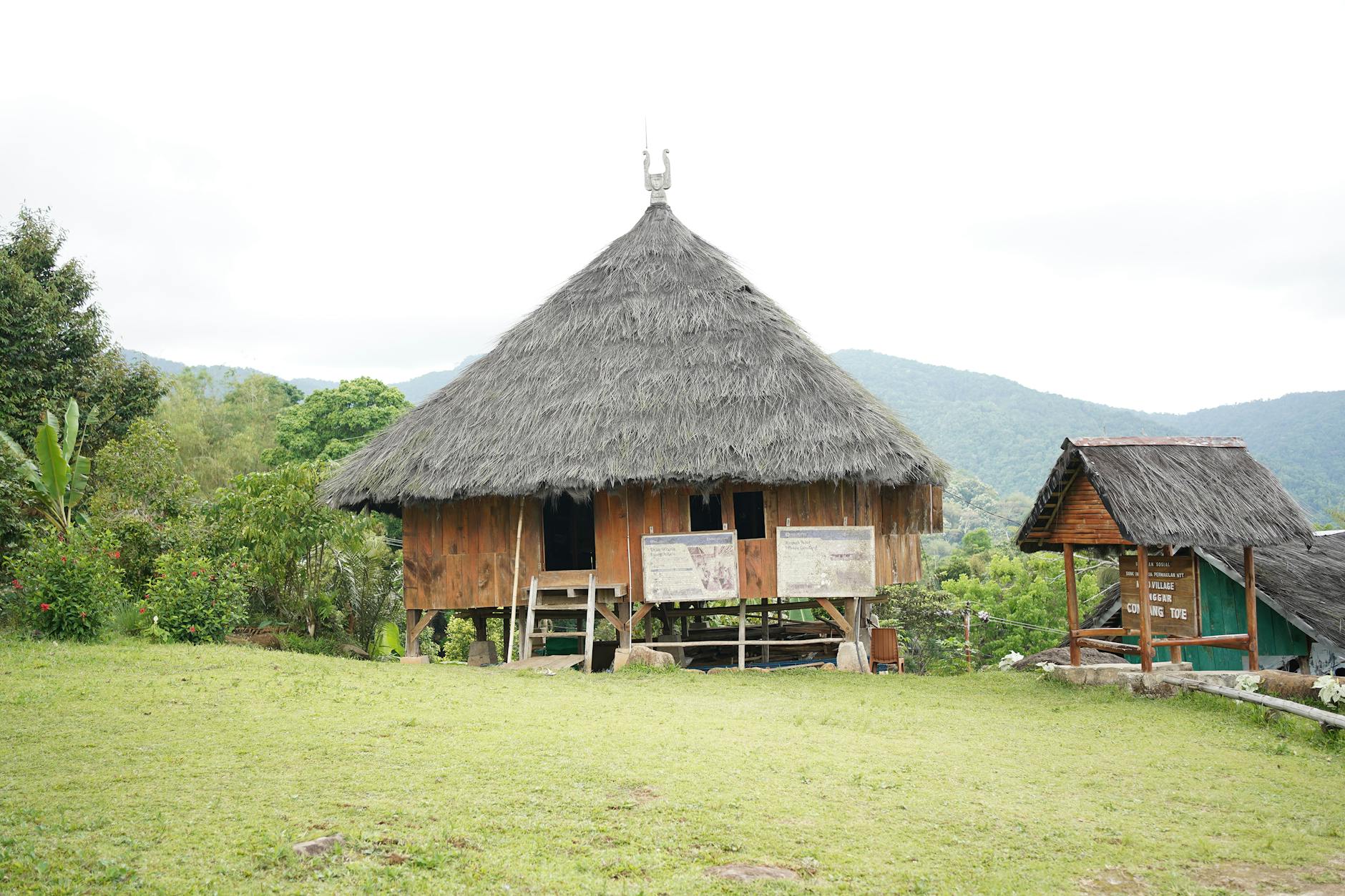
Wae Rebo, Flores — The hardest option on this list and the most rewarding. This highland Manggarai village of traditional cone-roofed mbaru niang houses sits at 1,200 metres, accessible only by a 4–5 hour trek from Denge village. You must sleep in the communal guesthouses (Rp350,000–450,000 per person, including meals), contribute to a small village fund, and have pre-arranged with the village head — do this through the Wae Rebo village contact system rather than through tour aggregators.
How to arrange a homestay without a middleman
Most rural Indonesian homestays are not on Booking.com. The ones that are have usually been professionalised to the point where the host’s grandfather no longer eats dinner with you.
Direct contact: Ask at local tourist information offices in district capitals — Bajawa for Flores villages, Rantepao for Torajan communities in Sulawesi, Bukittinggi for West Sumatran Minang stays. These offices maintain lists of registered host families.
WhatsApp: This is how rural Indonesia communicates. Once you have a name, a number travels through one or two conversations. Indonesian hospitality means most hosts will respond to a politely worded voice note, even with limited English.
Village gates: At Sade and Penglipuran specifically, simply arriving and asking works. Bring cash. Confirm what is included (meals, transport to trailheads) before agreeing, as additions accumulate.
Avoid platforms that charge 20–30% commission without disclosing it — the family sees less, the price to you is higher, and the intermediary adds nothing practical.
What to eat, and what you’re agreeing to
Food is not optional at most homestays — it’s included in the price and eaten with the family. This is the actual point.
In Toraja (Sulawesi), that means pa’piong — pork or chicken stuffed into bamboo tubes and cooked over fire — and black sticky rice at breakfast. On Samosir, expect naniura (raw carp cured in citrus and spices) if the host is confident you can handle it. In West Sumatra, the Minang tradition means every surface of the table holds a small dish: rendang, gulai daun singkong (cassava leaf curry), perkedel jagung (sweetcorn fritters).
Dietary requirements: vegetarianism is workable in Bali and increasingly in tourist-adjacent villages elsewhere. It is genuinely difficult in Toraja and among Batak communities where pork is central to both food and culture. Be honest about this before you arrive — it avoids waste and awkwardness.
Logistics and costs at a glance
| Location | Nightly cost (incl. meals) | Getting there | Trek/difficulty | Best months |
|---|---|---|---|---|
| Penglipuran, Bali | Rp150,000–250,000 | Bemo from Bangli (Rp10,000) | Flat village walk | May–Oct |
| Sade, Lombok | Rp100,000–200,000 | Cidomo or ojek from Praya | Flat | May–Sep |
| Tuk Tuk, Samosir | Rp150,000–300,000 | Ferry from Parapat (Rp25,000) | Flat to moderate | Jun–Sep |
| Wae Rebo, Flores | Rp350,000–450,000 | Ojek to Denge + 4–5hr trek | Strenuous | Apr–Nov |
| Rantepao, Toraja | Rp200,000–350,000 | Bus from Makassar (10–12hr) | Moderate | Jul–Aug |
All prices in Indonesian Rupiah. As of 2026: Rp15,000 ≈ USD $0.90. Exchange rates vary.
What to bring and how to behave
Pack a sarong — you’ll use it for temple visits, for sleeping on hot nights, and as a gesture of effort that Indonesian hosts notice. Bring small gifts from your home country rather than cash gifts, which can feel transactional. Instant coffee from your country, postcards, or sweets for children work well.
Behaviour matters more than gifts. Remove footwear before entering any home. Ask before photographing family members, particularly older women and children. If there’s a ceremony during your stay —