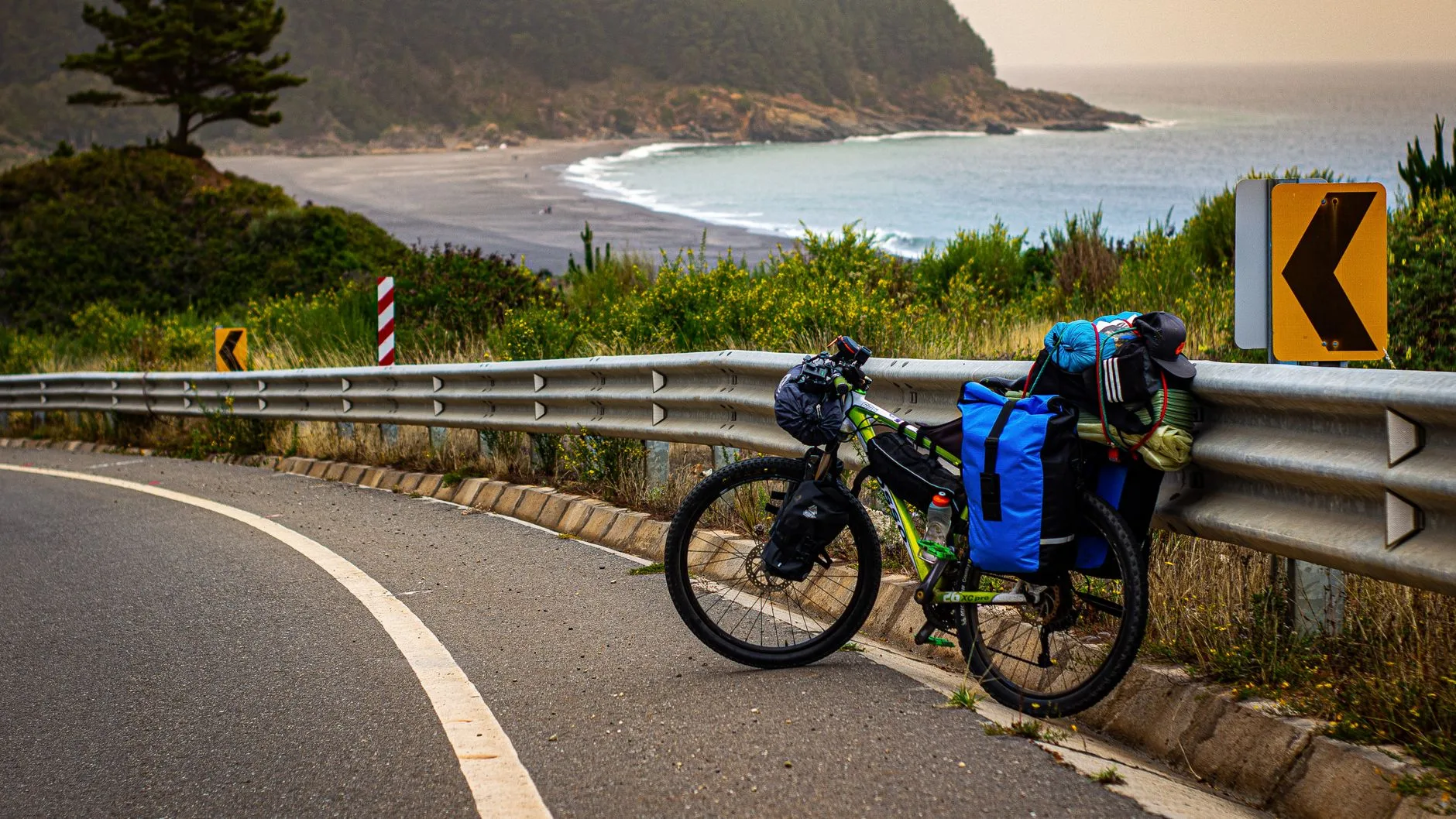
Photo by Alexis Leandro Jeria Bocca on Pexels
The gravel crunches differently in Austria than it does in Hungary. Somewhere past Melk, the Danube cycle path turns smooth and freshly tarred, lined with apricot orchards and the occasional Stift glowing gold on its hill. Two hundred kilometres later, near the Slovak border, the same river path becomes a rutted track through poplar forest, and the only sound is wind through leaves and the tick of a chain that needs oiling. This is what crossing a continent by bicycle actually feels like — not one continuous adventure but a series of very different countries stitched together by a thin ribbon of asphalt, gravel, and the occasional unmarked farm track.
Cycling across Europe is not a single trip. It’s dozens of micro-decisions about border crossings, bike-friendly trains, where to refill water, and whether your rear derailleur will survive Romanian cobblestones. This guide covers the actual mechanics: which routes work, what to pack, what it costs, and what nobody mentions until you’re standing in the rain in Transylvania wondering why your “waterproof” panniers aren’t.
Choosing a route: the EuroVelo network and what it actually delivers
The EuroVelo network, coordinated by the European Cyclists’ Federation, is the backbone of long-distance cycling in Europe — seventeen numbered routes totalling tens of thousands of kilometres, ranging from fully signed and paved to barely marked farm tracks that exist mostly on a map. Signage quality varies wildly by country, which matters more than most planning guides admit.
EuroVelo 6, the Atlantic–Black Sea route, is the classic choice and for good reason: it follows the Loire, then the Danube, through ten countries with relatively gentle gradients and well-developed cycling infrastructure in its western half. EuroVelo 15, the Rhine Cycle Route, is shorter and more urban, threading through Switzerland, France, Germany, and the Netherlands — ideal if you want dense history and good beer without committing three months. EuroVelo 1, the Atlantic Coast Route, runs from Norway to Portugal and rewards riders who don’t mind wind, hills, and ferry timetables in exchange for coastal scenery that the inland routes can’t match. EuroVelo 13, the Iron Curtain Trail, follows the old Cold War border from the Barents Sea to the Black Sea — less developed, more remote, and genuinely fascinating for anyone interested in twentieth-century history rather than postcard villages.
| Route | Length | Terrain | Best for | Surface quality |
|---|---|---|---|---|
| EuroVelo 6 (Atlantic–Black Sea) | ~6,800 km | Flat to rolling | First-time long-distance riders | Excellent in France/Germany, mixed in Balkans |
| EuroVelo 15 (Rhine) | ~1,500 km | Flat | Shorter trips, city-hopping | Very good throughout |
| EuroVelo 1 (Atlantic Coast) | ~11,000 km | Hilly, coastal, windy | Scenery over speed | Variable, ferry-dependent |
| EuroVelo 13 (Iron Curtain Trail) | ~10,400 km | Mixed, often remote | History, solitude | Patchy, often unpaved |
Most riders don’t attempt a full EuroVelo route end to end. A realistic first crossing is something like Munich to Vienna to Budapest along the Danube — roughly 600 km, almost entirely flat, well-supplied with campsites and bakeries, and a good test of whether multi-week cycling suits you before committing to anything longer.
Borders, visas, and the paperwork nobody enjoys
If your route stays inside the Schengen Area, border crossings are mostly symbolic — a sign, maybe an old customs booth now selling ice cream. The practical constraint is the 90/180-day Schengen visa rule for non-EU passport holders, which catches out more long-distance cyclists than any mechanical failure does. Riders from the UK, US, Canada, and Australia need to plan their route around this limit carefully; a six-month crossing of Europe is not possible on a standard tourist stay without routing through non-Schengen countries like the UK, Ireland, Romania (until it fully joins), or the Balkan states to reset the clock. Check current requirements on the European Commission’s official Schengen information before departure, since rules around the new Entry/Exit System have been shifting.
Outside Schengen, things get more interesting. Serbia, Albania, and North Macedonia welcome cyclists with minimal fuss and no visa for most Western passport holders. Crossing into countries like Moldova or Ukraine requires more homework and, depending on circumstances, may not be advisable at all — check your government’s current travel advisory before routing anywhere near an active conflict zone.
Getting your bike there and getting it home
Flying with a bike is the most expensive and most annoying part of the whole enterprise. Budget airlines charge anywhere from €50 to €150 each way for a bike box, and policies change often enough that it’s worth checking the specific airline’s current rules the week before you fly, not months in advance.
Trains are usually the better option within Europe. German and Austrian regional trains (Regionalbahn, Regionalzug) generally allow bikes with a supplementary ticket and no reservation. French TGVs and most high-speed services require a reservation and sometimes a disassembled, bagged bike — a genuine hassle if you’re riding a fully loaded touring bike. The Deutsche Bahn and ÖBB websites both have English-language bike policies that are worth reading in full before you assume you can just roll on.
Ferries solve more problems than trains do. Crossing the Adriatic from Bari to Durrës, or the Baltic from Travemünde to Helsinki, lets you skip entire countries’ worth of riding and arrive rested. If ferry logistics across the continent interest you beyond cycling, it’s worth reading about underrated ferry routes in Europe — several of them double as useful shortcuts for a cycling itinerary, particularly around the Greek islands and the Baltic.
Where to sleep: the real hierarchy of options
Wild camping is technically illegal in much of Western Europe but widely tolerated in Scandinavia, where “allemansrätten” (the right to roam) explicitly permits it. In France, Germany, and Austria, campsites (Campingplatz) are abundant, cheap — typically €8 to €18 per night for a cyclist with a small tent — and almost always have hot showers and a small shop.
Warmshowers.org, a hospitality network specifically for touring cyclists, is free to use and connects riders with hosts along almost every major route. It’s slower to arrange than booking a hostel but tends to produce the most interesting evenings of the whole trip — homemade goulash in a Hungarian garden, unsolicited route advice from someone who’s done the same ride three times.
Monasteries along routes through Austria, Hungary, and Italy sometimes offer basic pilgrim accommodation for a donation, a holdover from older pilgrimage infrastructure that long-distance cyclists have quietly adopted. It’s not guaranteed and rarely advertised, so ask locally rather than relying on an app.
What you’ll actually eat
Food changes faster than the scenery. In Bavaria, expect Leberkäse rolls from bakery counters that open before 6am — useful, since cyclists are often on the road before the heat sets in. Along the Austrian Danube, apricot everything: Marillenknödel (apricot dumplings) in the Wachau valley, sold at farm stands alongside the cycle path itself. Cross into Hungary and the diet shifts to lángos — fried dough slathered in sour cream and cheese, sold at roadside stalls near Győr and Esztergom, and genuinely one of the best 800-calorie decisions a tired cyclist can make.
Through Serbia, grilled ćevapi and fresh bread from bakeries in towns like Novi Sad provide the kind of dense, cheap calories that long days demand. If markets interest you as much as the riding does, it’s worth timing arrivals around weekly market days — a habit worth developing generally, and one covered well in a broader look at Europe’s best local food markets.
The gear that actually matters
Touring bikes split into two broad camps: steel-framed drop-bar tourers (Surly Disc Trucker, Kona Sutra) built for durability and repairability, and increasingly popular gravel bikes adapted for touring, which handle mixed surfaces better but have fewer spare-parts standards if something breaks in a small town. For a first continental crossing, a steel frame with 26- or 700c wheels and disc or cantilever brakes remains the safer, more repairable choice — most bike shops across rural Europe can still find or improvise parts for it.
Panniers: Ortlieb’s Back-Roller Classic panniers are close to an industry standard for a reason — genuinely waterproof, not just water-resistant, which matters more than almost any other gear decision once autumn rain sets in over the Alps. Budget for four panniers (front and rear) rather than two if you’re carrying camping gear; overloading a rear rack is the fastest route to a broken spoke.
The essential kit, beyond the obvious tent and sleeping bag:
- A spare tyre, not just spare tubes — sidewall tears happen, usually at the worst possible moment
- A chain tool, spoke key, and multi-tool rated for your specific bike’s bolts
- Puncture repair kit plus at least two spare inner tubes
- A physical paper map as backup; GPS apps drain battery and lose signal in river valleys exactly when you need them most
- Merino wool base layers — they don’t hold odour the way synthetic fabrics do, which matters on a trip where laundry happens once a week at best
- A good set of lights; many European cycle paths pass through unlit forest sections even in daylight hours during autumn fog
Daily distance expectations should be modest and honest. A loaded touring cyclist averages 60 to 90 km a day on flat terrain with good surfaces, less in hills or headwind, and significantly less on gravel sections of routes like EuroVelo 13. Planning 120 km days as a baseline is how trips end early with tendonitis.
| Gear category | Budget option | Recommended option |
|---|---|---|
| Panniers | Decathlon basic set (~€60) | Ortlieb Back-Roller Classic (~€150/pair) |
| Tent | 2-person budget dome (~€80) | MSR Hubba Hubba or similar 3-season (~€350) |
| Bike | Secondhand steel tourer | Surly Disc Trucker or Kona Sutra |
| Navigation | Smartphone + offline maps | Smartphone + Garmin eTrex backup |
The honest difficulties
Weather in continental Europe is more extreme than the tourist-board photos suggest. The Danube valley can hit 35°C in July with no shade for stretches of twenty kilometres, and the same route in October brings cold rain that doesn’t let up for days. Headwinds along the Atlantic coast routes are a near-constant companion, not an occasional nuisance — riders heading north on EuroVelo 1 often find the wind alone adds hours to a day’s ride.
Mechanical failures happen, usually at inconvenient moments rather than convenient ones. A broken spoke outside a Hungarian village with no bike shop for 40 km is a realistic scenario, not a worst-case one. This is less a cautionary tale than a reason to carry real spares and learn basic repairs before departure, not during a crisis.
Solitude is also more common than the group-photo version of cycling tourism suggests. Long stretches of EuroVelo 13 or the inland sections of EuroVelo 1 can go hours without another rider in sight — which some people love and others find genuinely isolating. It’s worth knowing which type of traveller you are before committing to the quieter routes. For context on how slower, less crowded travel feels across Europe more broadly, the piece on Europe’s best cities for slow travel covers a similar philosophy applied off the bike.
The Bottom Line
Start smaller than you think you want to. A 600 km stretch like Passau to Budapest along the Danube tests gear, fitness, and patience without the three-month commitment of a full EuroVelo route, and it’s forgiving terrain if things go wrong. Budget more for waterproof gear than for the bike itself — a mediocre bike with excellent panniers survives a European autumn; a brilliant bike with leaking panniers does not. Plan your Schengen days on paper before you leave, not somewhere around week ten when the math suddenly matters. And accept that the food, not the scenery, will likely be what you remember most clearly a year later — the lángos stand outside Győr, the bakery in Melk, the goulash made by a Warmshowers host who insisted on a second helping before letting anyone leave the table.
Keep reading: Cycling the Danube: a practical beginner’s guide