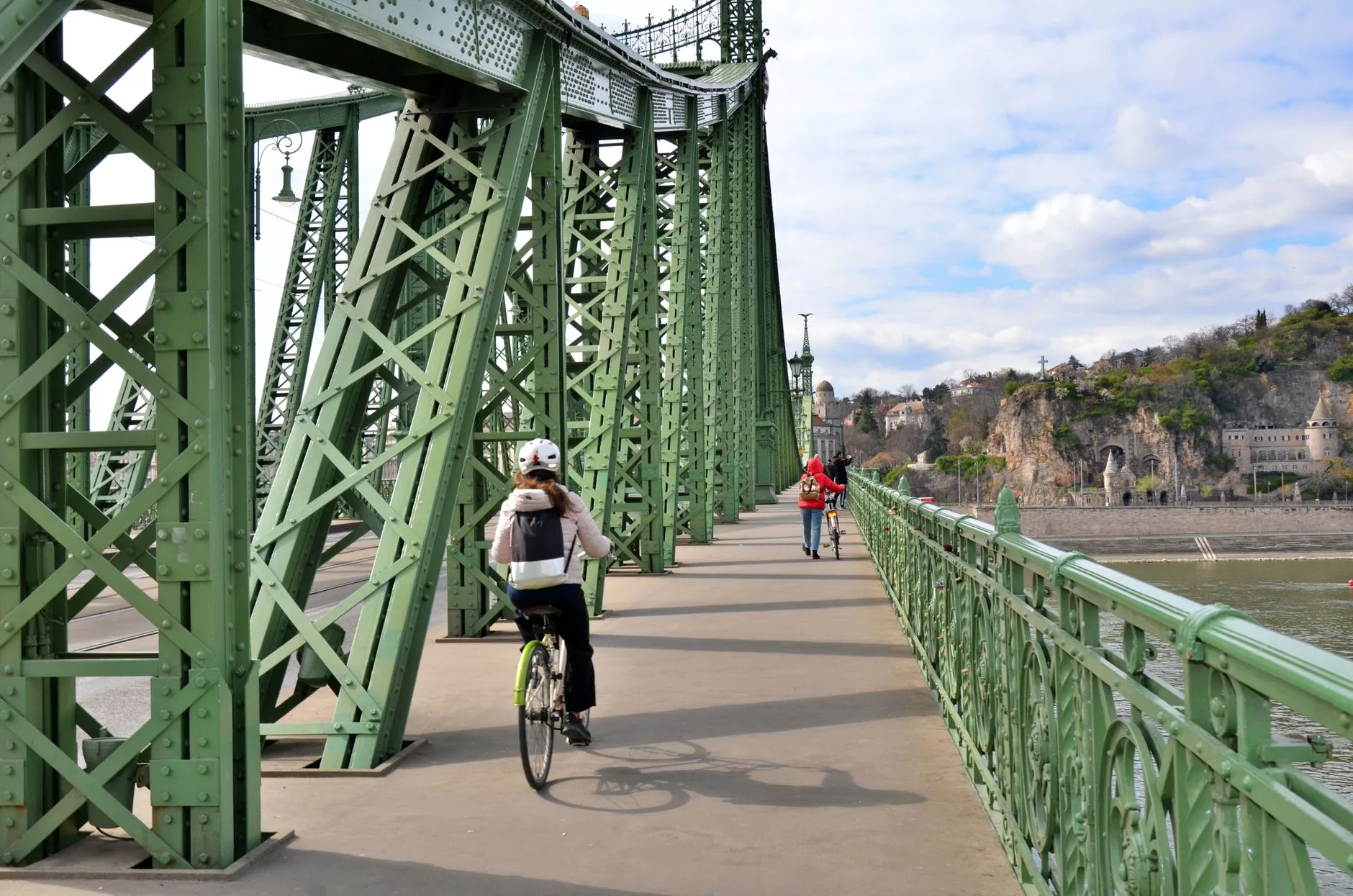
Photo by Ehtiram Mammadov on Pexels
Cycling the Danube: a practical beginner’s guide
The ferry from Passau’s Rathaus landing stage takes about five minutes to cross the river. On the far bank, a painted blue sign announces the start of the EuroVelo 6 and the beginning of something that will occupy your legs, your appetite, and your attention for the next two to three weeks. The morning air is cool and smells of river silt and diesel from a passing barge. Somewhere behind you, a church bell is working through seven o’clock.
This is how most people start cycling the Danube — on the Austrian and Bavarian bank, bikes loaded, with roughly 2,900 kilometres of waymarked path between them and the Black Sea. Most beginners ride a manageable section: Passau to Vienna (roughly 360 km) or Passau to Budapest (roughly 700 km), rather than attempting the full route. Both are sensible choices. The path is well-marked, the terrain is mostly flat, the villages come frequently enough that you are never far from food or a bed, and the route has been refined over decades of cycle touring. None of that means it’s effortless. It means the difficulty is manageable if you go in with honest expectations and reasonable preparation.
What follows is the practical information you need to plan it — distances, costs, terrain, logistics, accommodation, border crossings, and what changes as you move east.
Which section should beginners actually ride?
The full Donauradweg (German for Danube Cycle Path) runs from the river’s source near Donaueschingen in Germany to the Romanian and Ukrainian delta. EuroVelo 6 is the international designation for a trans-European route that follows it most of the way to the Black Sea.
For a first trip, three sections make the most sense:
Passau to Vienna (360 km, ~5–6 days): The most polished section of the entire route. The path follows the river closely through the Wachau Valley — a UNESCO World Heritage landscape of vineyard terraces, apricot orchards, and medieval market towns. Traffic is minimal. Waymarking is reliable. Most guesthouses are set up for cyclists. This section is almost entirely flat or gentle downhill (you’re following the gradient of the river), which makes it genuinely manageable for beginners who are reasonably fit.
Vienna to Budapest (320 km, ~4–5 days): Slightly less polished than the Austrian section, with some sections through industrial outskirts and agricultural flatlands that aren’t particularly scenic. But Budapest is a magnetic finish line, the price of accommodation and food drops noticeably once you cross into Slovakia and Hungary, and the route passes through Bratislava — a city most people spend too little time in.
Passau to Budapest (680 km, ~10–14 days): The full beginner-friendly route. Two weeks is comfortable; ten days is doable but tiring if you’re not a regular cyclist. This is the sweet spot — long enough to develop a rhythm, short enough not to become a physical ordeal.
The sections east of Budapest — through Serbia, Bulgaria, and Romania — are longer, less maintained, more logistically demanding, and more rewarding in a different way. They deserve their own guide.
Terrain and daily distances: what’s realistic
The Austrian section (Passau to Vienna) is almost entirely flat. The Wachau gorge section between Melk and Krems has occasional short climbs — nothing brutal, but you’ll feel them with a loaded bike. Expect daily distances of 50–80 km depending on your fitness and how much time you spend stopping.
The Slovak and Hungarian sections are similarly flat, mostly following the Danubian plain. Wind is the main variable here. A headwind on a flat, featureless stretch can turn a 60 km day into a slog.
A realistic daily average for a beginner with a loaded bike:
| Section | Distance | Typical days | Terrain | Notes |
|---|---|---|---|---|
| Passau → Linz | 130 km | 2 | Flat, river-side path | Well-marked, mostly car-free |
| Linz → Melk | 100 km | 1–2 | Flat with short climbs | Industrial sections near Linz |
| Melk → Vienna (via Wachau) | 130 km | 2 | Flat, vineyard valley | Most scenic section of the route |
| Vienna → Bratislava | 80 km | 1 | Flat, some road sections | Straightforward; good day trip pace |
| Bratislava → Győr | 120 km | 2 | Flat agricultural land | Less scenic; wind can be a factor |
| Győr → Budapest | 120 km | 2 | Flat | Urban approaches; busy near Budapest |
Plan for at least one full rest day per week. Legs need it. So does the trip itself — a rest day in Krems or Dürnstein (Wachau) or Vienna means you actually see the place rather than passing through it at 15 km/h.
Bikes, rental, and what to bring
You do not need a specialist touring bike. Most people ride the Passau–Vienna section on a hybrid or even a city bike, and rental companies along the route have stock that suits the terrain. Flat handlebars, at least seven gears, and a rear rack for panniers are the essentials.
Renting in Passau: Several shops near the old town rent touring bikes with rear racks and basic panniers. Donauradler (Passau) and Rad-Zeil are frequently recommended. Expect to pay €20–30/day for a decent hybrid, less for multi-day rentals. One-way rentals are available to Vienna and some Budapest operators — ask specifically, as availability varies by season.
Panniers vs. a trailer: For beginners, two rear panniers (30–40 litres combined) are enough. Keep the front of the bike unloaded — it handles better and tires you less. You do not need camping gear unless you plan to wild-camp, which is possible in some sections but requires permits or discretion depending on the country.
What to pack: Cycling the Danube is not a wilderness expedition — you pass through towns every 15–30 km in Austria and Germany. Carry a rain jacket, a lock (U-lock plus cable), a basic repair kit (spare inner tubes, tyre levers, mini pump, patch kit), a phone mount, and enough water for two hours between stops. A small first aid kit and chamois cream will save you from the only kind of misery specific to cycling.
Navigation: The route is waymarked with the blue EuroVelo 6 sign and local Donauradweg signs in Austria. In Slovakia and Hungary, signs are present but less consistent. Download the Komoot or Outdooractive route files before you leave and keep your phone charged. A small portable battery bank weighs almost nothing and prevents the anxiety of a dying screen 30 km from your next stop.
Where to sleep: guesthouses, cycle-specific hostels, and camping
The Austrian section has a well-developed infrastructure of Radlerwirt — guesthouses that actively cater to cyclists, often with bike storage, drying rooms, and earlier breakfasts. In Wachau specifically, the towns of Spitz, Weissenkirchen, and Dürnstein have guesthouses that fill up in peak season (May–September); book at least two or three days ahead.
Rough cost of accommodation per night:
– Austria: €50–80 for a double in a guesthouse; €25–35 in a hostel dorm
– Slovakia (Bratislava area): €30–50 for a guesthouse; €15–20 hostel
– Hungary: €25–45 guesthouse; €12–18 hostel
Camping is cheap and legal in designated campgrounds along the route, many of which are set up specifically for cyclists, with hot showers, laundry, and secure bike storage. A pitch costs €8–15/night in Austria; slightly less in Hungary. Wild camping is technically prohibited in Austria but is tolerated in some areas; in Hungary it’s more relaxed in rural areas, less so near the river.
The EuroVelo route planner maintains an updated accommodation directory for the entire EV6, which is genuinely useful for route planning.
Food and water: eating well on the road
The Wachau Valley grows some of Austria’s finest white wines — Grüner Veltliner and Riesling from the terraces between Dürnstein and Krems — and the local Marillen (apricots) appear in everything from jam to dumplings in late summer. Most guesthouses serve a hot breakfast included in the room rate. Lunch is often at a Gasthof in a river village: try Wiener Schnitzel (the real thing, pan-fried not deep-fried, in butter), Tafelspitz (boiled beef with chive sauce and apple horseradish), or Wachauer Laberl — a distinctive soft bread roll from the valley.
In Slovakia, look for halušky (potato dumplings with sheep’s cheese and bacon) in Bratislava’s old town taverns. In Hungary, the route passes through Győr before Budapest — a city with a genuinely good food scene and far fewer tourists than the capital. The traditional market in Győr’s central square sells langos (deep-fried dough with sour cream and cheese) for around 600–800 HUF (roughly €1.50).
Budapest’s Central Market Hall (Vásárcsarnok, on Fővám tér) is worth half a day at the end of your route: three floors of paprika, sausage, lace, pickles, and freshly pressed lángos on the ground floor. It is, by this point, a well-earned reward.
Tap water is safe to drink throughout Austria, Slovakia, and Hungary. Fill bottles at guesthouses and from municipal taps in town squares — this is one ride where you do not need to carry more than a litre at a time in the settled sections.
Border crossings and practical logistics
Germany/Austria (Passau): No border control. You pedal across the river and you’re in Austria. Nothing to declare.
Austria/Slovakia: The route crosses at Berg/Petržalka or via ferry near Hainburg/Devín. No passport control for EU citizens; non-EU passport holders get a stamp. The crossing itself is a non-event — a few minutes at most.
Slovakia/Hungary: Multiple crossing points. The route typically uses the bridge at Štúrovo/Esztergom, which is scenic (the Esztergom Basilica looms above you as you cross) and straightforward. Again, no queue for most crossings.
Currency: Austria and Slovakia use euros. Hungary uses forints. There are ATMs in all major towns. In small Hungarian villages, cash is essential — card acceptance is less reliable once you leave the main tourist corridor.
Visas: Citizens of EU countries, the UK, USA, Canada, and Australia need no visa for any of these four countries for stays under 90 days.
When to go
May and early June: The best balance of conditions. Warm enough, not yet crowded. The Wachau apricot orchards are in bloom in late April/early May — genuinely beautiful. Guesthouses have availability without booking months in advance.
July–August: Peak season. The path between Passau and Vienna is busy with other cyclists and tour groups. Temperatures can reach 35°C in Hungary. Book accommodation further in advance.
September–October: Harvest season in Wachau — vines heavy with grapes, wine festivals in Krems and Dürnstein, cooler temperatures. One of the better windows for this route, though evenings get cold quickly by October.
November–April: Not recommended for beginners. Several guesthouses close. The path can be flooded in spring (March–April). Cold and wind make the flat sections punishing.
Costs: a realistic budget
Excluding flights or trains to Passau, a typical two-week Passau–Budapest ride costs roughly:
| Expense | Budget (per day) | Mid-range (per day) |
|---|---|---|
| Accommodation | €15–25 (camping/hostel) | €50–70 (guesthouse) |
| Food & drink | €20–30 | €40–60 |
| Bike rental | €15–20 | €25–35 |
| Miscellaneous (repairs, entry fees) | €5 | €10–15 |
| Total per day | ~€55–75 | ~€125–165 |
Over 14 days, budget travellers can manage the full Passau–Budapest ride for €800–1,000 including bike rental. Mid-range travellers spending on Wachau guesthouses and restaurant dinners should budget €1,600–2,000.
Getting to Passau: direct trains from Munich (1.5 hours, from €20), Vienna (2 hours, from €25), and Prague (4 hours, from €30). Bikes travel on trains for a small supplement (€6–10 depending on operator) — book the bike space separately, as spaces are limited on some services. If you’re cycling one-way to Budapest, the return to Passau or your origin by train is simple: Budapest Keleti station has direct services to Vienna, Bratislava, Munich, and Prague.
A note on the Wachau
It deserves separate mention because no amount of general advice prepares you for what the Wachau actually looks like. The river bends sharply, the valley walls close in, and the path runs between the water and vine terraces that have been worked continuously since the Celts. Dürnstein’s blue-and-white baroque abbey tower sits above the town in a way that seems almost unreasonably photogenic. The castle ruin above it is where Richard I of England was imprisoned in 1192, which turns out to be a more interesting piece of history than you expect when someone first mentions it in a guesthouse.
Take your time here. Ride slowly. Stop in Weissenkirchen and drink a glass of local Riesling at one of the Heuriger (wine taverns) on the main street. These are not tourist-facing wine bars — they’re working farms that open their courtyards to customers when they have wine to sell, indicated by a pine branch hung above the door. A quarter-litre costs €2–3. The wine is cold, the terrace is shaded, and the afternoon can go wherever it wants from there.
For context on how different this kind of slow, place-centred travel feels compared to faster itineraries, this piece on cycling through Sri Lanka covers similar rhythms in a very different landscape — useful reading if you’re weighing the Danube against other cycle touring options.
If you’re the kind of traveller who extends trips into the surrounding region, Austria and Slovakia sit at the edge of a more complex European geography — the slow overland world described in how to travel slowly through the Balkans by train is a natural continuation south from Budapest.
The Bottom Line
- The Passau–Vienna section is the most beginner-friendly long-distance cycle route in Europe. Flat terrain, excellent waymarking, guesthouses every 15–30 km, and the Wachau Valley alone justifies the trip. If you have limited time (5–7 days), ride this section.
- Plan for 50–70 km per day, not 100. The daily average sounds modest until you add a Wachau wine stop, a castle detour, and a long lunch. The route rewards slow riding.
- Book accommodation in the Wachau two or three nights in advance in peak season (June–August). Everywhere else, especially in Slovakia and Hungary, you can usually find a bed on short notice.
- Take the train to Passau and back from Budapest. Both cities have fast, direct rail connections to major European hubs. The logistics are simple, the cost is low, and you avoid the circular-route problem of having to cycle back.
- The route changes character significantly east of Vienna. Slower, quieter, flatter, and more agricultural. Prepare for fewer guesthouses and more self-sufficiency. It’s not worse — just different, and worth knowing about before you arrive in Slovakia and find fewer coffee stops than you’d expected.
Keep reading: Best local food markets in Europe for travellers