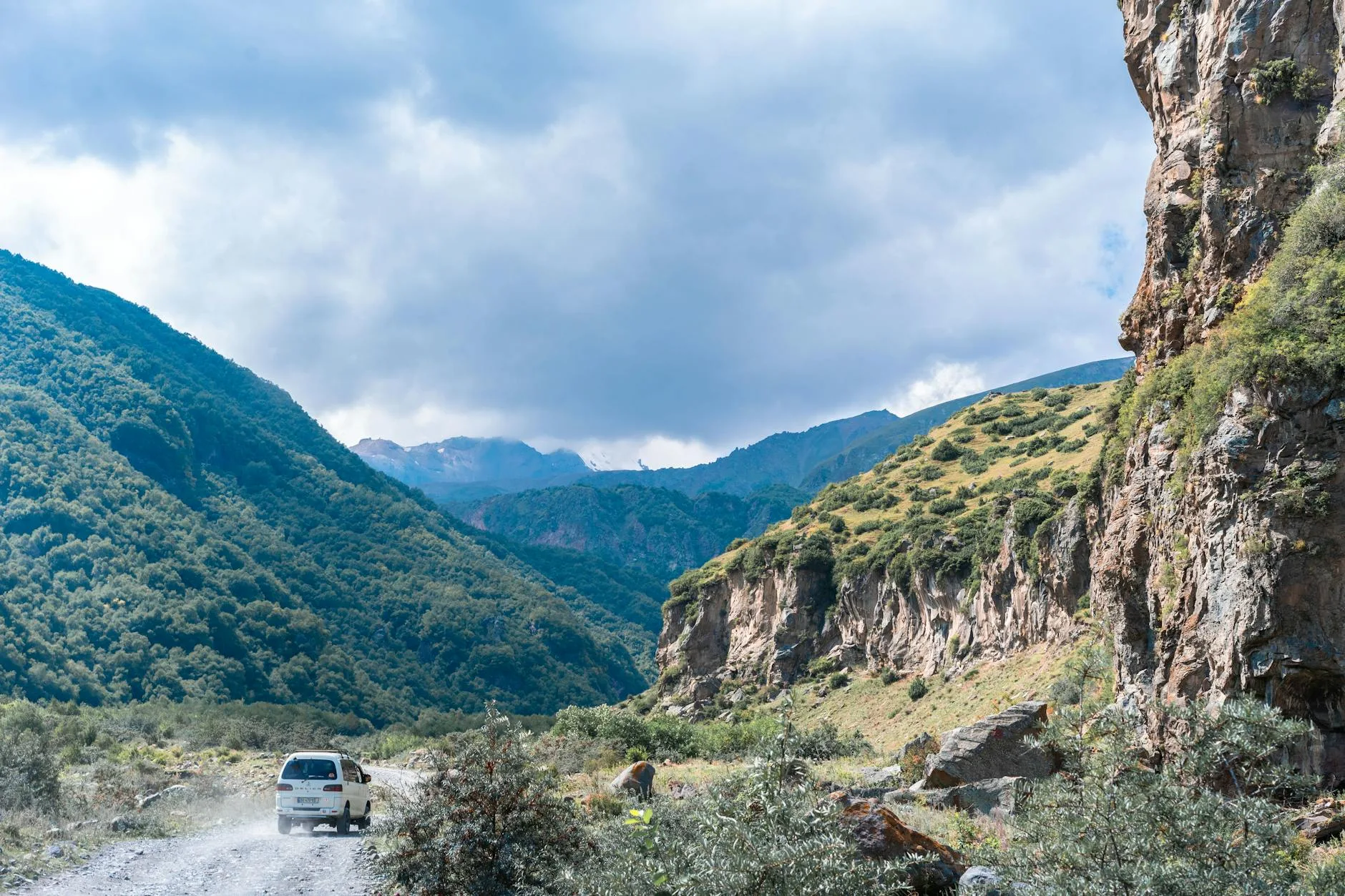
Photo by Atlantic Ambience on Pexels
The road out of Tbilisi’s Mtatsminda district drops fast, past Soviet apartment blocks giving way to open steppe, and within forty minutes you’re in a landscape that feels ancient in the way that actually means something — not metaphorically ancient, but old in geology and people and unresolved history. A shepherd crosses ahead of a small flock. A roadside stall sells churchkhela, the walnut-and-grape-juice sausages that hang like candles. Someone’s grandmother is carrying something improbable on her back. This is the Caucasus, and it earns every claim made about it.
A road trip through Georgia, Armenia, and Azerbaijan covers roughly 1,500–2,000 kilometres depending on your route, and takes three weeks comfortably or two weeks at pace. The three countries share a geography — mountain ridges, river valleys, ancient monasteries carved into rock faces — but have strikingly different characters. Georgia is warm, a little chaotic, and extraordinarily generous with food and wine. Armenia is quieter, more introspective, shaped by a history that sits heavily in the air. Azerbaijan blends Silk Road architecture with oil-boom Baku and a rural interior that most visitors never reach. Drive all three and you get something none of them offers alone.
The shape of the trip: which direction, which borders
The most logical loop starts and ends in Tbilisi, since Georgia has the most international flight connections of the three. The standard sequence is Georgia → Armenia → Azerbaijan → back to Georgia, though the reverse works equally well.
The critical logistical constraint is the Armenia–Azerbaijan border: it is closed. These two countries remain in a state of deep political tension, and there is no direct crossing. You must return to Georgia between them. This adds roughly two to three days to your trip but also gives you more time in Georgia, which is rarely a complaint.
Border crossings to plan for:
- Georgia → Armenia: The Bagratashen–Sadakhlo crossing on the M6 is the most used. Straightforward by car; expect 30–90 minutes. Open 24 hours.
- Armenia → Georgia: Same crossing, same logistics, reversed.
- Georgia → Azerbaijan: The Red Bridge (Krasny Most) crossing on the S5 highway east of Tbilisi. Efficient, usually 30–60 minutes. Open 24 hours.
- Azerbaijan → Georgia: Same crossing in reverse.
You do not need to pre-arrange visas if you hold a passport from most Western European, North American, or Australian countries. Georgia is visa-free. Armenia is visa-free for many nationalities or offers e-visa on arrival. Azerbaijan requires an e-visa applied for in advance — allow at least three days, though approvals often come faster. Check your specific passport against each country’s current entry requirements before you go; rules shift.
Getting a car: renting vs. buying
Renting is the easiest option. Tbilisi has multiple rental agencies — both international chains and local operators clustered around Rustaveli Avenue and the airport. Budget around $35–70 USD per day for a basic car; 4WDs cost more but open up roads that are otherwise impassable in wet weather, particularly in Svaneti and highland Armenia.
The key complication: most Georgian rental agencies do not allow their vehicles into Azerbaijan, and some restrict Armenia too. Read the contract before you sign. Agencies that do permit cross-border driving include some local operators on Freedom Square — ask explicitly, get it in writing, and confirm whether cross-border insurance is included or costs extra (usually $10–20/day additional).
If you’re travelling for a month or more, buying a cheap car in Tbilisi and selling it at the end is genuinely viable. Expect to pay $2,500–4,000 for something reliable enough, and factor in Georgian registration paperwork.
Georgia: Tbilisi to the borders
Give Tbilisi two full days minimum. The old town — Abanotubani (the sulphur bath district) and Narikala fortress above it — is compact enough to walk but dense enough to reward slow exploration. Eat at least one meal at Café Littera in the Writers’ House garden if budget allows, or walk into any local khinkali spot in the Sololaki neighbourhood for the Georgian dumpling that beats most competition: thick dough, spiced beef and pork, a knot of dough on top that you hold and bite carefully to catch the broth inside. Do not cut it with a fork. Do not eat the knot (it’s a handle, locals will notice, they will be polite about it).
From Tbilisi, the route north through the Georgian Military Highway to Kazbegi (now officially Stepantsminda) is a half-day’s drive and one of the most dramatic road trips in the region. The Gergeti Trinity Church, perched at 2,170 metres above the Terek River, is the image you’ve already seen — but standing below it in early morning before the day-trippers arrive from Tbilisi is a different thing entirely. The drive itself passes through the Dariali Gorge and the Jvari Pass at 2,379 metres; in winter it’s often closed. May through October is reliable.
For the western route toward Armenia, the road through Gori (birthplace of Stalin, with a museum that remains a genuine historical curiosity rather than a celebration), then Borjomi in its green valley, is worth a night. Borjomi’s mineral water is carbonated and distinctly medicinal — the locals drink it for everything; you’ll either love it or politely decline a second glass.
Armenia: Yerevan, Ararat, and the highlands
Cross into Armenia at Bagratashen and the landscape shifts — drier, more exposed, the horizon bigger. Yerevan is a pink-tinted city (built largely from local volcanic tuff stone) that operates at a more contemplative pace than Tbilisi. The Cascade complex, a giant staircase of limestone connecting the city centre to the hilltop, has an embedded contemporary art museum and a view toward Mount Ararat on clear mornings — the mountain that is Armenia’s most potent symbol, despite sitting entirely within Turkish territory.
Eat at Tavern Yerevan in the old city for traditional khorovats (Armenian barbecue), or find dolma — grape leaves stuffed with seasoned meat and rice — at any family restaurant around the Vernissage market on weekends. The market itself sells Soviet-era memorabilia, carpets, jewellery, and paintings; more interesting than it sounds.
Beyond Yerevan, the roads to Geghard Monastery (a UNESCO World Heritage Site carved partly into a cliff face in the Azat river gorge, 40km east) and the Temple of Garni (a Hellenistic-era pagan temple, improbably well-preserved) are both accessible in a single day. Drive the Selim Pass through Vayots Dzor province if weather permits — this road through the Vardenyats mountain range passes a 14th-century caravanserai sitting alone on the high steppe at 2,400 metres, and almost nobody stops. Stop.
For a deeper dip into Armenian geography and hospitality, the town of Goris in the south (near the Iranian border) has cave dwellings carved into the surrounding cliffs and is the base for visiting Tatev Monastery via the world’s longest reversible aerial tramway — 5.7km, operating since 2010, takes about twelve minutes, and offers a genuinely vertiginous descent into the Vorotan gorge.
Azerbaijan: Sheki, the Caucasus foothills, and Baku
Re-enter Georgia, cross east at Red Bridge, and Azerbaijan opens with flat semi-arid landscape that misleads — the north of the country, particularly the Greater Caucasus foothills, is far more interesting than the approach suggests.
Make the detour to Sheki, a four-hour drive northwest of Baku near the Russian border. This is one of the most undervisited cities in the Caucasus: a former Silk Road trading town with a 18th-century Khan’s Palace whose walls are covered in shebeke (stained glass assembled without glue or nails), walnut orchards, and a caravanserai still functioning as a guesthouse. The local dish is piti — a slow-cooked lamb soup with chickpeas, served in ceramic pots and eaten by crumbling the bread in first — and you should eat it here, where it comes from.
Baku is disorienting in the way oil cities often are: a medieval walled old city (Icheri Sheher, UNESCO-listed) surrounded by Haussmann-style 19th-century architecture surrounded by 21st-century glass towers with flame-shaped rooflines. The contrast is jarring and interesting. Walk the old city walls at dusk when the light is copper. Eat at Firuze for Azerbaijani food that isn’t catered toward tourists, or find çiğ döner and qutab (thin flatbreads filled with greens or meat, cooked on a saj griddle) from street vendors near the Taza Bazaar in the centre.
Seasonal guide and route comparison
| Season | Road conditions | Highlights | Watch out for |
|---|---|---|---|
| May–June | Excellent; highland roads open | Wildflowers, mild heat, green valleys | Some high passes still snowy in May |
| July–August | Good, but hot in lowlands | Festivals, long days | Heat in Baku and Yerevan can exceed 38°C |
| September–October | Best overall | Harvest, lower crowds, golden light | Occasional rain in Georgia’s west |
| November–March | Variable; Selim, Jvari passes close | Snow landscapes, very quiet | Many guesthouses in villages close; 4WD advisable |
The sweet spot is late May through June or September through mid-October. Both windows give you open mountain roads, reasonable temperatures, and harvests — grape in Georgia, pomegranate in Azerbaijan, apricot in Armenia (June specifically).
Honest logistics: fuel, money, roads
Fuel is cheap by European standards — around $0.70–0.90 USD per litre in Georgia and Azerbaijan, slightly more in Armenia. Fill up in towns; rural petrol stations are unreliable.
Cash matters more than in Western Europe. Georgia is relatively card-friendly in cities; Armenia’s capital is fine; outside Yerevan and Baku, carry local currency. ATMs exist in most towns. The lari (GEL), dram (AMD), and manat (AZN) are not interchangeable — change at banks or official exchange kiosks.
Roads vary widely. The main arteries (M6, M4 in Georgia; the A2 through Armenia; the M1 in Azerbaijan) are surfaced and maintained. Secondary roads can be potholed, gravel, or both. GPS apps work but can be optimistic about minor roads — WikiLoc and the mapping notes from the Caucasus trekking community are useful supplementary resources, as is the broader regional guidance offered by National Geographic’s Caucasus coverage for understanding the cultural and geographic range of the region before you drive it.
Mobile data: Georgian SIM cards (Magti or Silknet) are cheap and work throughout Georgia. Buy Azerbaijani and Armenian SIMs separately at each border or in the first city — cross-border roaming is expensive.
On the question of depth versus pace, it’s worth considering how this kind of overland journey compares to slow regional travel elsewhere. Readers who’ve explored our piece on how to travel slowly through the Balkans by train will recognise a similar principle at work here: the ground between the highlights is often where a region shows you who it actually is.
Food as geography: what to eat and where
The food across all three countries rewards attention. A few specifics:
- Georgia: Khinkali (Tbilisi, any local canteen); khachapuri Adjaruli (boat-shaped bread with egg and butter, best in Batumi or central Tbilisi bakeries); churchkhela at any roadside stall; natural wine from the Kakheti region, specifically rkatsiteli or saperavi grape varieties, ideally at a family winery in Sighnaghi.
- Armenia: Lavash bread (baked in a tonir clay oven, watch it made at the Vernissage market); khorovats (barbecue, often ordered by weight); manti (small baked dumplings in broth); aged brandy from the Ararat Brandy Factory, which offers tours.
- Azerbaijan: Qutab and plov (saffron rice with lamb and dried fruit, a dish that arrives in a dome and takes serious time to eat); baklava in Sheki (different from Turkish versions, lighter and walnut-heavy); pomegranate molasses as a condiment on almost everything.
For travellers who appreciate the overlap between food markets and cultural immersion, the logic running through our guide to the best local food markets in Europe applies here too — a market like Taza Bazaar in Baku or the GUM market in Yerevan tells you things about a place that no museum quite manages.
The Bottom Line
-
The Armenia–Azerbaijan border is closed. Route your trip accordingly: Georgia–Armenia–Georgia–Azerbaijan or the reverse. This isn’t a minor detail — it defines the structure of the whole trip.
-
Book your Azerbaijani e-visa before you leave home. It’s straightforward but takes a few days; do not assume you can sort it at the border.
-
A 4WD opens the trip significantly. You don’t need one for the main routes, but if you want to drive the Selim Pass in Armenia, reach Svaneti in Georgia, or explore the Caucasus foothills in Azerbaijan, it earns its higher daily rate.
-
Three weeks is the realistic minimum for all three countries with any depth. Two weeks is possible but compressed — cut Azerbaijan to Sheki plus Baku and skip the deep rural detours.
-
Carry cash in local currency at all times. Outside capital cities, cards are unreliable and the ATM in the next village may or may not exist. This is a cash-first region, and planning around that saves real frustration.
Keep reading: Budget travel in Georgia: the country’s hidden gem