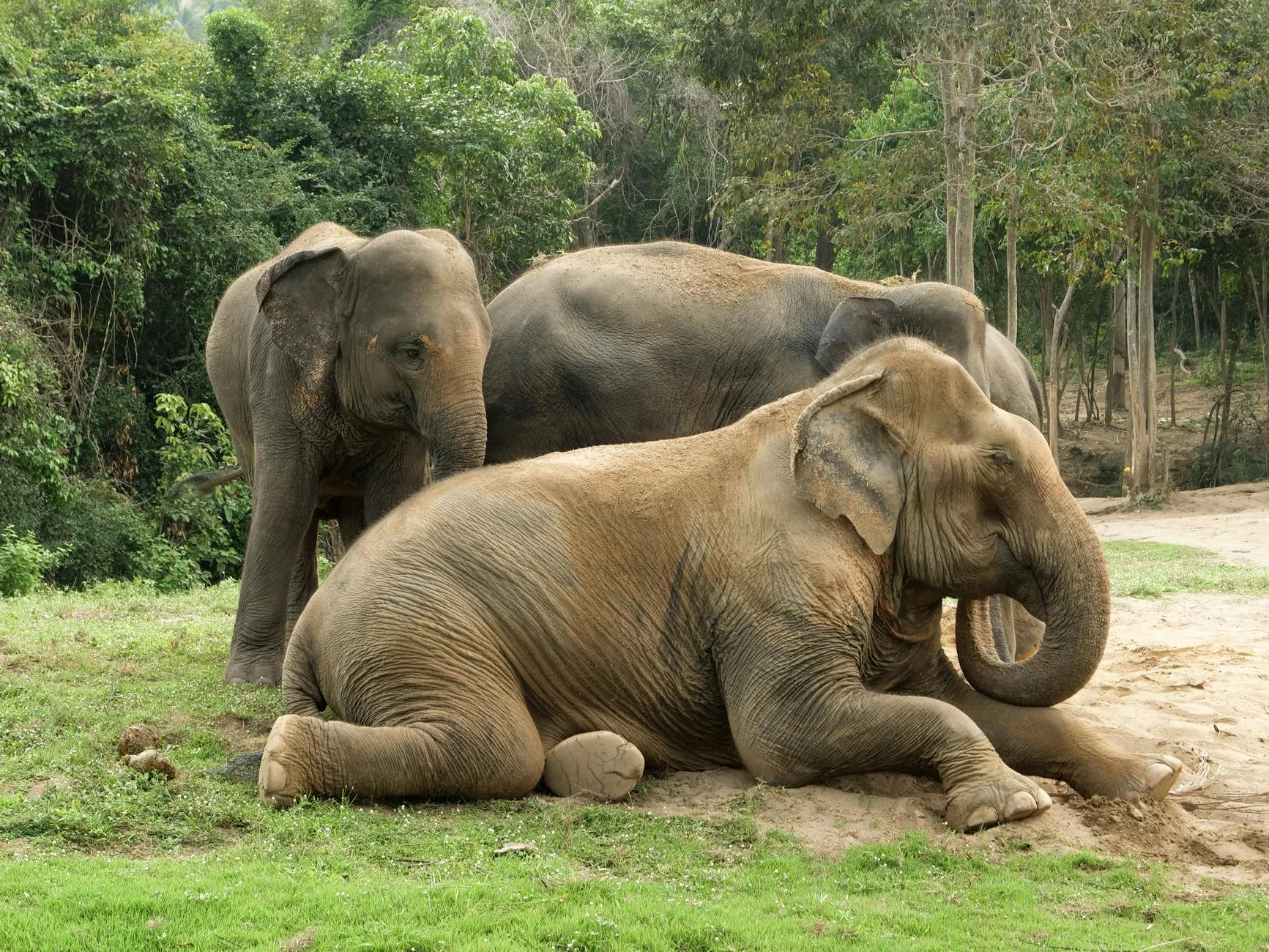
Photo by Katie Hollamby on Pexels
Ethical elephant encounters in Southeast Asia: a practical guide
The mahout arrives before dawn. He moves quietly through the trees at the edge of the sanctuary, calling in a low, steady voice — not a command, more like a greeting between two beings that know each other well. The elephant emerges from the forest on her own terms, ears fanning slowly, and walks toward him without a rope, without a hook. She is enormous and unhurried. This is what it looks like when an elephant has a choice.
That scene — played out at a handful of genuinely responsible sanctuaries across northern Thailand, Laos, and Cambodia — is a far cry from what most tourists encounter when they search “elephant experience” online. The majority of what comes up in those results still involves riding, forced performances, or animals kept in conditions that cause ongoing harm. The gap between what is marketed as ethical and what actually is can be wide and deliberately obscured. This guide exists to close that gap: to name the specific places that are doing this well, explain what makes them different, and give you the practical detail to actually visit them.
What “ethical” actually means in practice
The word ethical has been so thoroughly co-opted by marketing that it is nearly useless without definition. When it comes to elephant tourism, the distinction comes down to a few concrete things.
No riding. Elephant riding requires a howdah (the saddle structure) or bareback riding that stresses the animal’s spine. Reputable sanctuaries banned this years ago. If a venue offers rides, it is not operating ethically regardless of how it describes itself.
No performances. Elephants do not naturally paint, play football, or balance on platforms. These behaviours require training methods — historically and often still involving pain and fear — that no welfare-focused operation should use.
Adequate space and social structure. Elephants are highly social animals that range enormous distances in the wild. A credible sanctuary will have several hectares of forested land, allow the elephants to move freely, and maintain or support natural social groupings where possible.
Rescue and rehabilitation focus. The best operations are not breeding elephants for tourism. They are taking in animals from logging, circus, or street-begging backgrounds and providing retirement conditions. Some partner with universities or conservation organisations to track herd genetics and long-term welfare.
Transparency about the mahout relationship. Many rescued elephants form deep bonds with a specific mahout — a traditional keeper from one of the ethnic groups in northern Thailand and Myanmar with centuries of knowledge about these animals. Ethical sanctuaries employ and pay mahouts fairly, and are honest about the ongoing training required to manage a multi-tonne animal safely.
Asking a prospective venue these questions directly — before booking — is the single most useful filter you have.
Thailand: the most options, the most noise
Thailand has the highest concentration of elephant operations in Southeast Asia, which means the highest number of genuinely good ones and an enormous number of bad ones dressed up in green language.
Elephant Nature Park, Mae Taeng Valley (Chiang Mai Province) remains the benchmark. Founded by Sangduen “Lek” Chailert in the 1990s, it houses around 100 elephants on roughly 250 acres of forested valley an hour north of Chiang Mai city. Day visits run approximately 2,500–3,000 THB (around USD 70–85 at 2026 rates) and include walking with elephants in the forest, preparing and hand-feeding fruit batches, and observing the animals in their social groups. The operation is large but manages its visitor numbers — groups are capped and rotated so animals are not overwhelmed. Multi-day volunteer programmes (from 5,000 THB for three days) allow deeper engagement: assisting with feeding, cleaning, and basic habitat maintenance. Book well in advance; weekends fill months out. Transfers from Chiang Mai are included.
Getting there: Most visitors fly into Chiang Mai (CNX) from Bangkok (1.5-hour flight, around 800–1,800 THB depending on airline and timing). From Chiang Mai’s old city, the sanctuary provides shuttle pickup from a central meeting point near Thae Pae Gate at around 8am.
Elephant Jungle Sanctuary operates across multiple camps in the Chiang Mai area — Chiang Mai Province (Mae Wang District), Chiang Rai, and Pattaya among them. The Mae Wang camp (Camp 5) is generally considered the most spacious and least crowded. Day programmes run around 2,000–2,500 THB. Quality varies by camp: read recent reviews specific to the camp you are booking, not the organisation generally.
Burm and Emily’s Elephant Sanctuary (BEES), about 45 minutes outside Chiang Mai near Hang Dong, is smaller — typically hosting fewer than ten elephants — which makes it genuinely quieter and more observational. Visitor numbers are limited to twelve per half-day session. It is more expensive (around 3,500 THB) and harder to book, but the ratio of people to animals is more favourable, and the staff explanation of individual elephant histories is detailed and honest. This is a good option if you want more time with fewer people around.
One honest caveat about Chiang Mai’s elephant tourism scene: the sheer volume of operators means competition is fierce, and some previously reputable operations have quietly reintroduced riding or expanded to sizes that compromise animal welfare. Check World Animal Protection’s guide to elephant-friendly venues before booking and cross-reference with recent visitor reports.
Laos: fewer options, higher stakes
Laos has a smaller elephant tourism scene — and a more precarious one. The country’s elephant population has dropped dramatically over the past thirty years, from an estimated 3,000 in the 1990s to under 800 today, and the majority are domestic (captive) animals rather than wild ones.
Elephant Conservation Center (ECC), Sayaboury Province is the most serious elephant welfare project in the country and one of the best in all of Southeast Asia. It operates on a lake north of Sayaboury town, reached from Luang Prabang by a combination of bus and boat (approximately 3–4 hours, or faster by private vehicle). The ECC focuses explicitly on breeding — addressing Laos’s critical elephant population decline — and on providing retired logging and entertainment elephants with appropriate conditions. Visitors stay on-site (accommodation from around USD 90 per night, all-inclusive), and the programme is structured around observation and education rather than hands-on contact. You will see veterinary care, mahout training, and calves in social settings. It is the most conservation-focused option in the region, and probably the most honest about the complexity of elephant welfare. Book via the ECC website directly.
Getting to Sayaboury from Luang Prabang: Take the 8am bus from Luang Prabang’s Southern Bus Terminal (around 40,000 LAK, approximately USD 2) to the boat crossing at Ban Muang Nan, then cross to Sayaboury town. The ECC is another 10km north. A tuk-tuk from Sayaboury town to the ECC costs around 50,000–80,000 LAK. The journey takes a full morning — factor this in.
Luang Prabang itself has several elephant operations of varying quality along the Nam Khan and upper Mekong areas. Mandalao, based in the forest just outside the city, is among the more consistent. It operates a half-day programme involving observation and bathing alongside elephants in the river — no bathing of the elephants by tourists, which is increasingly recognised as stressful for the animals, but walking alongside them as they bathe themselves. Prices run around USD 95 per person.
Cambodia: a small but growing ethical scene
Cambodia’s domesticated elephant population is tiny — around 70 captive elephants as of 2025 estimates — and concentrated around Mondulkiri Province in the northeast and the Cardamom Mountains in the southwest.
Elephant Valley Project (EVP), Sen Monorom (Mondulkiri Province) is Cambodia’s longest-running ethical elephant operation. EVP takes in retired logging and entertainment elephants — animals that have been worked hard for decades — and provides forest retirement. Visitors (maximum six per group, which matters) walk quietly through the forest observing the elephants at distance. There is no feeding, no bathing, no physical contact. That sounds minimal, but watching an old bull move through dense forest at his own pace, following his own logic, is a genuinely affecting thing. Day visits run around USD 95. Multi-day options include a two-day stay in the forest camp.
Getting to Sen Monorom: Bus from Phnom Penh via Giant Ibis or Mekong Express (around USD 12–18, 7–8 hours) or faster with a shared taxi. EVP is 10km outside town; they arrange transport from the guesthouse cluster.
A note on entry: if you’re arriving in Cambodia and haven’t sorted your visa, the Cambodia visa on arrival process is straightforward at Phnom Penh International Airport.
What to skip — and why
A few patterns reliably indicate a problematic operation:
- Elephant camps near Chiang Mai’s tourist centre, particularly those visible from the main Superhighway (Route 11) or advertised heavily at guesthouses along Nimman Road — proximity to the tourist strip correlates with volume-focused, welfare-compromising operations.
- “Bathing experience” programmes where tourists scrub elephants in a shallow pool. This practice, long marketed as gentle and bonding, is now understood to cause stress through excessive human contact and loss of the elephant’s ability to self-regulate.
- Any operation offering elephant shows, regardless of whatever other language surrounds it.
- Short half-day packages under 1,500 THB in Thailand. Genuine sanctuaries have real land, veterinary costs, and staff to pay. Rock-bottom pricing is a reliable indicator of compromised standards.
For a broader look at how to approach wildlife tourism without causing harm, National Geographic’s guide to responsible wildlife watching is worth reading before any trip involving animals.
Timing, costs, and logistics compared
| Country | Best operator | Day visit cost (approx.) | Best months | Getting there |
|---|---|---|---|---|
| Thailand | Elephant Nature Park, Mae Taeng | USD 70–85 | Nov–Feb (cool dry season) | Fly CNX, shuttle included |
| Thailand | BEES (Hang Dong) | USD 95–100 | Nov–Feb | Fly CNX, 45-min transfer |
| Laos | Elephant Conservation Center | USD 90+/night (all-in) | Oct–Mar | Bus + boat from Luang Prabang |
| Laos | Mandalao (Luang Prabang) | USD 95 | Oct–Mar | Based at Luang Prabang |
| Cambodia | Elephant Valley Project | USD 95 | Nov–Mar | Bus from Phnom Penh |
The rainy season (roughly May–October across most of mainland Southeast Asia) brings genuine challenges — road access to Mondulkiri and Sayaboury can become difficult, some sanctuaries reduce visitor numbers, and the forest is muggier and harder going. That said, rainy season means fewer visitors overall, which is not nothing. If you do go during wetter months, confirm access directly with the operation before booking.
Fitting this into a broader Southeast Asia trip
Most of these destinations fit naturally into existing circuits. Chiang Mai is a common stop on a northern Thailand loop, and if you’re planning time there, the Digital Nomad Life in Chiang Mai: Honest Review offers a useful orientation to the city’s neighbourhoods and infrastructure. Luang Prabang pairs well with the Mekong slow boat route from Huay Xai on the Thai border. Mondulkiri is more of a deliberate side trip — most travellers come up from Phnom Penh and loop back rather than continuing through to Vietnam at Ban Lung, though that border crossing at O’Yadaw is open to foreigners.
If you’re trying to navigate Southeast Asia’s tourist pressures more broadly, the piece on avoiding overtourism in Southeast Asia covers how to think about destination and timing choices across the region.
The Bottom Line
-
Riding and performances are the lines. Any venue that offers either is not operating ethically, regardless of what else it claims. This remains the fastest filter.
-
Elephant Nature Park (Thailand) and Elephant Conservation Center (Laos) are the benchmarks. Both have long track records, transparent operations, and real conservation mandates. Book ENP through their own website; prices and availability shift.
-
Elephant Valley Project in Mondulkiri is the most hands-off experience on this list — and one of the most honest. If you want to see elephants living on their own terms rather than interacting with you, it is the right choice.
-
Budget reflects reality. Expect to spend USD 70–100 for a quality day experience. Anything substantially cheaper almost certainly involves compromises to animal welfare.
-
Book direct, book early. The best-run operations cap visitor numbers genuinely. Last-minute availability at ENP or BEES often doesn’t exist, especially October through February.
Keep reading: Responsible wildlife safari Kenya: tips for ethical travel