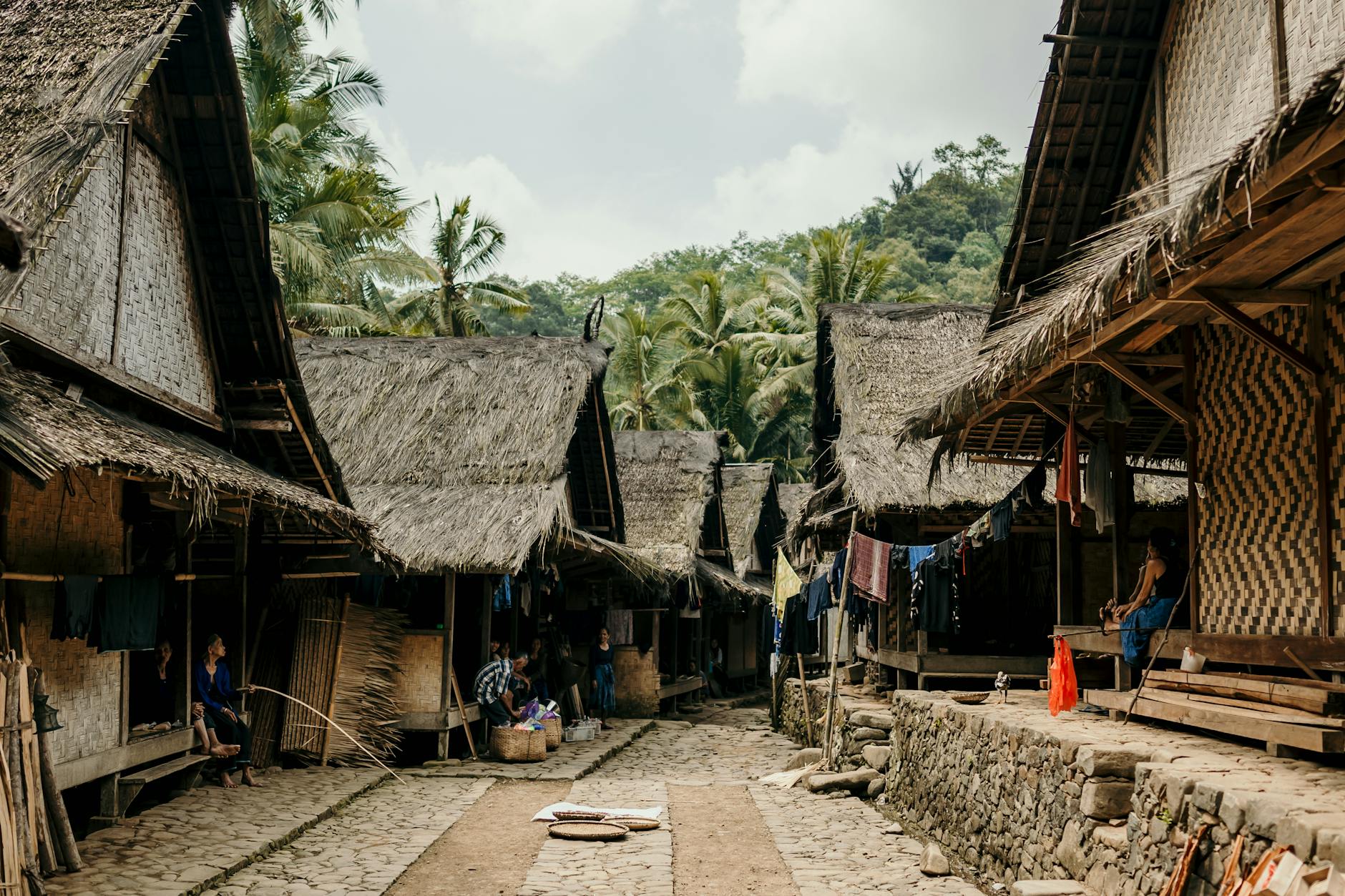
Photo by NATASHA LOIS on Pexels
Community based tourism examples that work: six places doing it right
The guesthouse in Ban Muang Ngoi, northern Laos, has no wi-fi, a corrugated tin roof, and a woman in her sixties who wakes at five to make khao piak sen — thick rice noodle soup with pork broth — for whoever is staying. The money for the room goes directly to her family. The trekking guide who takes you upriver to the Hmong village is from that village. The boat fuel, the lunch, the woven shoulder bag you buy on the way out — it all stays local. That’s community-based tourism when it’s functioning as intended: not a branding exercise, but an economic structure.
The phrase gets applied loosely. Resorts that hire local staff while charging European prices and repatriating profits aren’t it. Neither are village visits tacked onto a standard tour itinerary. What follows are six examples where the structure is genuinely community-led — the design, the revenue, and the decision-making.
Ban Muang Ngoi, Luang Prabang Province, Laos
Getting there is the commitment: a slow boat north from Luang Prabang to Nong Khiaw (around 3–4 hours, 120,000 kip), then a 45-minute longtail upriver to Muang Ngoi itself. There are no roads in. That inconvenience is the filter. The village operates its own trekking cooperative — you book guides directly at the information board near the main path, not through an agency in town. Day treks to surrounding Hmong and Khmu villages cost 80,000–120,000 kip per person. Guesthouses run 50,000–80,000 kip a night. The food — laap, grilled river fish, sticky rice in bamboo — comes from local suppliers. The village council manages access; group sizes are capped.
Tesoro Escondido, Oaxaca State, Mexico
In the Sierra Norte highlands, about 100km northeast of Oaxaca City, eight Indigenous Zapotec communities run their own ecotourism network called Expediciones Sierra Norte. Each village — Benito Juárez, Cuajimoloyas, La Nevería among them — manages its own cabins, guides, and trail infrastructure. You pay the community directly at arrival; there’s no intermediary tour operator. Prices are fixed: cabins 350–500 MXN per person per night, guided forest treks 200–300 MXN. The trails connect the villages, so you can walk multi-day routes with a different community hosting each night. The food is mountain Zapotec — tlayudas with local tasajo, black beans, chapulines (toasted grasshoppers) — not a tourist approximation of it. Getting there: second-class buses from Oaxaca’s Terminal de Autobuses go to Cuajimoloyas for around 80 MXN, roughly 2.5 hours.
Nungwi Women’s Cooperative, Zanzibar, Tanzania
North of Stone Town, past the resort belt on the island’s tip, Nungwi village has a long-running seaweed farming cooperative that accepts visitors — but on terms the women set. Tours run Tuesday and Thursday mornings, booked through the Zanzibar Community Tourism association rather than hotel concierges. You wade into the shallows with the farmers, learn the drying and processing technique, and buy finished products at the cooperative’s fixed prices (not negotiable — don’t try). The session costs around USD 15 per person, all of which goes to the cooperative fund. Getting there: dalla-dalla Route 116 from Darajani Market in Stone Town, 1.5 hours, 2,000 TZS. Ask to be dropped at Nungwi Cooperative, not the beach.
Chalalan Ecolodge, Madidi National Park, Bolivia
This is one of the clearest structural examples in South America: the Quechua-Tacana community of San José de Uchupiamonas built and owns the lodge entirely, after initial funding from Conservation International in the 1990s. The lodge sits inside Madidi National Park, accessible only by a 6-hour motorized canoe from Rurrenabaque. All guides, cooks, and staff are from the community. Revenue funds a community school and medical post. It’s not cheap — full packages run USD 280–320 per person for three nights including transport, meals, and guiding — but the economic model is genuinely intact. Book through the community’s own office in Rurrenabaque, not through La Paz agencies who take a margin.
Kabini River Village Homestays, Karnataka, India
The buffer zone around Nagarhole Tiger Reserve, about 80km southwest of Mysuru, has a cluster of Jenu Kuruba and Betta Kuruba tribal homestays registered under Karnataka’s Jungle Lodges scheme but managed at village level. The Kabini area is well-known for upmarket safari lodges, but the homestays — clustered near Balle and Gundre villages — charge 800–1,200 INR per person per night including dinner and breakfast. Guides are certified community members who know this forest intimately. Morning walks focus on bird life and plant identification rather than big-cat sightings — adjust expectations accordingly. Reach Kabini from Mysuru by KSRTC bus to H.D. Kote (2 hours, 80 INR), then autorickshaw to the village clusters.
Tambo del Inka Quechua Homestay Circuit, Sacred Valley, Peru
Not the luxury Tambo del Inka hotel — a different operation entirely. The community homestay circuit in the villages around Pisac and Chinchero, organized through the Quechua-speaking farming communities themselves, puts visitors in family homes for 80–120 PEN per night including meals. The food is Andean staples: chuño (freeze-dried potato), quinua soup, chicharrón de cerdo on market days. The circuit is self-guided with a map booklet sold at Pisac market (5 PEN), or guided for 60 PEN per day. Families rotate hosting duties, distributing income across the network. Combi from Cusco to Pisac leaves from Calle Puputi, 2 soles, 45 minutes.
Comparison table: six CBT examples at a glance
| Location | Cost per night (approx.) | Getting there | Who controls revenue | Best season |
|---|---|---|---|---|
| Ban Muang Ngoi, Laos | USD 5–8 | Slow boat + longtail from Luang Prabang | Village cooperative | Nov–Feb |
| Sierra Norte, Oaxaca | USD 20–28 | Bus from Oaxaca City (2.5 hrs) | Zapotec community council | Oct–Apr |
| Nungwi, Zanzibar | Day visit USD 15 | Dalla-dalla from Stone Town | Women’s |