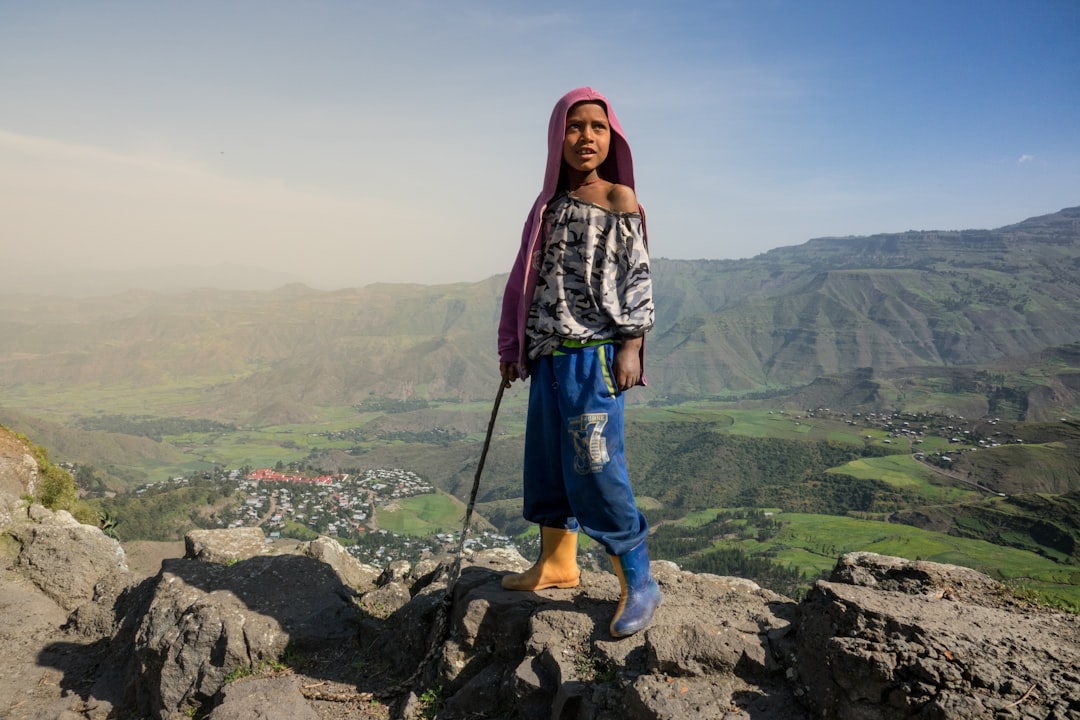
Photo by Gerald Schömbs on Unsplash
Solo Ethiopia: The Realities of Traveling Alone in the Horn
Flying into Addis Ababa at sunrise, the city sprawls chaotic and layered below — high-rises mixed with tin-roof compounds, churches built centuries ago still visible between new construction. Solo travel in Ethiopia is achievable and the country rewards independent travellers who can tolerate discomfort, embrace uncertainty, and navigate systems that don’t streamline things for foreigners. It’s not dangerous the way some stories suggest, but it’s also not simple. It requires real planning and comfort with doing things the hard way.
Ethiopia is the only African country that was never colonized. It maintained its own calendar (8 years behind the Gregorian calendar), its own script (Ge’ez), its own church (Ethiopian Orthodox). This independence extends to tourism infrastructure, which exists but doesn’t pander. English is limited, tourist trails are thin, and if you go solo, you’re genuinely on your own in ways that organized tours obscure. That’s also what makes it genuinely interesting.
Addis Ababa: Where the City Actually Happens
Addis Ababa is Ethiopia’s capital and entry point. It’s where you’ll likely arrive and where you’ll probably spend 2–3 nights. Understanding the real Addis is the foundation for solo travel throughout the country.
Piazza neighbourhood: This is the old heart of the city, where Addis’s actual life happens. The Piazza is dense, commercial, chaotic, and entirely functional — it’s not a tourist neighbourhood and largely doesn’t cater to visitors. This is where you start understanding how the city works. Walk south from the main Piazza square past the shops, past groups of men drinking coffee outside, past the telephone offices and money changers. Real coffee ceremonies happen in small shops here — women roasting green coffee beans over charcoal, grinding them, brewing them in a traditional jebena (clay pot). A complete ceremony (coffee, popcorn, incense) costs 30–50 ETB (£0.35–0.60). This is the real city.
Stay in Piazza if you want the actual experience of Addis. Hotels range from 150 ETB ($2.80) for a basic room to 500 ETB ($9.30) for something better. The neighbourhood is safe and walkable during daylight; at night, use common sense and avoid walking alone (use taxis or ride-sharing apps like Ride or Uber).
Merkato: Africa’s largest open-air market, Merkato is overwhelming if you’re unprepared and utterly fascinating if you approach it right. The market is organized by section — fabrics, kitchenware, electronics, spices, grains, meat, fish. It sprawls across several square kilometers. You don’t “visit” Merkato; you navigate to specific sections based on what you want to see or buy.
Go at 7am, before the heat peaks. Hire a local guide (ask your hotel) to walk you through — not the tourist guide who’ll steer you toward souvenir shops, but an actual Merkato shopper who uses the market daily. They’ll explain sections, introduce you to stall owners if you’re genuinely interested in something, and keep you oriented. Cost: 200–300 ETB for two hours. The alternative is wandering alone, which means getting constantly pestered to buy, photographed, and overwhelmed. The guide makes it workable.
Buy something in Merkato even if you don’t need it — a piece of fabric, spices, a textile. Engage in the transaction, understand the negotiation, pay fairly. This interaction is the actual value of Merkato, not shopping as a tourist activity.
Omo Valley: The Logistics and the Ethics
The Omo Valley in southern Ethiopia is where several indigenous groups live — Surma, Mursi, Karo, Dinka. They’re known for body decoration and for living in ways that have changed minimally over centuries. Tourism here is growing and it’s becoming increasingly extractive. If you go, understand what you’re doing.
Getting there independently: The Omo is roughly 600 kilometers south of Addis Ababa. The standard route is Addis → Jinka (by bus, 2 days) → Jinka → Mursi villages (guided day trips). Direct transport from Addis to Jinka exists (Ethiopian long-distance buses) and costs 500–800 ETB. The drive is rough roads; budget two full days. From Jinka, hire a guide and vehicle (4WD needed in rainy season) through your hotel — roughly 800–1,200 ETB per day for guide + vehicle + fuel.
The ethical reality: Indigenous communities in the Omo exist in a complex relationship with tourism. Visiting means intruding on people’s lives, usually photographing them, and sometimes paying them directly for the privilege. This has changed behaviour — some communities now pose specifically for photos, have set prices for photographs, and treat visitors as a transaction rather than a meeting. You’re not a bad person for visiting, but you should understand what’s happening.
If you go: hire a guide from Jinka (get recommendations from your hotel), explain you want to visit community, not just photograph. A good guide will emphasize meeting people, understanding daily life, and making respectful interactions. They’ll ask the community’s permission before you photograph. You might meet families, have coffee with them, understand their life. You might also see tourism as extracted performance — it depends on the guide and the community’s relationship with visitors.
Costs: guide (400–600 ETB), vehicle hire (600–1,000 ETB), fuel (200 ETB), possible community contribution if families invite you into their homes (200–400 ETB). Don’t photograph without permission. If someone says no, respect it.
Lalibela: An easier and better-executed destination for seeing religious Ethiopia. Lalibela is a town built around 11 rock-hewn churches, carved downward into the ground in the 12th century. The churches are still active — priests conduct services, pilgrims come from across Ethiopia, particularly during religious holidays. It’s genuinely moving without being extractive.
Reach Lalibela by flying from Addis Ababa (1 hour, 1,500–2,500 ETB) or driving (12+ hours, not recommended solo). Stay 2–3 nights. The main experience is walking the churches with a guide (hire one locally for 200–300 ETB). The churches are in clusters — the northern group, the eastern group, the southern group, the isolated church of St. George. Each is remarkable for different reasons. St. George is the most photographed; go at dawn or dusk to avoid crowds and have the space feel more meditative.
The town itself has basic hotels (150–400 ETB per night), real restaurants, and is small enough to walk safely in daylight. Lalibela is what happens when a cultural/religious site works well for visitors — it welcomes you but doesn’t perform for you.
Simien Mountains: Trekking Solo or Guided
The Simien Mountains sit north of Lalibela, at high altitude, with dramatic escarpment scenery and endemic wildlife (Walia ibex, Ethiopian wolf, Hamadryas baboon). Multi-day trekking is possible solo but not recommended; hire a guide and porter.
A typical Simien trek: Addis Ababa → Gondar (fly or drive, 10 hours) → Debark (2 hours drive) → Simien Mountains. Trek for 3–5 days with a guide and porter. Cost: guide (150–250 ETB per day), porter (80–150 ETB per day), camp fees (50 ETB per night), food (bring your own or guide arranges it). Total: roughly $15–25 per day for guide, porter and camp.
The mountains reward trekking — wildlife is visible (especially baboons and ibex), the altitude (up to 4,543 meters at Ras Dashen) means thin air and cold, the terrain is genuinely alpine. Most trekkers go 3 days (more accessible) rather than a week. Physically, it’s demanding but achievable for reasonably fit people.
Hire guide and porter through your Debark hotel or through the Simien Mountains National Park office. Check operator reviews — some guides are knowledgeable, others go through motions. Ask for one who speaks English if you speak it, who can identify wildlife, and who actively assists with acclimatization (pace, rest breaks, water).
The trek is worth doing. It’s also worth understanding that you’ll share the mountains with other trekking groups — it’s not a solitary wilderness experience. But the landscape is striking enough that it remains meaningful.
Ethiopian Food: What to Eat and Where
Ethiopian food is excellent and nearly uniform across the country. The staple meal is injera — a fermented spongy flatbread that serves as both plate and utensil. Dishes (wots, salads, vegetables) are piled on it, and you tear off pieces and use them to scoop up food.
What to order:
– Doro wot: spiced chicken stew, sometimes with eggs. Regional variation is significant.
– Misir wot: red lentil stew. Rich, filling.
– Gomen: sautéed greens (spinach-like). Simple and good.
– Kitfo: minced raw beef (fresh, not fermented, unless you want it to be). Prepared with mitmita (chili paste) and butter. Genuinely delicious if you trust the hygiene.
– Shiro: ground chickpea or bean flour made into a creamy paste, spiced. Often vegetarian.
– Injera with cheese: cottage cheese on injera with a drizzle of oil.
Where to eat:
In Addis Ababa and towns, there are restaurants (50–200 ETB for a meal) and modest local eateries called wots (20–50 ETB for a full meal). The restaurants cater to tourists and wealthier locals. The wots are where workers eat — functional, cheap, real. A good rule: if you eat where locals eat, you’ll be fine. If you eat in tourist restaurants claiming to be “authentic,” you’re paying triple and getting performance instead of food.
A typical meal: injera with one or two wots, side of salad, water or local coffee. Cost in a local place: 25–50 ETB. Cost in a mid-range restaurant: 150–300 ETB. Both serve the same food; price is determined by atmosphere and foreigners.
Transport: Buses, Flights, Taxis
Domestic flights: Ethiopian Airlines operates most domestic routes. Addis → Jinka ($80–100), Addis → Lalibela ($80–100), Addis → Gondar ($60–80). Book through their website or local travel agencies. Flights are reliable and reasonably priced. This is the fastest way between distant places.
Long-distance buses: Buses connect all major towns. Addis to Jinka (600km): two buses per day, 20+ hours, 500–800 ETB. Addis to Gondar (750km): multiple daily options, 12–15 hours, 300–500 ETB. Buses are uncomfortable, slow, but affordable and work for solo travellers. You’ll meet other travellers and Ethiopians on buses. Book a ticket at the main bus station the day before or hire your hotel to book for you (small fee).
Overnight buses exist. They’re slower (seats recline partially) but save a night’s hotel cost. Whether they’re worth the sleep deprivation is personal preference.
Taxis and local transport: In cities, taxis are common. In Addis Ababa, use Ride or Uber apps (WiFi or mobile data required) rather than hailing taxis — safer and price is set. Cost: 30–100 ETB depending on distance. In smaller towns, taxis are negotiated; agree on price before entering.
Local minibuses (blue and white vans) travel between towns for shorter distances. They’re crowded, cheap (10–50 ETB), and usually depart when full rather than on a schedule. Locals use them routinely.
Visa and Documents: The Actual Process
Ethiopia issues tourist visas on arrival at Addis Ababa Airport (Bole). You need a passport valid 6+ months. Cost: 50 USD (cash). The process is straightforward — stand in the visa line at immigration, fill out a form, pay, get a stamp. It takes 15–30 minutes. No photography required, no sponsorship needed.
Alternatively, apply for an e-visa online through the Ethiopian immigration portal before you leave. Cost: 52 USD. You get approval within 3 days and present it at the airport. This is optional but removes uncertainty on arrival.
Visas are valid 30 days from arrival. Extensions are possible but require going to the immigration office in Addis Ababa (takes a few hours, adds bureaucracy). Most tourists stay 2–3 weeks and don’t need extensions.
Solo Safety: What’s Real, What’s Overstated
Ethiopia’s reputation is “unsafe for tourists,” but the reality is more nuanced. Addis Ababa is generally safe (crime against tourists is low), rural areas are safe (people are welcoming), and certain regions are more volatile (Oromia region, eastern pastoralist areas, far north). For a typical tourist itinerary (Addis → Lalibela → Simien → Omo), safety is not a significant issue.
Real precautions:
– Don’t walk alone at night in Addis Ababa after dark (use taxis).
– Don’t flash money or expensive cameras in Merkato.
– Don’t travel to pastoralist conflict zones (far east, far north) — the government discourages tourists from these regions.
– Be aware of demonstrations (can happen in political moments) and avoid them.
Overstated risks:
– Muggings are uncommon outside poor neighborhoods.
– Tourist-oriented areas (Piazza, Lalibela, etc.) have heavy police presence.
– Hostels and hotels actively warn guests about safety and provide current advice.
– Most violent crime targets locals, not tourists.
The government is cautious about tourism safety for reputational reasons — crimes against tourists are investigated. This means tourists are relatively safe despite some areas being genuinely risky for locals.
Travel with basic sense: don’t be alone late at night, don’t carry excessive valuables, ask locals about neighborhoods, trust your instinct. Solo female travellers report being hassled for attention (stares, unwanted conversation) but not assaulted. Solo male travellers report minimal issues.
The Bottom Line
Solo Ethiopia works if you approach it practically. Skip the organized tours and you’ll see more and spend less. Budget 5,000–7,500 ETB per day ($25–35) for accommodation, food, and local transport. Plan routes loosely and be willing to change based on what you encounter. Hire guides in specific places (Merkato, Omo, Lalibela, Simien) and move independently between them.
The rewards are high: a country that hasn’t been flattened into a tourist product, genuine interactions, landscapes that remain wild, food that’s the same whether you eat in a wot or a restaurant. Ethiopia requires more effort than Thailand or Peru, but the effort is worth it. You’ll travel slower, understand deeper, and come away with stories instead of photos.