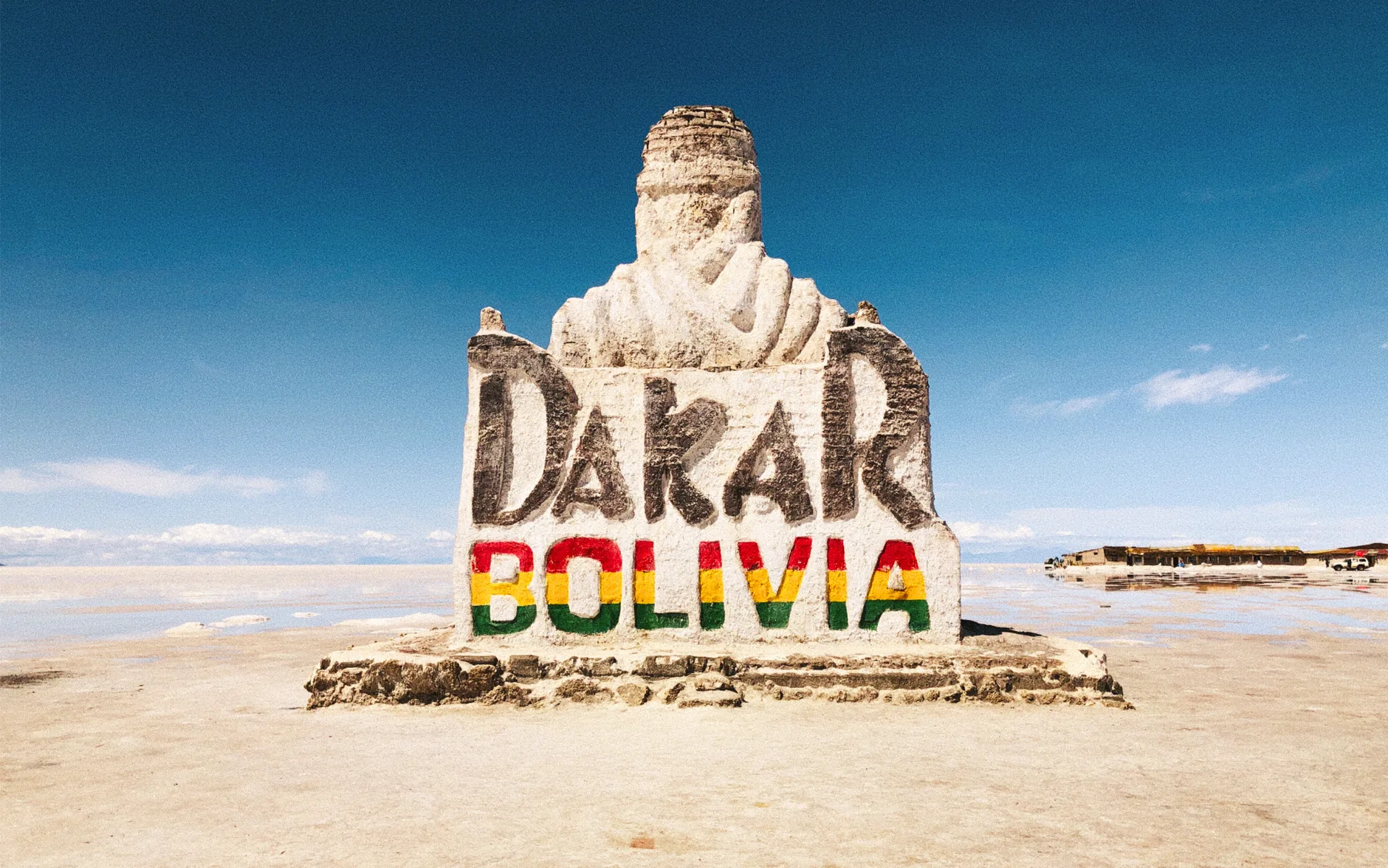
Photo by Nicolas Orellana on Pexels
The salt stretches to every horizon at once, white and cracked into hexagons like something designed rather than formed. At 6am from the edge of Isla Incahuasi, before the day-trip jeeps arrive from Uyuni, the Salar de Uyuni is silent except for wind moving across a surface with nothing to catch it. The giant cacti on the island — some over 900 years old — are the only vertical things for miles. Within an hour, dozens of Toyota Land Cruisers will be parked in loose convoys, their drivers cooking lunch on tailgates, and the illusion of emptiness will be gone. This is the rhythm of the Salar: solitude early, company later, and either one is worth having.
Bolivia rewards travellers willing to arrange things themselves rather than book a single prepackaged circuit. The country is cheap, infrastructure is improving but still unpredictable, and the landscapes — salt flat, Altiplano, cloud forest, Amazon basin — are close enough together that a self-planned route through all of them is genuinely feasible in three to four weeks. It is not always comfortable. Roads wash out, altitude sickness is a real planning variable rather than a footnote, and English fades fast outside La Paz and Uyuni. That’s the trade for seeing a country that hasn’t yet been smoothed into a product.
Getting to Uyuni and starting the salt flat circuit
Most independent routes begin in La Paz or Sucre and funnel toward Uyuni, a dusty rail town that exists almost entirely because of the salt flat tourism it services. Overnight buses from La Paz (around 10–11 hours) or Sucre (around 7–8 hours) are the standard approach; both routes are cold, occasionally rough, and considerably cheaper than flying, which is also an option via Boliviana de Aviación if time matters more than money.
In Uyuni itself, the standard product is the three-day, two-night 4×4 tour covering the Salar, the Eduardo Avaroa Reserve, coloured lagoons (Laguna Colorada, Laguna Verde), and geysers near the Chilean border, often finishing at the Chile crossing into San Pedro de Atacama rather than looping back. Agencies cluster along Avenida Ferroviaria and Avenida Arce. Prices vary wildly — roughly $130–220 USD per person depending on season, group size, and vehicle condition — and the honest advice is to book one or two days ahead in person, not months in advance online, so you can actually inspect the vehicle and meet the driver. Breakdowns happen; a driver who seems competent and sober matters more than a glossy brochure.
Independent travellers sometimes try to DIY the Salar with a rented vehicle, but this is genuinely inadvisable beyond the salt flat’s immediate edge — there are no roads in the usual sense across the Altiplano beyond, GPS is unreliable, and temperatures at night near the Chilean border drop well below freezing. This is one part of Bolivia where joining a small operator-run group, rather than going fully solo, is simply the practical choice.
Beyond the salt: La Paz, Sucre, and the Altiplano
La Paz itself deserves two or three days beyond its role as a transit hub. The Mi Teleférico cable car network — now the world’s highest urban cable car system — is the cheapest and most striking way to understand the city’s geography, with the Red Line giving views down into the canyon the city is built inside. The Mercado de las Brujas (Witches’ Market) along Calle Linares sells dried llama fetuses and herbal remedies alongside tourist trinkets, worth a walk-through even if you buy nothing. For altitude acclimatisation before heading toward Uyuni or the Salar’s 3,650-metre elevation, spend at least two nights in La Paz first — coca tea helps marginally, but the real fix is simply time.
Sucre, Bolivia’s constitutional capital, is whitewashed, lower in altitude (2,800m), and considerably more relaxed — a good place to study Spanish for a week at one of the city’s language schools before pushing on. From Sucre, the Cal Orck’o dinosaur footprint site, a working cement quarry that happens to contain thousands of preserved tracks, is an odd and worthwhile half-day trip.
Potosí, reachable by bus from Sucre in about 3 hours, sits beneath Cerro Rico, the mountain whose silver once funded the Spanish empire and whose mines are still worked today under brutal conditions. Mine tours exist and are popular, but they are genuinely not for everyone — the air is bad, the conditions are real rather than staged, and some travellers find the experience exploitative rather than educational. It’s worth deciding in advance how you feel about visiting an active, dangerous workplace as a tourist attraction rather than deciding on the spot.
Into the Amazon: Rurrenabaque and the Pampas
Few travellers realise how close the Bolivian Amazon sits to the Andean routes. From La Paz, a short flight (around 40 minutes, weather permitting — flights are cancelled often in rainy season) or a long, rough bus journey (18–20 hours, including a notoriously hair-raising descent on the old Yungas road’s modern replacement) gets you to Rurrenabaque, gateway to both the Madidi National Park rainforest and the Pampas del Yacuma wetlands.
The two experiences are distinct and worth understanding before booking: Madidi tours go deep into dense jungle with lower wildlife visibility but far more biodiversity and a genuine sense of scale; Pampas tours travel by boat along the Yacuma River with near-guaranteed sightings of caiman, capybara, pink river dolphins, and squirrel monkeys, but in a more exposed, less wild-feeling landscape. Three days is standard for either; many travellers do both back to back, which is worth the extra days if the budget allows.
| Route segment | Typical duration | Approx. cost (USD, per person) | Best season |
|---|---|---|---|
| La Paz → Uyuni (overnight bus) | 10–11 hrs | $15–25 | Year-round |
| Uyuni salt flat + Altiplano tour (3D/2N) | 3 days | $130–220 | May–Nov (dry) |
| Sucre → Potosí (bus) | 3 hrs | $5–8 | Year-round |
| La Paz → Rurrenabaque (flight) | 40 min | $90–140 | Dry season most reliable |
| La Paz → Rurrenabaque (bus) | 18–20 hrs | $15–20 | Avoid wet season (Nov–Mar) |
| Pampas tour (3D/2N) | 3 days | $150–200 | May–Oct |
| Madidi jungle tour (3D/2N) | 3 days | $180–260 | May–Oct |
Altitude, roads, and the honest logistics of getting around
Bolivia’s long-distance buses are generally reliable on paved routes but can be slow, cold, and occasionally stranded by landslides or road blockades — paros, organised by local communities or unions over political grievances, are a genuine feature of Bolivian travel and can close a highway for a day or more with little warning. Building slack into an itinerary isn’t optional caution, it’s basic planning. Overland travellers moving through the wider region often find it useful to read up on bus travel conditions across South America before committing to multi-day overland stretches, since Bolivia shares many of the same unpredictabilities as its neighbours.
Altitude sickness is a real risk given how much of the standard route sits above 3,500 metres — La Paz, Uyuni, Potosí, and the Altiplano lagoons all qualify. Acetazolamide (Diamox) is widely available over the counter in Bolivian pharmacies without a prescription, and it’s worth discussing with a travel doctor before departure rather than improvising on arrival. The U.S. CDC’s altitude illness guidance is a solid starting point for understanding symptoms and acclimatisation timelines.
Bolivia uses the boliviano (BOB), and while card acceptance has improved in La Paz and Santa Cruz, cash is still essential in Uyuni, Rurrenabaque, and most rural stops. ATMs run out of cash or go offline with some regularity outside major cities, so carrying more reserve cash than feels strictly necessary is a reasonable habit here.
Food worth seeking out
Bolivian food doesn’t have the international profile of Peruvian or Mexican cuisine, but it has real depth. In La Paz, the market stalls around Mercado Lanza serve api, a thick, spiced purple corn drink, alongside pastel, a fried pastry dusted with sugar — a standard breakfast combination best eaten standing at the counter before 9am. Salteñas — a juicier, sweeter cousin of the empanada, filled with meat, olives, and a gelatinous broth that will burn your fingers if you bite too fast — are a mid-morning institution; Salteñería Paceña and countless unmarked stalls across the city serve them until they sell out, usually by early afternoon.
In Sucre, try chicharrón (fried pork) served with mote (hominy corn) and tunta or chuño (freeze-dried potato, an Andean preservation technique that predates refrigeration by centuries). Near Lake Titicaca and the Altiplano, trucha (trout) grilled whole and served with quinoa is the standard, and generally excellent given how close the lake sits to the table.
Lake Titicaca, Copacabana, and the Peru connection
Copacabana, on the Bolivian shore of Lake Titicaca, is a natural final stop or starting point depending on direction of travel, with regular buses (3–4 hours) connecting it to La Paz. From Copacabana, boats run to Isla del Sol, where Inca-era terraces and a handful of small villages make for a good two-day walk along the island’s ridge trail, with simple guesthouses available in Yumani or Challapampa. The border crossing to Peru at Kasani, just outside Copacabana, is straightforward and commonly combined with onward travel toward Puno — a natural link for travellers continuing a longer Andean route, and one that pairs well with planning drawn from budget travel in Peru beyond Machu Picchu.
The Bottom Line
- Build at least 3–4 weeks if you want the salt flats, the Altiplano lagoons, a highland city or two, and a jungle or Pampas stop — trying to compress Bolivia into under two weeks means cutting one of these entirely.
- Book the Uyuni salt flat tour locally, a day or two ahead, rather than online in advance — inspecting the vehicle and meeting the driver in person matters more than any online review.
- Treat altitude as a logistics problem, not a minor discomfort — acclimatise in La Paz before heading to higher elevations, and know where to get Diamox before you need it.
- Keep more cash on hand than feels necessary outside La Paz and Santa Cruz, and build slack into any overland itinerary for road blockades that can appear with little warning.
- Decide your stance on the Potosí mine tours before you arrive — it’s a conversation worth having with yourself in advance rather than under social pressure at the hostel bar.
Keep reading: Get the honest logistics of regional buses first