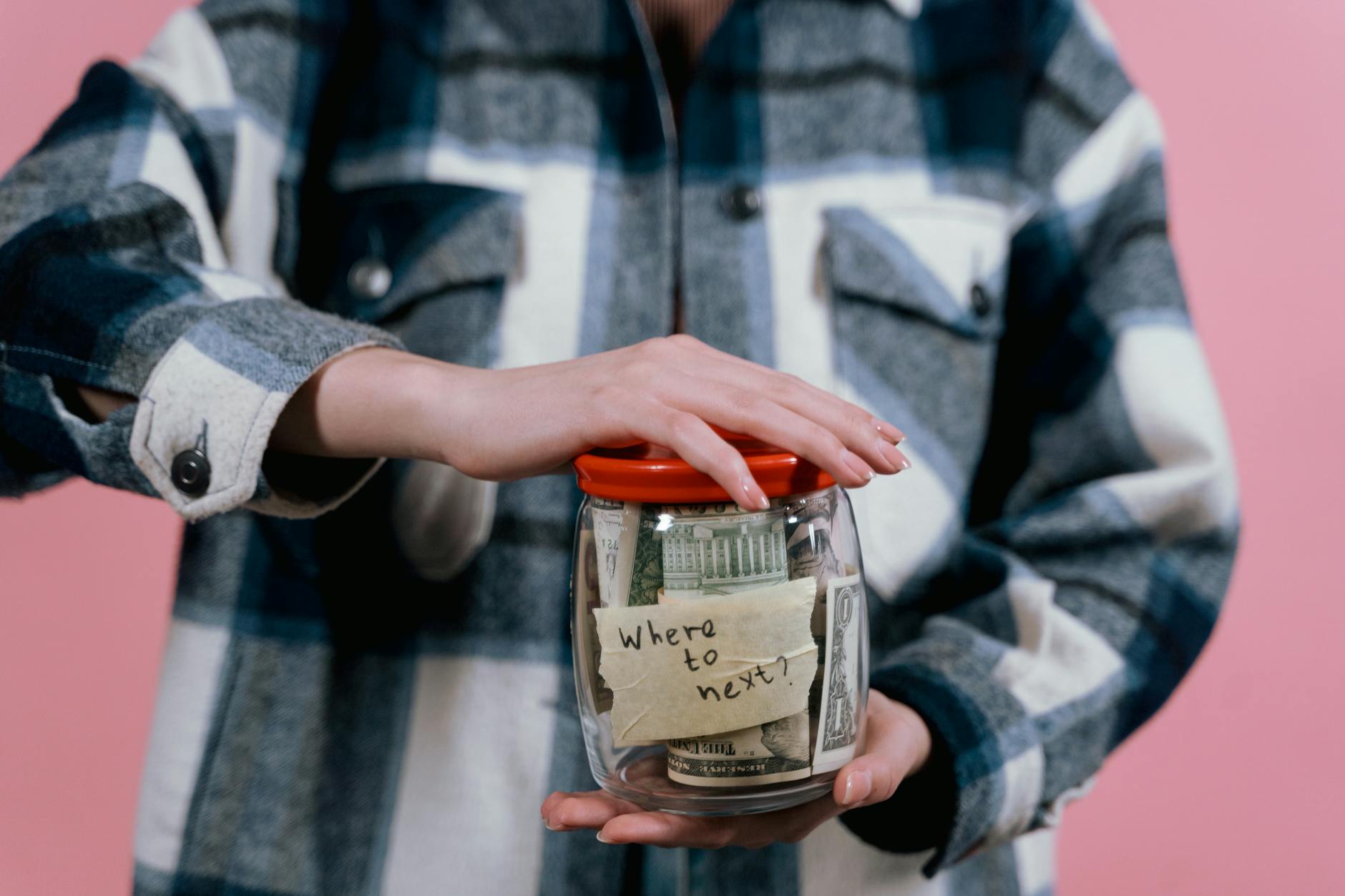
Photo by Tima Miroshnichenko on Pexels
How to save money for a long term trip
The decision usually arrives before the plan does. You’re sitting somewhere unremarkable — a Tuesday commute, a lunch break that tastes like the last hundred — and you think: six months. I want six months. Then the arithmetic starts, and the number feels impossible.
It isn’t. But saving for long-term travel is a specific financial project, not a vague intention, and it responds to specific action. The people who pull it off aren’t earning more than you — they’re spending differently, earlier, and with a target in mind. This guide is about building that target and hitting it.
Fix a number before you fix a timeline
Most savings plans fail because the goal is “enough money to travel,” which is not a goal. It’s a feeling. You need a hard figure.
Start with your destination stack. A six-month trip through Southeast Asia — Thailand, Laos, Vietnam, Cambodia — currently costs most independent travellers between $12,000 and $18,000 USD including flights, visas, accommodation, food, and transport. The Balkans (Serbia, North Macedonia, Albania, Bosnia) runs cheaper at around $8,000–$11,000 for the same duration. Central America (Guatemala, Honduras, Nicaragua) sits around $9,000–$13,000.
Add 15% contingency. Write it down. That is your number.
Then divide it by how many months you have to save. If you need $15,000 in 18 months, that’s $833/month. Now the question isn’t “how do I save money?” — it’s “where do I find $833 a month?” That’s a solvable problem.
Audit your fixed costs with deliberate ruthlessness
Housing is where most savings plans either win or collapse. If you’re renting in a major city, consider the uncomfortable options seriously: moving to a cheaper neighbourhood, taking on a flatmate, or — if your job allows remote work — leaving the expensive city entirely for 12–18 months. Moving from a $1,800/month one-bed in London to a £900/month room in Sheffield or Porto for a year generates your entire travel fund almost on its own.
Subscriptions compound quietly. Run a three-month bank statement, highlight every recurring charge, and cancel anything you haven’t actively used in the past 30 days. The average person doing this exercise recovers $80–$150/month.
Transport is the other lever. If you own a car that isn’t essential, sell it. Insurance, fuel, servicing, and depreciation on a mid-range car typically cost $5,000–$8,000 annually — more than a month of travel in Southeast Asia every single month you’re sitting at a red light.
Build a separate account and automate everything
The most reliable savings mechanism isn’t discipline — it’s friction. Open a dedicated travel fund account at a separate bank from your daily spending (Starling, Marcus, or a credit union all work well). Set up an automatic transfer to hit it the morning after payday, before you see the money.
If the transfer happens automatically, you never make the decision. You never weigh it against dinner out or a new jacket. It’s already gone.
Name the account something specific — “Vietnam September 2027” is more effective than “Savings.” This sounds trivial. It isn’t. Naming creates commitment.
Generate additional income, not just cuts
Cutting costs has a floor. Earning extra income doesn’t. The most common sources for pre-trip savings:
Sell possessions. Before a long trip, you’re going to shed most of your stuff anyway. Do it a year early. Furniture, clothes, equipment, books — sell through Facebook Marketplace, Vinted, or eBay. A thorough purge of a two-bedroom flat often generates $1,500–$3,000.
Freelance your existing skills. If you work in marketing, design, writing, accounting, or software, there is almost certainly paid freelance work available on platforms like Contra or through direct outreach to small businesses. Even four hours a week at $40/hour adds $640/month.
Work extra shifts or take short contracts. Hospitality, healthcare, logistics, and retail all have consistent demand for additional hours. A second shift two evenings a week for a year adds up faster than almost any other strategy.
One important note: according to research compiled by MoneySavingExpert, high-interest savings accounts in the UK are currently offering 4.5–5% on easy-access accounts. For a fund sitting untouched for 12 months, that’s not nothing — on $12,000 saved, it adds $540–$600 in interest without any effort.
Learn what your trip actually costs per day
Pre-departure budgeting is abstract. It becomes concrete when you know the daily rates.
| Region | Budget daily spend (USD) | Mid-range daily spend | 6-month total (budget) |
|---|---|---|---|
| Southeast Asia | $30–$45 | $60–$90 | $5,400–$8,100 |
| Balkans | $35–$50 | $70–$100 | $6,300–$9,000 |
| Central America | $35–$55 | $65–$100 | $6,300–$9,900 |
| South America (Andean) | $35–$55 | $70–$110 | $6,300–$9,900 |
| India/Nepal | $20–$35 | $50–$80 | $3,600–$6,300 |
| Eastern Africa | $45–$70 | $90–$140 | $8,100–$12,600 |
Figures reflect 2025–2026 averages. Excludes international flights and major one-off costs (visas, vaccinations, gear).
Daily spend figures assume: dorm beds or cheap guesthouses, street food and local restaurants, local transport, occasional activity. They do not include party travel, private rooms every night, or regular flights between destinations.
The most expensive parts of any long trip aren’t the days in the field — they’re the flights, the gear purchased badly at the last minute, and the first week of any trip when you’re still calibrating. Lonely Planet’s regional budgeting guides are a reasonable reference for breaking down typical per-country costs in more granular detail.
Reduce the pre-departure bleed
The months immediately before departure are when savings plans hemorrhage. The instinct to buy gear, celebrate, and “prepare” is real — and expensive.
Buy less gear than you think you need. A 40-litre backpack, two pairs of walking trousers, a rain layer, and good sandals covers 90% of Southeast Asia and the Balkans. Everything else — lightweight towels, plug adaptors, dry bags — is cheaper in Bangkok’s Chatuchak Market or Hanoi’s Đồng Xuân Market than from an outdoor retailer at home.
Book the first two weeks of accommodation in advance (it manages arrival anxiety and stops you overpaying for the first bed), then leave the rest open