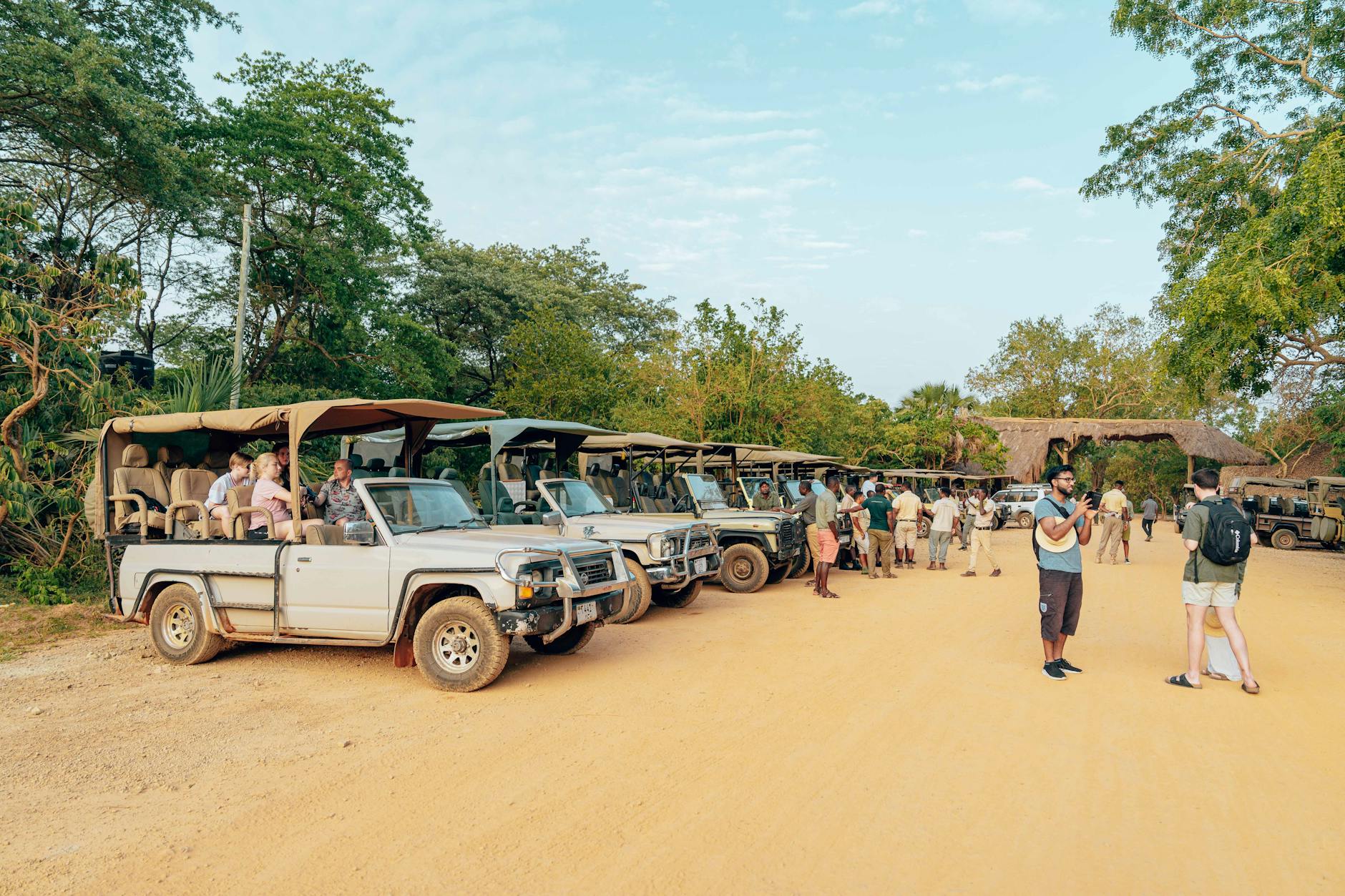
Photo by Keegan Checks on Pexels
How to travel Africa without a tour group
The Nairobi bus station at 5 a.m. smells of diesel, mandazi frying in oil, and something indefinable that is equal parts anticipation and mild alarm. A conductor leans out of a Kampala-bound coach and shouts a price that has already changed twice. Beside you, three Kenyan students argue cheerfully about whether the bus will actually leave on time. It will not. You know this. You buy a chai from a woman in a yellow apron, find a concrete ledge, and wait.
This is what independent travel in Africa actually looks like most of the time — not a safari Land Cruiser, not a guided walking tour with commentary. Long waits, fast friendships, chai that is too sweet and too hot and exactly right. It is absolutely possible to move through this continent without a tour company organising everything. It requires more planning, more patience, and a higher tolerance for the unglamorous middle hours of travel. What it gives you in return is proportion: you start to understand how large and varied Africa actually is, because you feel every kilometre of it.
Choose a region and commit to it
Africa is 54 countries across roughly 30 million square kilometres. The first mistake independent travellers make is treating it as one itinerary. Pick a region and go deep.
East Africa (Kenya, Uganda, Tanzania, Rwanda) has the most developed independent travel infrastructure: functioning bus networks between capitals, reliable guesthouses in most towns, and a well-worn backpacker circuit that doesn’t require you to join it entirely but gives you useful anchors. Nairobi’s Westlands neighbourhood has budget accommodation; Arusha in northern Tanzania is the practical base for Kilimanjaro and the northern parks if you want to hire a private guide rather than join a group.
Southern Africa (Zambia, Malawi, Zimbabwe, Mozambique) is more logistically demanding but rewards patience. The Tazara railway from Dar es Salaam to Kapiri Mposhi in Zambia — a 1,860 km route built in the 1970s — is slow (expect 45–50 hours, not the scheduled 40), genuinely beautiful across the Selous and the Zambian plateau, and costs roughly $50–80 USD in second class.
West Africa (Senegal, Ghana, Côte d’Ivoire) is the region most independent travellers skip, which is exactly why it’s worth considering. Bush taxis — shared Peugeot 504s that run fixed routes when full — are the primary transport between towns in Senegal. From Dakar’s Gare Routière de Pompiers, you can reach Saint-Louis (3 hours, around 3,500 CFA / ~$6) and from there negotiate onward to Mauritania if your paperwork is in order.
Border crossings: what no one tells you
Most African border crossings work. They are bureaucratic, sometimes slow, often hot, and occasionally staffed by someone who will scrutinise your yellow fever certificate with theatrical suspicion before waving you through. A few specifics:
- Namanga (Kenya–Tanzania): busy, functional, takes 1–2 hours on a quiet day. Buses from Nairobi’s Riverside Shuttle stop here directly.
- Chirundu (Zimbabwe–Zambia): chaotic, requires patience. Budget half a day and carry small bills in USD.
- Cinkansé (Ghana–Burkina Faso): straightforward but infrequent transport onward — confirm your bus from Ouagadougou before you cross.
Carry printed copies of your visa approvals, vaccination certificates (yellow fever is mandatory for most of West and Central Africa), and more passport photos than you think you need. E-visas now cover Rwanda, Kenya, Ethiopia, and several Southern African countries — apply 2–3 weeks in advance.
Getting between cities without a private vehicle
The backbone of independent African travel is the long-distance bus, the minibus (matatu in East Africa, tro-tro in Ghana), and the shared taxi. Each operates differently.
Long-distance coaches between capitals — companies like Easy Coach (Nairobi–Kampala), Intercape (Johannesburg–Harare), and STC in Ghana — sell tickets in advance, depart at scheduled times, and are the most predictable option. Book online where possible or at the terminal the evening before.
Minibuses fill and go. There is no timetable. You sit in the vehicle until it is full, then it leaves. This is efficient when it’s your direction; it teaches you nothing useful about time management. For shorter routes between towns — Kampala to Jinja (2 hours), Accra to Cape Coast (3 hours) — it’s the normal, cheap, and perfectly reasonable way to travel.
Rail is slow almost everywhere, but the exceptions are worth knowing: the Shosholoza Meyl overnight from Johannesburg to Cape Town (25 hours, around 400 ZAR / ~$22 in second class) is one of the better rail journeys on the continent — the Karoo at dawn deserves your full attention.
Where to stay without booking a resort
The guesthouse economy across East and Southern Africa is robust. In Tanzania, look for gesti (the Swahili corruption of “guesthouse”) rather than hotels — they’re family-run, often include breakfast, and cost $10–25 a night. In Ghana, chop bars attached to guesthouses in towns like Ho and Bolgatanga are where you eat: red red (black-eyed peas with fried plantain), banku with tilapia, groundnut soup thick enough to stand a spoon in.
Budget accommodation in West Africa is patchier. Senegal has a good network of campements touristiques — simple lodges, often community-run — in the Casamance region. In Fadiouth, a village built entirely on a shell island south of Dakar, the campement costs around 15,000 CFA (~$25) for a room and dinner.
Costs and practicalities at a glance
| Route / Item | Approximate cost | Notes |
|---|---|---|
| Nairobi → Kampala (Easy Coach) | $20–25 USD | ~9 hours, book ahead |
| Dar es Salaam → Kapiri Mposhi (Tazara rail) | $50–80 USD (2nd class) | 45–50 hours, scenic |
| Accra tro-tro (city routes) | 2–5 GHS (~$0.15–0.40) | Cash only, exact change helps |
| Jo’burg → Cape Town (Shosholoza Meyl) | ~400 ZAR (~$22) | 25 hours, book via Prasa website |
| Dakar → Saint-Louis (bush taxi) | ~3,500 CFA (~$6) | 3 hours, Gare de Pompiers |
| Budget guesthouse, East Africa | $10–25/night | Breakfast often included |
| Yellow fever certificate | Varies by country | Mandatory for most crossings |
| East Africa e-visa (Kenya) |