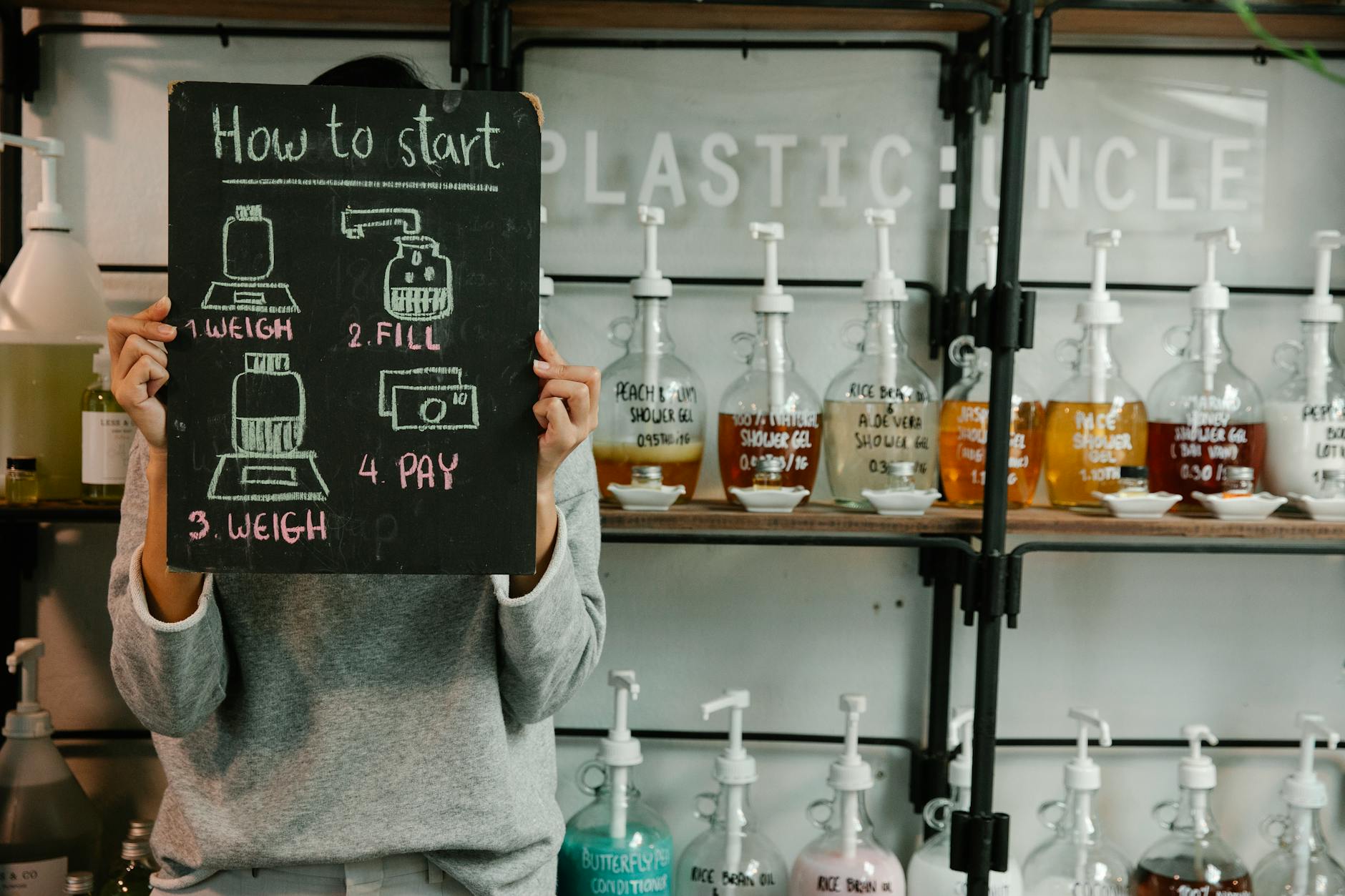
Photo by Sarah Chai on Pexels
How to travel with less plastic on the road
The market in Hội An’s Old Quarter opens before six. Vendors arrange pyramids of dragon fruit and bunches of morning glory under fluorescent light, and the smell of pork broth drifts from a woman ladling cao lầu into bowls at a folding table. It is one of the most grounded, beautiful food scenes in Southeast Asia. It is also ringed, by eight in the morning, with a tide of single-use plastic: bags wrapped around bags, straws in every drink, bottles stacked in crates outside every guesthouse. The gap between the place you came to experience and the waste it generates is hard to ignore once you start noticing it.
Travelling with less plastic is not about moral purity. It is about practicality — a set of decisions made before you leave and adjusted as you go — and about understanding that the infrastructure you rely on at home does not exist in the same form everywhere. Some destinations make it easy. Others make it genuinely hard. The honest answer is not “just bring a reusable bottle” but something more granular: knowing which cities have safe tap water, which markets sell loose produce, which buses will hand you a sealed bag of water and nothing else.
This is that more granular answer.
Build your kit before you leave — not at the airport
The single most effective thing you can do happens before you board anything. Airport shops sell almost nothing that helps, and you will pay three times the price for the privilege of buying it stressed. The kit itself is simple, but the decisions matter.
A collapsible water bottle (Hydrapak and Nomader both pack flat) serves you better than a rigid bottle on flights where luggage space is tight. If you’re heading anywhere with unreliable tap water — most of sub-Saharan Africa, rural Southeast Asia, much of Central America — pair it with a SteriPen UV purifier or a Sawyer Squeeze filter. The SteriPen runs on a USB-charged battery and treats 1 litre in 90 seconds; the Sawyer screws onto a standard water bottle and works without power. Neither is cheap (£45–£70), but each replaces hundreds of single-use bottles over the course of a trip.
A lightweight mesh bag or two folds into nothing and handles market shopping — bread, fruit, loose vegetables — without needing a plastic carrier. A bamboo or metal cutlery set with a straw covers the situations where street food arrives with disposable utensils. A solid shampoo bar and conditioner bar (Ethique and Lush both make durable versions) eliminate the entire category of miniature plastic toiletry bottles and are allowed in hand luggage without liquid restrictions.
One thing to be honest about: none of this makes you zero-waste. It reduces the volume of plastic you generate. The difference is meaningful, not absolute.
Understand the water safety landscape before you arrive
The question of whether you can drink tap water is the hinge on which most plastic consumption turns. Get it right and you stop buying bottles entirely. Get it wrong and you spend a week on a drip.
The World Health Organization’s global water sanitation data is the most reliable reference, but here is a working map for common destinations:
| Region / Country | Tap water safe to drink? | Best approach |
|---|---|---|
| Western Europe, Japan, New Zealand, Australia | Yes, in almost all cities | Drink freely; carry a refillable bottle |
| Eastern Europe (Czech Republic, Hungary, Poland) | Generally yes in cities | Check locally in rural areas |
| Mexico (cities) | No — even locals avoid it | SteriPen, filter, or large refill jugs (garrafones) |
| Southeast Asia (Thailand, Vietnam, Cambodia) | No | SteriPen or filter; look for refill stations |
| India (cities) | No | Boil or filter; refill stations increasingly available |
| Sub-Saharan Africa (most countries) | No outside major city infrastructure | Filter essential; treat with iodine as backup |
| South America (Argentina, Chile, Uruguay) | Yes in cities | Filter useful in rural/mountain areas |
| Bolivia, Peru | No | Filter or SteriPen; altitude affects boiling point |
In cities where tap water is unsafe, look for refill stations before defaulting to bottles. In Chiang Mai, Bangkok, and Ho Chi Minh City, coin-operated water dispensers (1–2 baht or 2,000 VND per litre) sit outside many 7-Elevens and pharmacies. In Mexico City, the garrafón system — large 20-litre jugs sold and refilled at neighbourhood purificadoras — is what most residents use; you can refill your bottle from a guesthouse or hostel’s supply for a few pesos. The Refill My Bottle app maps verified refill points in 20+ countries and is worth downloading before a long trip.
Navigate markets like a practical human being
One of the pleasures of travel is buying food in markets that have nothing to do with supermarkets. One of the frustrations is that vendors in many countries default to plastic bags even for a single mango. This is not a character flaw — it is a system, and you work with it rather than around it by arriving with your own container.
In Istanbul’s Kapalıçarşı (Grand Bazaar) and the surrounding Mısır Çarşısı (Spice Bazaar) in Eminönü, vendors are entirely unbothered if you hand them a bag and ask them to fill it with dried apricots, pistachios, or loose tea. The same is true at La Boqueria in Barcelona (arrive before 9am on a weekday; later in the day it’s heaving with tour groups) and at Mercado de San Telmo in Buenos Aires, where the deli stalls will wrap charcuterie in paper if you ask.
In Southeast Asia, the dynamic shifts. At Talat Sao (Morning Market) in Vientiane, at Pak Khlong Talat in Bangkok (the flower and produce market near Memorial Bridge, open all night), and at Ben Thanh Market in Ho Chi Minh City, plastic bags are given reflexively and rapidly. A few phrases go a long way: mai ao tung (ไม่เอาถุง) is “no bag” in Thai; không lấy túi works in Vietnamese. A smile and a held-up mesh bag communicates the rest. You won’t always succeed. Accept that, take the bag occasionally, and return it to a recycling point if one exists.
Choose accommodation that makes it easier
The accommodation you choose multiplies or undermines every other decision. A guesthouse that hands you a daily miniature plastic toiletry kit, stocks a fridge with single-use bottles, and serves breakfast in individually wrapped portions will generate more plastic than anything in your daypack.
Ask directly when you book: does the property have a water refill station? Are toiletries refillable dispensers or miniatures? Small guesthouses in Oaxaca, Mexico (particularly in the Jalatlaco neighbourhood), family-run pension operations throughout Slovenia’s Soča Valley, and many smaller hotels in Sri Lanka’s hill country around Ella and Kandy operate with a lower-waste approach as a matter of course — they just don’t always advertise it.
Larger eco-certified properties do advertise it, though certification quality varies. The Global Sustainable Tourism Council’s database lists accredited operators by country — useful as a starting point, though it is not exhaustive and excludes many excellent small places that simply haven’t paid for certification.
Hostels with communal kitchens are genuinely useful here: cooking occasionally, buying produce loose at a market, and using the hostel’s filtered water costs less and generates dramatically less packaging than three restaurant meals a day.
Handle the unglamorous moments honestly
There will be a 14-hour overnight bus from Luang Prabang to Vientiane where the attendant hands everyone a sealed plastic bag of water at 2am and there is no alternative. There will be a guesthouse in rural Gujarat with nothing but plastic bottles in a locked fridge and no refill option in sight. There will be a festival in Oaxaca where the mezcal comes in a tiny plastic cup because that is simply what is used there.
These moments are not failures. They are part of the honest arithmetic of travel: you can reduce significantly, but eliminating entirely requires a level of control over your environment that travel, by its nature, does not offer. The useful response is to carry a small dry bag or zip-lock for collecting your own waste on days when bins or recycling are absent, dispose properly when you do reach a city, and not let perfect be the enemy of a meaningful reduction.
In urban areas with functioning waste infrastructure — Berlin, Tokyo, Amsterdam, Medellín — sorting and recycling what you do generate is genuinely viable and worth doing. In places without that infrastructure, the calculus is harder, and acknowledging that is more useful than pretending otherwise.
The specific habits that move the needle most
In practice, a handful of decisions account for the majority of the difference:
Refuse the straw before it arrives. In Thailand, Vietnam, and across Latin America, drinks come with a straw automatically and quickly. Saying no straw when you order — or as soon as you sit down — is more effective than trying to return one already in your glass.
Buy loose over packaged wherever you can. At a market, a loose banana has no packaging. At a convenience store, the same banana is in shrink wrap. The market is also usually cheaper and more interesting. This is rarely a sacrifice.
Use transport refill stops. Long-distance buses in Peru, Bolivia, and India stop at roadside depots where you can refill a bottle from large dispensers or buy a single large bottle to share rather than multiple small ones. Pay attention to when stops happen.
Carry snacks from markets. A bag of nuts, a piece of fruit, and a bread roll from the morning market means you’re not buying packaged snacks at a highway petrol station. This applies everywhere from rural Romania to the Peruvian altiplano.
Book sleeper trains over budget flights where the route exists. This is not primarily a plastic argument, but sleeper trains — Budapest to Bucharest, Hanoi to Ho Chi Minh City on the Reunification Express, Nairobi to Mombasa on the SGR — typically serve food in reusable containers, allow you to carry your own food, and avoid the cycle of sealed plastic cups and individually wrapped crackers that economy air travel generates.
The Bottom Line
- Water is the biggest single variable. Know which countries have safe tap water before you arrive, and carry a SteriPen or Sawyer filter for those that don’t. This one decision eliminates more plastic than everything else combined.
- Your kit should be built before you leave and small enough not to be a burden. A collapsible bottle, a filter, a mesh bag, and solid toiletries cover 80% of situations. Everything else is optional.
- Markets, accommodation choices, and transport habits matter more than individual purchases. Systemic decisions — where you stay, where you shop, how you travel between cities — have more impact than refusing a single straw.
- Some situations are genuinely outside your control. An overnight bus, a remote guesthouse, a street food stall — you will use plastic you didn’t want to. Carrying it to proper disposal is the honest response, not a sense of failure.
- The best destinations for low-plastic travel are those with strong tap water infrastructure and functioning recycling: Japan, Germany, the Netherlands, New Zealand, and most of Western Europe. If you want to practise the habits before a harder trip, these are the places to build them.