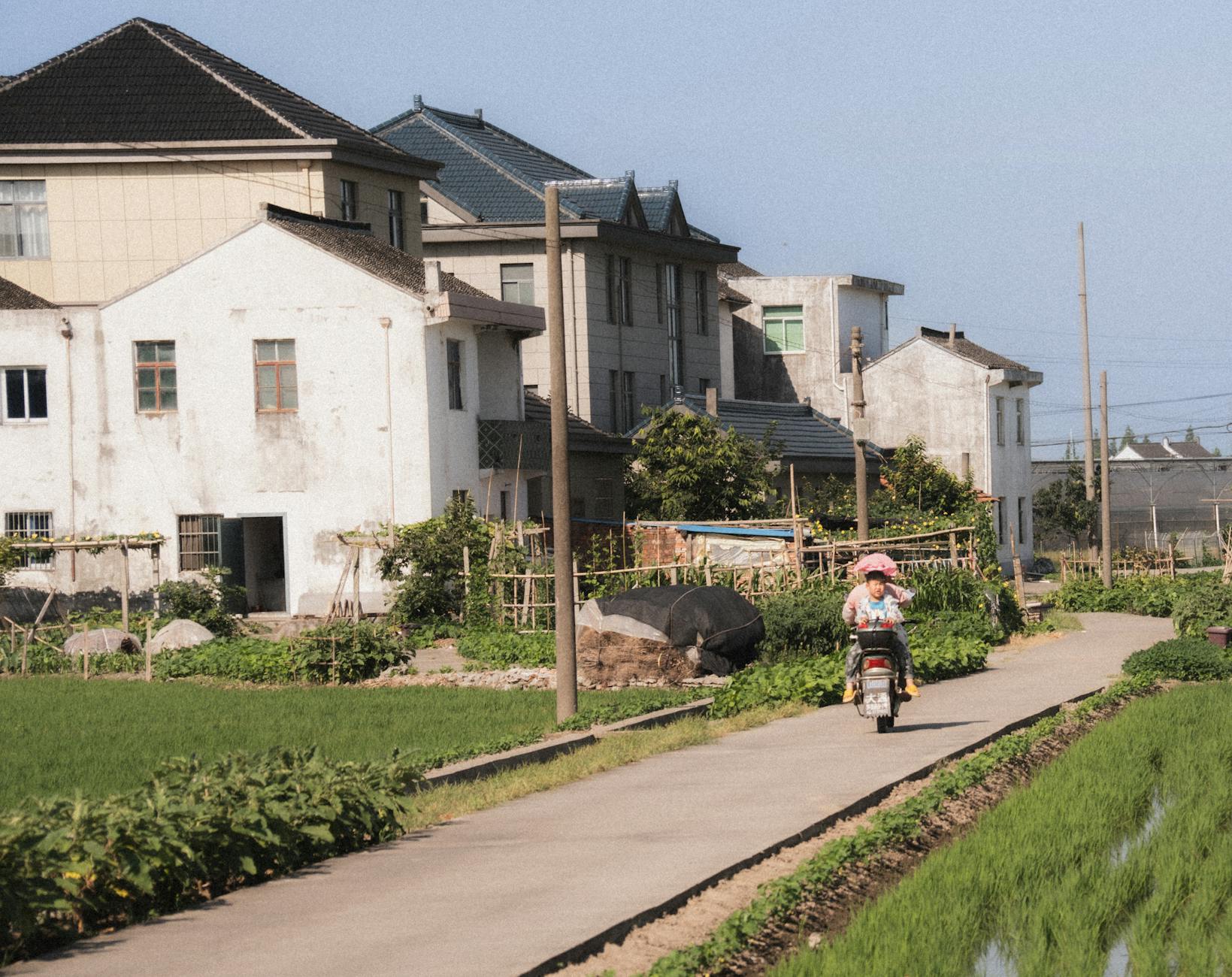
Navigating language barriers in rural China
The bus from Lijiang to Lugu Lake takes about four hours on a good day — longer if a truck has stalled on the switchbacks above Yongning. When you finally step off in Luoshui village, the lake filling the valley below you in every shade of cold blue, there is no tourist information office. There is a woman selling flatbread from a folding table, a dog asleep in the road, and a hand-painted sign you cannot read. This is where the phrasebook runs out.
Rural China is not a monolith. It is Mosuo fishing villages and Dong covered-bridge towns and Yi market days in Sichuan highlands where the lingua franca is neither Mandarin nor English but something older and entirely local. Navigating language barriers here is genuinely challenging — but it is also manageable, and the texture of working through it is part of what makes this kind of travel rewarding. What follows is a practical toolkit, not a pep talk.
Understanding what “rural China” actually means linguistically
Before you pack a phrasebook, it helps to understand why rural China is so linguistically complex. China recognises 56 ethnic groups, and many maintain living languages or dialects that differ radically from standard Mandarin (Putonghua). In Guizhou, a Miao village elder may speak only her own dialect. In Gansu’s Linxia prefecture, Arabic-script notices sit alongside Chinese characters in a community where Salar is spoken at home. In Guangdong’s Pearl River delta hinterland, Cantonese dominates; Putonghua can feel like a second language to older residents.
This means your Mandarin phrasebook will get you further in some regions than others. In Yunnan, Sichuan, and most of the southwest, Putonghua is widely understood as a common tongue between groups — but fluency varies enormously by age and education. In general: younger people in market towns will have more Mandarin; older people in farming villages may have very little. English, outside of dedicated tourist corridors like Yangshuo or Zhangjiajie’s main trails, is rare.
The essential digital toolkit (and its real limits)
Google Translate works in China only with a VPN, and VPN reliability has tightened considerably since 2023. Before you travel, download the offline language pack for Simplified Chinese in both Google Translate and Microsoft Translator — this gets you camera translation (point your phone at a sign or menu) and typed input without any internet connection. Both apps allow you to save your offline packs ahead of time; do this before you leave home.
Pleco is indispensable for anything text-based — menus, bus destination boards, market signage. Its dictionary works fully offline and the OCR (camera scan) function is faster than Google Translate for single words and short phrases. Free version is sufficient for most travellers.
Baidu Translate is the dominant tool among Chinese users and works without a VPN on Chinese networks. The voice-to-voice translation is genuinely useful for basic conversation — it handles regional accents better than Google’s equivalent in many cases. Download it before crossing into areas with poor connectivity.
The honest caveat: all of these tools fail in low-light conditions (dim restaurant, night market), on handwritten signs, and in fast verbal exchanges. They are supports, not solutions. The most effective communication in rural China is often physical: pointing, showing photos, writing numbers in the air with your finger.
| Tool | Works offline? | VPN needed? | Best for |
|---|---|---|---|
| Google Translate (with pack) | Yes | No (offline) | Camera translation, menus |
| Pleco | Yes | No | Written characters, dictionaries |
| Baidu Translate | Partial | No | Voice-to-voice, local network |
| Microsoft Translator | Yes | No | Backup; offline packs available |
| WeChat (with contacts) | No | No | Locals can type/translate for you |
Learning the 30 phrases that actually matter
Standard phrasebook Mandarin covers greetings and pleasantries. What you need in rural areas is more transactional. The following categories will solve the majority of your communication problems:
Transport: How much? Where does this bus go? Does this go to [destination]? I want to get off here. How many hours?
Food: No meat. No chilli. I am allergic to [x]. What is this? One bowl, please. How much?
Accommodation: Do you have a room? One person. Two nights. Is there hot water?
Navigation: Which direction is [place]? Is this the road to [place]? I am lost.
Write these in both pinyin (romanised pronunciation) and Chinese characters in a small notebook — not just on your phone, which can run out of battery or fail to display correctly. Locals in remote villages are more likely to be able to read characters than to parse your pinyin pronunciation, particularly tones, which carry meaning in Mandarin and are almost impossible to get right from a phrasebook alone.
The BBC’s language resources for Mandarin are a reasonable starting point for audio pronunciation — listen to tones rather than just reading them.
On the ground: what actually works
Show, don’t say. Save photos of your intended destinations on your phone — a photo of Songpan old town is more useful than trying to pronounce “Songpan” with the wrong tones. Download offline maps (Maps.me or the offline section of Amap/高德) so you can show a local your blue dot and your destination pin simultaneously. This resolves roughly 80 percent of navigation problems.
Find the schoolteacher or the shopkeeper. In most rural villages, someone has enough Mandarin to bridge the gap — often the primary school teacher, the owner of the general goods shop, or whoever runs the village guesthouse. Hotel owners and guesthouse operators in remote areas who see any foreign visitors at all will usually have a basic communication strategy worked out, even if it’s a laminated picture menu and a calculator for prices.
WeChat as a translation relay. Even in areas with intermittent signal, locals use WeChat constantly. If someone wants to help you but the verbal exchange isn’t working, they will often call a friend or relative who has more Mandarin or even some English. Let this happen. It is not an imposition; it is often genuinely interesting to everyone involved.
Carry a business card from your guesthouse. This is the oldest advice and still works. When you leave your accommodation each morning, take a card with its name and address in Chinese characters. Taxi and minibus drivers can read it; you can show it to anyone who needs to point you home.
Routes where language barriers are most significant — and how to manage them
Guizhou’s Miao and Dong regions — The villages around Zhaoxing (Dong) and Xijiang (Miao) receive some tourists, but leave the main cluster and you are in deeply local territory. The twice-weekly market at Rongjiang draws villages from a wide radius; almost no English is spoken, and Putonghua is patchwork. Go with a printed list of your dietary restrictions in Chinese. Bus connections exist but schedules change seasonally; ask at the county bus station (县汽车站) rather than relying on apps.
Sichuan’s Aba (Ngawa) Tibetan Autonomous Prefecture — Towns like Hongyuan and Zoigê are majority Tibetan-speaking; Putonghua is the administrative language but not always the street language. Monks in larger monasteries sometimes speak Mandarin well enough to help. The G213 national highway gives you a spine for navigation; signage is bilingual (Tibetan/Chinese) throughout.
Gansu’s Hexi Corridor and southern Gansu — Linxia (临夏) is a Hui Muslim city where Mandarin is spoken but the cultural texture is distinct from Han China. Further south toward Xiahe and Labrang Monastery, Tibetan is dominant. The monastery itself has staff who speak multiple languages during pilgrimage season (most active March–May and September–October).
Yunnan’s northwest — The stretch from Shangri-La (Zhongdian) toward Deqin and Meili Snow Mountain is among the most scenically dramatic in China and also among the most logistically complex. Public buses run from Shangri-La bus station (香格里拉客运站) to Deqin daily (roughly 4–5 hours, 60–80 RMB); the final push to Feilai Temple viewpoint requires either a local taxi negotiation or your own transport. English is essentially absent; Mandarin works for logistics.
Eating when you cannot read the menu
This is where language barriers become most visceral — and most rewarding when you get it right. In rural China, most small restaurants (小吃店 or 农家乐) do not have picture menus. A few strategies:
Go at rush hour. Lunch service (11:30–13:00) in a village canteen means you can simply point at what other people are eating. This works almost everywhere and produces better meals than ordering from a menu you cannot parse.
Learn three dishes by name. In Yunnan: 过桥米线 (guoqiao mixian, crossing-the-bridge noodles), 炒饭 (chaofan, fried rice), and 蛋炒饭 (dan chaofan, egg fried rice). In Sichuan: 担担面 (dandanmian), 回锅肉 (huiguorou, twice-cooked pork). In Guizhou: 酸汤鱼 (suantangyu, sour fish soup) and 肠旺面 (changwangmian, a rich offal noodle soup). These are fall-back options when the menu is entirely opaque — and all of them are genuinely good.
The calculator negotiation. For anything without a posted price — market food stalls, unlicensed guesthouses, private minibuses — the vendor will often produce a phone or calculator and show you a number. This is not necessarily a tourist markup; it is simply how prices are communicated across a language gap. Have your own phone or a small notepad ready to counter-offer if needed.
What to expect emotionally — and practically
There will be moments of genuine confusion — a minibus that stops in a village you don’t recognise, a guesthouse where the owner’s entire communication strategy is cheerful repetition of the same phrase at increasing volume. This is normal. It passes. The majority of encounters in rural China are marked by patience and practical ingenuity on both sides.
What makes these moments easier is preparation: offline maps, downloaded translation packs, key phrases in a notebook, photos of destinations. What makes them better is attitude — not performing gratitude or delight, but being willing to slow down, point, wait, try again.
China’s rural interiors — the stone villages of eastern Guizhou, the monasteries of the Tibetan plateau, the karst corridors of northern Guangxi — are among the most visually and culturally dense places on earth. The language barrier is real. It is also, with preparation, navigable.
The Bottom Line
- Download offline translation packs before you arrive — Google Translate, Pleco, and Baidu Translate all work without internet once the language data is saved. Do this at home, not in China.
- Carry key information in written Chinese characters: your guesthouse address, dietary restrictions, destination names. Locals can read characters even when they can’t understand your pronunciation.
- Public buses connect most county towns in rural China; the county bus station (县汽车站) is your logistics hub. Schedules are unreliable online — go in person the day before.
- The language barrier is most acute in Guizhou’s Miao/Dong villages, Tibetan-majority areas of Sichuan and Gansu, and northwest Yunnan — these are also among the most rewarding destinations. Prepare accordingly.
- Pointing, photos, and calculators solve most problems. Verbal communication is one tool among many. The people you’ll meet in these places have been bridging communication gaps with travellers and traders for centuries — you are not the first person to stand confused at a bus station.