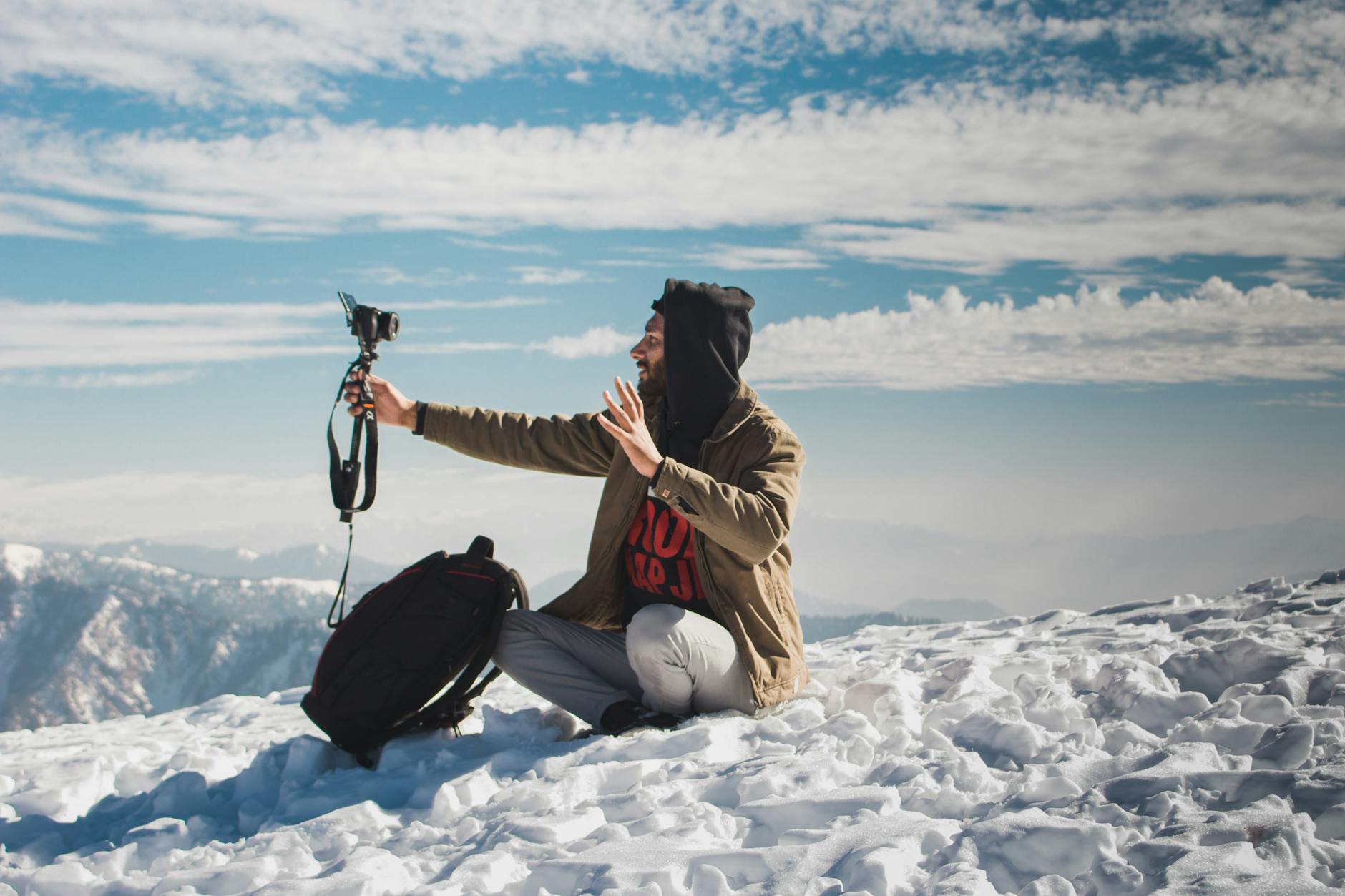
Photo by Raqeeb Ahmed on Pexels
Solo travel in Pakistan: is it possible?
The bus from Gilgit to Karimabad takes about two hours on a road that clings to the side of the Karakoram like an afterthought. On one side, the Hunza River cuts through a gorge so deep you can’t see water, only hear it. On the other, rock walls rise hundreds of metres in the kind of silence that makes conversation feel rude. Somewhere before the Hunza Valley opens up and the terraced apricot orchards come into view, the man beside you will almost certainly ask where you’re from, offer you something from a plastic bag of dried mulberries, and insist — with genuine feeling — that you are very welcome.
That welcome is not incidental to Pakistan. It is structural. Solo travellers, particularly those from countries that have historically portrayed Pakistan as synonymous with danger, consistently describe being disarmed by it. That doesn’t mean Pakistan is without complexity, logistical friction, or places that require careful thought. It does mean the premise of the question — is solo travel in Pakistan even possible? — is already slightly off. The better question is: what kind of solo trip, where, and how?
This guide answers that practically.
The honest picture on safety and registration
Pakistan’s security landscape is uneven, and pretending otherwise helps no one. The Foreign Commonwealth and Development Office, the US State Department, and most Western governments advise against travel to certain areas — particularly Balochistan, parts of Khyber Pakhtunkhwa bordering Afghanistan, and tribal districts. These advisories are worth reading in full, not skimming.
Within the regions most solo travellers actually visit — Lahore, Islamabad, the Hunza Valley, Gilgit-Baltistan, the Swat Valley, and the Karakoram Highway corridor — conditions are meaningfully different from those headline-grabbing advisories. Gilgit-Baltistan in particular has hosted international trekkers for decades and has a functioning tourism infrastructure precisely because visitors keep returning.
Foreigners are required to register with local police when staying in many areas outside major cities. In practice, most guesthouses handle this for you and are accustomed to the process. In Karimabad, Passu, or Skardu, registration is routine. Carry extra passport photos and photocopies — you will use them. Some trekking routes, including approaches to K2 base camp in the Baltoro Glacier area, require a licensed guide and formal trekking permit obtained through the Pakistan Tourism Development Corporation. Budget at least two to three weeks of lead time for permit paperwork.
The UK Foreign Travel Advice for Pakistan is updated regularly and distinguishes between regions — read it carefully before finalising your itinerary.
Getting in: visas and entry
Pakistan introduced an e-visa system that, for most nationalities, has made entry considerably more straightforward than it was a decade ago. Citizens of around 175 countries can apply online through the official NADRA portal. Processing typically takes five to seven working days; pay the fee (around USD 75–100 depending on nationality and visa type) and receive a single or multiple-entry tourist visa valid for 30 or 90 days.
Overland entry is possible at Wagah (Lahore) from India, though the political situation between the two countries periodically closes or complicates this crossing — check current status before planning around it. The Sost border crossing into China via the Khunjerab Pass (4,693m) is open seasonally, typically May to October, and is one of the most dramatic entry points in the world — high altitude, sometimes slow, always memorable. Entry from Iran through Taftan is possible but falls in an area most government advisories flag as high-risk.
Most independent travellers fly into Islamabad’s Benazir Bhutto International Airport, which has direct connections to Dubai, Doha, Istanbul, Kuala Lumpur, and London.
Where to actually go: a practical itinerary structure
Pakistan rewards itineraries built around geographic logic rather than ticking boxes. Here is a framework that works well for solo travellers with two to three weeks:
Lahore (2–3 days): Start here to calibrate. Lahore is dense, loud, and extraordinarily good at feeding people. The Walled City — centred on Delhi Gate and Bhati Gate — contains the Badshahi Mosque, the Lahore Fort complex (a UNESCO World Heritage Site), and the Food Street near Gawalmandi where you eat nihari (slow-braised beef shank) and paya (trotters in gravy) at pavement restaurants that have been operating in roughly the same way for generations. The Anarkali Bazaar for fabric, silver, and spices. The Shalimar Gardens for some space and Mughal geometry.
Islamabad (1 day transit): Not the most compelling city for extended stays, but the Margalla Hills behind the city have well-marked day hike trails (Trail 3 is the most popular, Trail 5 quieter), and the Faisal Mosque is architecturally striking. Use it as a base for onward travel.
Karakoram Highway north to Hunza (3–4 days): The KKH from Islamabad to Gilgit by road takes roughly 14–16 hours. NATCO buses run this route; private coaches are more comfortable. Alternatively, PIA operates short flights from Islamabad to Gilgit (around 45 minutes, spectacular views, frequently weather-delayed — keep your schedule loose). From Gilgit, shared vans head to Karimabad in Hunza Valley, the main traveller hub in the north. Stay at one of the family-run guesthouses on the ridge above town — Eagle’s Nest area has the famous view of Rakaposhi (7,788m) and Ultar Sar (7,388m) at dawn.
Passu and Gulmit (2 days): Further north on the KKH, past the Attabad Lake (turquoise, formed by a 2010 landslide, crossed by a short tunnel), Passu has the jagged Passu Cones and the Passu Glacier within walking distance. Quieter than Karimabad, fewer travellers, more unhurried conversations.
Skardu and the Baltoro (5+ days for trekking): Reachable by flight from Islamabad (weather permitting) or a long road journey east of Gilgit. Skardu is the gateway to K2 and the Baltoro Glacier region. Day hikes around Skardu include Deosai National Park (high-altitude plateau, snowmelt wildflowers in July–August, Himalayan brown bears) and Satpara Lake. The K2 base camp trek requires a minimum of 12–14 days round trip from Askole and a licensed guide — not a beginner undertaking.
Getting around on the ground
| Route | Mode | Approx. Duration | Approx. Cost (2026) |
|---|---|---|---|
| Islamabad → Lahore | Daewoo Express bus | 4–5 hours | PKR 1,200–1,800 |
| Islamabad → Gilgit | NATCO bus (KKH) | 14–16 hours | PKR 1,800–2,500 |
| Islamabad → Gilgit | PIA flight | 45 min (+ delays) | USD 50–80 |
| Gilgit → Karimabad | Shared van | ~2 hours | PKR 400–600 |
| Gilgit → Skardu | Road (jeep/bus) | 6–8 hours | PKR 800–1,500 |
| Islamabad → Skardu | PIA flight | 1 hour (+ delays) | USD 50–90 |
| Khunjerab Pass → China | Cross-border van | 3–4 hours to Tashkurgan | USD 30–60 |
Mountain flights in Pakistan are subject to significant weather cancellation — bank on delays of 24–72 hours and book accommodation flexibly. The KKH by road is an experience in itself and worth doing in daylight at least one direction.
Food, money, and the daily texture of it
The rupee (PKR) is the currency; as of 2026, exchange rates have stabilised after several years of volatility, but carry USD or Euros in cash for remote areas where ATMs are unreliable or absent. Islamabad and Lahore have functioning ATMs; Karimabad has one or two that occasionally work. In Passu or Askole, assume cash only.
Budget travellers can get by comfortably on USD 25–40 per day in the north — guesthouse beds run PKR 1,500–3,500, meals at local dhabas cost PKR 200–600. Lahore is comparable. Organised trekking adds costs significantly.
What to eat and where: In Lahore, Lakshmi Chowk near the Walled City is the street food corridor — karahi (wok-cooked meat with tomato and spices), seekh kebabs, and channay (spiced chickpeas). In Gilgit, chapshuro (meat-stuffed flatbread) and butter tea are Balti staples. In Hunza, look for hunzai bread, dried apricots, and walnut oil in the bazaar at Karimabad — the apricots here have a genuine tartness that the dried versions exported abroad never quite replicate.
Solo travel as a woman in Pakistan
Honest answer: it requires more planning and more deliberate choices, but it is done, and done well, by a growing number of travellers. The north — Gilgit-Baltistan, Hunza — tends to be more relaxed in terms of social norms than urban centres or more conservative rural areas. Dressing conservatively (loose trousers, long tunic or kameez, dupatta available if needed) smooths interactions substantially. Many guesthouses in the north are family-run operations where female solo travellers are a known quantity.
In cities, travelling by ride-hailing app (Careem is widely used in Lahore and Islamabad) rather than flagging down random taxis is both practical and smarter. The female-only coaches on Daewoo Express buses are worth booking.
National Geographic’s coverage of women travelling in Pakistan includes first-person accounts that are worth reading for grounded perspective.
Pakistani women travelling independently exist, obviously — connecting with local women travellers through communities like Girls at Dhabas (a Pakistani women’s street food and public space movement) gives useful context on what is navigable.
The bottom line
Solo travel in Pakistan is not only possible — it is, for many people, some of the most memorable travel they do. But it rewards preparation over spontaneity.
- Stick to the itinerary framework that matches your experience level. First-timers do well on Lahore → KKH → Hunza. The Baltoro is genuinely demanding and requires a guide; treat that as a feature rather than a bureaucratic obstacle.
- Read region-specific advisories, not country-level headlines. The security situation in Gilgit-Baltistan is substantively different from that in Balochistan. Conflating them leads to bad decisions in both directions.
- Carry cash, carry photocopies, carry more time than you think you need. Mountain flights cancel. Border formalities take longer than planned. The pace of things in Pakistan is unhurried; fight it and you’ll be miserable.
- The hospitality is real, but it creates its own navigation. Accepting tea, accepting invitations, spending unplanned time with people — this is where the depth of the place actually opens up. Build slack into your days.
- The food alone is worth the trip. Lahore’s karahi at midnight, chapshuro in Gilgit, apricots in Hunza still warm from the tree. These are not footnotes; they are the point.