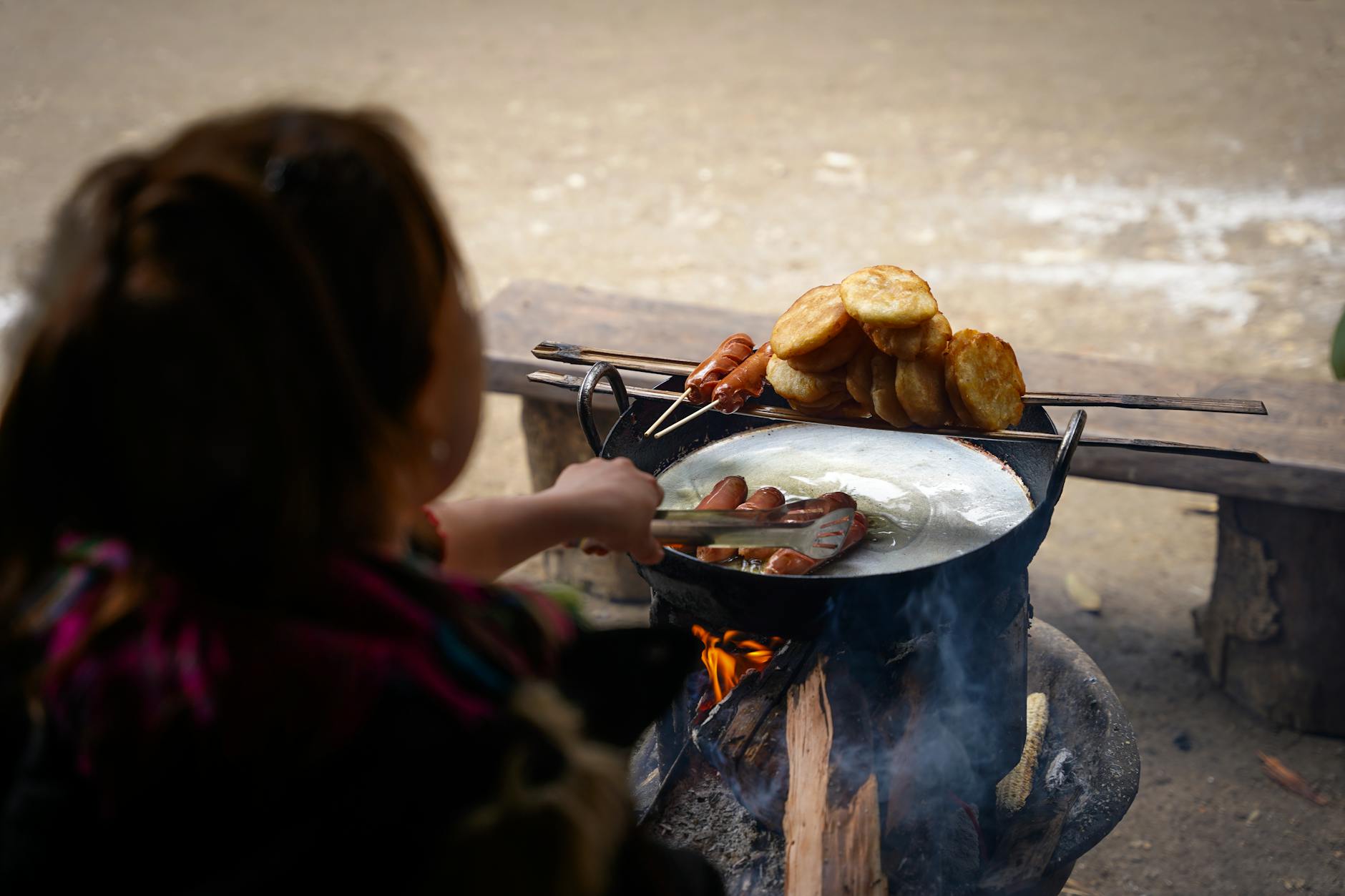
Photo by Viet Hang Pham on Pexels
Traditional cooking class in rural Vietnam: where to go
The kitchen is a concrete room open on one side to a vegetable garden. A woman named Lan is demonstrating how to fold a bánh cuốn — a steamed rice roll — using a cloth stretched over a pot of boiling water. The batter goes on in one thin pour. You’ll ruin your first four. The fifth, she eats without comment, which is about the highest praise on offer. Outside, two chickens are investigating the herb beds. It smells of lemongrass and charcoal.
This is not a Hoi An cooking school with laminated recipe cards. This is a home kitchen in Ninh Binh province, about three hours south of Hanoi, and you got here by local bus because the organiser doesn’t run transfers. That distinction matters. The gap between a cooking class in rural Vietnam and a cooking class themed around rural Vietnam is wide, and mostly invisible until you’re already in one or the other.
Here’s how to find the real thing — where to go, what to book, what to cook, and what the logistics actually look like.
Why the village matters more than the dish
Most cooking classes sold as “traditional” are held in peri-urban restaurants convenient to tourist transport. The recipes are often simplified, the ingredients pre-washed and pre-portioned, and the class ends with lunch in a dining room. None of that is fraudulent — it’s just a different product.
A genuinely rural class puts you in a working kitchen. The market run happens at 6am at the actual wet market. The cooking techniques are functional, not demonstrative. The host probably doesn’t speak much English, which means your fellow participants and a translator do a lot of interpretive work. It’s slower, messier, and considerably more interesting.
The villages worth seeking out cluster around three areas: the Red River Delta villages south of Hanoi, the ethnic minority communities of Sapa and Ha Giang in the north, and the farming hamlets outside Hội An in central Vietnam. Each produces different food, different techniques, and very different logistics.
Red River Delta: Ninh Binh and Tam Cốc villages
What you’ll cook: Cơm cháy (crispy rice cakes), ốc luộc (boiled river snails with lemongrass), and mắm tép — a fermented shrimp paste that defines the delta’s flavour profile. Expect to spend time on knife skills for banana blossom and morning glory.
Who runs it: A handful of small operators work with farming families in the villages around Tam Cốc. Nguyen Shack, a guesthouse in Ninh Binh, facilitates half-day classes with a local family in the nearby rice paddies. Classes run for around four hours, cost roughly 650,000–850,000 VND (approximately $25–33 USD) per person, and include the market visit, cooking session, and the meal you prepared.
Getting there: From Hanoi’s Giáp Bát bus station, take one of the frequent coaches to Ninh Binh (90,000–120,000 VND, about two and a half hours). From Ninh Binh town, it’s a short taxi or xe ôm (motorbike taxi) ride to Tam Cốc — agree the price before you get on, around 60,000–80,000 VND.
Honest caveat: This area floods in late August and September. The rice paddies are spectacular in late May and October when the harvest colours are at their peak.
Sapa and the northern highlands: Hmong kitchen culture
What you’ll cook: Thắng cố — a Hmong broth made with offal and spices that you’ll need to want to eat, not just sample — and simple but technically demanding thịt lợn cắp nách (free-range mountain pork, slow-cooked). Classes also often include making men mén, a maize porridge that is the staple carbohydrate for Hmong families.
Who runs it: Hmong Sisters, a social enterprise operating from Cat Cat village and through homestays around Y Tý, runs classes embedded in family kitchens. The focus is on Hmong and Dao culinary traditions specifically, not a pan-Vietnamese curriculum. Classes cost around $30–40 USD including ingredients, and they’re honest on their booking page that your translator may also be learning on the job.
Getting there: Sapa is accessible from Hanoi by overnight train to Lào Cai (from 150,000 VND hard seat; sleeper berths 300,000–600,000 VND) followed by a 45-minute minibus to Sapa town (60,000 VND). Total journey: around eight hours. From Sapa, Cat Cat village is a 20-minute walk downhill.
Honest caveat: Sapa is genuinely cold from November to February — this is not a highland chill, this is fog and near-zero temperatures. Pack accordingly. The UNESCO recognition of Sapa’s cultural landscape has brought increased tourism pressure; the villages closest to Sapa town are more commercial than those reachable only by motorbike.
Central Vietnam: villages outside Hội An
What you’ll cook: Cao lầu noodles (the flour is traditionally treated with water from a specific well and ash from Cham Island wood — you won’t replicate it perfectly, which is the point), bánh xèo (sizzling rice-flour crepes with pork and shrimp), and mì Quảng, the turmeric-stained noodle dish that Hội An residents consider their real signature dish over the more tourist-famous cao lầu.
Who runs it: Thuan Tinh Island Cooking School, located on a small river island accessible by rowing boat from Hội An’s An Hội Bridge, is the most rigorously authentic option in the area. It’s run by a local family rather than a hospitality company. Half-day classes including a morning market visit to Hội An Central Market cost around $35–45 USD.
Getting there: Hội An itself is reached from Đà Nẵng airport (30 minutes by taxi, around 350,000–400,000 VND). The cooking school’s island location means you cross by small wooden boat — a two-minute crossing that costs nothing but reminds you, pleasantly, that you are somewhere.
Honest caveat: Hội An is not rural Vietnam — it’s a UNESCO-listed tourist town. But Thuan Tinh Island and the surrounding rice fields provide a genuine buffer from the lantern-strewn streets. Go in November if you can: peak harvest, lower humidity, and the town before Chinese New Year tour groups arrive.
Costs, logistics, and seasons at a glance
| Location | Class cost (USD) | Getting there from Hanoi/Đà Nẵng | Best season | Difficulty |
|---|---|---|---|---|
| Ninh Binh / Tam Cốc | $25–33 | Bus, 2.5 hrs from Hanoi | May, Oct | Easy |
| Sapa / Cat Cat | $30–40 | Overnight train + min |