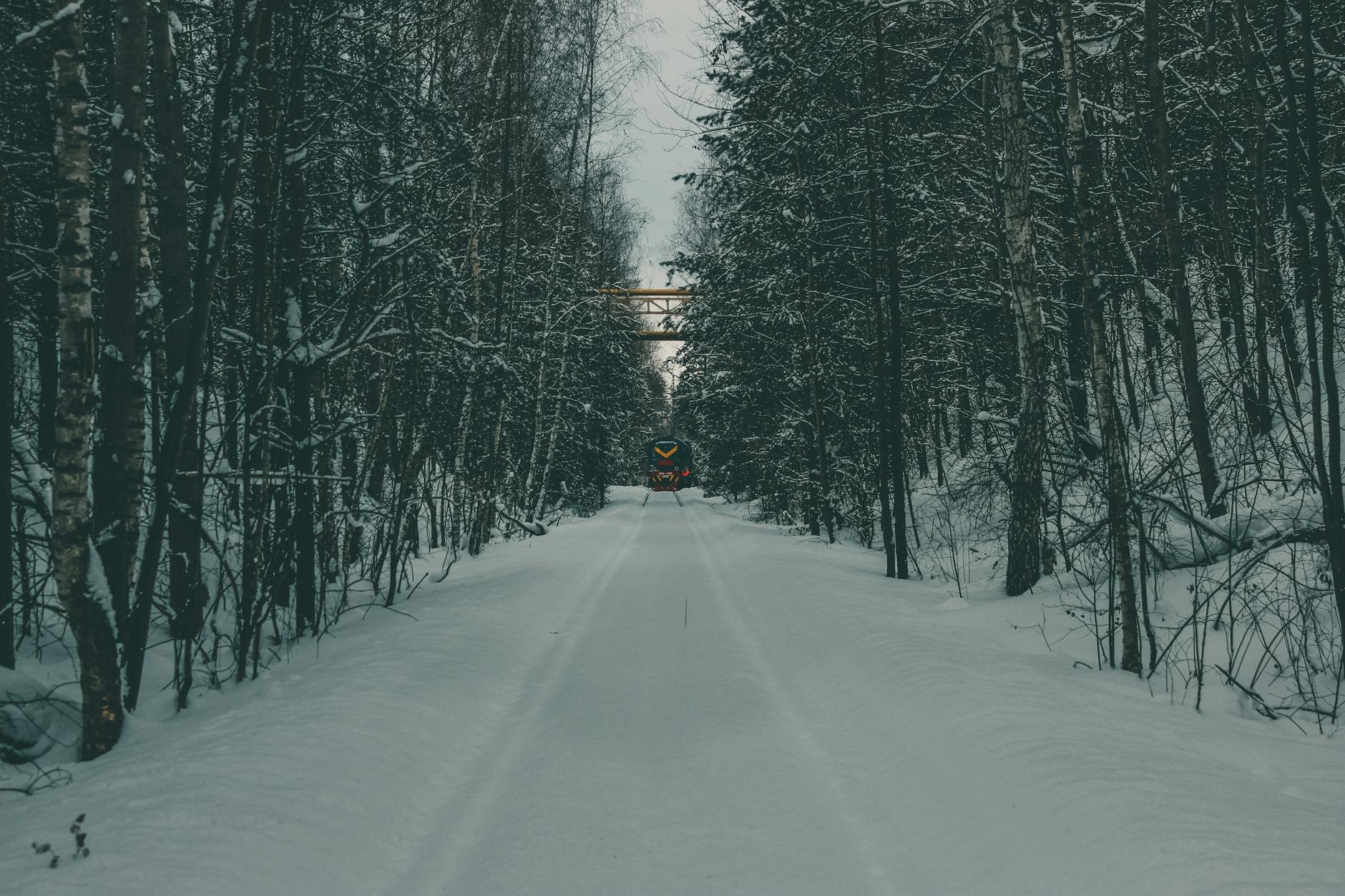
Photo by Eugene Shirokov on Pexels
Trans-Siberian railway trip planning guide (2026)
The train leaves Yaroslavsky Station in Moscow at 21:35, and by midnight the city’s orange glow has dissolved into birch forest. You’re in a four-berth platzkart compartment — open-plan, no door, smelling of instant noodles and slightly damp wool — and your neighbours have already produced a bottle of something clear and poured you a cup without asking. This is the social contract of the Trans-Siberian, and it works.
The full route from Moscow to Vladivostok is 9,289 kilometres and takes around seven days aboard train No. 1, the Rossiya. Most people don’t do it in one sitting. They shouldn’t. The journey earns its reputation not through motion but through stopping: at Yekaterinburg to walk the Romanov memorial site, at Irkutsk to spend a week beside Lake Baikal, at Ulan-Ude to cross into Mongolia. Knowing which stops to take, and why, is what separates a meaningful journey from a very long nap.
Which route: three options explained
There are three distinct railways people refer to loosely as “Trans-Siberian,” and they’re not interchangeable.
Trans-Siberian (classic): Moscow → Yekaterinburg → Omsk → Novosibirsk → Krasnoyarsk → Irkutsk → Ulan-Ude → Chita → Vladivostok. All within Russia. Takes 6 days 2 hours non-stop on the Rossiya.
Trans-Mongolian: Branches south at Ulan-Ude, crosses the border at Naushki/Sukhbaatar into Mongolia, stops in Ulaanbaatar, then continues into Beijing via Erlian/Erenhot. Total journey Moscow–Beijing: approximately 6 days. Requires separate Mongolian and Chinese visas.
Trans-Manchurian: Stays in Russia longer before crossing into China at Zabaykalsk/Manzhouli, bypassing Mongolia entirely. Moscow–Beijing in around 6 days 2 hours. Requires Chinese visa only (plus Russian).
For most travellers in 2026, the Trans-Mongolian is the most varied — three countries, genuine steppe, and Ulaanbaatar’s chaotic energy as a mid-route reward. The classic all-Russia route offers the most depth if Central Russia and the Pacific coast are your focus.
Visas and the bureaucratic reality
Russia remains accessible via e-visa for citizens of over 50 countries as of 2026, but the political situation means this changes. Check the Russian Ministry of Foreign Affairs visa portal before making any bookings — do not rely on outdated advice.
Mongolia issues e-visas easily online (around USD 50, processed in five working days). China requires an in-person application at a consulate or via a licensed agent; allow three to four weeks and budget USD 140–160 for the standard tourist visa. If you’re transiting China only to fly onward, the 144-hour transit exemption may apply at Beijing Capital — but verify current rules before banking on it.
One practical tip: apply for Chinese and Mongolian visas before you enter Russia. Doing so from Moscow is possible but time-consuming, and consulates can be difficult to book.
Choosing your carriage class
The train has four classes. The choice is less about comfort than about the kind of journey you want.
Firmenny/Spalny Vagon (SV) — first class: Two-berth compartments, lockable. Air-conditioned, clean linen. Roughly USD 600–900 for Moscow–Vladivostok. Good for couples or anyone who values sleep.
Kupé — second class: Four-berth compartments with a sliding door. The default choice for most independent travellers. Clean, adequate, sociable if you want it to be. USD 250–400 for the full route.
Platzkart — third class: Open-plan, 54 berths to a carriage. No privacy, very loud, occasionally chaotic. Also the most interesting socially. Budget around USD 100–180. The upper bunks (odd numbers) are slightly quieter.
Lyuks/Premium: Exists on some trains. Fine but you lose the atmosphere entirely.
For most people: Kupé is the answer. Platzkart for those who speak some Russian and genuinely enjoy extended proximity to strangers.
Key stops and how long to stay
Don’t try to do this in one continuous run unless you have a specific reason. The stops are the point.
Yekaterinburg (2–3 nights): The Ural city where Tsar Nicholas II and his family were executed in 1918. The Church on the Blood stands where the Ipatiev House once did. The city is also a functional, underrated Russian industrial hub — eat pelmeni at Dok restaurant on Malysheva Street.
Irkutsk (3–5 nights): The jumping-off point for Baikal. The city’s 19th-century wooden architecture on Ulitsa Karla Marksa survived Soviet planning better than most Siberian cities. Take the elektrichka commuter train (around RUB 250, 1.5 hours) to Slyudyanka, then a marshrutka to Listvyanka on Baikal’s southern shore. The lake is 1,640 metres deep and tastes clean. Eat omul — the endemic Baikal whitefish — smoked at the Listvyanka fish market. Sit with it on the rocks.
Ulan-Ude (1–2 nights): The Buryat capital, majority Buddhist, with the world’s largest Lenin head in Soviets Square (genuinely massive, genuinely strange). Try buuzy — steamed Buryat meat dumplings — at any of the small canteens near the central market.
Ulaanbaatar (3–4 nights, Trans-Mongolian): Genuinely difficult city — polluted, sprawling, with traffic unlike anywhere in the region. But Gandan Monastery still functions as a living place of worship, and the National Museum of Mongolia on Juulchny Avenue gives essential context for the steppe you’ve just crossed. Stay in Sukhbaatar district rather than the tourist-facing guesthouses near the train station.
Costs, routes, and logistics table
| Segment | Distance | Train | Duration | Approx. cost (Kupé) |
|---|---|---|---|---|
| Moscow → Yekaterinburg | 1,818 km | Various, daily | 26 hrs | USD 40–70 |
| Yekaterinburg → Irkutsk | 3,375 km | No. 1 Rossiya | 49 hrs | USD 90–140 |
| Irkutsk → Ulan-Ude | 458 km | Multiple daily | 6–7 hrs | USD 15–25 |