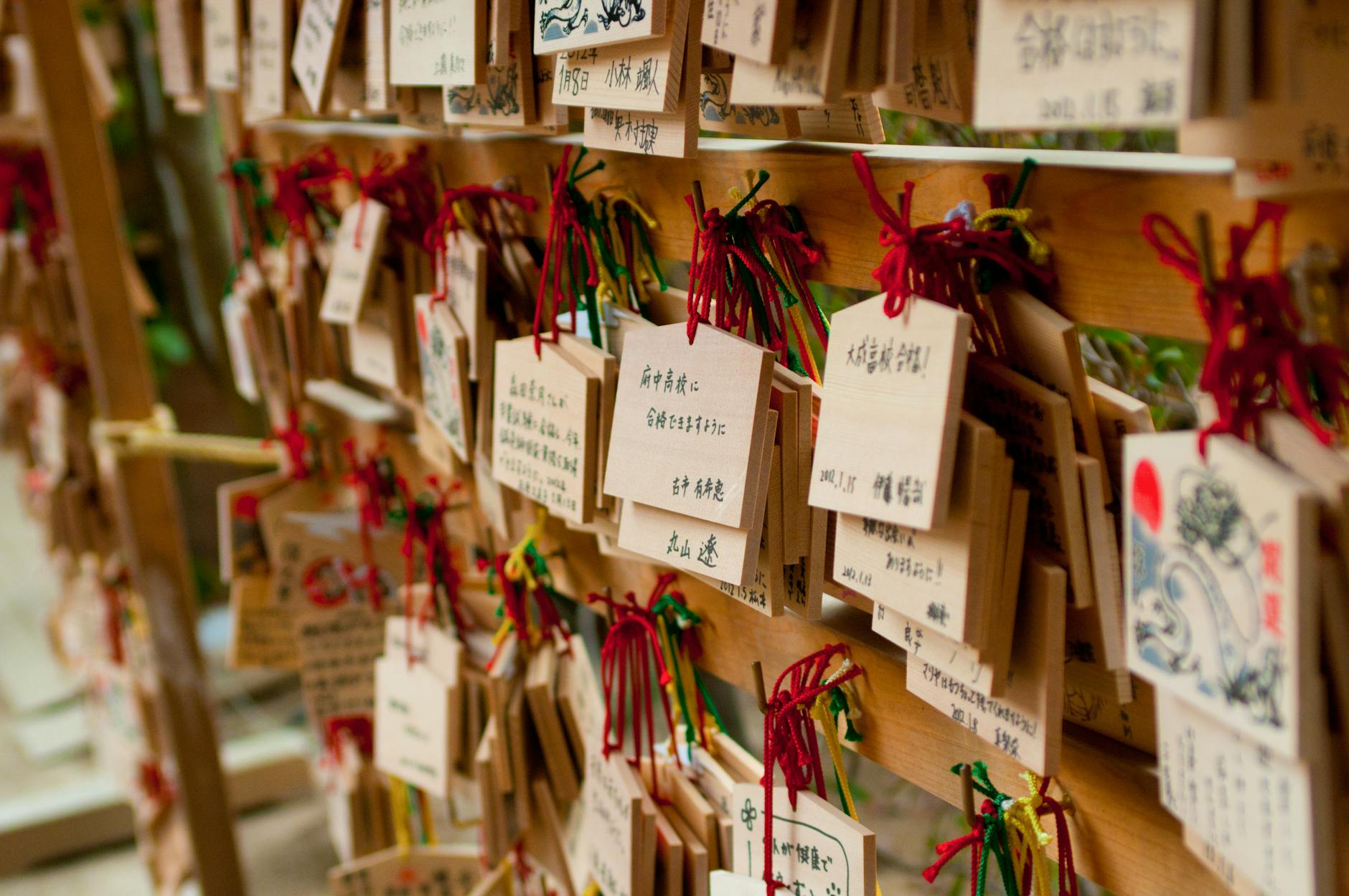
Photo by Artem Zhukov on Pexels
Understanding Japanese customs before you visit
The first thing you notice at Kyoto Station isn’t the architecture — it’s the silence. Hundreds of people moving through one of Japan’s busiest transit hubs, and almost nobody is on the phone. A man in a business suit bows slightly at a ticket attendant who bows back. A group of schoolchildren queues in a line so neat it looks choreographed. Nobody eats while walking. You haven’t left the station yet, and already you’re reading a different social language.
Japan has a reputation for being difficult to navigate culturally — for being a place where a foreigner will inevitably commit some invisible offence and cause silent offence. That reputation is mostly overblown. Japanese society is genuinely welcoming to visitors, and most people will extend patience and generosity to someone who is clearly trying. But trying does matter. Understanding a handful of real customs before you arrive won’t just save you embarrassment — it will open more doors, more conversations, and more of the texture of daily life than any amount of advance booking.
What follows is not a list of abstract rules. It is a practical guide to the specific situations you will actually encounter, with enough context to understand why each custom exists, not just what to do.
Shoes: the boundary between outside and inside
Remove your shoes before entering a Japanese home. This you probably already knew. What surprises most visitors is how far the principle extends — and how seriously it is taken.
At traditional ryokan (inn) entrances, you step out of your shoes at the genkan (the lowered entryway threshold) and into waiting slippers. At many temples and historic buildings, such as the samurai house districts of Kanazawa’s Higashi Chaya area, you’ll be asked to remove shoes before entering interiors. At traditional restaurants with tatami seating — common throughout the Nishiki market neighbourhood in Kyoto and in countless izakayas in Tokyo’s Yanaka district — shoes come off before you step onto the raised floor.
The practical logistics: wear shoes you can slip on and off easily. Boots with multiple buckles are genuinely annoying. Socks with holes are embarrassing — Japan is a country where someone will see them. When you remove your shoes, turn them so they face outward toward the exit. This small gesture signals that you understand the protocol.
Toilet slippers are a separate category. Many traditional guesthouses and some older restaurants provide a distinct pair of slippers specifically for the bathroom. Change into them when you enter, change back when you leave. Forgetting and shuffling back to the dining room in toilet slippers is one of the most reliable ways to cause suppressed amusement in an otherwise restrained environment.
Bowing: what it actually means in practice
You don’t need to master the bow. What you need to understand is that bowing is a fluid, functional gesture — not a ceremonial performance — and that acknowledging it goes a long way.
A shallow incline of the head and shoulders (around 15 degrees) is appropriate for most interactions: thanking a shopkeeper, greeting a host, receiving something from someone. Deeper bows (30–45 degrees) signal apology or deep respect and are less common in everyday tourist interactions. If someone bows to you, a small nod or incline in return is entirely sufficient and warmly received.
Handshakes are not standard, though they are understood in international business contexts, particularly in Tokyo. In most retail, hospitality, and temple interactions, don’t reach for a handshake — wait to see what the other person initiates. In rural areas and at smaller family-run establishments, a bow with a smile is the right register.
One honest note: bow exchanges can loop. You bow, they bow deeper, you bow again. This is real, it is faintly comic, and you can gracefully exit it with a final slight nod and a smile.
Eating and drinking: the rules that actually matter
Japanese food culture has its own etiquette, and some of it is more flexible than travel writing typically suggests. Here is what genuinely matters versus what is often overstated.
What matters:
– Don’t stick chopsticks upright in rice. This mirrors a funeral ritual and is considered inauspicious.
– Don’t pass food chopstick to chopstick. Same funeral association.
– At ramen and soba counters — notably the standing bars in Tokyo’s Shinjuku or the counter seats at Ichiran on Dotonbori in Osaka — eating alone is completely normal and often encouraged by the booth-style seating design.
– Slurping noodles is not just acceptable; it is a genuine expression of enjoyment and aerates the flavour.
– Saying itadakimasu before a meal (a quiet acknowledgment of the food you’re about to receive) and gochisousama deshita after (a thanks to the cook) are gestures that will be noticed and appreciated at sit-down restaurants.
What is overstated:
– That you must never pour your own drink. At casual izakayas, nobody is policing this.
– That eating while walking is a grave offence. It is frowned upon, particularly in historic neighbourhoods like Kyoto’s Gion, but it is not a serious transgression in busy food market areas like Osaka’s Kuromon Ichiba, where vendors expect you to eat as you walk.
Tipping is genuinely not done. Not just discouraged — actually confusing and sometimes offensive, because it implies the person needed extra incentive to do their job well. Leave no tip at restaurants, in taxis, at hotels. If you receive exceptional service and want to express gratitude, say so directly, or write a note.
Onsen: the bathing rules explained clearly
Public bathing at an onsen (hot spring bath) or sento (public bathhouse) is one of Japan’s most distinctive cultural practices and one that genuinely rewards doing properly. The good news is that the rules are logical once you understand the reasoning: communal bathing requires everyone to enter the water clean.
The standard protocol at any onsen:
| Step | What to do | Why |
|---|---|---|
| Undress completely | Leave everything in the changing room locker | No swimwear in traditional onsen |
| Wash before entering | Use the shower stations provided — seated, with soap and shampoo | The bath is for soaking, not washing |
| Keep your small towel out of the water | Fold it on your head or set it aside | Hygiene standard, universally observed |
| Enter quietly | No splashing, no loud conversation | Onsen are contemplative spaces |
| Rinse everything when done | Return shower stations to how you found them | Standard courtesy |
The tattoo policy is the most commonly asked question. Many traditional onsen — particularly rural resort towns like Kinosaki Onsen in Hyogo Prefecture or Beppu in Oita — still formally prohibit tattoos. This is changing slowly, and some facilities now offer private baths (kashikiri onsen) for a surcharge, which is the cleanest solution if you have visible tattoos. Checking the specific onsen’s policy before you arrive is strongly recommended. Japan’s national tourism organisation maintains a useful database of tattoo-friendly facilities.
Temples and shrines: different spaces, different protocols
Japan has approximately 80,000 Buddhist temples and 80,000 Shinto shrines. Knowing the difference matters, because the customs at each are distinct.
At Shinto shrines (identified by the torii gate at the entrance):
– Bow once before passing through the torii.
– At the purification fountain (temizuya), rinse your left hand, then your right, then your mouth (using your cupped left hand — not the ladle directly), then the handle of the ladle.
– At the main hall, the standard sequence is: bow twice, clap twice, pray or stand quietly, bow once.
– Photography in the courtyard is generally fine. Inside halls, follow signage.
At Buddhist temples:
– No hand-clapping at the main hall.
– Incense (osenko) is often available to light and place in the burner — waft smoke toward yourself, as it is believed to have healing properties.
– Photography policies vary widely. Ninna-ji and Tofuku-ji in Kyoto allow extensive photography; Ryoan-ji requests no photography inside the main hall. Follow posted signs.
The single most useful habit at any sacred site: move at a quieter pace than you would elsewhere. Not performatively reverent — just unhurried. This is noticed and appreciated, and it will also make you a better observer.
Moving around: the unwritten rules of public space
Japan’s public transport systems — particularly the Shinkansen network and the Tokyo and Osaka metro systems — operate with a social code that is worth understanding before you ride.
On trains and metro:
– Phone calls are strongly discouraged in carriages; text and silent use is fine.
– Priority seats (marked in a different colour, usually near the doors) are for elderly, pregnant, and disabled passengers. Vacate them when needed — if in doubt, stand.
– Queuing for trains follows marked lines on the platform. Join the queue from the back.
– Eating on the metro is not standard practice in Tokyo. On the Shinkansen (bullet train), eating is fine — this is expected, and ekiben (station bento boxes) are a genuine pleasure worth buying at your departure station.
On streets:
– Keep to the left on escalators in Tokyo (the right in Osaka — genuinely different by city, and locals take it seriously).
– At pedestrian crossings, wait for the signal even when the road is clear. This is widely observed in Japan in a way it isn’t in most cities.
For a practical overview of regional transport logistics across the country, Lonely Planet’s Japan transport guide provides consistently updated information on rail passes and intercity travel.
What actually causes offence versus what doesn’t
A brief honest accounting, because much of what circulates online is either overblown or missing the genuinely important things:
| Situation | Reality |
|---|---|
| Wearing shoes inside | Genuinely important — do not do this |
| Tipping | Confusing and unnecessary — never do it |
| Pointing with chopsticks | Mildly impolite but not a crisis |
| Loud conversation in public | Noticed and frowned upon, particularly on transit |
| Eating while walking in a temple district | Disrespectful in context — avoid it |
| Refusing food offered to you | Awkward, but a polite “I’m sorry, I can’t” is understood |
| Being lost and asking for help | Not an imposition — most people will try hard to help |
| Speaking no Japanese | Not offensive — a few words (arigatou gozaimasu, sumimasen) will be warmly received |
The single most misunderstood thing about Japanese social customs: restraint is not coldness. The quiet, contained manner of most public interactions is not indifference to your presence — it is the operating register of public life. Warmth exists in abundance, but it tends to emerge in the particularities of an interaction rather than in its surface temperature.
The bottom line
- Shoes and bathing etiquette are the two areas that matter most in practice. Get these right and you’re already ahead of most visitors. Everything else is learnable in the moment.
- A handful of phrases will open more doors than perfect knowledge of every custom. Sumimasen (excuse me / I’m sorry to bother you), arigatou gozaimasu (thank you), and itadakimasu (before eating) are the ones worth having before you land.
- Tattoo policies at onsen are real and worth checking in advance, especially if you’re planning time in traditional spa towns like Kinosaki or Beppu. Private bath options exist and are not prohibitively expensive (typically ¥1,500–3,000 for 45 minutes).
- Don’t perform the customs — just apply them. Over-bowing, excessive formality, or conspicuous effort at ritual can read as slightly odd. A genuine, unhurried attempt is always better received than a theatrical one.
- Japan rewards patience and attention more than any other preparation you can do. The customs are an invitation to move through the country at a different pace. The travellers who find Japan most rewarding are usually the ones who stopped trying to decode it and started simply watching how people around them behave — and following along.