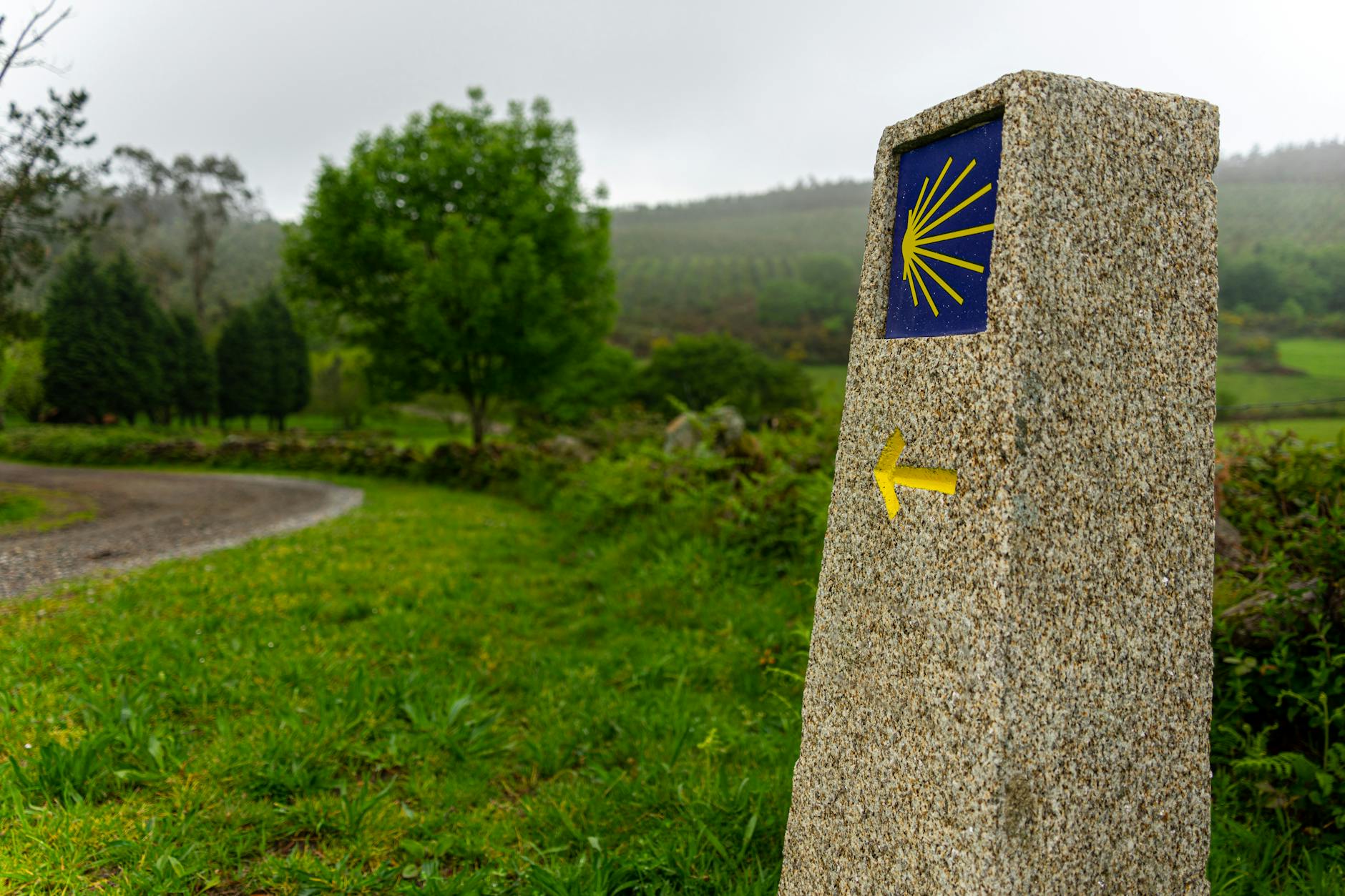
The albergue in Pamplona smells of damp boots and instant soup by 7pm. Thirty people are horizontal on bunk beds, alarms already set for 5:45am. Someone is wrapping both feet in surgical tape with the focused expression of a field medic, and the dormitory has that particular hush of people pretending to sleep while listening to everyone else not sleep. Outside, the old city is still going — pintxos bars on Calle Estafeta packed shoulder to shoulder, glasses of txakoli poured from a height into tumblers, the clatter of plates on zinc counters carrying three streets over.
These two worlds — the pilgrimage and the actual Spain or Portugal it passes through — run parallel the entire way, and almost nobody explains how to move between them before you arrive. More importantly, almost nobody explains that there isn’t one Camino to prepare for. There are at least eight recognised routes to Santiago de Compostela, and the one you choose will do more to shape your experience than your fitness, your budget, or how many pairs of socks you pack.
There Isn’t One Camino — and the Choice Changes Everything
The Camino Francés is the one in the films: 780km from Saint-Jean-Pied-de-Port in France, over the Pyrenees, across the Castilian meseta, into Galicia. It’s the busiest route by a wide margin, the most heavily serviced, and the most socially intense — you’ll likely recognise the same 25 or 30 faces at breakfast every morning for five weeks, which some people find the whole point and others find exhausting by week two.
The Camino Portugués runs from Lisbon (620km) or, more commonly, from Porto (roughly 240km), reaching Santiago in 10–12 days of walking. The coastal variant — via Viana do Castelo, crossing into Spain at A Guarda — trades the inland route’s industrial stretches for Atlantic light and sea air, and is flatter and greener than almost anything on the Francés.
The Camino del Norte follows the Cantabrian coast from Irún, on the French border, 825km west to Santiago. More climbing, more weather, fewer people, and consistently some of the best scenery of any route — cliff paths above fishing villages, eucalyptus woods dropping straight to the sea.
The Via de la Plata runs 1,000km north from Seville through Extremadura into Galicia. It’s the longest established route, the hardest to find information about in English, and in February or March you can walk entire days between Zafra and Mérida without seeing another pilgrim.
The Camino Primitivo, from Oviedo, is the original route — the one walked before any other existed — and at 320km through the Asturian mountains it’s widely considered the most physically demanding and the most beautiful, climbing to Hospitales at 1,150m with views that make the daily 900m of ascent feel earned.
| Route | Distance | Typical duration | Difficulty | Budget cost/day | Crowd level | Best months |
|---|---|---|---|---|---|---|
| Camino Francés | 780km | 32–35 days | Moderate | €35–45 | Very high (Jun–Aug) | May, Sept |
| Camino Portugués (Porto) | 240km | 10–12 days | Easy–moderate | €35–45 | Moderate | Apr–Jun, Sept |
| Camino del Norte | 825km | 32–36 days | Hard | €35–50 | Low–moderate | Jun–Sept |
| Via de la Plata | 1,000km | 35–40 days | Hard | €30–40 | Very low | Mar–May, Sept–Oct |
| Camino Primitivo | 320km | 12–14 days | Hard | €35–45 | Low | May–Sept |
Getting to the Start Line: Trains, Buses, and Border Crossings
Nobody arrives at a Camino start point by accident, and the logistics vary enormously by route.
For the Camino Francés, most people fly into Biarritz or Bilbao and get to Saint-Jean-Pied-de-Port via Bayonne. From Paris, the Intercités de Nuit overnight train runs to Hendaye, or you can take a TGV to Bayonne (around 5 hours) and change onto the SNCF TER regional line to Saint-Jean (about 1 hour, roughly €10). The Pilgrim Office on Rue de la Citadelle opens at 7:30am and issues your credencial along with current weather advice for the mountain crossing — a conversation worth having in person rather than skipping.
For the Camino del Norte, Irún sits directly on the French border, reachable by Euskotren or Renfe Cercanías from Hendaye on the French side or San Sebastián on the Spanish side — a short, unglamorous commuter journey across the Bidasoa estuary that somehow makes a fitting start to a pilgrimage.
For the Camino Portugués, Porto’s São Bento station (itself worth a slow look, with its blue-and-white azulejo murals) connects by regional train to Valença, the last Portuguese town before the border. From there you walk across the Ponte Internacional — an Eiffel-designed iron bridge with a pedestrian lane running beneath the rail deck — into Tui, Spain, and the walk proper begins. Buses with Rede Expressos or Flixbus also run Porto–Valença for around €15–20 if you’d rather save the legs.
For the Via de la Plata, Seville’s Santa Justa station is served by AVE high-speed trains from Madrid (around 2 hours 30 minutes, €60–90 if booked ahead), and the route begins on foot from the cathedral itself.
For the Camino Primitivo, Oviedo is reached by Alvia train from Madrid (around 4.5 hours) or by Alsa bus from León (about 2 hours, €15–20) — useful if you’re combining routes, since many walkers join the Primitivo partway through a Francés attempt that’s running short on time.
The Pyrenees Crossing: What It Actually Involves
If you start the Camino Francés from Saint-Jean, day one is the hardest single stage of the entire route: 25km over the Pyrenees via the Route de Napoléon, with roughly 1,400m of ascent to the Col de Lepoeder before the long descent into Roncesvalles. In clear weather it’s a demanding but spectacular mountain walk, with views back over the Basque country that make the 5:45am start worthwhile. In poor weather — which can arrive quickly in the Pyrenees even in late spring or early autumn — the route is officially closed and walkers are redirected via the lower Valcarlos road, which adds distance without the drama.
Many walkers break the climb at the Refuge Orisson, 8km in, the only accommodation on the mountain stage — book this months ahead for summer, since it’s the single hardest bed to secure on the entire Francés. Without it, you’re committing to the full 25km in one push.
Saint-Jean itself is a well-preserved Basque market town worth arriving a day early for. The Gîte Ultreïa and Albergue Beilari both fill fast between April and September. Eat on Rue d’Espagne — axoa, a veal stew built around Espelette pepper, is the local dish, and it’s genuinely good preparation for a day that will burn through every calorie in it.
The Meseta: What Everyone Warns You About
Between Burgos and León, the Camino Francés crosses the Castilian meseta — roughly 200km of high plateau farmland, largely exposed, with long flat stages and almost no shade. June and July routinely push past 35°C here, and the advice to start walking by 6am isn’t gentle suggestion; by mid-morning the light goes white and the heat stops being scenery and starts being a logistics problem.
Most accounts frame the meseta purely as psychological trial — nothing to distract you from the walking, hour after hour of the same horizon. That’s true, but it undersells the place: wheat fields turning silver in the wind, Romanesque churches appearing out of flat nothing, red kite and white stork overhead on the thermals. The town of Sahagún is chronically underrated — some of the finest Mudéjar brickwork in Spain in the Torre del Reloj and the church of San Tirso, almost no tourist infrastructure built around it, and a Thursday market selling cheese and cured meats from León province at prices that make the detour worthwhile on its own.
Walking the meseta in April or late September avoids the worst heat entirely, at the cost of a harder-to-predict forecast and shorter café hours in the smaller villages.
Where to Sleep: Albergues, Costs, and the Booking Question
The Camino albergue system is real, functional, and worth understanding before you’re standing outside one at 6pm with nowhere else to go.
| Type | Typical cost | Booking | Notes |
|---|---|---|---|
| Municipal albergue | €8–12 | First-come, first-served | Dorms, basic bathrooms, sometimes no heating |
| Private albergue | €15–25 | Phone/WhatsApp, same-day usually fine | Smaller dorms, better showers, sometimes private rooms |
| Private room (albergue or pensión) | €35–50 | Book ahead in peak season | Worth it after a bad night’s sleep |
| Galicia public albergues | €8 (fixed) | Must book via the Xunta’s official system | Applies to the final 100km, where crowds peak |
Most municipal albergues genuinely cannot be booked ahead — they operate on arrival order, which is exactly why the 6am starts exist on busy stretches. The exception is Galicia, where the regional government runs a centralised booking system for public albergues, a direct response to overcrowding on the final stretch into Santiago. Private albergues are more flexible and a same-day call usually secures a bed outside peak July–August weekends.
Two things nobody mentions clearly enough: bedbugs (chinches) are an occasional, unglamorous reality in older municipal albergues, worth checking reviews for before booking; and earplugs are not optional kit, they’re load-bearing infrastructure. A menú del peregrino — three courses, bread, wine, coffee — runs €10–15 in most towns and is reliably the best value meal of the day, even when the food itself is unambitious.
Matching the Route to the Walker
- First Camino, limited time: Porto to Santiago on the Portugués. Manageable in under two weeks, excellent infrastructure, enough fellow walkers for company without the crush.
- Want solitude over scenery: Via de la Plata, walked outside summer. Long stretches of Extremadura where you’ll go entire days without seeing another pilgrim.
- Want the social experience the books describe: Camino Francés in May or September — busy enough for the dinner tables and bunkhouse conversations, past the June–August peak crowding.
- Strong hiker, want the toughest terrain and the best views: Camino Primitivo. Shorter in distance, harder in gradient, consistently rated the most beautiful by people who’ve walked more than one route.
- Coastal light, fewer crowds, don’t mind extra climbing: