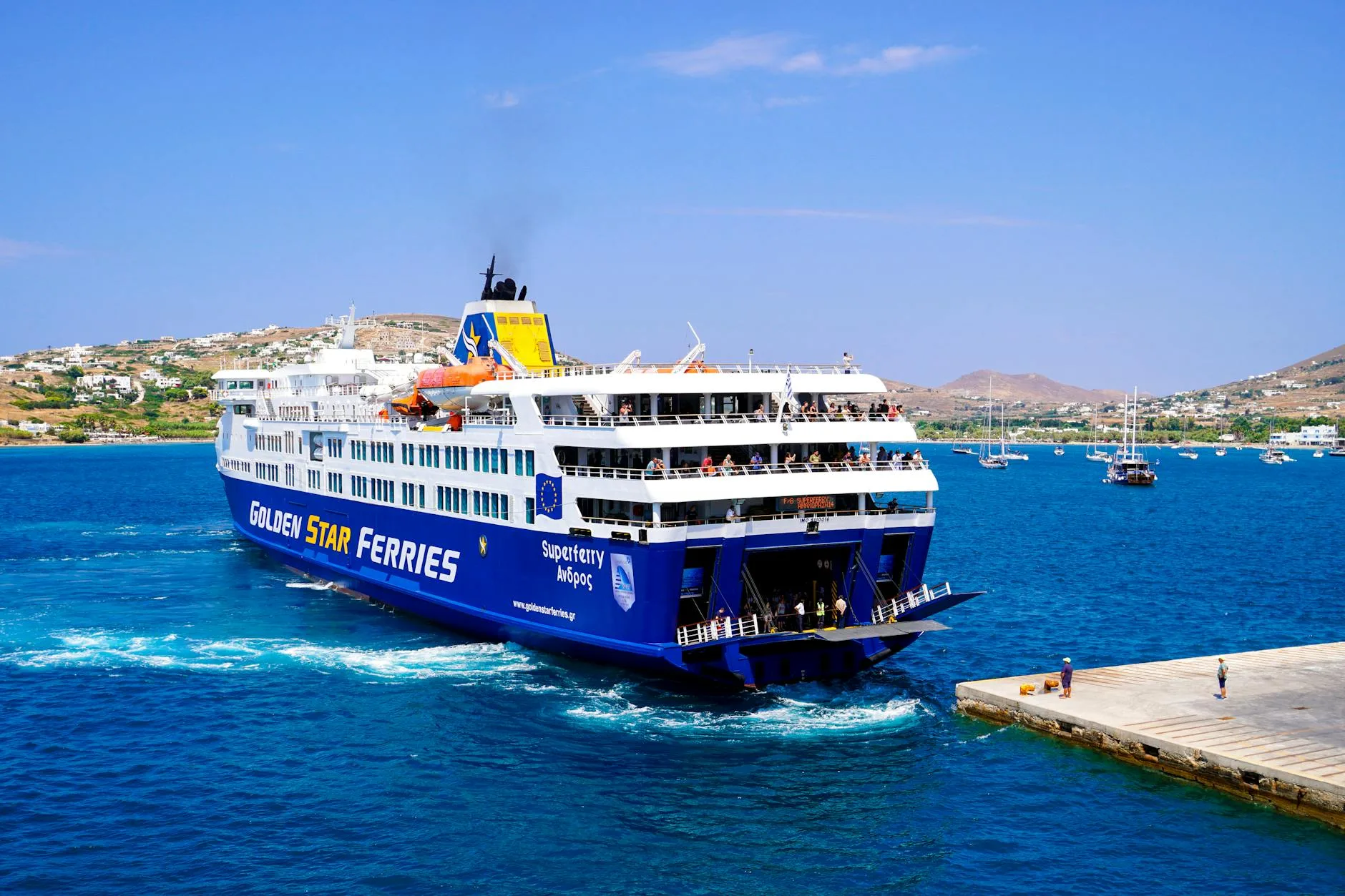
Photo by Oliver LOK on Pexels
Ferry travel in Greece: island hopping practical guide
The boat leaves Piraeus at 7:30 in the morning, and the port is already awake. Truck drivers eat tiropita from a plastic bag beside their vehicles. A priest in black robes wheels a suitcase past a row of idling engines. The vessel itself is enormous — a high-sided ro-ro ferry named after some ancient sea nymph — and it will take you to Paros in four and a half hours, stopping first at Syros, before you’ve had time to finish a second coffee from the snack bar below deck.
This is the thing about travelling the Greek islands by ferry: it is not a scenic pleasure cruise (though there is plenty of scenery). It is a working transport network used by islanders, construction workers, students, and the odd goat farmer, and it moves on its own logic, which you are better off understanding before you book anything.
Greece has roughly 6,000 islands, of which around 230 are inhabited and a much smaller number — perhaps 50 — are served by regular ferry routes. The Aegean is divided into loose island groups: the Cyclades, the Dodecanese, the Northeastern Aegean islands, the Saronic Gulf islands, and the Ionian islands on the western side of the country. Understanding which group you’re in, and where ferries depart from, will save you significant frustration.
Understanding the ferry network: how it actually works
Greek ferries operate on a hub-and-spoke system rather than a neat chain of island-to-island hops. Piraeus, the port of Athens (served from central Athens by the Metro’s Green Line, around 35 minutes from Monastiraki, €1.40), is the main hub for the Cyclades and Dodecanese. Rafina, a smaller port 30km east of Athens (reachable by KTEL bus from the Pedion Areos terminal, around 50 minutes, €3), serves eastern Cyclades like Andros, Tinos, and Mykonos — and is often overlooked, meaning it’s less chaotic and sometimes cheaper.
For the Ionian islands — Corfu, Kefalonia, Ithaca, Zakynthos — you depart from western Greek ports: Patras, Igoumenitsa, and Killini. These are different ferry companies, different routes, different logic entirely. Many travellers don’t realise the Ionian islands are not easily combined with a Cyclades itinerary without flying or backtracking substantially by land.
For the Dodecanese — Rhodes, Kos, Samos, Patmos — ferries run from Piraeus but are long (Rhodes is 15–18 hours overnight by standard ferry), or you fly into Rhodes and hop north by smaller local ferries. The latter approach makes much more practical sense if your time is limited.
Ferry types: what you’re actually buying
Greece has four main categories of ferry, and the difference between them matters more than the price.
Large conventional ferries (ANEK Lines, Minoan Lines, Blue Star Ferries) — the workhorses. These carry cars, trucks, and passengers. Deck class (just a seat or outdoor deck space) is the cheapest option, fine in summer but grim in rough weather. Cabin classes range from aircraft-style reclining seats to private 4-berth cabins to, on some routes, proper en-suite double cabins. On overnight routes like Piraeus–Rhodes or Piraeus–Heraklion (Crete), a cabin is absolutely worth the extra €30–50 per person.
High-speed ferries and catamarans (Hellenic Seaways, Seajet, Golden Star) — faster (Piraeus to Mykonos in 2.5 hours vs. 5 hours), but more expensive, more susceptible to cancellation in choppy seas, and often smaller with limited luggage space. If the Aegean wind is up — and in July and August it frequently is — high-speed services on routes like Mykonos–Santorini cancel without much notice.
Small island-hopping ferries — short routes between nearby islands (Naxos–Paros, Paros–Antiparos, Santorini–Ios) run by smaller operators. Schedules are less frequent off-season. Some run only in summer (June–September).
Flying Dolphins (hydrofoils) — mostly phased out now, but you’ll still see the name on some Saronic Gulf services (Athens–Aegina–Hydra–Spetses). Quick and useful for day-trip routes out of Piraeus.
Booking tickets: what works and what doesn’t
The two main booking platforms used by most travellers are Ferryhopper and Greek Ferries (formerly Openseas). Both aggregate multiple operators and let you search by route and date. Ferryhopper has a cleaner interface; Greek Ferries sometimes surfaces older schedules that Ferryhopper misses.
Booking in advance is essential from late June through August — not weeks ahead but months ahead for cabin berths on overnight routes or for popular summer crossings (Piraeus–Santorini on a Friday evening in July will sell out). In May, June, September, and October, you can often buy tickets at the port the same day.
At the port itself, ticket agents — small booths in the terminal hall or along the harbour front — sell tickets for multiple operators. They are not always neutral advisors, but they know the schedules cold and can sort out complicated multi-leg routes. For Piraeus, the main gates are labelled by island group (Gate E1 for Heraklion and Dodecanese, Gate E6 for Cyclades, etc.), which is useful to know before you drag luggage across a large and not particularly signposted terminal.
Print your ticket or have it downloaded; QR codes are now standard but data connections near some island ports are unreliable.
Building a realistic itinerary
The most common mistake is booking too many islands in too little time. Factor in that a missed or cancelled ferry can lose you a full day; that some islands genuinely warrant three nights to be worth the crossing; and that spending four hours on a boat every other day gets tiring.
A two-week itinerary that works well, covering the Cyclades from Athens:
- Athens (2 nights) — base in Koukaki or Metaxourgeio rather than the tourist-dense streets of Monastiraki
- Paros (3 nights) — the village of Naoussa in the north is worth the 12km bus ride from Parikia; better tavernas, a working fishing harbour, and a morning market
- Naxos (3 nights) — the largest Cycladic island, with the mountain village of Apeiranthos an hour inland by local bus (€2.50) and a north coast beach road that rewards rented wheels
- Santorini (2 nights) — worth seeing, genuinely beautiful, and also genuinely crowded in the caldera villages; staying in Karterados or Vothonas rather than Oia or Fira costs less and gives you a functioning village rather than a gift-shop corridor
- Ios (2 nights) — underrated; the Chora is compact and the island’s southern beaches (Manganari, Kalamos) require either a hired scooter or the summer boat taxi from Yialos port
- Athens (1 night) — return from Ios to Piraeus in around 7 hours by standard ferry
This route moves mostly southward, with the wind rather than against it, which matters in July and August when the meltemi — the Aegean’s persistent northerly summer wind — can create rough crossings on north-facing routes.
Route comparison: key Cyclades crossings
| Route | Operator | Duration | Frequency (summer) | Approx. deck class fare |
|---|---|---|---|---|
| Piraeus → Paros | Blue Star | 4h 30m | 2–3x daily | €28–38 |
| Paros → Naxos | Blue Star / Seajet | 45m–1h | 4–6x daily | €10–16 |
| Naxos → Santorini | Seajet / Hellenic | 1h 45m–2h 30m | 2–4x daily | €18–30 |
| Santorini → Ios | Seajet | 45m | 2x daily | €16–22 |
| Ios → Piraeus | Blue Star | 7h | 1x daily | €28–36 |
| Piraeus → Rhodes | Blue Star (overnight) | 15–18h | Daily | €40–55 deck / €80–100 cabin |
| Rhodes → Kos | Local ferries / Dodekanisos | 2h–3h 30m | 2–3x daily | €12–20 |
Fares fluctuate seasonally. Check Ferryhopper for current pricing. High-speed options cost 30–60% more.
What the crossings are actually like
On a Blue Star ferry in July, the lower decks smell of diesel and chips from the cafeteria, and the outdoor rear deck is where most passengers congregate — seated on plastic chairs, sleeping on spread-out jackets, watching the wake. It is rarely glamorous. The cafeteria sells koulouri (sesame bread rings), spanakopita, and Nescafé, which is what Greeks call any instant coffee regardless of brand.
Cabins, when you book them, vary: on the Piraeus–Heraklion route, Blue Star’s 4-berth economy cabins are clean and functional, essentially bunk beds with a small sink. The 2-berth inner cabins on the same vessel are worth the upgrade for the privacy. On overnight routes, bring earplugs — the engines are loud and Greek families travel expressively.
Deck class on a calm night crossing, with a sleeping bag and a clear sky, is a different experience entirely: one of the genuinely good ones.
Getting around once you’re on the island
Each island’s main port connects to the main town (often called chora or hora) by local bus — KTEL-operated, inexpensive, usually timed loosely to ferry arrivals. Paros’s bus from Parikia port to Naoussa runs roughly hourly in summer and costs €1.80. On Naxos, the KTEL bus to Apeiranthos takes 55 minutes and costs €3.50.
For exploring beyond the obvious points, a rented scooter (€15–25/day on most islands) or small car (€35–55/day in shoulder season, higher in August) opens up considerably more. An international driving licence is technically required for scooters above 50cc — most rental places on smaller islands don’t check, but that calculus is yours to make.
Food markets on many islands reward early morning attention — Naxos’s covered market in the chora has local cheese, graviera, dried figs, and olive varieties. If you’re interested in what Greek food markets actually contain beyond tourist-facing restaurants, the best local food markets in Europe for travellers gives useful context for approaching them well.
Practical considerations: season, weather, and what to expect
Best months: May–June and September–October. Fewer crowds than July–August, more predictable weather than November–April, and ferry schedules still running at close to full frequency. The sea temperature in September is at its warmest — 26°C around the Cyclades.
Shoulder and off-season: October onwards, many islands thin out rapidly. Smaller operators reduce to 3x weekly sailings or stop entirely. Some tavernas, accommodation, and car hire closes. The islands are quieter, cheaper, and — depending on your preference — more interesting for it. Rhodes, Crete, and Corfu retain more year-round infrastructure than smaller Cycladic islands.
Cancellations and delays: In peak meltemi season (mainly late July–August), high-speed ferries cancel more readily than conventional ferries, which can handle stronger winds. If you have a flight to catch, build in a full spare day rather than scheduling your final island departure for the day before. The Greek travel pages on the GNTO website have current seasonal route information, and Lonely Planet’s Greece transport section provides a useful structural overview of the network.
Entry requirements (2026): EU and EEA nationals travel freely. UK nationals can stay up to 90 days in the Schengen Area without a visa. US, Canadian, and Australian passport holders: same. ETIAS — the EU’s new pre-travel authorisation — was expected to come into effect; check current requirements before travel as the rollout has been delayed multiple times.
Island hopping asks for a certain looseness of schedule. If you’ve ever considered slow travel by rail — and the pleasures of extended journeys through landscapes — Greece’s ferry network scratches a similar itch. It’s worth reading about similar slow-travel infrastructure in Europe: the same mental shift that makes night train travel in Europe rewarding applies here — the journey itself becomes part of the experience rather than dead time to minimise.
The Bottom Line
-
Use Piraeus for the Cyclades and Dodecanese; use Rafina for eastern Cyclades like Andros and Tinos; use western ports (Patras, Killini) for the Ionian islands. These networks don’t connect easily — plan your island group first, then build your route.
-
Book cabin berths on overnight routes (Piraeus–Rhodes, Piraeus–Heraklion) months ahead in summer. Day crossings between Cycladic islands can usually be booked a few days out in May, June, and September.
-
The meltemi is real. From late July through August, northerly winds regularly cancel or delay high-speed catamaran services. On tight itineraries, stick to conventional ferries and leave buffer days before any outbound flight.
-
Two weeks works well for five or six islands; three or four is more realistic for depth. Paros–Naxos–Santorini is the reliable Cyclades triangle for a reason — the connections are frequent, the islands genuinely different from each other, and the route is logistically straightforward.
-
Deck class on a night crossing, cabin class on anything over four hours. That’s the honest dividing line.
Keep reading: Night train travel in Europe: romantic and practical guide