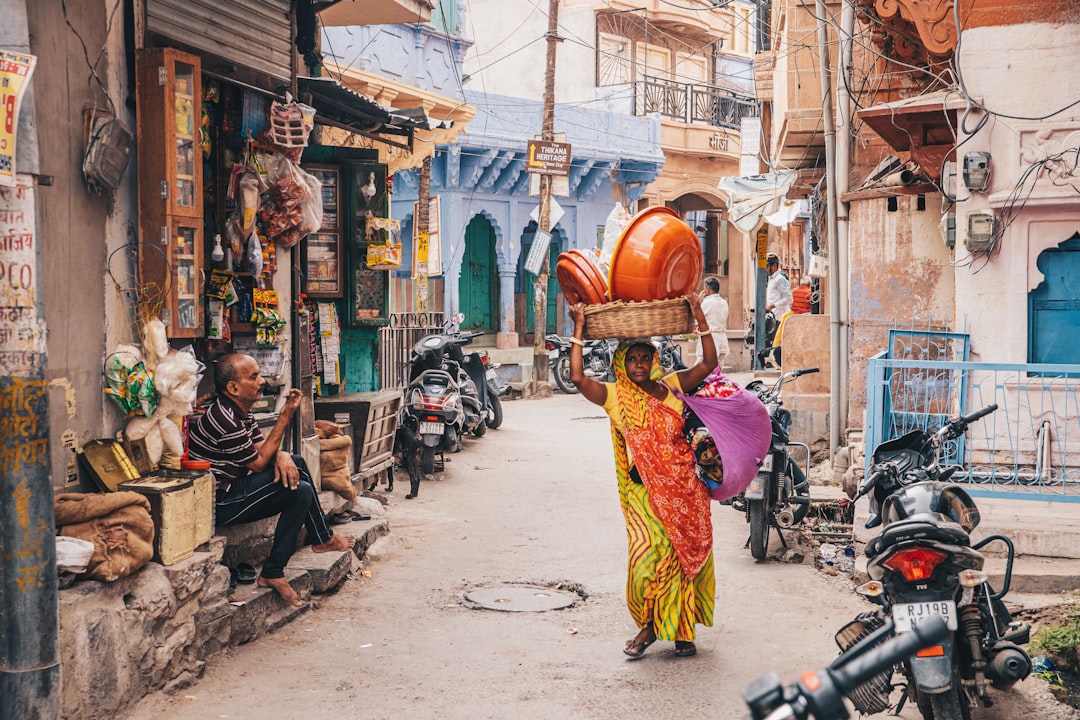
Photo by Jannes Jacobs on Unsplash
India Beyond the Golden Triangle: Breaking Out and Actually Seeing the Country
The Golden Triangle — Delhi, Agra, Jaipur — is India’s most famous tourist loop. Millions of visitors follow this route annually. It’s iconic (Taj Mahal is genuinely stunning), but it’s also the thinnest slice of India possible. After these three cities, most tourists leave thinking they’ve seen the country. They haven’t. They’ve seen tourism infrastructure built explicitly for foreign visitors. Breaking the bubble requires going elsewhere and using different methods to navigate.
Where to Go Instead of (or After) the Golden Triangle
Varanasi: One of India’s holiest cities, on the Ganges River. It’s the anti-tourist loop in that it’s genuinely intense — narrow streets, cremations happening daily along the river, pilgrims, sacred rituals, sensory overload. Many tourists find it overwhelming.
What to actually do: Take a boat at sunrise on the Ganges. Don’t go with a tourist boat operator; find a local boatman (usually outside major hotels). Agree on price (200–500 INR/$2.40–6 for an hour). You’ll see the city waking up, pilgrims entering the water, locals living daily life. It’s much less touristy than the equivalent tourist boat experience.
Walk the ghats (riverside steps) early morning before crowds. Eat at local restaurants (not tourist-facing ones) along the riverbank. A simple thali (rice plate with curries): 80–150 INR ($1–1.80). Varanasi’s spiritual intensity is real if you observe rather than perform.
Hampi: Ruins of a 15th-century kingdom in the southern state of Karnataka. Massive boulders, temples, and landscape that’s dramatic and undervisited compared to North India.
What to actually do: Rent a bicycle in Hampi and explore the ruins independently. Hire a guide if you want history (300–500 INR/$3.60–6 for 3 hours). The advantage of Hampi over other temple sites is that it’s sprawling — you can escape crowds by cycling to less-visited temples and ruins. The landscape itself (giant granite boulders, river valley) is as interesting as the temples.
Stay in Hampi Bazaar (the main village) — budget hotels and guesthouses. Food is cheap. Eating in local restaurants (thali, dosas, local food): 80–150 INR per meal.
Pondicherry (Puducherry): A coastal Tamil city with French colonial architecture (it was a French colony until 1954). Less touristy than beaches in Goa, more interesting architecturally.
What to actually do: Walk the French Quarter (Ville Française) — the colonial streets are genuinely beautiful and less photographed than Goa’s beaches. Eat at local Tamil restaurants serving dosas (fermented rice and lentil pancakes), idli (steamed cakes), sambar (vegetable stew). Cost: 60–100 INR per meal. The White Town neighbourhood is less tourist-focused and more of what Pondicherry actually is.
Visit a local ashram (many in the area) if you’re interested in yoga or meditation. Auroville nearby is a planned spiritual community (worth visiting, but touristy).
Mysuru: South Indian city, former princely state. Less visited by international tourists than Varanasi or Hampi.
What to actually do: The Mysore Palace is famous, but beyond it the city is genuinely livable. Visit the Devaraja Market (a massive local market, chaotic, real, no tourists) and buy spices, local produce, textiles. Get a cup of coffee at a local café. Mysuru is known for silk, incense, and coffee production — these are visible in the city’s commerce.
Walk the Aravidu Gardens at dawn (peaceful, few tourists). Rent a bicycle and explore the city like a local would. Cost: 3,000–4,000 INR ($36–48) per night for accommodation, 80–150 INR per meal.
Northeast India (Meghalaya, Assam, Arunachal Pradesh): Vastly less visited than the south or north. Mountain scenery, waterfalls, living root bridges, different culture (tribal vs. Hindu majority India).
Specific places: Kaziranga National Park (wildlife, rhinos), Meghalaya’s living root bridges (at Cherrapunjee), Mizoram’s mountains. Getting there requires flights and buses — it’s time-consuming. But the reward is that you see regions of India that most visitors never touch. Language barriers are real; English is less common.
Using Indian Railways: How to Actually Get Between Places
Indian Railways is the practical and experiential way to move through India. Trains connect everywhere, costs are low, and the journey itself reveals the country.
Booking: Use IRCTC (Indian Railways Catering and Ticketing Corporation) to book tickets online. You need an Indian phone number (buy a local SIM card when you arrive, or use your phone with roaming). Alternatively: book in person at train stations (requires going to the station, waiting, but works if online booking fails).
Classes:
– Sleeper (SL): Basic sleeper class, 6–8 people per compartment, cheapest
– First AC (1AC): Private cabins, most expensive
– Second AC (2AC): 4-person compartments, good balance of price/comfort
– Third AC (3AC): 6-person compartments, budget option
For long distances (overnight), a sleeper or 2AC berth is comfortable enough. Prices: Sleeper (New Delhi to Varanasi, ~800km): 250–400 INR ($3–4.80). Second AC: 1,500–2,000 INR ($18–24).
Practical reality: Indian trains are often crowded, sometimes delayed, but move at a pace that reveals the landscape. You’re moving through the country slowly enough to see changes in terrain, vegetation, settlement patterns.
Food: Eating Like Locals, Not Tourists
Thali: A plate with rice, dal (lentils), one or two curries, pickle, pappadum, yogurt. Costs 80–200 INR ($1–2.40) depending on the place. This is the local meal — eating a thali in a modest restaurant is how Indians eat. It’s nutritionally balanced and you can eat this every day.
Dosa: A fermented rice and lentil pancake, served with sambar and chutney. South Indian staple. Cost: 40–80 INR (50 cents–$1). Eat this at a local dosa shop in the morning.
Idli: Steamed rice and lentil cakes, served with sambar and chutney. Similar to dosa, softer. Cost: 30–60 INR (35 cents–70 cents).
Street food: Samosa (fried pastry with filling), pakora (vegetable fritters), chaat (tangy snacks). Cost: 10–30 INR per item. These are genuinely safe if bought from busy stalls (turnover = freshness). Avoid pre-made items sitting in heat lamps.
Where to eat: Eating at a local restaurant (not a tourist restaurant) costs 80–200 INR for a full meal. Eating at a street stall costs 30–80 INR. There’s no quality degradation — local food is excellent because locals have standards.
Navigating Without English: The Reality
English is widely spoken in tourist areas, hotels, and among educated Indian populations. Outside these contexts, English is less common.
Tools:
– Google Translate: Works for text translation. Take a photo of a menu, translate it.
– Hand gestures: Pointing works. A palms-together bow is a sign of respect.
– Translation apps with voice: Speak into your phone, it translates. Imperfect but helpful.
– Learning key words: “Hello” (namaste), “thank you” (dhanyavaad), “how much?” (kitna?), “no” (nahi). Simple phrases help.
The barrier is real but not insurmountable. Most interactions are transactional — you point at food, you agree on a price, you pay. This works across language barriers.
Getting a SIM Card and Internet
Arriving at Indian airports, buy a SIM card (Jio, Airtel, or Vodafone) immediately. Costs 100–200 INR with a few GB of data included. You’ll need ID (passport is fine). Internet is reliable in cities, patchy in rural areas. Cost for a month of unlimited data: 300–500 INR ($3.60–6).
WiFi exists in hotels and many cafés, but a mobile SIM ensures independence.
Budget Breakdown: A Month in India
| Item | Cost |
|---|---|
| Accommodation (budget hotel/guesthouse, 30 nights) | 2,500–4,500 INR |
| Food (eating locally) | 2,400–4,800 INR |
| Transport (trains, buses, local) | 1,500–2,500 INR |
| Activities/guides/entry fees | 1,000–2,000 INR |
| SIM card/data | 300–500 INR |
| Total | 7,700–14,300 INR (~$92–172 USD) |
India is genuinely cheap. A month costs $90–170 if you’re careful, $200–300 if you’re comfortable.
Cultural Realities and Practical Matters
Vegetarianism: Many Indians are vegetarian. Vegetarian food is excellent and the default in many regions. Meat exists but you might eat more vegetarian meals than you expect.
Caste and Religion: India’s caste system still influences society, though it’s legally abolished. As a tourist, you’ll encounter this indirectly (some people may show deference based on assumptions about your status, some areas are more traditionally religious). It’s good to be aware and respectful.
Touching: Physical contact between men and men or women and women is common. Between men and women (especially cross-gender), less so.
Toilets: Toilet seats and paper are not universal. Indian-style squat toilets are common. Many places provide water instead of paper. Hotels and restaurants have Western-style toilets. It’s something to adjust to.
Dress: Modest clothing is appreciated, especially in religious areas. Shoulder coverage, knee coverage for women. Men can wear shorts but full-length pants show more respect.
The Bottom Line
Breaking the Golden Triangle requires going to places tourists haven’t optimized yet (Varanasi, Hampi, Pondicherry, Northeast India). It requires using local methods (Indian Railways, walking, hiring local guides, eating at local restaurants). The barrier is comfort with ambiguity and willingness to navigate independently.
A month in India visiting non-standard places and eating locally costs $100–200. The experience is fundamentally different — you’re in actual India, not tourism infrastructure built for foreigners. That’s where the value is.
India rewards time and patience. Spend 3–4 weeks if you can, move slowly, stay in places longer than Instagram-optimized routes suggest, eat where locals eat, and use trains to move between places. The country reveals itself to travellers with time.