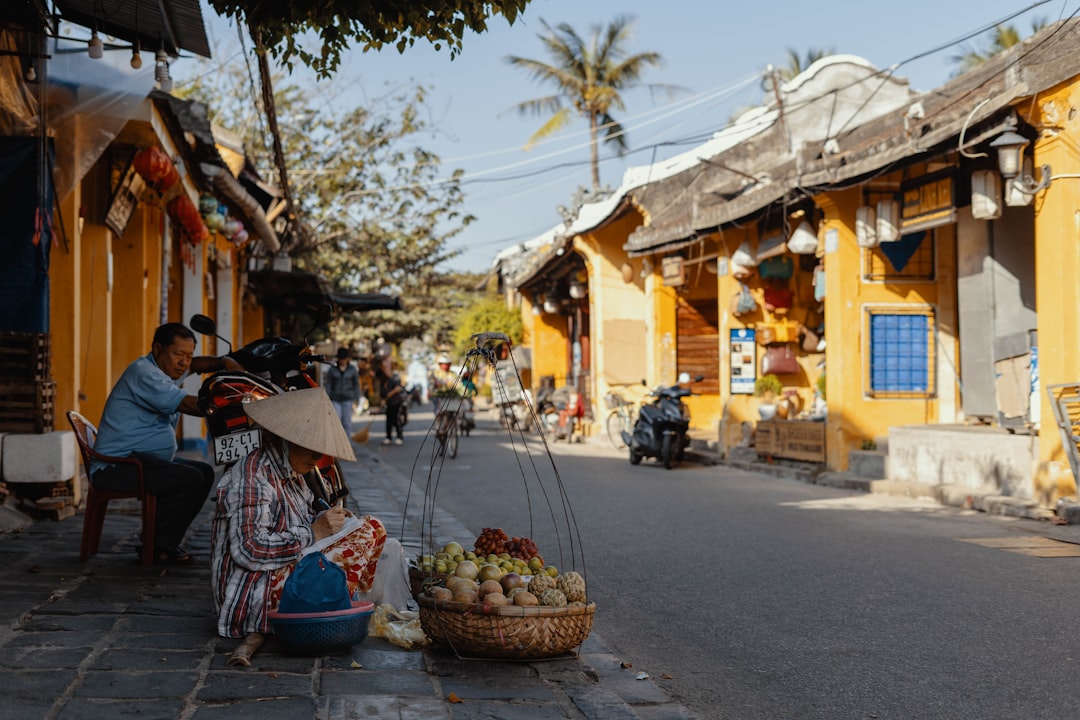
Photo by Chinh Le Duc on Unsplash
The minibus stops at a roadside stall at 2am. It’s not on a map. The driver gestures—everyone gets out, eats pho from a communal pot, buys cigarettes, pees behind a building. Forty minutes later, we’re rolling again. This is how 80% of Vietnam travels long distance: not through booking apps, but through networks of buses that work because locals know the routes.
Local travel in Vietnam has specific logistics: which neighborhoods to stay in (not backpacker zones), how to hire a motorbike with a driver, which food happens when, which transport gets you where actually-local people go, and why the Grab app is actually the tourist option.
Neighborhoods Worth Staying In
Hanoi’s Old Quarter (36 Phố Phàn Chu Trinh area, not the main tourist lanes): The Old Quarter is a neighborhood of narrow streets organized by trade: one street all silver shops, another all silk. Stay on the edges, not on Tạ Hiện (which is entirely bars for backpackers). Stay instead on Phố Hàng Gai (silk street) or Phố Hàng Thiếc (tin street). Guesthouses here are family-run, rooms cost 250,000–400,000 dong ($10–16), and breakfast is actual Vietnamese breakfast, not Western fry-ups.
Hanoi’s Ba Đình District (west of the Old Quarter): This is residential, slower, where families live. Guesthouses cluster around Phố Phạm Ngũ Lão. You’ll be the only foreigner on many streets. Pho restaurants serve actual families from 5–8am. Prices are lower: 200,000 dong for rooms, 30,000 for a proper breakfast bowl.
Ho Chi Minh’s District 2 (Thảo Điền): This is where young Vietnamese professionals live—not tourists, not expats performing ex-pat life. Restaurants are for locals; sidewalk cafes face real streets, not tourist zones. The Saigon Pearl guesthouse area near Nguyễn Hữu Cảnh Street has good family-run lodging. Budget: 300,000–500,000 dong for rooms. A breakfast pho here is still 35,000 dong.
Ho Chi Minh’s District 1, Phố Bến Thành: Ignore the guidebook recommendations for District 1 central. Instead, stay near Bến Thành market’s periphery—specifically around Phố Lê Thánh Tôn. Locals actually shop at the market; tourists photograph it. Stay near the market and you’re eating where price and quality reflect actual use, not tourist markup.
Hội An, outside the Ancient Town walls: The UNESCO town center is controlled tourism—high prices, curated experiences. Stay on Phố Cửa Đại, a few blocks from the walls, or in neighborhoods like Thanh Hà. You can walk to the center in 5 minutes but live in actual Vietnam. Rooms: 200,000–350,000 dong.
Ninh Bình (entirely): This is an alternative to overcrowded Hạ Long Bay. Same karst geology, zero tourists. Stay in the town center near Tràng An Scenic Area. Rooms under 250,000 dong, actual local restaurants, limestone peaks you see because no crowds block the view.
Transportation: How Locals Actually Move
Domestic buses: Vietnamese use minibuses (16–20 seats) and buses (40+ seats) for all overland travel. These leave from bus stations (bến xe), not tourist offices. Book one day before at a ticket booth—ask “tôi muốn đi tới [place] khách sạn nào?” and they’ll direct you. Cost is half what Sleeper Bus companies charge tourists. A Hanoi-HCMC journey: 500,000 dong (~$20) on a local bus vs. 800,000 on a tourist sleeper.
Where to find them: Every town has a “bến xe” (bus station). In Hanoi, the main one is Bến xe Mỹ Đình. In HCMC, it’s Bến xe Miền Đông. Walk in, ask the ticket window for your destination, and buy a ticket. Buses leave early morning (5–7am) for long routes.
Sleeper trains: For Hanoi to HCMC (1,800 km), the sleeper train (Open Tour Bus’s competitor) is 600,000–900,000 dong depending on class. Hard sleeper (6 bunks per compartment) is where locals travel; soft sleeper is the tourist upgrade. Trains leave Hanoi Station (Ga Hà Nội) around 8–9pm, arrive HCMC around 6–7pm next day. Book 1–2 days ahead at the station or through any travel agent.
Xe ôm (motorbike taxi): This is the local option to Grab. Grab is convenient and English-speaking but expensive. Xe ôm drivers don’t speak English, don’t use meters, but charge 10,000–20,000 dong for short city trips vs. 50,000+ on Grab. Stand on a street in any neighborhood; motorbikes will stop. Point, say “bao nhiêu tiền?” (how much?), negotiate for 5 seconds, then get on. If the price seems high, shake your head and the next one will come. This is how locals move around cities.
Renting a motorbike with driver: Hire a driver for a full day (200,000–300,000 dong / $8–12 for 12 hours). This person knows the city by memory, not GPS. They’ll take you to neighborhoods tourists don’t know exist. Negotiate the night before. Use a translation app to say “tôi muốn đi tới Ba Đình, Hoan Kiem, bao nhiêu tiền một ngày?” (I want to go to Ba Đình and Hoan Kiem districts, how much for a day?). They’ll quote a price.
Grab vs local methods: Grab works but it’s expensive (2–3x xe ôm) and it brands you as a tourist. Use Grab if you’re in a hurry or if it’s late at night. Use xe ôm if you want to move like a local.
Where and When Food Actually Happens
Timing is religious in Vietnam. Eat at wrong times and shops are closed.
Phở (beef noodle soup): 4:30am–8am. This is breakfast. Some places serve until 10am, but quality drops after 9. The best phở is in the Old Quarter or in Ba Đình: go to a shop with a line at 6am, order a large bowl (tô lớn). Cost: 30,000–50,000 dong. Avoid restaurants with English menus; they’re adaptations for tourists.
Bánh mì (Vietnamese sandwich): 11am–1pm and 4:30pm–6pm. These are lunch and light dinner. The bread is crispy banh-mi specific bread; the fillings are pickled vegetables, pâté, and often a fried egg. Cost: 25,000–40,000 dong. Found at every street corner in every neighborhood.
Bún bò Huế (Huế-style beef noodle soup): 11am–1pm and 5pm–8pm. This is the heartier cousin to phở—spicier, with beef and pork. Originating from Huế (central Vietnam), it’s everywhere now. Cost: 35,000–50,000 dong.
Cơm tấm (broken rice with protein): 11:30am–1:30pm. This is the farmer’s lunch—white rice with grilled chicken, pork, or fish. Found at small shops with plastic stools. Cost: 40,000–60,000 dong.
Night markets (chợ đêm): 6pm–11pm in most towns. Open-air stalls serving grilled skewers (xiên nướng), seafood, noodles. This is where families gather. No English menus. Point at what others are eating. Cost: 15,000–30,000 per item.
Avoid eating outside these times. Shops close. If you arrive at 2pm expecting lunch, you’ll find closed shutters. This is when Vietnam rests.
Key shops to find:
– Phở shops: Look for a simple counter, a line of Vietnamese people, and pots of broth. No English signs.
– Bánh mì stalls: Street corner, metal cart or small window. One person making sandwiches.
– Night markets: Look for smoke and the smell of charcoal. Ask locals “chợ đêm ở đâu?” (where’s the night market?)
Going Beyond the Tourist Loop: Towns Worth Slowing Down In
Hà Giang (extreme north, near China): This is a loop road (Ha Giang Loop) that guides make famous, but locals do it too—360 km of limestone mountains and ethnic minority villages. Do it by motorbike (rent locally) or on a self-guided bus tour. Stay in towns like Yên Minh or Phong Thổ, not in touristy Hà Giang City. Cost: negligible if you move by local bus.
Mekong Delta towns: Skip the Mekong Delta “tours.” Instead, stay in towns like Cần Thơ or Cai Bè. Rent a motorbike, ride to floating markets that actually function (not tourist versions). Cái Bè market operates 4:30am–8am. Arrive at 5am, eat breakfast on a boat, watch the real commerce. Cost of motorbike: 100,000 dong/day.
Sa Pa (northwest): This hill station is tourist-famous, but stay in the Hmong village of Cát Cát, not in Sa Pa town. Walk down from Sa Pa (45 min) to Cát Cát, stay with a family (200,000 dong/night), eat what they eat. The family will take you to actual farms, not “cultural experiences for tourists.”
Phong Nha-Ke Bang (Quảng Bình): Instead of organized cave tours, rent a motorbike and explore the region independently. Stay in the village of Phong Nha itself, not in Dong Hoi (which is 45 km away and touristy). Caves are accessible; hire a local guide from your guesthouse for $5–8 for a few hours.
Language for Getting Around
Learn these phrases:
- “Tôi muốn đi tới [place]” — I want to go to [place]
- “Bao nhiêu tiền?” — How much?
- “Cái này bao nhiêu?” — How much is this?
- “Không có tiền” — I don’t have money (useful for negotiations)
- “Tại sao?” — Why? (useful if a price seems wrong)
- “Cảm ơn” — Thank you
- “Không, cảm ơn” — No, thank you
Download Google Translate offline. Point at a menu item and translate. This beats trying to speak; Vietnameseis tonal and hard without practice.
Practical Grid
| Need | Tourist Way | Local Way | Cost Difference |
|---|---|---|---|
| Overnight bus Hanoi-HCMC | Sleeper bus company + hotel | Direct bus station | Save 300,000 dong |
| City transport | Grab app | Xe ôm motorbike | Save 60–70% |
| Accommodation | Hotels in tourist zones | Family guesthouses in neighborhoods | Save 50–70% |
| Food | Restaurants with English menus | Street stalls at meal times | Save 60–80% |
| Regional motorbike | Tour operator rental | Local rental shop | Save 30–40% |
| Domestic flight | Online booking sites | Travel agent in town | Same price, better service |
The Bottom Line
Traveling Vietnam like a local requires specific knowledge: where to stay (Ba Đình, District 2, outside Hội An’s walls), how to book transport (at bus stations, not apps), when to eat (phở at 6am, bánh mì at noon), and what to skip (the Mekong Delta tours, the Sa Pa trekking companies, the Grab app).
It’s not about language fluency or knowing history. It’s about moving at the pace of actual Vietnam—buses that leave when they’re full, food shops that close at 2pm, neighborhoods where you’re one of zero tourists. You’ll be confused. You’ll eat something you can’t identify. You’ll take a wrong turn and find something better than any guidebook would recommend.
That’s the whole point.