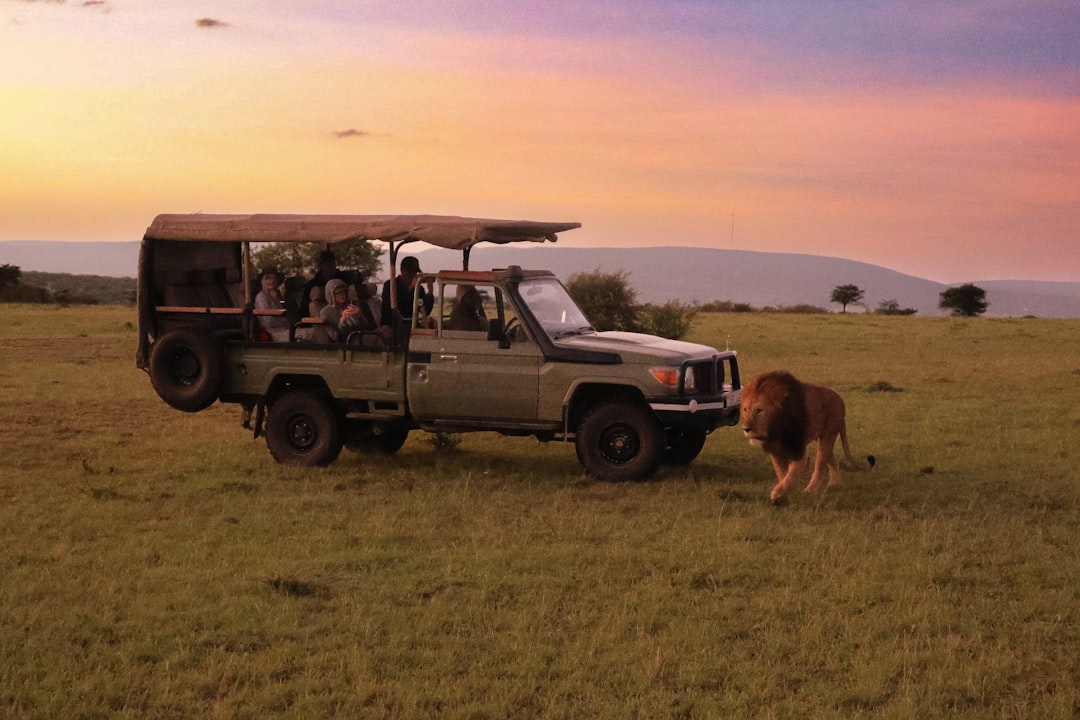
Photo by Meg von Haartman on Unsplash
Kenya Safari: How to Do It Without Extracting Value
The Land Rover pulls up to a lioness at 6am. Twelve other vehicles are already there, most with tourists hanging out of windows with cameras. The guide cuts the engine and waits. This is what “wildlife safari” has become in Kenya: animals as performance, extraction of photos and experience, with little regard for the animal’s stress or the park’s carrying capacity. It’s also what most tourists experience and what most safari operators are built around.
But Kenya’s wildlife system is vastly larger than the famous parks and the extractive tourism model. There are community conservancies where tourism revenue actually goes to local people, parks with low traffic where you might see animals without an audience, and operators who ask fundamentally different questions about what they’re doing. A responsible Kenya safari requires understanding which model you’re supporting and making choices that don’t treat wildlife as a photo opportunity.
The Two Systems: National Parks vs. Conservancies
Maasai Mara National Park is the most famous and most visited. The park is 1,510 square kilometers and sees around 300,000 visitors annually. That density matters. At peak season (July–October, during the Great Migration), you’ll see crowds. Animals are accustomed to vehicles. The park is genuinely spectacular, but you’re seeing it as one of thousands of visitors, not as an explorer.
The value flow in the Mara is: tourists → large tour operators and international chains → some percentage goes to the government and park management, very little directly to local communities. A Mara safari through an international operator costs $250–400+ per person per day (lodge included) and the communities adjacent to the park see minimal benefit. The Maasai who have lived with these animals for centuries have less access to the park than tourists do.
Community conservancies are a different system entirely. These are land parcels (often private or communal Maasai land) where wildlife operates and communities manage access. Tourism revenue is meant to go directly to residents, though implementation varies widely. The major ones include Laikpia Plateau (west of Mount Kenya), Samburu (north, semi-arid, fewer visitors), Tsavo region (massive, lesser-known), and the smaller Maasai conservancies adjacent to the Mara (Naboisho, Olare Motorogi, Mara North Conservancy).
The practical difference: a Laikpia conservancy has one vehicle per concession (you’re often alone when spotting animals), prices are lower but more of the money goes locally ($150–250 per person per day), and you’re supporting a community model where residents benefit directly from wildlife being alive rather than dead. The animals see far fewer vehicles, which means less stress.
Assessing Operator Ethics: What to Actually Ask
Most tour operators will claim they’re “sustainable” or “community-focused.” Marketing claims and reality rarely align. Here’s what to ask before booking:
Where does the money go? Ask your operator: “What percentage of the fee I’m paying goes to [specific community/lodge/park]?” Push for specific numbers. If they can’t answer clearly, they’re probably taking a large cut and local benefit is minimal. A responsible operator will break down costs openly. At a community conservancy, at least 40–50% should go to the community; at a park lodge, you should know what their community investment programme actually is beyond a vague “we support local schools.”
How many vehicles are in the park/concession at peak time? This matters for animal stress and your experience. A private concession with 5–8 vehicles across thousands of acres is very different from Maasai Mara with hundreds. Ask: “What’s the maximum number of vehicles in the concession, and how many can visit animals at the same time?” Responsible operators limit vehicles per sighting (often to 2–3) and have rules about how long vehicles stay near animals.
Are local people employed as guides? This is obvious but often missed. Your guide should be from the region — ideally Maasai or local to the area. They’ll have deep knowledge, their employment benefits the community directly, and the experience is more genuine. If the guide is imported from Nairobi or Dar es Salaam, local employment is probably limited. Ask about wages: are guides paid fairly compared to other jobs in the region? Are they trained in wildlife biology or just trained to drive tourists?
What’s the conservation practice? Ask what the operator does during “non-guiding” time. Do they participate in anti-poaching patrols? Support wildlife monitoring? Contribute to water and grazing management? Responsible operators integrate into the conservation system, not just extract tourists.
What’s the policy on animal stress? Real operators have rules: no more than 2–3 vehicles at a predator sighting, limited duration (15–30 minutes per sighting), no off-track driving to chase animals, no driving at night with spotlights (which disorients animals). Ask directly: “What are your guidelines for approaching animals?” A good operator can explain specific rules.
Which Parks Actually Make Sense: Mara vs. Alternatives
Maasai Mara (July–October migration): Most famous. Wildebeest crossing the Mara River is genuine spectacle — 1.5 million animals in motion. But you’ll rarely be alone, guides often prioritize big cats over other wildlife, and the experience is crowded. Cost: $250–400+ per day. Worth it if you want the river crossing and understand you’ll see it with others. Best to book through a camp or lodge that has its own vehicles rather than a group operator.
Samburu National Park (north): Semi-arid, 165 square kilometers, much less visited than the Mara. The landscape is stark and beautiful. Wildlife is different — Grevy’s zebra (endangered), reticulated giraffe, beisa oryx. Predators are there but less frequently seen. The fewer tourists are actually an advantage: you might have an animal sighting with just your guide and one other vehicle instead of twelve. Cost: $150–250 per day. Better ethical position because fewer visitors means less habitat pressure.
Laikpia Plateau Conservancies: Private concessions on privately or communally owned land north of Mount Kenya. Multiple camps and conservancies operate here: Laikpia Wilderness, Laikpia Plateau, Il Ngwesi Group Ranch. The key advantage: one vehicle per concession, which means you’re often alone during sightings. You’ll see fewer animals overall (wildlife is sparser) but see them in a stress-free context. Community benefit is real — the grazing land is also used for livestock, so tourism revenue offsets the “lost” grazing. Cost: $120–200 per day depending on the camp. This is the most ethical large-scale safari option.
Tsavo East and West: Massive parks (Tsavo East: 13,747 square kilometers; Tsavo West: 9,065 square kilometers). Fewer tourists than Mara because the parks are huge and less “photogenic” (less concentrated game viewing). The landscape is wild and dramatic. Best for people who want wildlife experience more than constant animal encounters. Cost: $150–250 per day. The remoteness is the ethical advantage — fewer visitors, better for animals.
Amboseli National Park: Near Mount Kilimanjaro (Tanzania border). Thousands of elephants use the park. The viewpoint for Kilimanjaro is genuine (though weather often obscures it). Moderate crowds. Cost: $200–350 per day. Worth it if you want extensive elephant exposure. The main ethical issue: the park is small and gets heavy pressure in high season.
The Timing Question: Best Season and What It Costs
Peak season (July–October): The Great Migration. Wildebeest and zebras move from Tanzania’s Serengeti north into Kenya’s Maasai Mara, crossing the Mara River. Crossing dates vary (usually mid-July through early October). The river crossings are genuine spectacle. Cost is highest: $400–600+ per day at good camps, hotels are booked months ahead, vehicles are everywhere. Only do this if the migration is specifically your goal and you can book through a reputable operator with guaranteed river crossing views (though no sighting is guaranteed). Best dates: August–early September (peak crossing).
Green season (March–May): Heavy rain, grass is lush, fewer tourists, animals disperse (vegetation is thick, harder to see), operators offer discounts (30–50%). Cost: $150–250 per day. Best for people who want solitude and don’t mind rain. Migration hasn’t started, so you won’t see massive herds.
Dry season (June, November–February): Good wildlife viewing because animals concentrate around water sources. Moderate tourism pressure. Cost: $250–350 per day. Generally the best balance of sightings and reasonable crowds.
December–February: Cool mornings, good visibility, moderate crowds. Cost: $250–300 per day. This is actually ideal for a non-migration safari.
Budget Breakdown: What a Kenya Safari Actually Costs
A one-week safari is standard. Here’s the realistic cost:
- Domestic flights (Nairobi to park): $150–250 return per person
- Camp/lodge per night: $100–250 (budget), $250–500 (mid-range), $500+ (luxury)
- Game drives (usually included at lodges): included
- Park fees: $60 (Maasai Mara, most parks), paid on arrival or pre-booked
- Meals (at budget lodge): $50–100 per day (sometimes included)
- Drinks/extras: $20–50 per day
Total per week (budget lodge, one person): $1,500–2,500
Total per week (mid-range, one person): $2,500–4,000
If you’re booking independently vs. through an operator, costs are lower but you’re organizing everything yourself (flights, transfers, accommodation, guides). If booking through an international operator, they handle everything but take a large markup.
How to book responsibly: Research operators that specialize in conservancies. Check if they publish community benefit data. Ask for recent guest reviews mentioning ethical practices. Avoid booking through mass-market sites (Viator, Klook) which often use poor local operators. Use direct lodge websites or ethical tour operators like Natural Habitat Adventures or local Kenyan operators.
What Most Safaris Get Wrong About Animals
Standard safari operators treat animals as performance. A “successful” safari is measured by big cats seen, photos taken, “the kill” witnessed. This inverts the relationship: instead of wildlife being the primary concern, human experience becomes it. It creates perverse incentives — guides will speed to predator sightings, circle animals, stay too long, and stress animals for better photos.
Responsible wildlife observation inverts this. A good sighting is one where the animal is calm, the vehicle maintains distance, and you’re watching behaviour unrelated to your presence. You might see a lion lying down (boring to most tourists) rather than hunting (dramatic, stressful to the animal). You might watch a giraffe eating acacia leaves for 45 minutes (genuinely interesting if you’re paying attention, tedious if you’re waiting for a predator).
Ask your guide: “Are we stressing this animal? Should we move back?” A good guide will say yes and do it. A guide optimizing for tourist satisfaction will stay until someone complains or the animal moves.
Community Benefit: The Actual Question
Tourism in Kenya’s parks happens on land where Maasai (and other groups) have herded for centuries. The standard model extracts wildlife value (via tourism) and leaves communities bearing the cost of coexisting with dangerous animals and land use restrictions. A responsible safari acknowledges this and supports models where communities benefit directly.
Community conservancies are meant to do this — tourism revenue is supposed to fund local development and make wildlife economically valuable to communities. Implementation varies. Some conservancies (like Laikpia conservancies managed by the Northern Rangelands Trust) have good track records. Others are more extractive under different management.
Before booking, research: does the conservancy have a community benefit statement? What percentage of revenue goes to residents vs. operators? Are there complaints from local residents about how revenue is distributed? Organizations like the Northern Rangelands Trust monitor community conservancies and publish assessments.
The Bottom Line
A responsible Kenya safari is possible but requires choosing a different model than the standard Maasai Mara package. The options are:
- Maasai Mara in low season (March–May, November–February) with a reputable camp that employs local guides and respects animal stress rules
- Community conservancies (Laikpia, Naboisho, Mara North) where fewer vehicles and clearer community benefit make a real difference
- Lesser-visited parks (Samburu, Tsavo, Amboseli) where you’ll see less wildlife but less tourism pressure
- High season migration only if you’re committed to the experience and book responsibly, not as a casual add-on
The worst option is booking a budget package tour through an international operator, which usually means overbooked vehicles, poor guides, and money flowing to international companies rather than local communities or conservation. The best option is finding a community-based conservancy, spending more per day but seeing wildlife in a stress-free context while supporting communities that actually live with these animals.
The safari works better when the animal’s wellbeing is the starting point, not the tourist’s photo album.