Budget travel in Georgia: what to know before you go
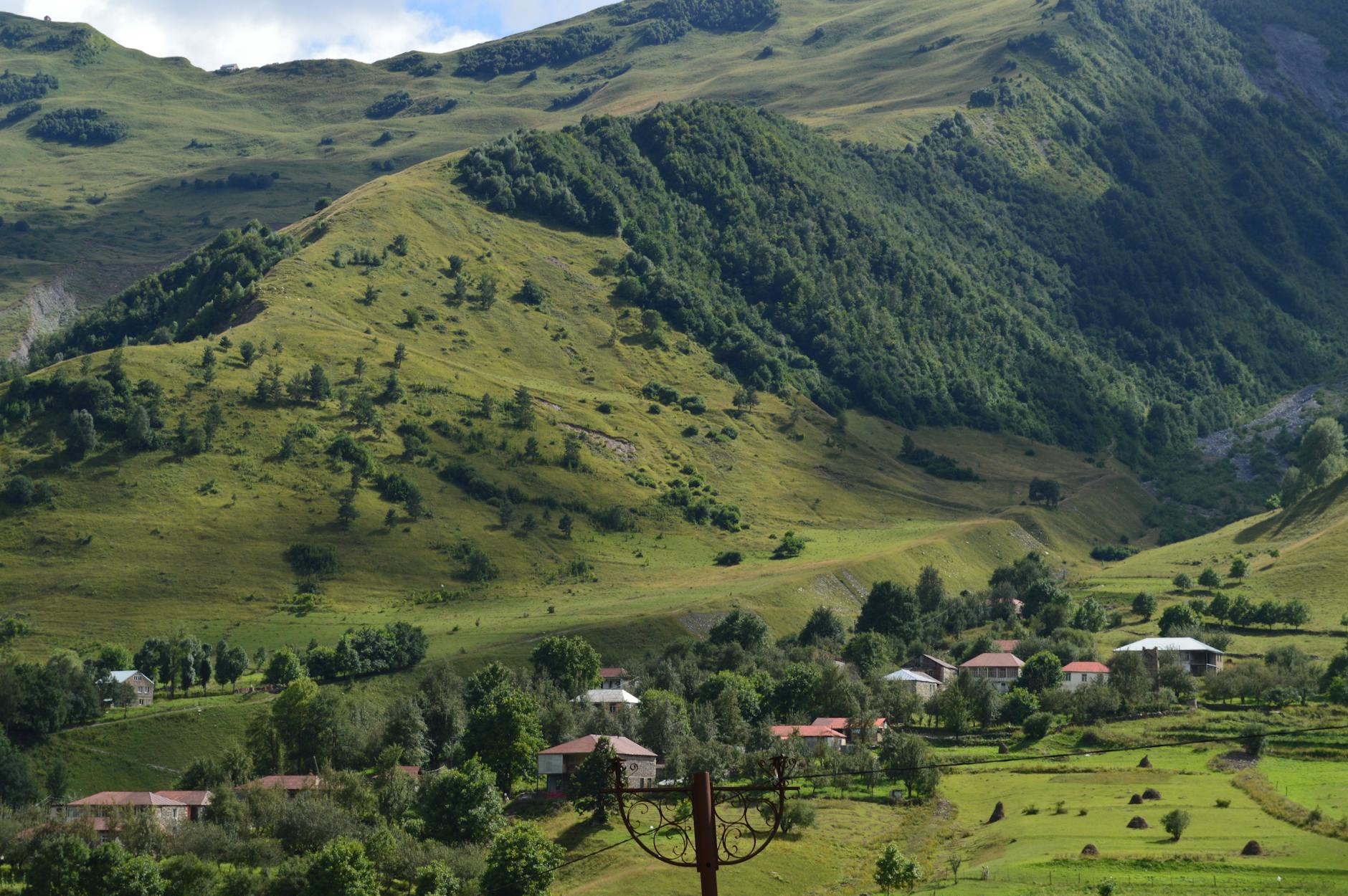
The marshrutka from Tbilisi’s Didube station to Kazbegi costs around 10 Georgian lari — less than four US dollars. It leaves when it’s full, which in summer means roughly every hour. You sit wedged between a grandmother with a bag of churchkhela and a pair of hikers comparing blister plasters, and for three hours you watch the Military Highway unspool northward through increasingly theatrical mountain scenery until the road drops you in Stepantsminda with Kazbegi’s Gergeti Trinity Church sitting above the village on its promontory like something from a medieval manuscript. It costs almost nothing. It is one of the great journeys in the Caucasus.
That ratio — extraordinary experience, very low cost — runs through almost everything Georgia offers. The country sits at the edge of Europe and the beginning of Asia, has been making wine for 8,000 years, and charges you almost nothing to experience any of it. The average daily spend for an independent traveller doing this thoughtfully is USD 40–60, including accommodation, food, local transport, and the odd museum ticket. Do it more carefully and you can come in under USD 30.
This isn’t a place where budget travel means compromise. It means eating well, sleeping in guesthouses run by families who will feed you more than you asked for, and moving through a landscape — Caucasus peaks, Black Sea coast, ancient cave cities — that still feels genuinely undervisited.
Getting there and what entry looks like
Georgia is straightforward to enter. Citizens of the EU, UK, US, Canada, Australia, and most other Western countries receive a visa-free stay of up to 365 days. You read that correctly: one year, no visa required, renewable by briefly exiting to Armenia or Turkey. Check the official Georgian e-Visa portal for your nationality’s specific status before travelling.
The main international airport is Tbilisi International (TBS). Budget carriers including Wizz Air and Ryanair serve it from multiple European hubs — fares from Warsaw, Vienna, or Bucharest regularly drop below EUR 40 one-way. From Istanbul, Turkish Airlines and Pegasus both fly to Tbilisi and Kutaisi (KUT), the latter being a useful entry point if you plan to start in western Georgia. Flying into Kutaisi and out of Tbilisi is a practical way to structure a linear itinerary without backtracking.
Overland entry from Turkey via the Sarpi border crossing on the Black Sea coast is calm and straightforward. The crossing from Armenia at Sadakhlo/Bagratashen is equally manageable. Both are open 24 hours. From Russia, the Lars/Kazbegi crossing is technically open but subject to geopolitical unpredictability — check your government’s travel advisory before considering it.
Tbilisi: where to spend your first few days
Tbilisi is the kind of city that rewards wandering with intention. Start in Abanotubani, the old sulphur bath district on the right bank of the Mtkvari River, where domed brick bathhouses have been operating since the fifth century. A private bath at Chreli-Abano or one of the smaller houses on Abano Street runs GEL 10–15 per person per hour in a shared pool, or GEL 80–150 for a private room — worth it after long travel days.
From Abanotubani, the lanes climb uphill toward Narikala Fortress, a fourth-century citadel you can reach on foot or by cable car from Rike Park (GEL 2.50 each way). The views over the old town’s zinc-roofed balconies and the Kura River bend explain why people have been building here for fifteen centuries.
For eating, Shavi Lomi in Vera neighbourhood does inventive Georgian cooking in a converted house — not the cheapest option at GEL 40–60 for two with wine, but worth knowing about. For everyday meals, the Dezerter Bazaar near Didube metro is where the city actually shops: piles of churchkhela (walnut-and-grape-must candy), tkemali plum sauce, fresh herbs, and the flat Imeruli cheese that ends up in every breakfast. Eat at the stalls around the market’s edges — lobiani (bean-stuffed bread) for GEL 2, a bowl of soup for GEL 5.
Accommodation in Tbilisi’s old town ranges from GEL 25–40 per night in a guesthouse dorm to GEL 80–120 for a private room in a well-run family guesthouse in Vera or Marjanishvili. Avoid the very cheapest options on Rustaveli Avenue — they tend to be noisy and poorly managed.
The Kazbegi route: mountains for less than you’d expect
The drive north from Tbilisi to Stepantsminda on the Georgian Military Highway is the country’s signature landscape experience. Marshrutkas leave from Didube station (not the metro station — the bus terminal beside it, which is chaotic but navigable) from around 9am. The GEL 10 fare is fixed. The journey takes three hours in good conditions; closer to four if there’s a slow truck on the switchbacks above Gudauri.
In Stepantsminda, the walk up to Gergeti Trinity Church takes 1.5–2 hours from the village at a steady pace — it’s a genuine climb of about 500 vertical metres, mostly on a clear trail, and completely free. The church itself (14th century, still active) is open to visitors except during services. Dress appropriately: shoulders and knees covered.
Guesthouse beds in Stepantsminda cost GEL 40–60 for a private room including dinner and breakfast — the hosts are almost always the cooks, and the food is plentiful and good. A typical evening table includes khinkali (soup dumplings, eaten by hand — never with cutlery), mchadi (cornbread), and something simmered with herbs and walnuts. Wine is usually homemade and comes in a jug.
For a longer hike, the trail to Arsha and across to Juta valley takes a full day and requires basic navigation — the trail markers are inconsistent. Download the route on Maps.me or Gaia GPS before you go. No guide is necessary if you’re a competent hiker and prepared for altitude (Juta sits at around 2,200m).
Kakheti: wine country on a guesthouse budget
Georgia invented the qvevri method of winemaking — fermenting and aging wine in clay amphorae buried in the earth — and Kakheti, the eastern wine region, is where most of it still happens. The regional capital is Telavi, two hours east of Tbilisi by marshrutka from Ortachala station (GEL 8).
The most interesting wineries for independent travellers are not the polished resort estates along the main road, but the small family operations in villages like Sighnaghi, Shilda, and Napareuli. Pheasant’s Tears in Sighnaghi is the best-known natural wine producer and runs an excellent restaurant alongside its cellar — a tasting with food will cost GEL 50–80 per person. Less famous but worth seeking: Ramaz Nikoladze’s cellar in Nakhshirgele (Imereti, technically, but the qvevri style connects them), and the family operations around the Alaverdi Monastery, which has been making wine since the 11th century and still produces its own.
Sighnaghi itself is a small hilltop town with a complete defensive wall circuit you can walk in an hour. It’s become something of a tourist town, which means the main square restaurants are overpriced — eat one street back. The guesthouses here are consistently good value: GEL 60–90 for a private room including meals.
Svaneti: the high route worth the effort
Upper Svaneti in the northwest is the part of Georgia that travel writers reach for superlatives and then fail to adequately describe. The UNESCO-listed village of Ushguli sits at 2,200m, surrounded by the kind of peaks that make Chamonix look modest. The medieval defensive towers — there are over 200 still standing across the region — were built between the 9th and 12th centuries by Svan families as protection and status symbols. UNESCO’s World Heritage entry on Svaneti gives useful background on the region’s significance.
Getting there is the honest part: from Tbilisi, the easiest route is a marshrutka to Zugdidi (GEL 20, five hours from Ortachala), then a shared 4WD to Mestia (GEL 30, four hours on a road that will rearrange your idea of what a road can be). From Mestia, another shared 4WD to Ushguli runs GEL 40–50. Plan at least a full day of travel each direction. In winter and early spring, the road to Ushguli closes entirely.
Mestia has guesthouses from GEL 60–100 per night with meals. The town is the base for day hikes: Chalaadi Glacier (four hours return from town, no technical skill needed) is the most accessible; the Koruldi Lakes trail above Mestia takes five hours and rewards with panoramic views of the main Caucasus ridge. For multi-day trekking, the classic Mestia to Ushguli trail (four days) is well-marked and hut-supported.
Cost breakdown: what to realistically budget
| Category | Budget option | Mid-range option |
|---|---|---|
| Accommodation (per night) | GEL 25–40 (hostel/dorm) | GEL 80–120 (guesthouse private room with meals) |
| Food (per day) | GEL 20–30 (markets, local canteens) | GEL 50–80 (restaurants + wine) |
| Local transport | GEL 5–20 (marshrutka) | GEL 80–150 (private taxi/transfer) |
| Wine (bottle) | GEL 10–15 (supermarket) | GEL 30–60 (restaurant qvevri wine) |
| Museum entry | GEL 5–15 | GEL 5–15 (same, there’s no premium tier) |
| Daily total (approx.) | USD 25–35 | USD 55–80 |
Exchange rate approximate at time of writing: 1 USD ≈ 2.7 GEL. Georgia uses the Georgian lari (GEL). ATMs are reliable in Tbilisi and Telavi; carry cash in Mestia and Stepantsminda.
Practical logistics worth knowing
Best season: May–June and September–October hit the balance between good weather and manageable crowds. July and August are hot in Tbilisi (35°C+) and busy in Kazbegi and Svaneti. Winter in the mountains closes roads but opens Gudauri ski resort, which is cheap and genuinely underrated.
SIM card: Pick up a Magti or Geocell SIM at Tbilisi airport for GEL 15–20 including data. Coverage is good in cities and main towns; patchy in upper Svaneti.
Getting around: Marshrutkas connect most major destinations and are the backbone of budget travel here. They are not always comfortable — a five-hour run in a full minivan on a mountain road is exactly what it sounds like — but they are dependable and cheap. Bolt works in Tbilisi and is genuinely affordable (GEL 8–12 for most city journeys).
Food allergies: Georgian cuisine is heavily meat and dairy-based. Vegetarians are fine — there are dedicated dishes (pkhali, lobiani, ajapsandali) — but vegans will struggle outside Tbilisi, where several dedicated restaurants exist in Vera and Vake neighbourhoods.
Safety: Georgia is consistently rated among the safer countries in the region. Petty theft exists in Tbilisi’s Rustaveli area and on crowded marshrutkas — standard precautions apply. Solo female travellers report generally positive experiences; Tbilisi’s nightlife areas around Fabrika and Bassiani are well-lit and busy until very late.
The Bottom Line
- Georgia is genuinely one of the most affordable countries in the Caucasus and wider Europe. A well-organised independent trip costs USD 35–55 per day all-in, and the value — food, wine, accommodation, landscape — consistently punches far above that price point.
- The marshrutka network is your best tool. It’s not glamorous, but it connects Tbilisi to Kazbegi, Telavi, Zugdidi, and dozens of smaller towns for under GEL 30 each way. Budget private taxis for the stretches — Mestia to Ushguli, remote trailheads — where shared transport doesn’t reach.
- Eat where the hosts cook. Guesthouses that include breakfast and dinner (and most do, for a modest extra charge) are better value and better food than almost any restaurant in the same price bracket. Say yes to the jug of homemade wine. It’s almost always good.
- Build in travel time for Svaneti. The journey is long and the roads are demanding. Travellers who rush it miss the point. Give the region at least four days to justify the travel; ideally a full week.
- Check the season before booking mountain routes. The Ushguli road and many higher trails are inaccessible from November through April. The Military Highway to Kazbegi stays open in winter but can close briefly after heavy snowfall — always check conditions the night before.