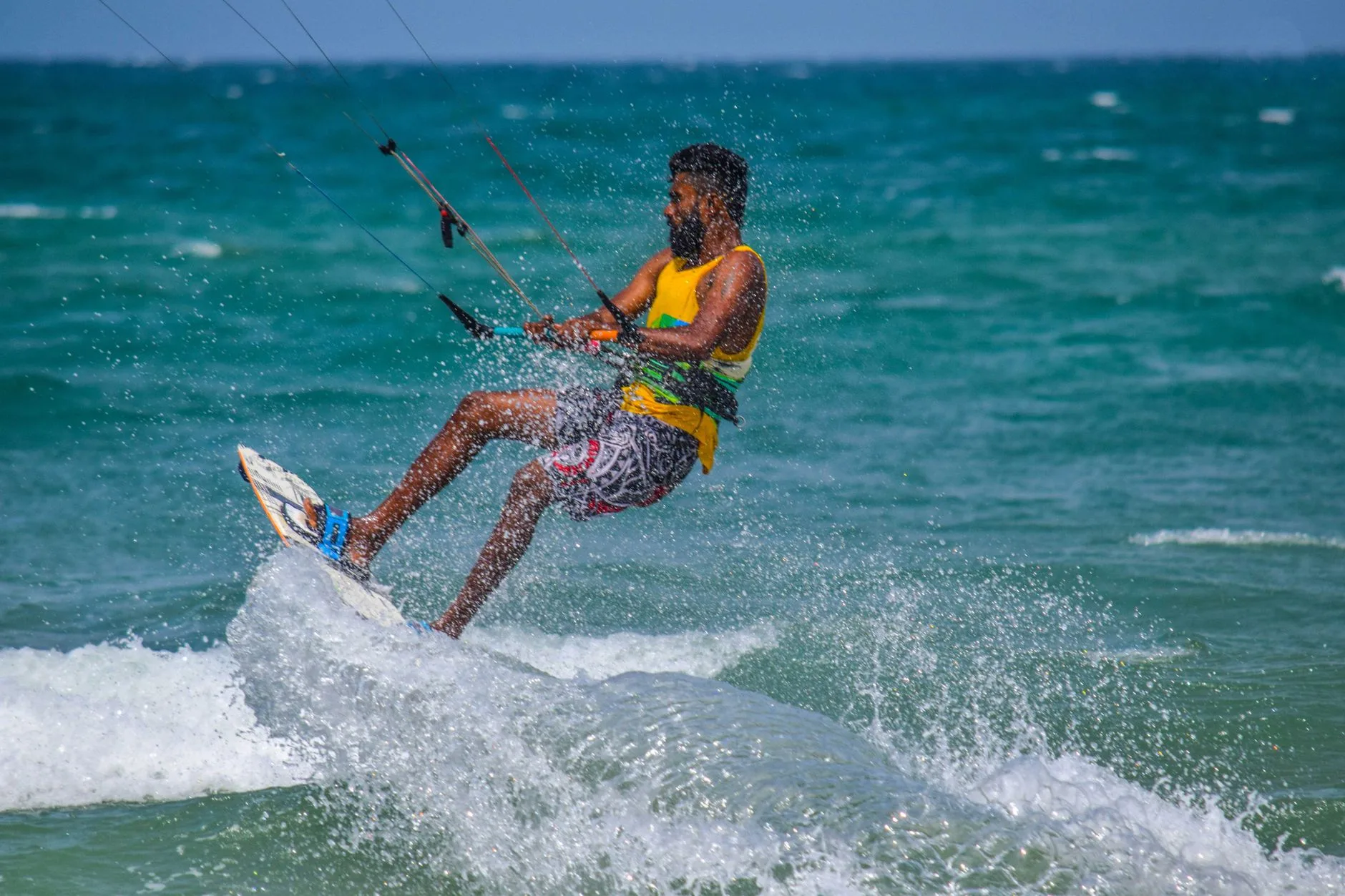
Photo by Namal Siriwardana on Pexels
Surfing in Sri Lanka: best spots for beginners
The lesson starts at seven in the morning, before the onshore wind picks up and turns the surface choppy. Your instructor — probably a young guy named Kasun or Dinesh who has been surfing this stretch since he was twelve — walks you down Weligama Bay’s pale sand to a battered foam board. The water is warm enough that you never once think about it. The wave lifts you, you stand for two seconds, and then you are in the white water, salt in your mouth, grinning. By most measures, you did nothing impressive. By the measure of that moment, it was entirely worth the flight.
Sri Lanka is one of the better-kept secrets in Asian surfing — not because it lacks waves, but because it tends to get overshadowed by Bali and the Maldives in the surf travel conversation. The waves here are genuinely forgiving in the right seasons, the water temperature hovers between 26°C and 29°C year-round, and a lesson plus board rental costs a fraction of what you’d pay in Europe. For someone learning to surf, or returning to it after a gap, this island can be close to ideal.
The key is knowing which coast to visit and when. Sri Lanka’s surf geography is split between the southwest coast (best from November to April) and the east coast, anchored by Arugam Bay (best from May to October). Get the timing wrong and you’ll paddle into flat water or ugly shore-break. Get it right and you’ll have consistent, manageable waves with plenty of instruction available.
Weligama: where most beginners should start
Weligama, roughly 150 km south of Colombo along the coastal A2 highway, is the clearest starting point. The bay is wide and horseshoe-shaped, which means the waves wrap in and break slowly along a long stretch of beach. The white water — the broken, foamy section after a wave has already crested — rolls in consistently and is exactly what beginners need for their first ten or twenty attempts at standing.
The town itself sits on the main Galle–Matara road, and the surf strip is concentrated at the western end of the bay, closest to the cluster of surf schools and guesthouses. Schools like Weligama Surf Inn and Coconut Cool Surf School operate with foam longboards and will pair you with an instructor in the water, not just standing on the beach watching. Expect to pay around LKR 5,000–7,000 (roughly USD 15–22) for a two-hour group lesson including the board. Private lessons cost roughly double that.
Accommodation ranges from family-run guesthouses at LKR 3,000–5,000 per night to mid-range boutique spots with pools. The main strip has enough cafes and rice-and-curry spots that you could eat well for under USD 10 a day without trying. Weligama is well-connected: regular buses run from Galle (45 minutes, LKR 60) and Matara (20 minutes, LKR 40). The intercity express train from Colombo Fort to Weligama takes about 2.5 hours and costs LKR 200–600 depending on class — one of the more scenic coastal train rides in Asia, hugging the shoreline much of the way.
Midigama: the next step up, five minutes east
Weligama and Midigama are effectively neighbours — Midigama is about 5 km east along the coast road — but they have a noticeably different feel. Where Weligama is a proper small town with a beach tourism economy, Midigama is quieter, slightly slower, and attracts surfers who want a few days of focused practice without much distraction.
The main break here, Lazy Left, is a left-hand point break that breaks over a flat rock shelf. In small swell (1–1.5 m), it produces long, unhurried waves with sections that give you time to find your feet. It is not always perfectly friendly — the rock shelf means wipeouts are best avoided in bigger conditions — but in small summer swells on the southwest season, it regularly offers manageable rides that are a good step beyond Weligama’s white water. There is also a beach break section near the main beach that is softer for pure beginners.
Accommodation here is genuinely low-key: a handful of surf guesthouses, several of which rent boards by the hour (around LKR 500–700) and can arrange informal instruction. The food options are slim but honest — a few small restaurants doing rice and curry, rotis, and fried rice. If you want variety in the evenings, Weligama is a tuk-tuk ride away.
Hikkaduwa: surf with a town around it
Hikkaduwa is 17 km west of Galle and has been a beach town since the backpacker era of the 1980s. It is not serene, and it doesn’t pretend to be. The main road runs parallel to the beach with restaurants, surf shops, and guesthouses stacked along it. If you want some nightlife, other travellers to meet, and a range of places to eat, Hikkaduwa delivers in a way that Midigama doesn’t.
The surf at Hikkaduwa breaks in several spots along the same stretch. The main beach break is generally suited to beginners in smaller swells — the waves are not particularly long, but they are consistent and the sandy bottom is forgiving. There is a more defined reef break slightly north called Benny’s Reef that intermediate surfers favour; as a beginner, you can watch it from the beach and note the difference in how a reef break behaves versus a beach break.
Multiple surf schools operate here, prices are competitive with Weligama, and the board rental market is active. Hikkaduwa also has better transport links than anywhere else on this stretch: direct trains from Colombo take 2 hours and 15 minutes, and buses from Galle run every 20–30 minutes. If you are arriving in Sri Lanka and want to get to waves quickly without overthinking logistics, Hikkaduwa is a practical first stop.
One honest caveat: the water near the main beach at Hikkaduwa can be murky after heavy rain, and the town’s very accessibility means it gets crowded in peak season (December–January). Both are minor but worth knowing.
Arugam Bay: the east coast option
Arugam Bay — usually called A-Bay by those who have been — is Sri Lanka’s most celebrated surf destination and sits on the island’s southeast coast, roughly 320 km from Colombo by road (or about 4 hours from Ella by bus). It operates on a completely different seasonal window to the southwest: the east coast swell runs May through October, driven by the southwest monsoon pushing waves around the bottom of the island.
Main Point, the break directly in front of the main bay, is a right-hand point break and one of the better-known waves in South Asia. At its best, it is a long, peeling wave with multiple sections — more suited to intermediate surfers. But for beginners, Arugam Bay has a better option nearby: Baby Point, a short walk south of the main strip (or a tuk-tuk ride to the access track). Baby Point breaks in a much softer, more gradual fashion and, in small swell conditions, is genuinely beginner-appropriate. The bottom is sandy and the wave tends to crumble rather than throw, giving you more time to react.
Arugam Bay’s vibe is distinctly different from the southwest coast. The town — really just a single main road with guesthouses, surf shops, and open-air restaurants — fills up with surfers from May onwards, but retains a low-key atmosphere that feels removed from the world. Accommodation ranges from basic rooms at LKR 4,000 per night to slightly more polished boutique spots at LKR 15,000+. The food scene is better than you might expect: Hideaway Restaurant does a solid fish curry, and several beachfront spots cook fresh seafood to order. Sri Lankan hoppers (crispy bowl-shaped pancakes with a fried egg inside) are a worthwhile breakfast.
Getting to Arugam Bay independently is straightforward if slightly time-consuming. The standard route from Colombo is: train or bus to Ella (about 6–7 hours), then a bus via Wellawaya and Monaragala to Arugam Bay (another 3–4 hours). Alternatively, direct buses run from Colombo Central Bus Stand to Pottuvil (the nearest town), taking 8–9 hours. Tuk-tuks cover the 4 km from Pottuvil to the bay itself for around LKR 300.
Pottuvil Point and Crocodile Rock: further east options
If you are spending more than a week on the east coast and want to explore beyond Baby Point, two other spots within reach of Arugam Bay are worth knowing about.
Pottuvil Point is a 20–30 minute tuk-tuk ride north of the bay (about LKR 400–600 one way). The break here is long, mellow, and often empty — it doesn’t get the foot traffic of Main Point because reaching it requires a commitment. In small to medium swell, it produces slow, forgiving waves that some beginners find even easier than Baby Point. The setting is also more isolated: backed by a lagoon and a long stretch of undeveloped coast, it is the kind of surf spot that makes you grateful you came this far.
Crocodile Rock (named for the shape of a rock in the water, not for any reptile encounters) sits between Main Point and Baby Point. It breaks over a rocky bottom and is not recommended for beginners, but is worth knowing about as a landmark so you can orient yourself along the bay.
Conditions, seasons, and what to realistically expect
Understanding the seasonal split is the single most important practical detail for planning a surf trip to Sri Lanka. Both coasts are affected by monsoon patterns — and surfing in the wrong season, on the wrong coast, is possible but often unrewarding.
| Coast | Best surf season | Location examples | Wave type | Beginner suitability |
|---|---|---|---|---|
| Southwest | November – April | Weligama, Midigama, Hikkaduwa | Beach break, gentle point break | High in small swell |
| East | May – October | Arugam Bay (Baby Point), Pottuvil Point | Mellow point break | High in small swell |
| Southwest (off-season) | May – October | Some breaks still work | Irregular, stormy | Low |
| East (off-season) | November – April | Flat or messy | Inconsistent | Low |
The swell that hits Sri Lanka’s southwest coast comes primarily from the south and southwest Indian Ocean. January and February tend to offer the most consistent, moderate swells — big enough to be fun, small enough to learn on. March and April can get larger, which is exciting for improvers but harder for pure beginners. On the east coast, June through August is the core of the season, with September and October tapering off.
Water temperature is not a concern — 28°C is typical, and board shorts or a thin bikini are all you need. UV exposure, however, is real. A rash guard protects both against sunburn and the minor board rash you accumulate while learning to paddle. Bring one.
Sri Lanka’s surf schools are generally good but unregulated. There is no national surf instructor certification system equivalent to ISA or BSUPA standards. Ask about your instructor’s experience directly; the better schools will tell you how long they have been teaching, how many students they handle per instructor, and whether the session includes water-based guidance rather than just an on-beach demonstration.
For context on how Sri Lanka fits within a wider Asian itinerary, it is worth noting that the island sits in a broader region where responsible, slower-paced travel has increasingly shifted away from the most crowded destinations — and Sri Lanka’s surf coast, outside of peak December–January, rarely feels overwhelmed.
Practical details: getting there, getting around, what it costs
Entry: Sri Lanka issues a 30-day Electronic Travel Authorisation (ETA) to most nationalities, applied for online before travel. As of 2026, the cost is USD 35 for most Western passport holders. The process is straightforward but requires submission at least 48 hours before arrival. The official site is eta.gov.lk.
Getting to Sri Lanka: Colombo Bandaranaike International Airport (BIA) in Katunayake is the main entry point. Flight time from London is around 10.5 hours direct; from Dubai, 3–4 hours. Several regional carriers connect to Colombo from Southeast Asian hubs.
Getting around the coast: The coastal railway between Colombo and Matara is functional, affordable, and genuinely scenic — a ride that earns its reputation. For east coast access, buses are more practical than trains. Tuk-tuks fill the gaps everywhere. If you want more flexibility across the island — for instance, combining a surf trip on the southwest coast with a visit to Ella or Kandy — renting a scooter (around USD 8–12 per day) or hiring a car with a driver (USD 50–80 per day) gives you considerably more range. Sri Lanka is compact: the entire island is roughly the size of Ireland.
Costs: Sri Lanka remains one of the more affordable surf destinations in Asia, though prices have risen since the economic disruption of 2022–23. Budget daily spend on the surf coast: USD 25–40 including accommodation, meals, and one lesson or board rental. Mid-range travellers spending on better accommodation and more lessons can budget USD 60–80/day comfortably.
Health and safety in the water: Sri Lanka has limited surf lifeguard infrastructure. At Weligama and Hikkaduwa, surf school staff act as informal water safety monitors during lessons, but there is no equivalent of a patrolled beach with flags and trained lifeguards. Surf with other people, stay in the white water section when starting out, and understand rip currents before entering the sea. Surf Life Saving Sri Lanka has been developing beach safety programmes, particularly on the south coast, and is worth checking for updates.
If you are the kind of traveller who wants to see more of Sri Lanka beyond the surf coast, the island rewards that impulse. The hill country around Ella and Kandy is within striking distance of both coasts, and the cultural heritage sites of the Cultural Triangle (Sigiriya, Polonnaruwa, Dambulla) are a full world away from the beach but worth the detour. Combining a surf week on the southwest coast with time in the interior is a very workable itinerary — and if you are considering exploring the island by two wheels rather than tuk-tuk, cycling through Sri Lanka offers a genuinely different pace and perspective on what the country looks like between the headline destinations.
The Bottom Line
-
Weligama is the right first stop for most beginners: consistent gentle waves, good instruction, easy transport from Colombo, and enough infrastructure to be comfortable without being overwhelming. Start here unless you have a specific reason to go elsewhere.
-
The seasonal split matters more than any other planning decision. Southwest coast (November–April) and east coast (May–October) are essentially two different surf trips. Get it right and conditions will work for you; get it wrong and no amount of patience will fix flat or messy water.
-
Arugam Bay’s Baby Point is underrated for beginners. Most coverage of A-Bay focuses on Main Point, which is not beginner terrain. Baby Point, a short tuk-tuk south, is softer, less crowded, and set in a more beautiful stretch of coast. If you are visiting in the May–October window, it is worth prioritising.
-
Board and lesson costs are genuinely low — around USD 15–22 for a group lesson, USD 500–700 LKR per hour for board rental. You do not need to pre-book anything. Walk-in availability is standard outside the Christmas–New Year peak period, when the southwest coast fills up and prices edge higher.
-
The ETA must be applied for before you arrive. It is not issued at the airport. Apply at eta.gov.lk at least 48 hours before departure to avoid complications.
Keep reading: Cycling through Sri Lanka: what to expect