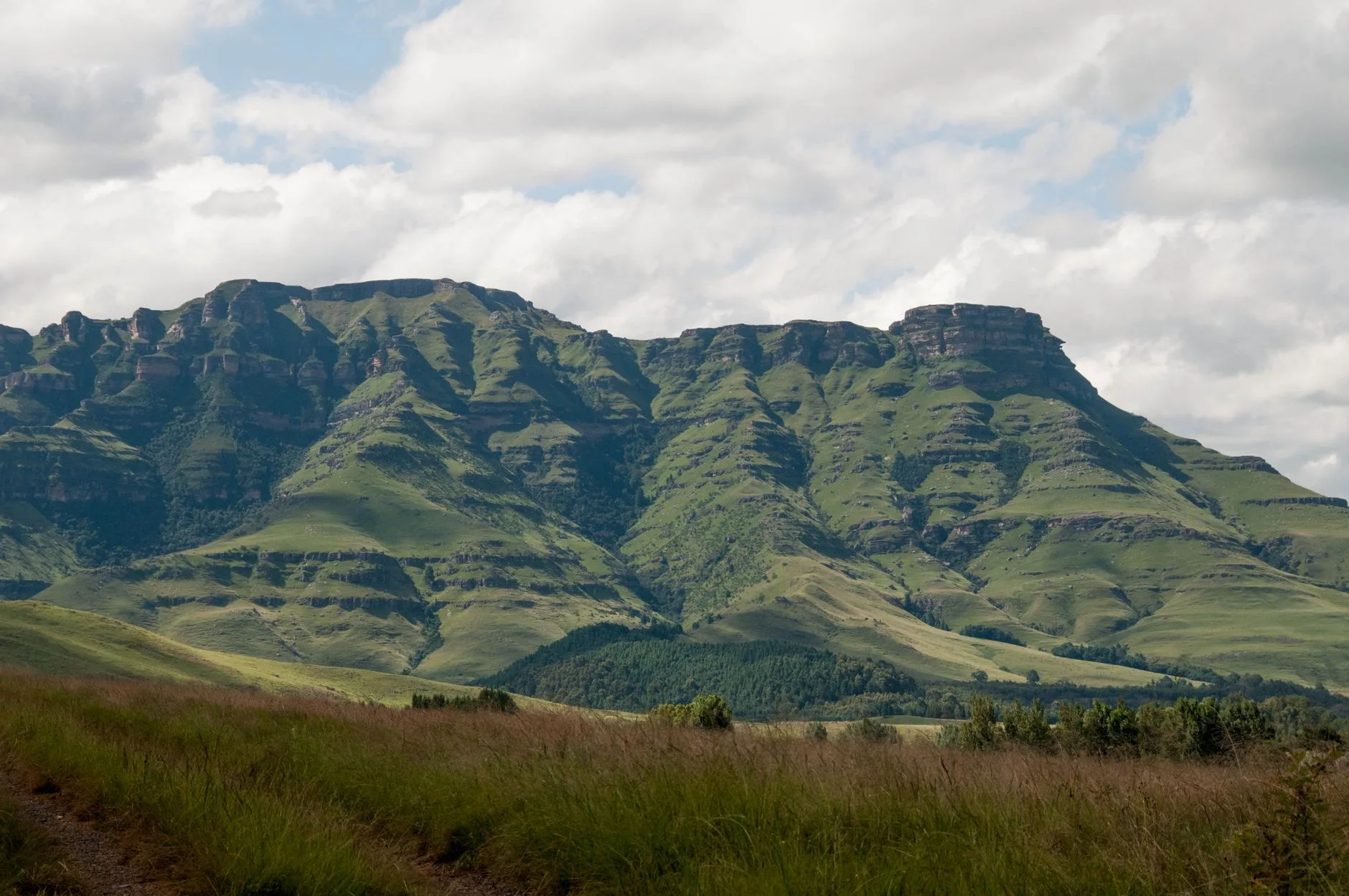
The Drakensberg is the largest mountain range in southern Africa — a 1,000-kilometre escarpment running along the eastern edge of the South African plateau, from the Limpopo province in the north down into the Eastern Cape. The highest peaks sit in the uKhahlamba-Drakensberg Park, a UNESCO World Heritage site in KwaZulu-Natal, where the basalt wall of the main escarpment tops out above 3,000 metres. The hiking here is serious, scenic, and — by the standards of comparable mountain destinations — almost entirely uncrowded.
This guide covers the practical specifics: which sections to hike, how to get there, what permits you need, where to sleep, and what the trails are actually like.
Understanding the Geography
The uKhahlamba-Drakensberg Park is divided into several distinct sections, each managed by Ezemvelo KZN Wildlife (the provincial conservation authority). Travellers usually focus on three main areas:
- Northern Berg: Royal Natal National Park — dramatic scenery, accessible day hikes, iconic Amphitheatre wall
- Central Berg: Monk’s Cowl, Champagne Castle, Cathedral Peak — most popular section for multi-day hikes
- Southern Berg: Garden Castle, Cobham, Mkhomazi — quieter, less developed, rewarding for those who want solitude
The Lesotho border runs along the top of the escarpment. Many of the longer wilderness trails cross into Lesotho without formal border controls, which is standard and accepted for hikers (keep your passport if planning any border-crossing route).
The Main Trails and Hikes
Amphitheatre, Royal Natal (Day hike or 2-day):
The Amphitheatre is the most recognisable rock face in the Drakensberg — a 5-kilometre-wide, 500-metre-tall basalt wall visible from the park entrance. The standard hike to the Tugela Falls (the second-highest waterfall in the world at 948m) involves:
– 11km return from the Sentinel Car Park (accessed via the Witsieshoek Mountain Lodge road)
– Two ladders bolted into the cliff near the summit, each about 10 metres
– Chain assistance on a steep section below the ladders
– The route is manageable for any fit hiker; allow 5–7 hours return
There’s a small permit fee (around R60–80 per person) payable at the entrance. No overnight camping is required if doing it as a day hike.
Cathedral Peak (Day hike to summit, or multi-day):
Cathedral Peak itself (3,004m) is a technical scramble requiring some hands-and-feet work near the top. The Cathedral Peak Hotel area offers numerous shorter alternatives. The Mikes Pass road from the hotel gives access to a 4WD track up to the top of the escarpment from which you can day-hike along the plateau — this is one of the fastest and most accessible ways to stand on the main escarpment without a multi-day commitment.
Giant’s Cup Trail (5-day hut-to-hut):
The only formally waymarked multi-day trail in the Drakensberg, running 60km through the Southern Berg from Sani Pass to Bushman’s Nek. There are four overnight huts with bunks, water, and basic toilets. The trail is graded moderate — daily stages of 12–14km with cumulative ascent of around 500m per day. No technical terrain. Bookings are made through Ezemvelo KZN Wildlife, costs around R180–220 per person per night in the huts. The trail is one of the most underrated hiking routes in Africa.
Sani Pass (Drive or hike):
Sani Pass is not a hiking trail but a gravel road ascending the escarpment between KwaZulu-Natal and Lesotho. It’s one of the most dramatic mountain roads on the continent. Standard 4WD vehicles can drive it; hiking it is also possible. The top of the pass (2,874m) has the Sani Mountain Lodge — the highest pub in Africa — and views across the Lesotho highlands.
Wilderness Hiking (Self-sufficient):
The Central and Northern Berg areas have extensive designated wilderness zones where you can hike without marked trails or huts, camping wherever you choose within the wilderness permit area. This requires:
– A wilderness permit (applied for through Ezemvelo, usually granted with 24–48 hours notice for non-peak periods; book further ahead in school holidays)
– Full self-sufficiency: tent, sleeping bag, stove, food, water purification
– A detailed topographic map (the Drakensberg 1:50,000 series is available at park offices)
– Two or more people minimum for all wilderness zones (solo wilderness hiking is not permitted)
This style of hiking — picking your own route across the escarpment, camping beside tarns at 3,000m — is the most rewarding way to experience the Drakensberg if you have the experience and equipment for it.
Permits and Bookings
| Activity | Permit required | Cost (2026 approx.) | Where to book |
|---|---|---|---|
| Day hikes in Ezemvelo parks | Conservation fee + day hike permit | R240–320/day (foreign visitors) | At park gates; sometimes online via Ezemvelo |
| Giant’s Cup Trail overnight huts | Advance booking essential | R180–220/night/person | ezemvelo.co.za |
| Wilderness camping permit | Required for all wilderness zones | R140–180/night/person | ezemvelo.co.za or park office |
| Sentinel Car Park (Amphitheatre route) | Entrance fee | R60–80/person | At gate |
Book during South African school holidays (June/July, September/October, December/January) well in advance — 3 months minimum. Outside those windows, you can often book a week ahead.
Getting There
The Drakensberg is in KwaZulu-Natal, about 3–4 hours from Durban and 5–6 hours from Johannesburg by road.
Flying in: Durban (DUR) is the closest major airport to most of the Berg. Car rental from Durban airport is straightforward and necessary — there is no public transport into the mountain parks. A 4WD is not essential for the main tarred access roads but is strongly recommended if you plan to drive Sani Pass or access rural camping areas.
Driving: Johannesburg to the Central Berg via the N3 and R74 takes about 5.5–6 hours. Most hiking bases (Monk’s Cowl, Cathedral Peak, Royal Natal) are at the end of tarred provincial roads off the main highway.
Distances within the Berg: the drive between Royal Natal (Northern Berg) and Cathedral Peak (Central Berg) takes about 1.5 hours. Southern Berg (Cobham, Garden Castle) adds another 2 hours south. Plan your route to minimise unnecessary backtracking.
Where to Stay
Inside the parks:
– Rest camps run by Ezemvelo: self-catering cottages and campsites at the base of most sections. Basic but well-maintained. Book via ezemvelo.co.za
– Wilderness camping as above: tent camping in designated zones with a permit
Outside the parks (within 30 minutes of park gates):
– Cathedral Peak Hotel — a long-running resort with good hiking access, pool, restaurant. 4-star standard, around R2,500–3,500/night full board
– Didima Camp (Royal Natal) — Ezemvelo-run, comfortable chalets with self-catering option, well-located for Amphitheatre hike
– Inkosana Lodge (Monk’s Cowl) — a popular independent guesthouse with a good base camp feel, meals available, knowledgeable owner, around R600–900/person including dinner and breakfast
Budget camping outside the parks is available at several private campsites along the approach roads for R150–250/person/night.
What to Bring
The Berg’s weather is famously changeable. Afternoon thunderstorms are common in summer (November–March), sometimes severe. Snow falls on the high escarpment in winter (June–August). On any day, conditions can shift from clear and warm to overcast, cold, and wet within a few hours.
Essential gear:
– Waterproof jacket and trousers
– Warm mid-layer (fleece or down; even in summer, temperatures drop quickly above 2,500m)
– Sturdy hiking boots with ankle support (many routes cross rocky terrain and stream crossings)
– Sun protection (UV exposure is high at altitude)
– 2–3 litres water capacity per person (water available from mountain streams; purify or treat)
– Headtorch and spare batteries
– For wilderness hikes: tent rated to wind, sleeping bag rated to at least -5°C, stove, 3–4 days food
When to Go
| Season | Conditions | Best for |
|---|---|---|
| May–September (winter) | Cold nights (below freezing at altitude), clear sunny days, no rain | Day hikes, clear views, low crowds |
| October–November (spring) | Warming, wildflowers, some rain beginning | Good all-round hiking conditions |
| December–February (summer) | Hot at lower elevations, afternoon thunderstorms frequent, green and lush | Multi-day hikes if you start early each day |
| March–April (autumn) | Stable, mild, often excellent visibility | Arguably the best overall hiking season |
Conclusion
The Drakensberg is one of Africa’s most rewarding hiking destinations — serious terrain, extraordinary scenery, and a fraction of the crowds of comparable European mountain ranges. Key practical points:
- Book Ezemvelo accommodation early during South African school holidays; outside those periods you can be more flexible
- A rental car is non-negotiable — there is no public transport to the park gates
- The Giant’s Cup Trail is the most accessible multi-day option and one of the most underrated long-distance trails in Africa
- Weather changes fast above 2,000m — carry rain gear and warm layers regardless of the morning forecast
- Wilderness permits open up the best terrain — if you have multi-day self-sufficient experience, the freedom to route-find your own way across the escarpment is exceptional
Keep reading: Gorilla trekking Uganda vs Rwanda comparison