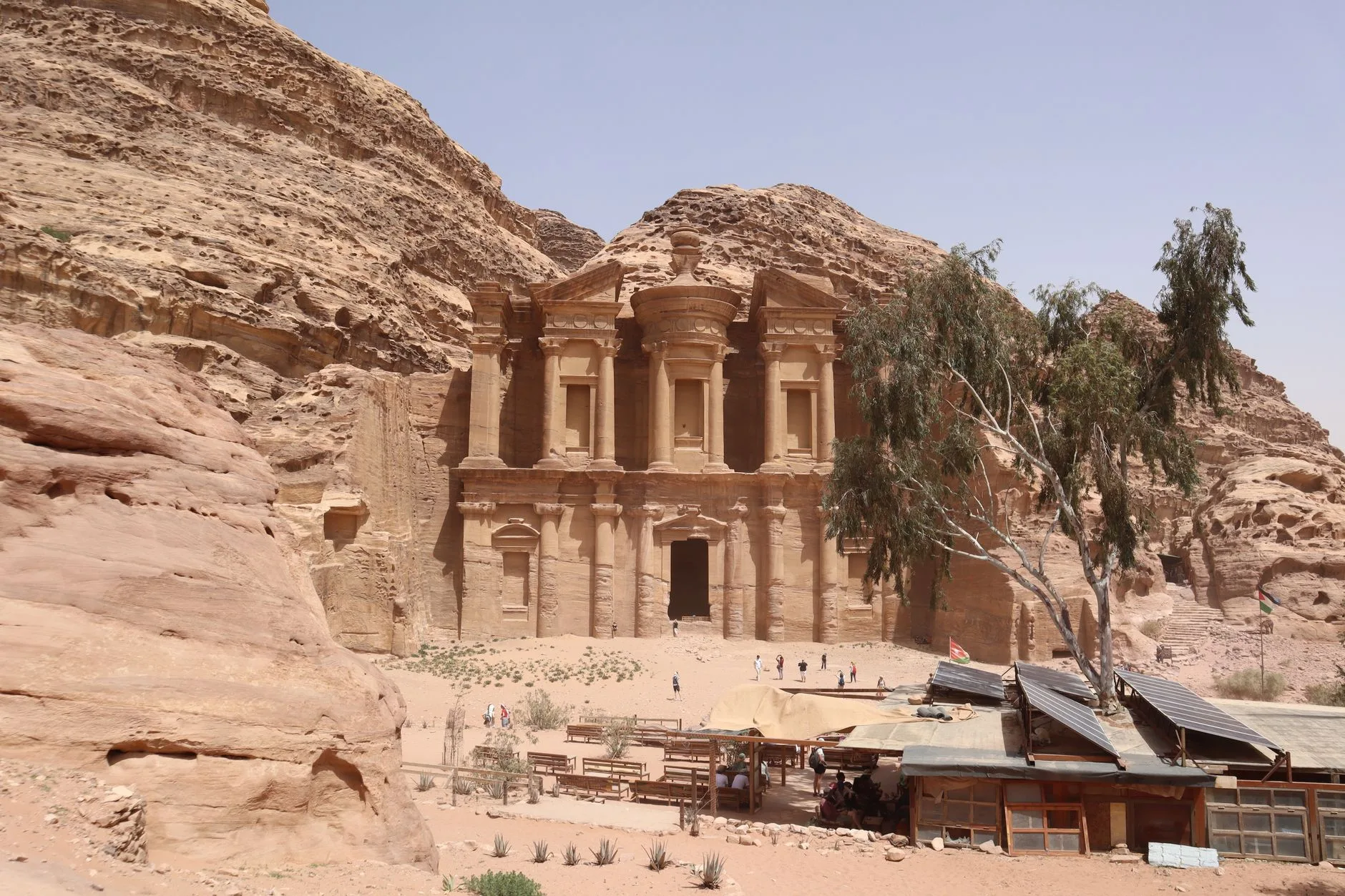
Photo by Mihaela Claudia Puscas on Pexels
Jordan is one of the Middle East’s most visitor-friendly countries — a constitutional monarchy with a stable government, welcoming population, and some of the most spectacular archaeology and landscape in the region. First-time visitors typically come for Petra but often find the wider country more interesting than they expected.
This guide covers the main sites, how to move between them, what things cost, and what to know before you arrive.
Getting In
Most Western nationalities can buy a visa on arrival at Queen Alia International Airport in Amman (30 JOD, approximately £33) or get an e-visa in advance at visitjordan.com.
Jordan Pass: If you’re visiting more than 3 nights and planning to visit Petra, the Jordan Pass is almost certainly worth buying before you arrive. It costs from 70–80 JOD (around £77–88) and covers the visa fee plus entry to Petra (normally 50 JOD alone for a one-day ticket) and 40+ other sites. Do the maths before you go — the saving is significant for most itineraries.
Where to Go
Petra
The Nabataean city carved into rose-red sandstone cliffs is the centrepiece of any Jordan itinerary. The scale consistently surprises visitors who’ve only seen photographs: the famous Treasury (Al-Khazneh) is just the beginning of a site that extends several kilometres into the mountains, including the Monastery (Ad-Deir) — a 3-hour round-trip hike from the Treasury but significantly larger and less crowded.
Allow at least 2 days in Petra. A third day is rewarding. The best time at the Treasury: first thing in the morning (the site opens at 6am) before the tour groups arrive, and late afternoon when the light turns the sandstone deep red. The evening candlelit walk (Petra by Night, Monday, Wednesday, Thursday) costs 17 JOD — romantic in photographs, less impressive in person due to the large group format, but worth knowing about.
Stay in Wadi Musa (the town adjacent to Petra) — a wide range of accommodation from budget guesthouses (from around 15 JOD/person) to Petra-view boutique hotels.
Wadi Rum
The desert canyon landscape 100km south of Petra — a vast sandstone and granite valley that inspired T.E. Lawrence’s writings and served as the filming location for The Martian, Rogue One, and Dune. The visual scale is extraordinary. Distinctive elements include Jebel Khazali (a canyon with Nabataean rock carvings), Khazali Canyon, the red sand dunes, and Lawrence’s Spring.
The standard experience is an overnight stay in a Bedouin camp — a mix of traditional-style tents with meals, a jeep tour of the desert, and, on clear nights, exceptional stargazing. Camps range from basic (around 20–30 JOD/person including dinner and breakfast) to luxury (glamp-style tents with private bathrooms, from £80–150+). Book directly with camps rather than through agencies — it’s cheaper and the money goes directly to the Bedouin families.
A jeep tour is the primary way to see the desert — most camps include a half-day or full-day tour in the package. Walking and scrambling in the rocks around the camp is free.
Amman
Jordan’s capital is worth 1–2 days. The old city (downtown, or al-Balad) has a Roman theatre, the Citadel with its Umayyad Palace and the Jordan Archaeological Museum, and some of the best street food in the country — falafel, knafeh (sweet cheese pastry soaked in syrup), and mansaf (Jordan’s national dish: lamb in dried yogurt sauce served on rice).
The more affluent western neighbourhoods (Jabal Amman, Abdoun) have good restaurants and bars. Jordan is liberal by regional standards — alcohol is widely available in restaurants, hotels, and some off-licences.
The Dead Sea
At 430 metres below sea level, the Dead Sea is the lowest point on Earth. The salt concentration (around 34%) makes it impossible to sink — the classic floating photograph. The experience itself is short (30–60 minutes is enough) but worth doing. Public beaches are available on the Jordanian side; resort beaches charge entry fees (from around 25 JOD, often including a food/drink credit).
Aqaba
Jordan’s only coastal city on the Red Sea, in the south. The snorkelling and diving are excellent — some of the best-preserved coral reef in the Red Sea region, accessible by shore or day boat. Worth 2 nights if you’re interested in marine life. Also the crossing point to Egypt via ferry to Nuweiba.
Getting Around Jordan
Car rental: The most flexible option and often the best value for groups or families. The Desert Highway connects Amman–Petra (3.5 hours) and Petra–Aqaba (1.5 hours). The King’s Highway (the scenic alternative via Kerak Castle and Wadi Mujib) is spectacular but slower. International licences are accepted.
JETT buses: The public bus company runs comfortable, air-conditioned coaches between Amman and Petra (around 10 JOD, 3.5 hours) and Amman and Aqaba. Book online or at the station.
Minibus/service taxi: Cheaper than JETT, more chaotic. Works for shorter routes or travellers comfortable with waiting until the vehicle fills. Not practical for Wadi Rum, which requires private transport or a pre-arranged camp pickup.
Getting to Wadi Rum: From Aqaba (1 hour), or from Wadi Musa/Petra (1.5 hours). Most camps arrange pickups from Wadi Rum Village for a small fee.
Costs
Jordan is not cheap by Middle Eastern standards, particularly for accommodation near Petra. Budget estimates:
| Item | Approximate cost |
|---|---|
| Budget guesthouse, Wadi Musa | 15–25 JOD/person |
| Mid-range hotel, Amman | 40–80 JOD/night |
| Petra entry (without Jordan Pass) | 50 JOD (1 day), 55 JOD (2 days) |
| Wadi Rum overnight camp | 25–50 JOD/person (incl. dinner and breakfast) |
| Street food meal | 2–5 JOD |
| Restaurant meal, mid-range | 8–18 JOD |
| JETT bus Amman–Petra | ~10 JOD |
Budget travellers who buy the Jordan Pass can get by on £60–80/day including accommodation, food, and transport. Mid-range travellers should expect £100–150/day.
When to Go
April–May and September–October are the best times: warm but not oppressively hot (Wadi Rum and Petra in July can reach 38–40°C), the light is good, and these months avoid both summer peak and winter cold. December–February is cool in Amman and cold at altitude — Petra can have frost, occasionally snow, which produces extraordinary photographs but requires warm layers.
Conclusion
Jordan rewards more than a Petra-Wadi Rum flyby. The layered history — Nabataean, Roman, Byzantine, Islamic — visible at almost every site, combined with Bedouin hospitality, makes it a country that benefits from slow exploration.
- Buy the Jordan Pass before flying — covers the visa and Petra entry, saving significantly for most itineraries
- Allow 2–3 days at Petra — one day barely scratches the surface
- Book Wadi Rum camps directly — cheaper and the money goes to the Bedouin community
- Rent a car if you’re going beyond Amman-Petra-Wadi Rum — the King’s Highway and less-visited sites require it
- Visit in April–May or September–October for optimal weather and manageable crowds
Keep reading: How to visit Uzbekistan independently: Silk Road guide