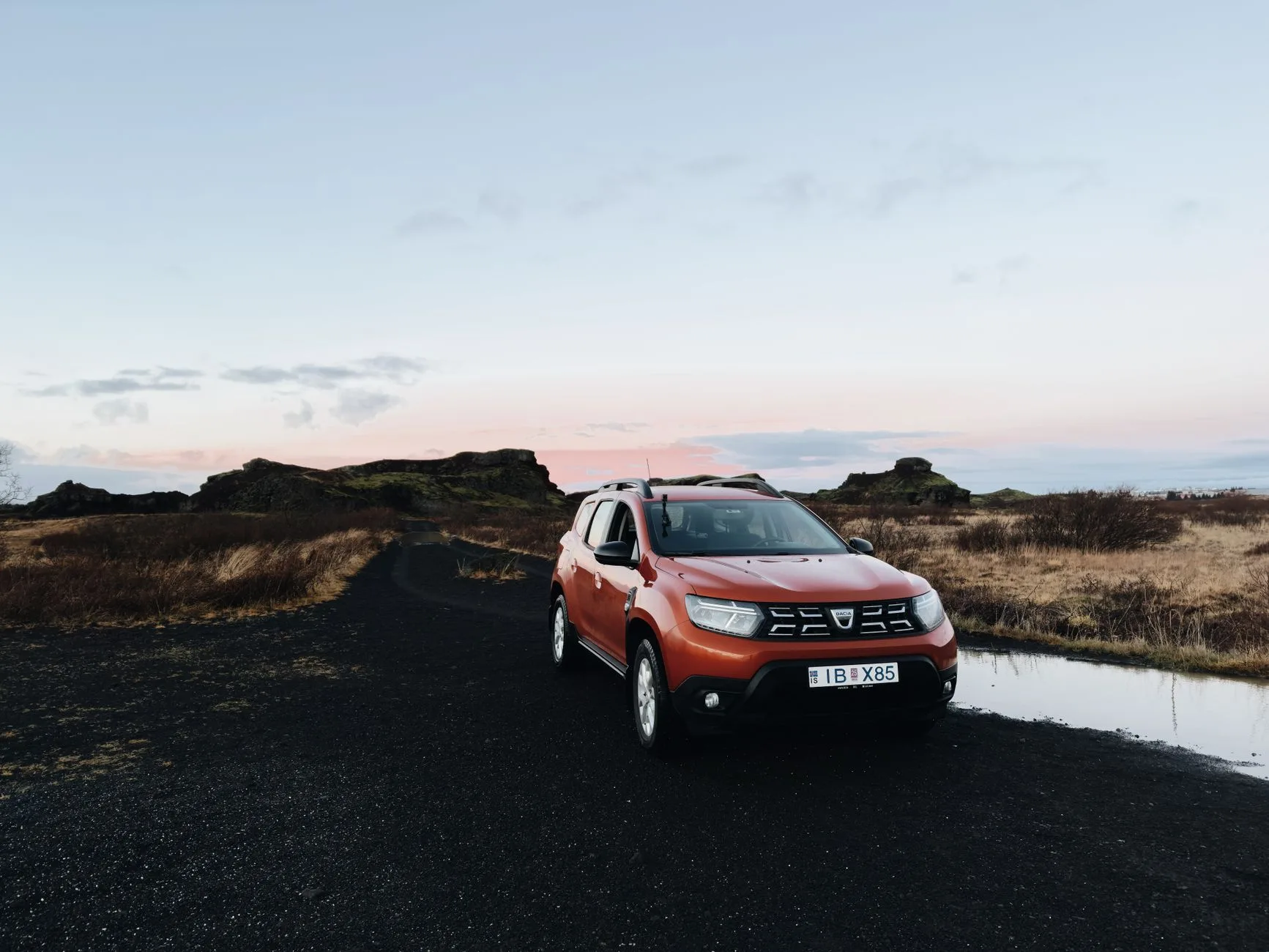
Photo by Matheus Bertelli on Pexels
The Ring Road (Route 1) circles Iceland’s entire coastline — approximately 1,332km — passing through landscapes that appear genuinely otherworldly: glaciers calving into lagoons, active volcanoes, geothermal fields venting steam, black sand beaches with basalt sea stacks, and waterfalls tumbling off plateau edges.
Iceland is one of the few places in the world where self-driving is unambiguously the best way to travel. Public transport is limited outside Reykjavík, and the distance between the most extraordinary sights often requires a car. The logic of doing it independently — at your own pace, stopping wherever the landscape demands — is overwhelming.
Planning the Route
The Ring Road (full circuit):
A complete Ring Road circuit takes approximately 7–10 days at a comfortable pace. Most travellers do it in 7–8 days, covering 150–200km per day. This is achievable but leaves limited time at each stop — 10–14 days is better.
One-week option (southern Iceland):
If time is limited, the south and Snæfellsnes Peninsula offer the highest concentration of dramatic landscape within a week:
– Reykjavík → Golden Circle → South Coast → Jökulsárlón Glacier Lagoon → back via inland road or continue to Akureyri and the north
The Westfjords:
An optional extension north of the Ring Road — one of the most remote and dramatic areas of Iceland. Unpaved roads, spectacular fjords, and almost no tourists even in summer. Adds 3–5 days to the Ring Road circuit.
Car Hire
What to hire: A 4WD (4×4) is not essential for the Ring Road itself in summer, but is required for any F-roads (highland interior tracks, only open July–September). A standard 2WD small car handles the Ring Road in good conditions. For F-road access, a proper 4×4 with high clearance is legally required and strongly advisable.
When to book: Car hire prices are highest in July and August and should be booked months in advance. For summer travel, booking 3–6 months ahead is not excessive.
What it costs: Expect £60–150/day for a basic 2WD in peak summer; £100–250/day for a 4×4. Prices drop significantly in shoulder season (May, June, September). An additional gravel protection waiver is worth adding (the Ring Road has sections where passing vehicles throw stones at windscreens).
Fuel: Iceland has petrol stations at regular intervals on the Ring Road, though the northeast and Westfjords have longer gaps. A card that doesn’t charge foreign transaction fees is useful for unmanned stations (N1 and Orkan are the main chains).
Accommodation Options
Camping:
Iceland has an excellent network of campgrounds along the Ring Road — most are well-maintained, with toilet blocks and (sometimes) hot showers. A Tjalda camping pass (available online or at the first campground you stop at) gives access to around 170 campgrounds for approximately £30–50 for the full season. In summer, camping is the most affordable accommodation option.
Campervan:
The most flexible option — park wherever is permitted, make your own schedule completely. Campervans are available from Keflavík and Reykjavík from approximately £100–200/day (including camping fees). Popular and booked far in advance for peak summer.
Guesthouses and farm stays:
The Ring Road is lined with farmstays (bænholt/farmhouse accommodation) — often the most atmospheric lodging, with home-cooked breakfasts and direct access to the surrounding landscape. Typically £80–150/night for a double room.
Hotels in towns:
Akureyri (the north), Höfn (the east), Selfoss and Vík (the south) have hotels and guesthouses. Book well in advance for summer.
Key Stops on the Ring Road (Clockwise from Reykjavík)
Golden Circle (day 1–2 from Reykjavík)
Not on the Ring Road but an essential start. Þingvellir National Park (the site of the world’s oldest parliament and where the North American and Eurasian tectonic plates are visibly diverging), Geysir (the geyser that gave all geysers their name — Strokkur erupts every 5–7 minutes), and Gullfoss (a massive two-tiered waterfall).
Seljalandsfoss and Skógafoss (south coast)
Two major waterfalls within an hour of each other on the south coast. Seljalandsfoss can be walked behind; Skógafoss has a hiking trail up to the top of the plateau.
Jökulsárlón Glacier Lagoon (southeast)
A glacial lake filled with icebergs calving off the Breiðamerkurjökull glacier — a completely unique landscape. Boat tours onto the lagoon. The adjacent Diamond Beach (black sand with ice blocks) is extraordinary.
Mývatn (north)
A geothermal lake with pseudocraters, lava fields, mud pots, and the Mývatn Nature Baths (geothermal pool, less crowded than the Blue Lagoon). Nearby Goðafoss waterfall is one of the most beautiful in Iceland.
Snæfellsjökull (Snæfellsnes Peninsula, west)
A glacier-capped volcano at the tip of a peninsula — Jules Verne’s entry point to the centre of the Earth in “Journey to the Centre of the Earth.” The peninsula has cliffs, sea stacks, and small fishing villages accessible as a loop from Reykjavík or as part of the Ring Road return.
Costs
Iceland is one of the most expensive countries in the world:
| Item | Approximate cost |
|---|---|
| Car hire (2WD, per day, summer) | £80–150 |
| Campground per night (with pass) | £10–15 |
| Guesthouse/farmstay per night | £80–150 |
| Supermarket meal (self-catered) | £8–15 |
| Restaurant meal | £25–45 |
| Petrol (full tank, small car) | £60–80 |
A 7-day Ring Road trip in summer with camping and some guesthouse nights: £1,200–2,000 per person excluding flights.
When to Go
Summer (June–August): 24-hour daylight, all roads open, maximum accessibility, maximum cost and crowds at the most popular sites.
September–October: Northern lights begin, fewer tourists, roads still mostly passable, accommodation cheaper.
Winter (November–March): Northern lights peak, dramatic snow landscapes, but reduced daylight hours (4–5 hours in December), many highland roads closed, some waterfalls frozen, significantly lower prices.
Conclusion
Iceland’s Ring Road is one of the world’s great drives — the landscape justifies every hour behind the wheel:
- Book car hire 3–6 months early for summer — availability and prices worsen dramatically closer to travel
- A gravel protection waiver is worth paying for — windscreen damage is common on gravel roads
- Camp or use a campervan if budget is a concern — camping significantly reduces daily costs
- Don’t try to complete the Ring Road in under 7 days — the pace becomes exhausting and the landscape deserves more time
- September is the best balance — northern lights possible, fewer crowds, lower costs, roads still open
Keep reading: Cycling through the Netherlands: practical guide