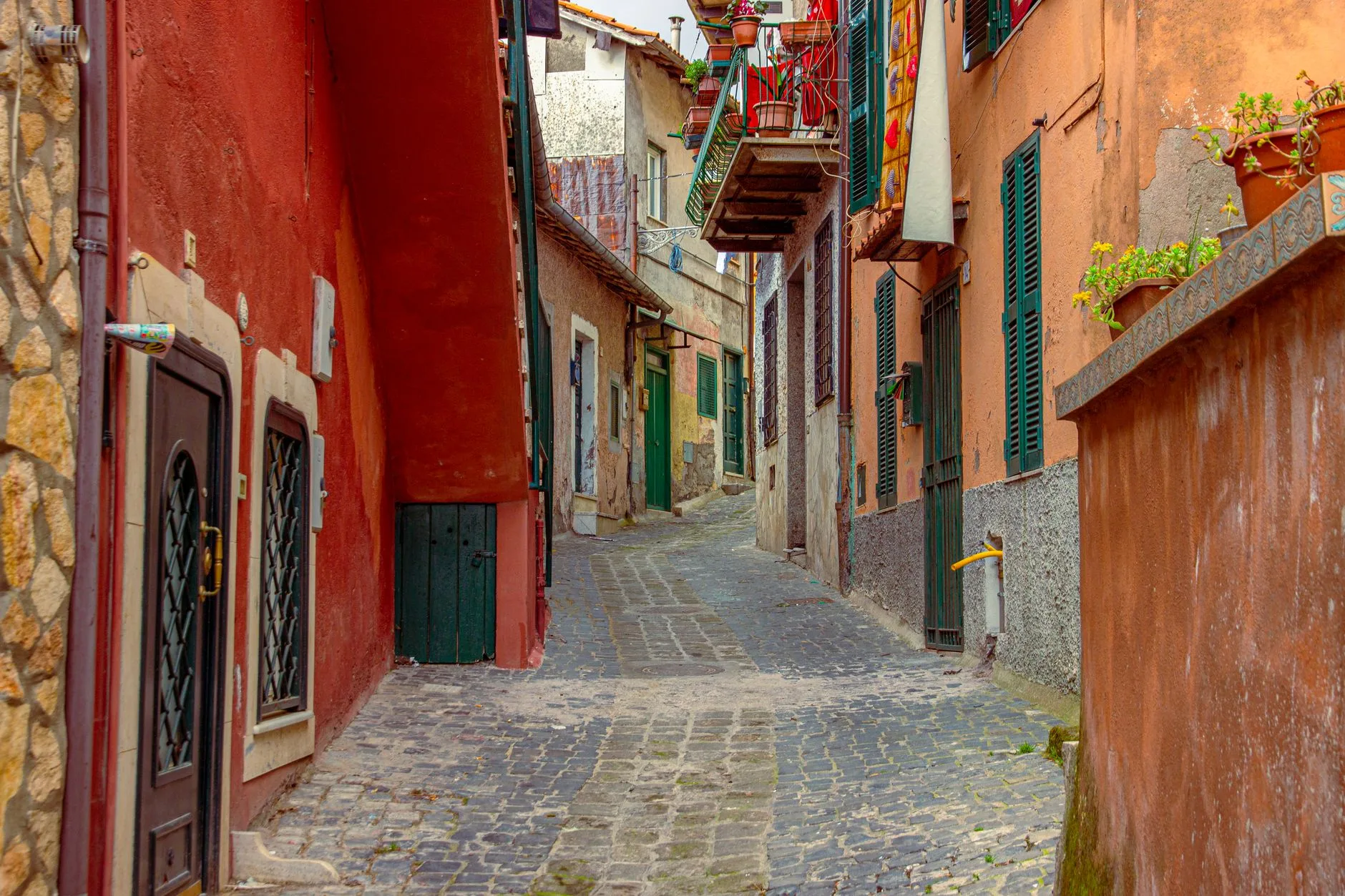
Photo by Виктор Соломоник on Pexels
Italy is the most visited country in Europe, but most of those visitors see the same five cities. The Italy that rewards slow travel is elsewhere — in the hill towns of Le Marche, the Baroque cities of Puglia, the mountains of Abruzzo, the volcanic landscape of Sicily’s interior, and the medieval streets of the Veneto hinterland.
This guide is for travellers who want to move past Rome–Florence–Venice and find the country that Italians themselves actually inhabit.
The Problem with the Standard Italian Circuit
Rome, Florence, and Venice are extraordinary. They’re also extraordinarily crowded — Venice’s historic centre has fewer permanent residents than visitors on any given summer day; the Uffizi in Florence requires booking weeks in advance; Rome’s most famous sights are surrounded by selfie-stick vendors from opening time.
The great Italian cities that most visitors skip: Bologna, Genoa, Turin, Palermo, Naples, Lecce, Bari — all are richer, less crowded, and more representative of contemporary Italian life than the trinity of the tourist circuit.
Regions Worth Extended Time
Le Marche (The Marches)
The most undervisited region of central Italy — east of Umbria and Tuscany on the Adriatic side of the Apennines. Hill towns (Urbino — home of Raphael and a perfectly preserved Renaissance ducal palace; Macerata — university town with a remarkable open-air opera season; Ascoli Piceno — one of the most beautiful piazzas in Italy) with almost no tourists. The coast has a long sandy Adriatic beach backed by wine country.
Urbino alone — the birthplace and palace of Federico da Montefeltro, and the city that produced Raphael — would justify a detour in any other country. In Italy, it’s largely ignored.
Puglia
The heel of the Italian boot — flat, intensely agricultural, and with a Baroque architectural culture that produces extraordinary hill towns. Lecce is the “Florence of the south” — a city of golden limestone Baroque churches and palaces that is genuinely stunning. The Trulli houses of Alberobello (conical limestone structures unique to this area) are UNESCO-listed. Ostuni (the “white city”), Locorotondo, and Cisternino are quieter alternatives. The Salento coastline in the far south is the best beach area in Puglia.
Abruzzo
A national park and three mountain ranges make Abruzzo one of the most outdoor-focused regions of central Italy. The Gran Sasso — the highest peak in the Apennines — is accessible by cable car from L’Aquila. The historic centres of L’Aquila, Sulmona, and Lanciano are well-preserved and mostly visitor-free. Hiking and skiing at Roccaraso are popular with Romans but largely unknown internationally.
Sicily
The largest Mediterranean island is large enough and varied enough for slow travel on its own. The Baroque cities of Val di Noto (Noto, Ragusa Ibla, Modica, Scicli — all UNESCO-listed, all extraordinary) reward several days in the southeast. Palermo’s street markets (Ballarò, Capo) and decaying Baroque churches are unlike anything else in Italy. The Valley of the Temples at Agrigento contains the best-preserved Greek temples outside Greece itself.
Slow Sicily: base yourself in Agrigento, Ragusa, or Trapani and use local buses to explore; avoid the overpriced tourist accommodation in Taormina unless you specifically want that atmosphere.
Friuli-Venezia Giulia
The northeast corner — between the Alps, the Adriatic, and Slovenia. Trieste is the most interesting city: once the main port of the Habsburg Empire, now a city with a Central European atmosphere entirely unlike the Veneto to the west. The frescoes at the Basilica of Aquileia are among the finest early Christian mosaics in the world. Cividale del Friuli is a perfect small Lombard town. The Carso (karst plateau) behind Trieste has walking trails and the eerie Grotta Gigante (a single cave chamber large enough to contain St Peter’s Basilica).
Practical Notes for Slow Italy
Accommodation: Monthly apartment rentals (Airbnb or local agencies) in smaller towns cost dramatically less than hotels in major cities. In Lecce or Urbino, a good apartment for a month costs what a basic hotel room in Florence costs per week.
Transport: Italy’s Trenitalia regional trains connect most towns not on the high-speed network. Slow (regionale) trains are cheap; the Italo and Frecciarossa high-speed trains are fast and relatively affordable booked in advance. For rural areas in Puglia, Sicily, and Le Marche, a rental car adds enormous flexibility.
Food: The further from the tourist circuit, the better and cheaper the food. A full lunch at a trattoria in Abruzzo — antipasti, pasta, main course, house wine, coffee — costs £12–18. The same in central Florence is £35–50.
When to go: May–June and September–October avoid both summer heat and peak crowds. August is the Italian holiday month — everywhere is either full of Italians or shut.
Starting Points
Lecce as a base for exploring Puglia south to Otranto and north to the Valle d’Itria.
Palermo as a base for western Sicily, with day trips to Agrigento, Monreale, and Cefalù.
Bologna as a base for Emilia-Romagna — Modena, Parma, Ravenna, and Ferrara are all within 90 minutes.
Trieste as a base for Friuli — Slovenia is 30 minutes away; Udine and Aquileia are day trips.
Conclusion
Italy off the tourist circuit rewards patience and curiosity:
- Puglia is the best starting point — Lecce is accessible, affordable, and genuinely beautiful
- Sicily deserves more than a day trip from Naples — the southeast Baroque towns require 3+ days
- Le Marche is the most under-visited region — Urbino alone justifies the detour
- Monthly accommodation unlocks the real Italy — markets, neighbours, local bars, the rhythm of a place
- Regional trains are good enough for most moves; a rental car opens Puglia and Sicily’s countryside
Keep reading: Slow travel in Portugal: beyond Lisbon and Porto