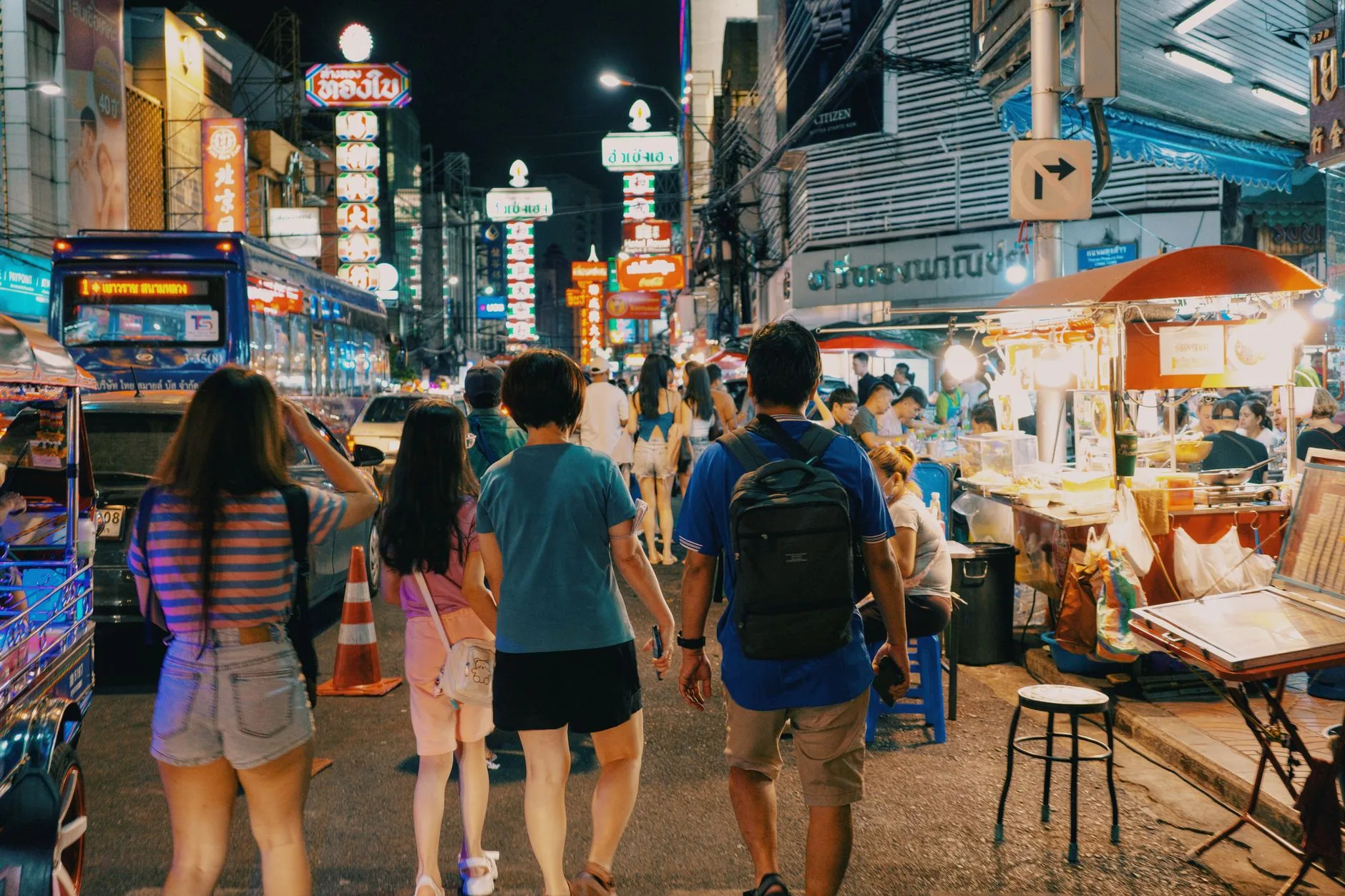
Bangkok is a remarkable city but it’s also where most Thailand itineraries start and end, often without going anywhere that reveals what makes the country genuinely interesting. Northern Thailand’s ancient cities and mountain culture, the Gulf Coast islands before the party reputation sets in, and the northeast (Isan) — which hardly any Western tourists visit — offer far more than the capital.
Costs
Thailand is cheap by Western standards but prices vary significantly by region and by how you travel.
Budget (dorm/guesthouse, street food, local buses): £20–30/day
Mid-range: £40–70/day
Daily breakdown (budget):
– Guesthouse single room: THB 300–600 (£6.50–13)
– Pad thai / khao man gai / noodle soup: THB 50–100 (£1.10–2.20)
– Large Chang/Singha beer: THB 60–80 (£1.30–1.75)
– Local songthaew (pickup truck bus): THB 20–50 (£0.45–1.10)
– Intercity sleeper train: THB 300–800 (£6.50–17.50)
Northern Thailand: Chiang Mai and Beyond
Chiang Mai is the north’s hub — surrounded by mountains, with 300+ temples, excellent food markets, and a well-developed guesthouse and café scene. Far more liveable and less frantic than Bangkok.
Don’t miss: Doi Suthep temple and the city moat at dusk. The Sunday Walking Street market. A cooking class (genuinely worthwhile — Thai cooking fundamentals are learnable in half a day). The Night Bazaar.
Beyond Chiang Mai: Pai (3-hour winding mountain road northwest — small hippie town, waterfalls, hot springs, genuinely lovely atmosphere despite its reputation). Chiang Rai (3 hours northeast by bus — the White Temple, the Blue Temple, the Black House, Doi Mae Salong tea plantations near the Myanmar border). Mae Sariang and the Doi Inthanon national park (Thailand’s highest peak, waterfalls, hill tribe villages) via the Mae Hong Son loop if you have a week and preferably a motorbike.
The Gulf Coast
Ko Samui is the most developed and expensive Gulf island. Worth a visit but not the budget-friendly paradise it once was.
Ko Pha-Ngan is famous for Full Moon Parties — but outside party weeks, it has excellent, affordable beaches (Haad Rin is the party beach; Haad Thong Nai Pan Noi in the northeast is far quieter and better).
Ko Tao is the world’s cheapest place to get PADI open water dive certified — approximately £200 for a 3–4 day course. Small island, good visibility, friendly scene.
Less-visited Gulf islands: Ko Kut and Ko Mak (south of Ko Chang) — almost no mass tourism, excellent snorkelling, difficult to reach (but that’s the point).
The Andaman Coast
Krabi town is a better base than Ao Nang for independent travellers — cheaper, more authentic, still easy access to Railay Beach (only accessible by longtail boat) and the Four Islands day trip.
Ko Lanta — larger and quieter than Ko Phi Phi, with a long western beach and laid-back atmosphere. The old town on the eastern coast is genuinely worth exploring.
Ko Phi Phi — extraordinary scenery (The Beach was filmed here); also extremely crowded and recovered slowly from overtourism. Worth a day trip rather than an overnight.
Avoid peak season prices: Christmas and New Year on the Andaman coast means prices 2–3× normal levels and pre-booked accommodation everywhere. January–April is excellent weather at more reasonable prices.
Northeast Thailand (Isan)
Isan is the most overlooked and most rewarding part of Thailand for independent travellers. The food is distinctly different (larb, som tam with fermented fish, sticky rice), the prices are 30–40% below tourist Thailand, the people see very few Western visitors, and the Khmer ruins at Phimai, Prasat Hin Phanom Rung, and Prasat Hin Khao Phanom Rung are remarkable — smaller than Angkor Wat but far less visited.
Get to Isan by train or bus from Bangkok (Nakhon Ratchasima / Korat is the hub) or overland from Laos (Nong Khai border crossing, connected to Vientiane by the Lao-China railway).
Getting Around
Trains: The State Railway of Thailand runs cheap, reliable overnight trains on major routes — Bangkok to Chiang Mai (sleeper from THB 400), Bangkok to Nong Khai (for Laos border), Bangkok to Ko Samui (train then ferry). Book at thairailwayticket.com or at stations.
VIP buses: Air-conditioned long-distance buses on major tourist routes. Nakhon Chai Air and other operators.
Songthaews (pickup truck buses): The local shared transport in towns and between villages. Very cheap; no set schedule (leave when full or when the driver feels like it).
Grab: Rideshare app that works in Bangkok, Chiang Mai, and most major cities — far cheaper and safer than tuk-tuks for short urban journeys.
Visas
UK passport holders get 60 days visa-free on arrival (increased from 30 in 2024). For longer stays, the Thailand LTR (Long-Term Resident) or tourist visa options apply.
Summary
Thailand beyond Bangkok:
- Chiang Mai deserves a week — not just a day trip from Bangkok; it’s a fundamentally different, more relaxed Thailand
- Ko Tao is the world’s cheapest place to learn to dive — genuinely excellent value if diving is on your list
- Isan is where independent travellers find real Thailand — Khmer ruins, distinctive food, almost no Western tourists
- Travel by sleeper train on overnight legs — comfortable, cheap, scenic, and saves accommodation costs
- Avoid the Andaman coast at Christmas — prices spike 2–3× and it’s chaotic; January–March offers the same weather at normal rates
Keep reading: Travelling in Laos: what to know before you go